









- What Does a Global Traffic Ecosystem Service Provider Do? What Are the Differences from a Single Advertising AgencyJul 16, 2026View details
- What should you focus on in the latest enterprise SaaS report? From renewal rates and delivery costs to overseas growth opportunitiesJul 12, 2026View details
- What signals are worth paying attention to in a cross-border marketing trend report? B2B companies should look at these 6 signalsJul 11, 2026View details
- How to Read a Cross-Border Marketing Trends Report? Five Key Dimensions for Evaluating Channel OpportunitiesJul 11, 2026View details
- Which channel has the highest ROI in the global traffic ecosystem? Comparative analysis of search, social media, and advertisingJul 10, 2026View details
- What multilingual website services are available in Sanya? Which model is more suitable for local businesses going global?Jul 08, 2026View details
- How to view the complete list of China SaaS companies in the top 100? Practical methods for screening website-building and marketing service providersJul 08, 2026View details
- How to view pricing in the global traffic ecosystem? Cost comparison of search, social media, and content channel advertisingJul 06, 2026View details
How to Choose the Right SSL Certificate Without Wasting Money
How should you choose an SSL certificate purchase to balance security, cost, and long-term maintenance? This article will focus on SSL certificate pricing, SSL certificate validity periods, and the SSL certificate application process to help you avoid common pitfalls and truly avoid wasting money.
Why do many companies still feel they “wasted money” after buying an SSL certificate

In the integrated website + marketing service scenario, an SSL certificate is not just a technical add-on, but foundational infrastructure for website credibility, form data transmission, landing page conversion, and overseas visitor experience.
Common issues usually fall into 3 areas: first, focusing only on SSL certificate pricing while ignoring the number of domains, subdomain coverage, and subsequent renewal fees; second, looking only at certificate types without considering business scenarios; third, lacking unified planning during application, resulting in multiple certificate replacements, repeated deployments, and extra maintenance within 1 year.
For information researchers, the hardest part is distinguishing the actual differences between DV, OV, and EV. For technical evaluators and security managers, the focus is on encryption strength, compatibility, certificate chains, and renewal mechanisms. For business decision-makers, the greater concerns are ROI, brand trust, and maintenance controllability.
Easimon Information Technology (Beijing) Co., Ltd. has long served website building, SEO optimization, social media marketing, and advertising projects, and understands deeply that SSL certificate purchasing is never an isolated decision. A high-conversion website often requires considering security, page loading, search crawlability, form stability, and follow-up promotion pathways together in order to truly avoid hidden costs.
First clarify this: when buying an SSL certificate, are you buying “encryption capability” or “business fit”
For most corporate websites, brand showcase sites, and foreign trade independent websites, the core value of an SSL certificate includes at least 4 points: establishing an HTTPS secure connection, reducing browser security warnings, protecting login and inquiry data, and increasing customer trust in the brand. Encryption is only the foundation; business fit determines whether it is truly cost-effective.
- For a showcase corporate website with only 1 primary domain, it is usually best to first see whether a single-domain certificate is sufficient, without directly choosing a high-cost combination.
- For companies with more than 5 business subsites, language sites, or channel landing pages, it is more appropriate to evaluate wildcard or multi-domain certificates.
- When backend login, customer data submission, dealer systems, or project collaboration platforms are involved, organizational validation and maintenance mechanisms should be evaluated simultaneously.
If a company is upgrading its official website, building an overseas marketing site, or creating a product matrix website, it can also plan the website architecture and certificate strategy together. For example, when targeting global customer acquisition in a vertical manufacturing industry, page structure, navigation logic, and trustworthy access experience often need to be designed simultaneously. For solutions such as laser engraving machine industry solutions, the focus is not only on launch speed, but also on product display efficiency and support for global growth.
SSL certificate prices vary greatly, so what should procurement focus on

When many people search for SSL certificate purchases, their first reaction is to compare prices. But what truly affects cost is not only the first-year price, but also certificate type, coverage scope, validation process, renewal frequency, manual deployment costs, and downtime risk. Looking only at quotations often turns a low price into a high total cost.
From a procurement perspective, at least 5 key dimensions should be checked: certificate type, number of supported domains, validity period management method, server compatibility, and whether it is convenient for later replacement. Especially for project managers and after-sales maintenance personnel, once certificates are purchased separately, quarterly inventory checks and renewals will increase workload later on.
The table below is suitable for quickly judging the applicable direction of different certificates, especially for the preliminary screening of procurement for corporate websites, marketing site groups, dealer platforms, and multilingual websites.
On the surface, DV certificates seem more economical, but if a company plans to launch multiple subdomains or language sites within 6 months, low-cost single certificates are not necessarily more cost-effective. On the contrary, reasonably planned wildcard or multi-domain certificates can often reduce the extra time costs caused by repeated purchases, deployments, and renewal reminders.
Is a longer SSL certificate validity period always more cost-effective
Many purchasers mistakenly believe that “the longer the validity period, the less trouble it is.” In fact, industry practice now emphasizes periodic renewal and compliance management more strongly. What companies really need to pay attention to is whether there are clear reminder mechanisms 30 days, 15 days, and 7 days before certificate expiration, and whether replacement will affect online business.
If the website supports advertising, SEO indexing, and form conversion, one certificate expiration may cause not just a loss of a few hundred yuan, but several continuous hours to 1 day of access warnings, inquiry loss, and decline in brand trust. This is also why website operations teams place more importance on renewal management rather than only watching the initial purchase price.
How should the SSL certificate application process proceed without affecting website launch and marketing promotion
For new site launches, old site revamps, or overseas site expansion projects, the SSL certificate application process should ideally be included in the project schedule in advance. The common process can be divided into 4 steps: confirm the domain and server environment, choose the certificate type, complete validation, then deploy and test. It seems simple, but every step may affect delivery time.
If it is a DV certificate, domain validation is usually faster; if it is an OV type, it also involves company information verification, and the delivery cycle may extend from 1 working day to 3 to 5 working days. For engineering project leaders, if the website plan is launched simultaneously with advertising, search engine crawling, or multi-region distribution, these time differences must be taken into account.
The table below is more suitable for project management, technical evaluation, and after-sales maintenance teams as a scheduling reference, to avoid certificate procedures delaying launch milestones.
A truly mature website project will not hand over SSL certificate application separately to a single position for temporary handling, but will arrange it together with website building, SEO basic configuration, page redirection, CDN strategy, and data tracking. The benefit of this approach is that security and marketing infrastructure can be calibrated simultaneously within 1 launch window.
What key points still need to be checked after deployment
Perform at least these 6 checks after launch
- Check whether HTTP to HTTPS has completed a 301 redirect to avoid fragmented indexing and repeated user visits.
- Check whether images, scripts, and style files on the site are still calling unencrypted links to reduce mixed content warnings.
- Check whether forms, inquiries, and login pages can all be submitted normally on both desktop and mobile devices.
- Check whether the new certificate chain has been correctly loaded in CDN, load balancing, or reverse proxy environments.
- Check whether the site URLs in search engine site properties, sitemaps, and analytics tools have been updated synchronously.
- Check the expiration reminder mechanism; it is recommended to keep at least 30-day and 7-day warning levels.
For companies continuously doing content marketing and advertising, deployment completion does not mean the work is done. Only when redirection, indexing, forms, and access stability are all confirmed to be correct can an SSL certificate purchase truly deliver business value.
When different roles procure SSL certificates, what pitfalls are they most likely to encounter
Different positions within a company view SSL certificates from different angles, which is also why procurement disputes occur frequently. Information researchers care about “which type is more suitable,” technical evaluators focus on “whether it can be deployed stably,” decision-makers look at “budget and risk,” while maintenance teams fear “forgetting to replace it at expiration” the most.
Without a unified evaluation framework, the procurement stage can easily fall into 2 extremes: one is over-purchasing, consuming budget that should have been used for marketing page optimization and content delivery on unnecessary certificate specifications; the other is over-compressing price, resulting in higher labor costs later during expansion, migration, or renewal.
For dealers, distributors, and agents, SSL certificates are also related to the unified management of channel websites. If there are more than 2 brand sites, multiple regional agent pages, or frequently updated campaign pages throughout the year, it becomes even more necessary to consider a centralized certificate management strategy rather than making temporary purchases each time.
4 high-frequency misunderstandings that directly increase the total cost of SSL certificates
- Only comparing first-year quotations, without comparing renewal, replacement, and manual deployment costs. Much of the extra money companies actually spend occurs during the 2nd and 3rd replacements.
- Failing to count the complete domain list. When the official website, mobile site, backend, language sites, and campaign pages belong to different domains, repeated supplementary purchases are most likely to happen.
- Handling certificate purchasing separately from website upgrades. The result is that the website building team, maintenance team, and marketing team wait for each other, delaying the overall project by 3 to 7 days.
- Not performing marketing-side verification after certificate deployment. HTTPS may be enabled, but if redirection, indexing, forms, and ad tracking are not synchronized, business results will still be compromised.
If a company is upgrading an industry-focused official website, product catalog site, or overseas inquiry website, it is also recommended to complete security, structure, and display efficiency in one go during the early planning stage. Taking laser engraving machine industry solutions as an example, professional website building, intelligent category navigation, and AI content editing capabilities combined with a trusted access environment are more suitable for B2B websites that need frequent product parameter displays and multi-page search.
Why choose us: solving SSL certificate purchasing within the overall growth chain
For companies, SSL certificate purchasing should not be just a one-time transaction, but should be incorporated into the overall solution for website construction, traffic acquisition, form conversion, and long-term maintenance. Easimon Information Technology (Beijing) Co., Ltd., established in 2013 and headquartered in Beijing, has long focused on digital marketing services driven by artificial intelligence and big data, providing full-chain support for website building, SEO optimization, social media marketing, and advertising.
In actual projects, we place greater emphasis on the collaboration of 3 stages: “early-stage assessment + mid-stage implementation + later-stage maintenance.” In the early stage, we help you sort out domain structure, number of sites, and budget boundaries; in the mid stage, we coordinate certificate application, deployment, redirection, and compatibility testing; in the later stage, we focus on renewal reminders, website stability, and ensuring marketing data is not affected.
If you are evaluating whether SSL certificate pricing is reasonable, how to plan SSL certificate validity periods, whether the SSL certificate application process will affect project progress, or if you want to plan certificate strategy together with official website upgrades, foreign trade independent websites, and SEO basic optimization, you can communicate with us further right now. Consultation topics include: domain and subdomain review, certificate type selection, standard delivery cycle, deployment coordination methods, subsequent renewal management, and full-site upgrade solutions.
For companies with limited budgets but hoping to balance security and conversion, we can also help determine based on the existing website architecture whether to first complete basic certificate configuration or simultaneously upgrade the website and marketing infrastructure. This not only helps avoid detours, but is also more beneficial for subsequent customer acquisition, brand presentation, and global business expansion.
Related Articles
 Attention! Builders' must-see: Yibingbao AI components updated, design efficiency directly doubled!
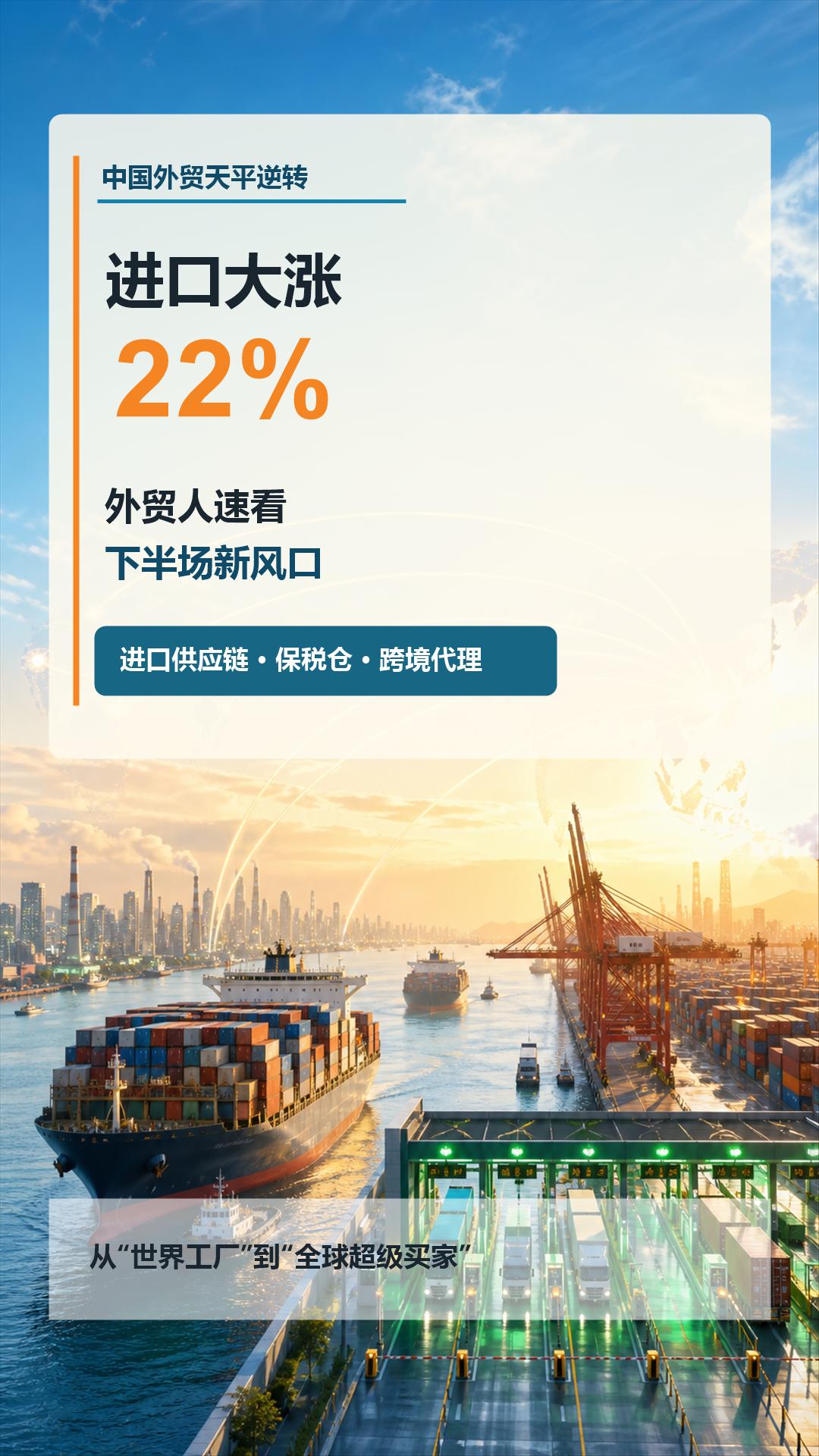
 China's foreign trade sees a turnaround: imports surge by 22%! Foreign trade professionals should quickly take note of the new trends in the second half of the year
 What Does a Global Traffic Ecosystem Service Provider Do? What Are the Differences from a Single Advertising Agency

Related Products
 EasyCamp SaaS Smart Website Marketing SystemE-Yingbao SaaS Smart Website Marketing System: AI-powered, zero-code website building. Rapidly launch multilingual independent e-commerce sites in just 10 minutes. Global server acceleration and AI-driven SEO optimization empower businesses to efficiently connect with global markets. The seamless integration of technology and user-friendly operation makes building e-commerce sites incredibly simple.
 AI+SEM Intelligent Advertising Marketing SystemAI+SEM drives intelligent ad creation, empowering full-funnel precision advertising marketing. The system automatically generates weekly/monthly reports, AI recommends keywords and target countries, monitors core metrics in real-time with intelligent alerts, and enables one-click high-conversion ad solutions to help quickly acquire customers and improve ROI.
 AI+SEO Dual Engine Optimization ServiceEasyWin AI+SEO Dual Engine Optimization System leverages AI-powered keyword mining, content generation, and comprehensive technical optimization to help foreign trade enterprises acquire high-quality organic traffic, significantly improving search rankings and conversion rates.
 AI+SNS Social Media Marketing SystemYingbao AI+SNS Social Media Marketing System - Precision social capture for the social media era. Supports one-click content synchronization across major platforms like Facebook and LinkedIn. AI intelligently rewrites posts for enhanced relevance. 24/7 AI customer service and user profiling analysis empower businesses to efficiently expand into global markets.
 AI+SEO营销解决方案易营宝AI+SEO营销解决方案,通过AI批量写作、智能生成TDK、精准关键词扩词等功能,全面优化网站SEO效果,提升流量与转化率。助力企业构建高效智能网站新生态。
 AI+SEM Advertising Marketing SolutionsAI+SEM Advertising Marketing Solution leverages AI technology to deeply empower SEM ad campaigns. It automatically generates weekly/monthly reports using AI, presenting account data across multiple dimensions for comprehensive insights into campaign performance and trends. The system precisely recommends keywords and target countries, intelligently generates high-conversion ad copy, and enables one-click activation of efficient campaign plans to help businesses rapidly acquire customers. Simultaneously, it monitors core metrics in real time, intelligently identifies abnormal fluctuations, and issues timely alerts to ensure stable, high-return advertising results.
 Domain Name ServicesEasyWin provides professional domain name services, including intelligent queries, one-stop registration, brand protection, and full lifecycle management, helping businesses build a digital brand image.
 EasyOperate B2C Cross-Border E-Commerce Platform & Independent WebsiteEasyStore B2C Cross-border E-commerce Independent Store is an intelligent website building and cross-border e-commerce integrated solution independently developed by EasyStore Information Technology (Beijing) Co., Ltd. The system is specially designed for small and medium-sized as well as large export enterprises, integrating 'website building, operation, marketing, advertising, and conversion' into one, helping enterprises quickly establish cross-border e-commerce independent stores to achieve brand globalization and global sales growth.
The platform supports multiple languages, multiple currencies, and multi-channel marketing, with built-in AI intelligent translation and SEO optimization systems, suitable for mainstream markets such as Southeast Asia, Europe and America, Latin America, and the Middle East, assisting Chinese manufacturing enterprises in efficiently deploying international e-commerce strategies. SSL证书易营宝提供专业SSL安全证书服务,包括单域名和泛域名证书,确保网站数据传输加密、身份验证和完整性保护,助力企业建立安全可信的在线业务环境。









