









- How to assess foreign trade website development trends?Looking at 2026 changes from multilingual,AI content to conversion pathsJul 04, 2026View details
- What are the new trends in multilingual marketing data analytics tools in 2026? Focus on attribution、automation and complianceJul 04, 2026View details
- Is Brand Globalization Marketing Consulting Worth Buying? At What Stage Should Companies Bring It InJul 01, 2026View details
- Cross-Border Marketing Trend Research: Why More and More Companies Are Starting to Deploy AI Search and GEO OptimizationJun 30, 2026View details
- Cross-Border Marketing Trend Research: How Independent Sites, AI Content, and Short-Video Customer Acquisition Are ChangingJun 30, 2026View details
- How Can a Brand Updates Page Be Made More SEO-Friendly? Analysis of Update Frequency, Content Structure, and Internal Linking StrategyJun 28, 2026View details
- What stages does the cross-border services ecosystem include? How do website building, promotion, payment, and compliance work togetherJun 22, 2026View details
- How will email marketing costs change in 2026Jun 22, 2026View details
Which Legacy Approaches Are International Digital Marketing Platforms Phasing Out
International digital marketing platforms are rapidly reshaping the logic of businesses going global and acquiring customers worldwide. For business decision-makers, the real concern is not what new features the platform has added, but which old methods have become ineffective, and whether continued investment will lead to waste, inefficiency, and stagnant growth.
From traffic acquisition and website building to content distribution and conversion management, the old extensive model that relied on experience, manual labor, and single tools is being replaced by a new system driven by data, automated collaboration, and localized operations. Whoever completes the transformation first will have a greater chance of establishing a long-term growth advantage.
What are business decision-makers really looking for when searching for "international digital marketing platforms"?

When businesses search for "international digital marketing platforms," their core intention is usually not to understand the concept of a platform, but to determine which practices are no longer applicable in the current global marketing environment and how businesses should choose a more efficient and sustainable growth path.
For decision-makers, the four things they care about most are: whether the budget is being wasted inefficiently, whether the platform's capabilities can connect the entire process from website building to customer acquisition, whether overseas markets need localized operations, and whether digital marketing investments can be quantified, reviewed, and continuously optimized.
Therefore, such articles should not merely describe trends, but should help managers identify the real risks of old models, understand the business value behind platform upgrades, and form a clear judgment on input and output, organizational collaboration, and implementation paths.
Old approach #1: Focusing solely on traffic volume, ignoring traffic quality.
In the past, many companies engaged in overseas marketing primarily focused on acquiring more traffic, expanding their reach across more channels, and maximizing exposure. However, today, international digital marketing platforms increasingly discourage this approach of simply pursuing quantity, as low-quality traffic is unlikely to generate effective business opportunities.
As platform algorithms mature, indiscriminate buying not only leads to lower conversion rates but also increases customer acquisition costs, impacting account quality and subsequent campaign performance. This is especially true for B2B, manufacturing, and service companies, where precise targeting is more important than broad coverage; the more erroneous traffic, the lower the sales efficiency.
If businesses continue to rely primarily on click-through rates and impressions as key performance indicators, they risk falling into the trap of "good-looking data, but no actual performance growth." A truly effective strategy should start by reconstructing the campaign logic based on target customer profiles, search intent, conversion paths, and lead quality.
Old Method Two: Advertising, SEO, and Website are Isolated from Each Other
When many companies first established their overseas marketing systems, their websites were managed by the technology department, SEO was outsourced, advertising was managed separately by the marketing team, and social media was a separate content system. This fragmented approach is increasingly difficult to adapt to today's complex global competitive environment.
International digital marketing platforms are leveraging their enhanced data integration capabilities to create a closed loop encompassing websites, content, search, social media, and advertising. The reason is simple: users won't convert based on isolated touchpoints due to internal departmental divisions within a company, and platforms will no longer reward fragmented experiences.
If a website loads slowly, the landing page doesn't match the advertising information, and the SEO content fails to engage potential customers, then no amount of budget allocation will yield results. Business decision-makers need to focus not on whether individual steps are being implemented, but on whether the entire process can be continuously coordinated and optimized.
Old Method 3: Building a website is considered completing a global layout
"Create an English website first" used to be the starting point for many companies going global, but now, this single-point website-building mindset is being rapidly phased out by international digital marketing platforms. The reason is that a website is no longer just a business card, but a core hub connecting brand awareness, search engine ranking, advertising conversion, and customer trust.
If a website prioritizes display over conversion, focuses solely on translation without localization, and prioritizes launch over subsequent data, its commercial value will be very limited. Especially when considering the search habits, reading preferences, and inquiry methods of users in different countries, a uniform template will struggle to support sustained growth.
A truly competitive website system should simultaneously meet requirements for speed, security, mobile experience, SEO structure, content updates, and conversion design, and should be able to be deployed differently according to different markets. This is also an important reason why integrated platforms are increasingly valued by enterprises.
Old Method 4: Relying on human experience and guesswork for deployment
In the past, many marketing decisions relied on "old experience": which country to invest in first, which keywords were more valuable, and which creative materials might be more effective—these were often driven by the team's subjective judgment. However, in an environment of rapid market changes and large-scale data, this approach is increasingly prone to bias.
Current platform capabilities allow for real-time adjustments to budgets and strategies based on user behavior, location, device, time of day, conversion path, and content interaction. Human experience still has value, but without data validation, it becomes difficult to handle the complexities of operating across multiple markets, languages, and channels.
For business managers, the key is not to completely hand over control to systems, nor to rely entirely on people, but to establish a mechanism of "data-driven judgment + strategic decision-making + continuous optimization." Whoever can identify problems from data faster is better able to avoid ineffective investments and improve overall marketing efficiency.
Old approach #5: Misunderstanding localization as simple translation
Many companies, when expanding into overseas markets, often start with language translation, neglecting cultural differences, user pain points, industry terminology, and business context. The development trend of international digital marketing platforms indicates that what truly determines conversion rates is often not "understanding," but rather "the willingness to believe and act."
The same product selling points may require completely different storytelling in different countries. Some markets value price transparency, others prioritize certifications and endorsements, and still others rely heavily on social media buzz and local case studies. A simple, literal translation often significantly diminishes the effectiveness of the information.
Therefore, whether a platform service provider possesses localized content planning, keyword research, channel adaptation, and customer communication support capabilities has become a crucial criterion for businesses when selecting partners. This directly impacts whether a marketing system can truly penetrate the target market, rather than merely remaining at the online display level.
Old Method Six: Only look at short-term inquiries, don't build long-term assets.
Short-term results are certainly important, but if a company's overseas marketing relies heavily on paid traffic acquisition in the long run, leads will decline significantly once the budget fluctuates. This indicates that the company lacks sustainable digital assets, such as high-quality content, stable organic traffic, brand keyword searches, user data, and reusable conversion pages.
One key reason why international digital marketing platforms are gaining popularity among businesses is their emphasis on a long-term perspective. Advertising generates immediate leads, SEO accumulates organic traffic, social media strengthens brand awareness, and websites gather user behavior and conversion data.
This aligns with the optimization logic of other systems in business operations. For example, the research on the optimization path of bank wealth management systems demonstrates that long-term efficiency and value are improved through systematic design, rather than relying solely on partial actions to obtain short-term gains.
How can businesses determine if they are still stuck in the old ways?
For management, the most effective approach is not to discuss concepts, but to look at several real-world signals: marketing budgets continue to increase but customer acquisition costs rise in tandem; data from different channels cannot be unified; website visits are high but inquiries are few; overseas content is frequently updated but ranking and conversion improvements are limited.
If a team is still separately procuring website building, advertising, SEO, and content services, and lacks a unified data dashboard and goal management, it likely indicates that the system is still in a traditional patchwork stage. Such a structure is not only inefficient, but also makes it difficult to pinpoint problems and assign responsibility.
Furthermore, if companies still rely primarily on trial and error when entering new markets, without a clear keyword strategy, user segmentation, and localized content framework, it means that the organization has not yet established a replicable global growth model, and business expansion is likely to hit a ceiling.
Looking to the future, what growth models should companies adopt?
The more effective international digital marketing platforms of the future will be more than just a collection of tools; they will be collaborative systems integrating intelligent website building, SEO optimization, social media marketing, advertising placement, and data analysis. What businesses need is not more fragmented actions, but a more stable infrastructure for growth.
For decision-makers, when choosing a platform or service provider, three key factors should be considered: whether they possess technological and data capabilities, whether they truly understand the target market, and whether they can provide continuous optimization around conversion and performance. A cooperation model that simultaneously meets all three criteria is more suitable for long-term investment.
Integrated service providers, such as Yiyingbao Information Technology (Beijing) Co., Ltd., have grown in response to this trend. Leveraging artificial intelligence, big data, and localized service capabilities, they help businesses integrate website building, content, traffic, and conversion, reducing trial-and-error costs and accelerating global growth.
In conclusion: What's being phased out isn't the tools, but rather inefficient growth strategies.
What international digital marketing platforms are eliminating, on the surface, are traffic-driven practices, single-site website building, extensive advertising, and translation-based localization. In reality, what's being eliminated is the inability to address the gap between old and new perceptions in global competition. If businesses continue to use outdated logic, their marketing costs will only continue to rise.
For business decision-makers, what truly matters is not chasing every new platform, but rather quickly shifting from "single-item execution" to "full-chain operation," from "experience-driven" to "data-driven," and from "short-term customer acquisition" to "long-term asset accumulation." This is the key to navigating economic cycles.
Those who grasp this point earlier are more likely to build sustainable customer acquisition capabilities and brand advantages in the complex international market. This is also the most valuable conclusion to be drawn when re-examining the value of international digital marketing platforms today.
Related Articles
 How can video news production be made more efficient?Breaking down the standard process from topic selection to editing
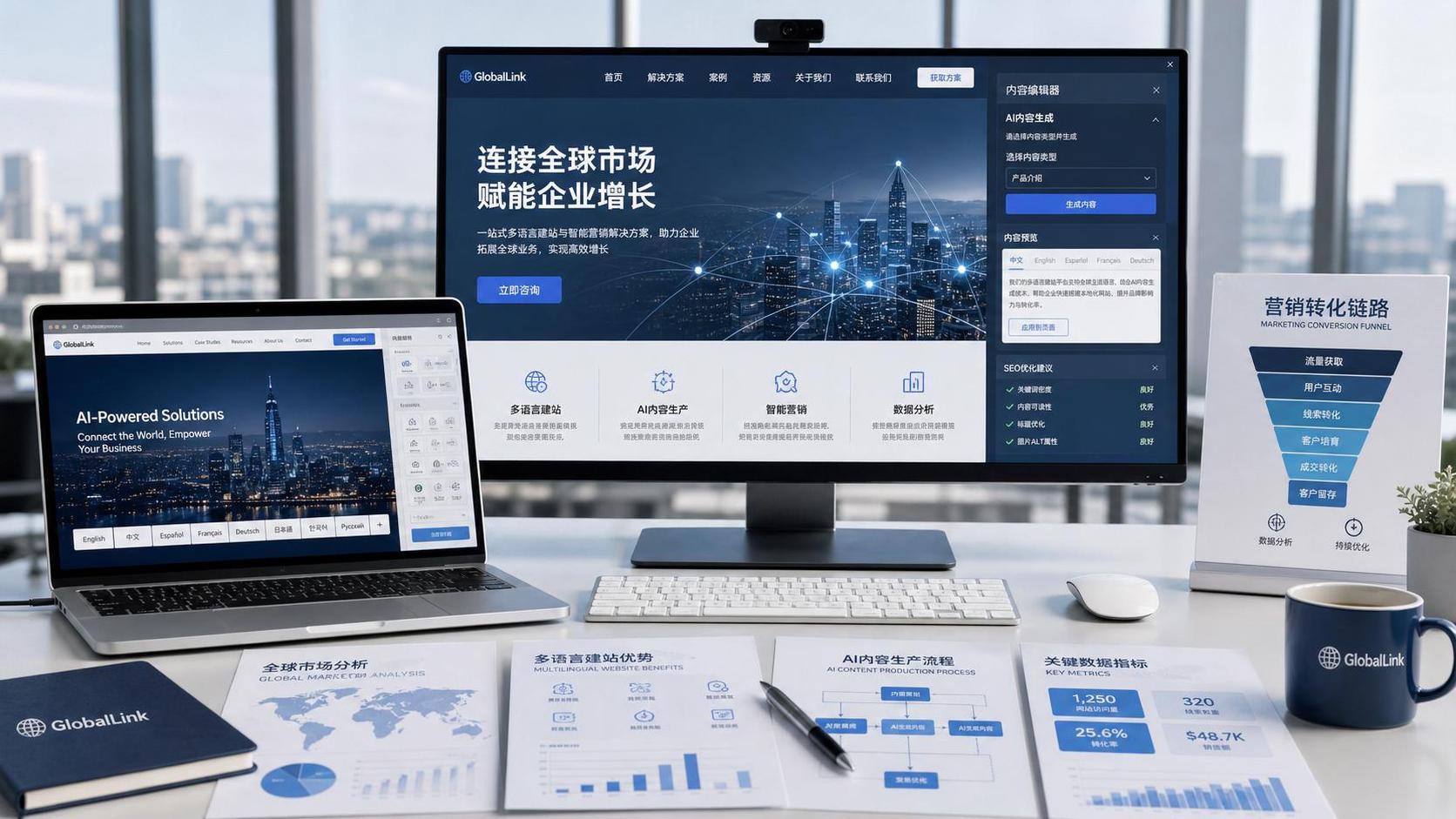
 How to assess foreign trade website development trends?Looking at 2026 changes from multilingual,AI content to conversion paths
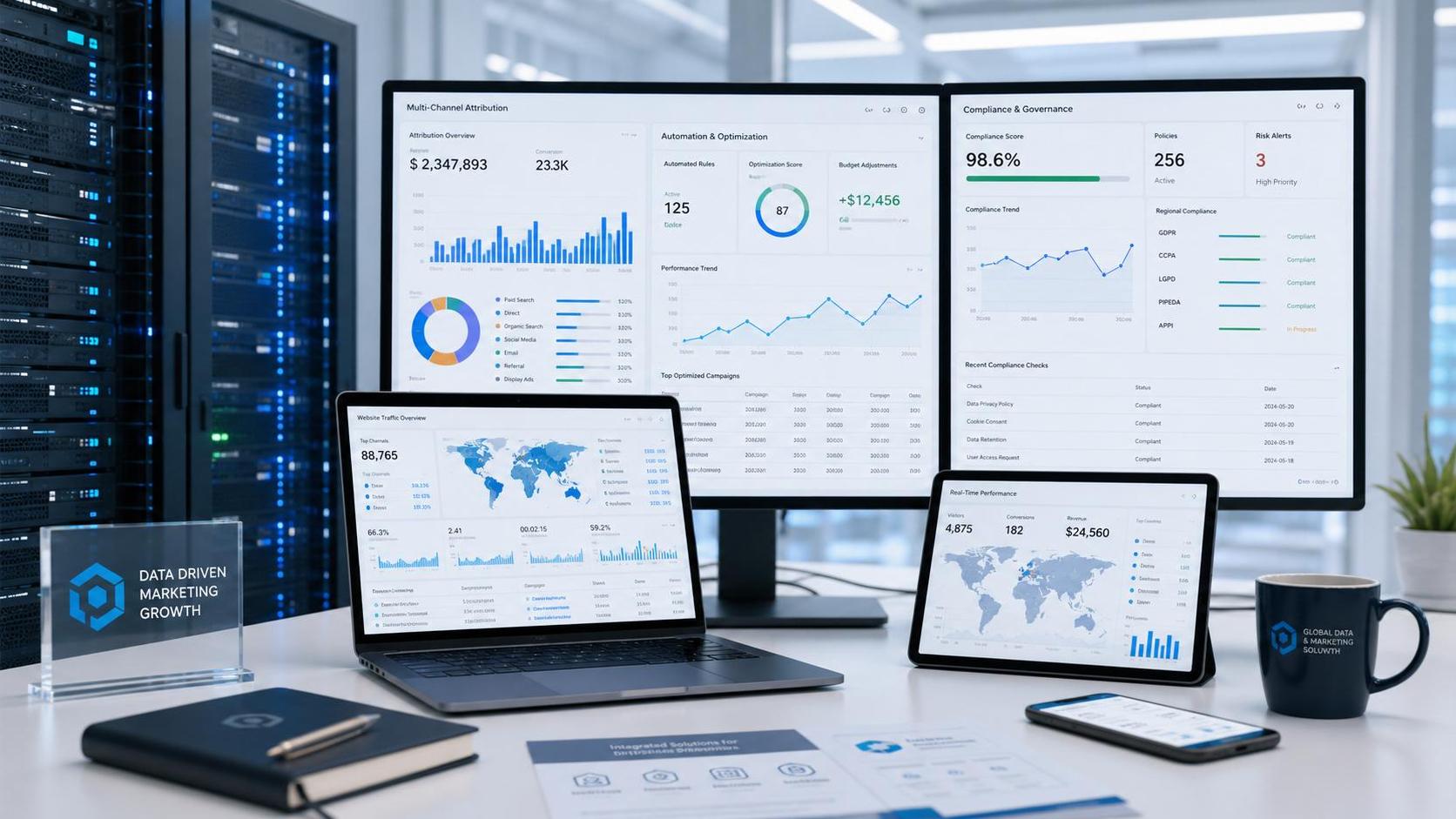
 What are the new trends in multilingual marketing data analytics tools in 2026? Focus on attribution、automation and compliance

Related Products
 EasyCamp SaaS Smart Website Marketing SystemE-Yingbao SaaS Smart Website Marketing System: AI-powered, zero-code website building. Rapidly launch multilingual independent e-commerce sites in just 10 minutes. Global server acceleration and AI-driven SEO optimization empower businesses to efficiently connect with global markets. The seamless integration of technology and user-friendly operation makes building e-commerce sites incredibly simple.
 AI+SEM Intelligent Advertising Marketing SystemAI+SEM drives intelligent ad creation, empowering full-funnel precision advertising marketing. The system automatically generates weekly/monthly reports, AI recommends keywords and target countries, monitors core metrics in real-time with intelligent alerts, and enables one-click high-conversion ad solutions to help quickly acquire customers and improve ROI.
 AI+SEO Dual Engine Optimization ServiceEasyWin AI+SEO Dual Engine Optimization System leverages AI-powered keyword mining, content generation, and comprehensive technical optimization to help foreign trade enterprises acquire high-quality organic traffic, significantly improving search rankings and conversion rates.
 AI+SNS Social Media Marketing SystemYingbao AI+SNS Social Media Marketing System - Precision social capture for the social media era. Supports one-click content synchronization across major platforms like Facebook and LinkedIn. AI intelligently rewrites posts for enhanced relevance. 24/7 AI customer service and user profiling analysis empower businesses to efficiently expand into global markets.
 AI+SEO营销解决方案易营宝AI+SEO营销解决方案,通过AI批量写作、智能生成TDK、精准关键词扩词等功能,全面优化网站SEO效果,提升流量与转化率。助力企业构建高效智能网站新生态。
 AI+SEM Advertising Marketing SolutionsAI+SEM Advertising Marketing Solution leverages AI technology to deeply empower SEM ad campaigns. It automatically generates weekly/monthly reports using AI, presenting account data across multiple dimensions for comprehensive insights into campaign performance and trends. The system precisely recommends keywords and target countries, intelligently generates high-conversion ad copy, and enables one-click activation of efficient campaign plans to help businesses rapidly acquire customers. Simultaneously, it monitors core metrics in real time, intelligently identifies abnormal fluctuations, and issues timely alerts to ensure stable, high-return advertising results.
 Domain Name ServicesEasyWin provides professional domain name services, including intelligent queries, one-stop registration, brand protection, and full lifecycle management, helping businesses build a digital brand image.
 EasyOperate B2C Cross-Border E-Commerce Platform & Independent WebsiteEasyStore B2C Cross-border E-commerce Independent Store is an intelligent website building and cross-border e-commerce integrated solution independently developed by EasyStore Information Technology (Beijing) Co., Ltd. The system is specially designed for small and medium-sized as well as large export enterprises, integrating 'website building, operation, marketing, advertising, and conversion' into one, helping enterprises quickly establish cross-border e-commerce independent stores to achieve brand globalization and global sales growth.
The platform supports multiple languages, multiple currencies, and multi-channel marketing, with built-in AI intelligent translation and SEO optimization systems, suitable for mainstream markets such as Southeast Asia, Europe and America, Latin America, and the Middle East, assisting Chinese manufacturing enterprises in efficiently deploying international e-commerce strategies. SSL证书易营宝提供专业SSL安全证书服务,包括单域名和泛域名证书,确保网站数据传输加密、身份验证和完整性保护,助力企业建立安全可信的在线业务环境。









