









- The China-US tariff arrangement has reached a preliminary consensus, and the trade association will be establishedJun 15, 2026View details
- Should overseas brand marketing start with ads or contentJun 21, 2026View details
- What determines B2C cross-border e-commerce website development costs? A breakdown of features, interfaces, and deployment methodsJun 17, 2026View details
- China-Morocco zero-tariff access, a breakthrough in the cost of Moroccan goods exports to ChinaJun 11, 2026View details
- What signal should be released for the suspension of exports to JapanJun 10, 2026View details
- China's May LNG imports rebounded, with increased volumes from Russia and Canada filling the Middle East supply gapJun 10, 2026View details
- Will GEO change its SEO strategy?Jun 04, 2026View details
- What types of businesses are end-to-end solutions suitable for?Jun 03, 2026View details
What growth challenges can AI+SNS marketing solutions address?
Peak traffic, soaring customer acquisition costs, and fragmented conversion paths are becoming the norm for business growth. AI+SNS marketing solutions help businesses improve brand exposure, lead quality, and global growth efficiency through intelligent insights, precise targeting, and continuous optimization.
The growth environment is being reshaped, and corporate marketing is entering a phase of "refined competition."
The era of acquiring customers through single-channel advertising and extensive, mass marketing is rapidly coming to an end. For the integrated website + marketing services industry, businesses are increasingly feeling three changes: First, the user decision-making paths of search and social media are merging, meaning brand awareness, content seeding, lead generation, and conversion are no longer independent processes; second, platform rules are constantly evolving, making it harder to acquire organic traffic, and advertising efficiency relies more heavily on data analysis and creative iteration; third, businesses are accelerating their overseas expansion and multi-regional operations, making localized communication, cross-platform collaboration, and data closure new competitive barriers.
Against this backdrop, AI+SNS marketing solutions are no longer just tools for "increasing exposure," but are gradually becoming important levers for enterprises to rebuild their growth models. They connect websites, content, social media accounts, advertising systems, and lead management, enabling marketing to move from fragmented execution to unified judgment, and from experience-driven to data-driven approaches.
Market signals indicate that AI+SNS marketing solutions are addressing several real-world challenges.
What business decision-makers care about most is not the technological concept itself, but what problems it actually solves. Based on current corporate marketing practices, AI+SNS marketing solutions primarily optimize the following types of growth pain points.
The most prominent problem is that "while many actions seem to be taken, it's difficult to actually generate results." For example, social media content may have exposure but no inquiries, websites may have visits but low conversion rates, and ads may have clicks but sales follow-up is difficult. The value of AI+SNS marketing solutions lies in putting these scattered metrics back into the same growth path for analysis and iteration.
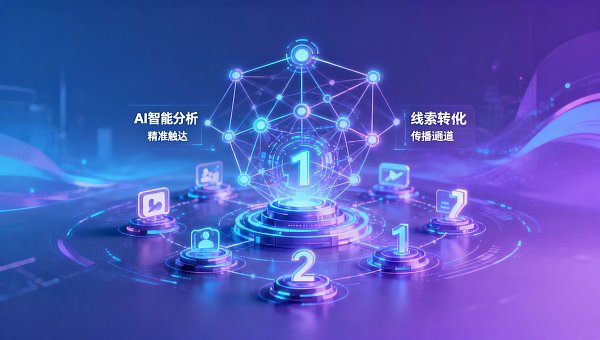
Four factors driving this trend are changing the logic of corporate marketing decisions.
Why have these kinds of solutions been mentioned more frequently in the past two years? It's not due to a single technological advancement, but rather a combination of multiple factors.
First, user attention continues to shift. Customers increasingly prefer to complete brand awareness, reputation comparison, and even initial screening on social media platforms. This means businesses cannot rely solely on their official websites but must move content touchpoints closer to the customer. Second, marketing performance evaluations increasingly emphasize return on investment (ROI). Management focuses more on the complete conversion from exposure to sales, rather than looking at isolated follower counts or clicks. Third, the increasing maturity of AI technology allows for faster implementation of user profiling, content recommendation, posting time assessment, comment analysis, and lead scoring. Finally, as businesses expand internationally, the efficiency of localized communication becomes a new growth variable.
For service providers like Yiyingbao Information Technology (Beijing) Co., Ltd., which has been deeply involved in the integrated website and marketing services field for ten years, the combination of technological innovation and localized services perfectly addresses the core needs of the current market. Enterprises are no longer satisfied with simply "building a website and opening a few accounts," but demand synergistic capabilities encompassing intelligent website building, SEO optimization, social media marketing, and advertising to support global growth.
Different types of businesses are affected differently.
While AI+SNS marketing solutions have a wide range of applications, companies at different stages and with different business models have different priorities. The key to determining whether an investment is worthwhile lies in identifying one's most pressing growth bottlenecks.
In other words, AI+SNS marketing solutions don't simply replace human intervention; rather, they help businesses allocate resources within a limited budget to nodes more likely to generate conversions. This ability to make informed decisions is becoming crucial for upgrading corporate marketing systems.
From "creating content" to "driving growth," restructuring the value chain is key.
Many companies mistakenly believe that the focus of social media marketing is simply on publishing content, but what truly impacts performance is the design of the workflow behind the content. A mature AI+SNS marketing solution typically involves continuous optimization around four stages: front-end, identifying audience interests and trending keywords through data analysis; mid-end, generating differentiated content and creative campaigns based on platform characteristics; back-end, improving conversion rates through website integration, form design, and customer service follow-up; and finally, continuously adjusting budgets and strategies through a review mechanism.
This is why businesses are increasingly emphasizing the integrated development of their websites and marketing strategies. Websites are not isolated display pages, but the core battleground for social media traffic conversion; social media is not merely a channel for brand communication, but an important supplement to website customer acquisition and search engine optimization. When the two are coordinated, brand messaging becomes more consistent, user paths are clearer, and leads are more easily retained.
At the business level, this "chain thinking" is even closely related to the broader innovation environment. For example, when formulating digital investment plans, some managers will refer to research related to industrial upgrading, policy incentives, and innovation returns. For instance, the ideas reflected in the research on how green taxation can help enterprises innovate and upgrade industries essentially point to a common proposition: how should enterprises exchange systematic investment for more sustainable growth efficiency?
What signals should businesses continue to pay attention to?
In the future, the development of AI+SNS marketing solutions will not remain merely at the level of "efficiency improvement tools," but will further impact enterprise marketing organizations, budget structures, and business collaboration methods. Decision-makers should at least pay close attention to the following signals.
First, is content increasingly reliant on data feedback to drive topic selection, rather than relying on experience? Second, is interaction data on social media platforms now able to guide website optimization, product presentation, and sales pitches? Third, does the marketing team possess cross-platform integration capabilities, rather than operating in silos? Fourth, has the company begun to prioritize "lead quality" over "traffic volume," reassessing the value of different channels?
If the above signals are strengthening, it indicates that businesses' demand for AI+SNS marketing solutions has gradually shifted from an option to a necessity. Especially in an environment of increased competition and tighter budgets, the ability to quickly discover effective channels and retain high-quality leads will directly impact the next stage of growth.
What judgments and preparatory actions are more suitable for businesses to take now?
From an execution perspective, companies shouldn't pursue a large and comprehensive approach from the outset. Instead, they should first establish a judgment framework around key issues. First, clarify whether the current growth bottleneck lies in traffic, content, conversion, or follow-up. Second, examine whether there are information gaps between the website, SEO, social media, and advertising. Third, establish basic data dashboards to at least clearly identify channel sources, conversion paths, and differences in lead quality. Fourth, prioritize key markets and key products, testing AI+SNS marketing solutions on a small scale before deciding to expand investment.
For companies aiming for a global footprint, localization capabilities should also be considered in their evaluation criteria. This includes multilingual content adaptation, strategies for different market platforms, analysis of user behavior differences, and local communication pacing. Technology can improve efficiency, but what truly determines effectiveness is whether the solution is tailored to the target market.
In conclusion: Instead of judging trends, it's better to first confirm these key questions.
The AI+SNS marketing solution has garnered attention not because of its novel concept, but because it directly addresses the most pressing growth challenges businesses face in an era of stagnant traffic: higher customer acquisition costs, more difficult conversions, more complex workflows, and greater globalization requirements. For business decision-makers, the real question is not "whether to do it," but rather "where to start, how to measure results, and how to integrate it with existing websites and marketing systems."
If businesses wish to further assess the impact of this trend on their operations, they should focus on identifying four key questions: Can existing traffic still generate stable conversions? Do social media and websites synergize? Does marketing data support rapid decision-making? Does the target market require stronger localized operations? By clearly understanding these questions, AI+SNS marketing solutions can truly evolve from mere tools into growth capabilities.
Related Articles



Related Products
 EasyCamp SaaS Smart Website Marketing SystemE-Yingbao SaaS Smart Website Marketing System: AI-powered, zero-code website building. Rapidly launch multilingual independent e-commerce sites in just 10 minutes. Global server acceleration and AI-driven SEO optimization empower businesses to efficiently connect with global markets. The seamless integration of technology and user-friendly operation makes building e-commerce sites incredibly simple.
 AI+SEM Intelligent Advertising Marketing SystemAI+SEM drives intelligent ad creation, empowering full-funnel precision advertising marketing. The system automatically generates weekly/monthly reports, AI recommends keywords and target countries, monitors core metrics in real-time with intelligent alerts, and enables one-click high-conversion ad solutions to help quickly acquire customers and improve ROI.
 AI+SEO Dual Engine Optimization ServiceEasyWin AI+SEO Dual Engine Optimization System leverages AI-powered keyword mining, content generation, and comprehensive technical optimization to help foreign trade enterprises acquire high-quality organic traffic, significantly improving search rankings and conversion rates.
 AI+SNS Social Media Marketing SystemYingbao AI+SNS Social Media Marketing System - Precision social capture for the social media era. Supports one-click content synchronization across major platforms like Facebook and LinkedIn. AI intelligently rewrites posts for enhanced relevance. 24/7 AI customer service and user profiling analysis empower businesses to efficiently expand into global markets.
 AI+SEO营销解决方案易营宝AI+SEO营销解决方案,通过AI批量写作、智能生成TDK、精准关键词扩词等功能,全面优化网站SEO效果,提升流量与转化率。助力企业构建高效智能网站新生态。
 AI+SEM Advertising Marketing SolutionsAI+SEM Advertising Marketing Solution leverages AI technology to deeply empower SEM ad campaigns. It automatically generates weekly/monthly reports using AI, presenting account data across multiple dimensions for comprehensive insights into campaign performance and trends. The system precisely recommends keywords and target countries, intelligently generates high-conversion ad copy, and enables one-click activation of efficient campaign plans to help businesses rapidly acquire customers. Simultaneously, it monitors core metrics in real time, intelligently identifies abnormal fluctuations, and issues timely alerts to ensure stable, high-return advertising results.
 Domain Name ServicesEasyWin provides professional domain name services, including intelligent queries, one-stop registration, brand protection, and full lifecycle management, helping businesses build a digital brand image.
 EasyOperate B2C Cross-Border E-Commerce Platform & Independent WebsiteEasyStore B2C Cross-border E-commerce Independent Store is an intelligent website building and cross-border e-commerce integrated solution independently developed by EasyStore Information Technology (Beijing) Co., Ltd. The system is specially designed for small and medium-sized as well as large export enterprises, integrating 'website building, operation, marketing, advertising, and conversion' into one, helping enterprises quickly establish cross-border e-commerce independent stores to achieve brand globalization and global sales growth.
The platform supports multiple languages, multiple currencies, and multi-channel marketing, with built-in AI intelligent translation and SEO optimization systems, suitable for mainstream markets such as Southeast Asia, Europe and America, Latin America, and the Middle East, assisting Chinese manufacturing enterprises in efficiently deploying international e-commerce strategies. SSL证书易营宝提供专业SSL安全证书服务,包括单域名和泛域名证书,确保网站数据传输加密、身份验证和完整性保护,助力企业建立安全可信的在线业务环境。









