









- What stages does the cross-border services ecosystem include? How do website building, promotion, payment, and compliance work togetherJun 22, 2026View details
- How will email marketing costs change in 2026Jun 22, 2026View details
- The China-US tariff arrangement has reached a preliminary consensus, and the trade association will be establishedJun 15, 2026View details
- Should overseas brand marketing start with ads or contentJun 21, 2026View details
- What determines B2C cross-border e-commerce website development costs? A breakdown of features, interfaces, and deployment methodsJun 17, 2026View details
- China-Morocco zero-tariff access, a breakthrough in the cost of Moroccan goods exports to ChinaJun 11, 2026View details
- What signal should be released for the suspension of exports to JapanJun 10, 2026View details
- China's May LNG imports rebounded, with increased volumes from Russia and Canada filling the Middle East supply gapJun 10, 2026View details
What New Changes Are Coming to Social Media Marketing in 2026
In 2026, social media marketing will no longer be as simple as “posting more content and running more ads.” What will truly set companies apart is whether they can integrate AI-generated capabilities, platform data capabilities, content credibility, and the conversion funnel. For business decision-makers, the biggest concerns are where budgets can be invested more effectively, which platforms are still worth continued investment, and how to reduce customer acquisition costs and trial-and-error risks; for execution teams and operations staff, the greater focus is on how to actually carry out Meta ad placement techniques, Facebook ad optimization, LinkedIn B2B marketing, and YouTube video marketing so that traffic can be turned into inquiries, orders, and long-term assets.
Let’s start with the overall judgment: social media marketing in 2026 will see five clear changes—algorithms will place more emphasis on “authentic engagement and content quality,” AI will evolve from an auxiliary tool into a growth collaboration system, cross-platform advertising and content coordination will become more tightly connected, the importance of private traffic and official website conversion capabilities will rise significantly, and compliance and brand safety will become the foundation of marketing. Whoever can establish a closed loop of “content + advertising + website + data” earlier will have a better chance of achieving stable growth in an environment where traffic costs continue to rise.
1. The biggest change in social media marketing in 2026 is not that the platforms have changed, but that the logic of growth has changed
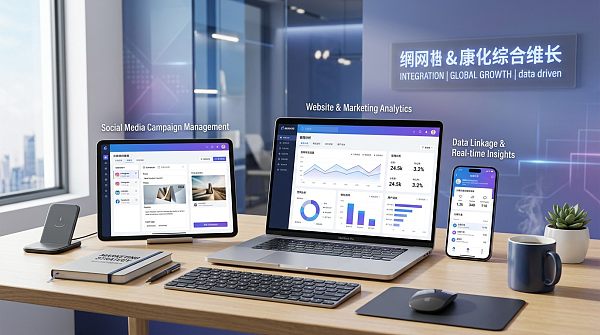
Many companies think the change in social media marketing is only that “there are more new features” or “short videos have become more important,” but from the perspective of actual business operations, the core change is that platforms are redefining the logic of traffic distribution.
In the past, companies could still rely on frequent posting, broad content seeding, and simple ad placement to gain exposure; but by 2026, platforms will pay more attention to the following dimensions:
- Whether the content truly solves user problems: The organic reach of pure brand promotional content will become increasingly limited, while educational, comparison-based, scenario-based, and case-based content will be more likely to gain sustained distribution.
- Whether engagement is authentic: Likes, dwell time, comment quality, and secondary dissemination after sharing will all become more important than exposure volume alone.
- Whether the conversion path is clear: Platforms will increasingly favor supporting high-quality paths such as “see content—click to learn more—enter website/form—submit lead.”
- Whether brand credibility is strong enough: Especially for B2B companies, cross-border brands, and businesses involving safety and quality scenarios, platforms will impose higher requirements on account stability, content professionalism, and the quality of user feedback.
This means that in 2026, the core of social media marketing will no longer simply be “competing for traffic,” but “using more precise content and more efficient funnels to achieve results.” For companies, social platforms should no longer be viewed merely as promotional channels, but as integrated entry points for brand awareness, customer education, lead generation, and sales conversion.
2. The question companies care about most: where should the budget go, and which platforms are still worth investing in
From the perspective of business management and operations, the most practical question in 2026 will not be “whether to do social media,” but “which goals each platform is best suited for.”
The Meta ecosystem will remain an important battlefield for global customer acquisition, especially suitable for cross-border e-commerce, overseas brand expansion, DTC product testing, and remarketing. Its strengths lie in its massive user base, mature advertising tools, and rich audience targeting labels, making it suitable for cold-start campaigns and scaled ad placement. But the challenges are also obvious: homogenized competition is intense, creative fatigue happens faster, and account stability and data feedback capabilities will have a greater impact on results.
Facebook ad optimization in 2026 will depend even more on the quality of event feedback, creative combination testing, and landing page relevance. It will no longer be true that the highest bid wins; rather, whoever has clearer data and pages that better match user expectations after search and click will be more likely to convert clicks into valid inquiries.
LinkedIn B2B marketing will further strengthen its value in the B2B field. For industrial products, equipment manufacturing, software services, and enterprise solution providers, LinkedIn is not only a brand showcase channel, but also an important entry point for building professional trust and reaching buyers and decision-makers. Although the cost per lead is often higher than on mass-traffic platforms, lead quality is usually higher, making it especially suitable for businesses with long decision cycles.
YouTube video marketing will continue to grow stronger, not only because video content is popular, but because video is increasingly taking on the role of “educating customers, building trust, and improving search visibility.” Product demonstrations, installation instructions, after-sales Q&A, case reviews, and industry knowledge interpretation are all highly valuable types of content for companies.
Simply put, if a company hopes to test the market quickly and scale order volume, it can focus on Meta; if it wants to acquire high-quality B2B customers, LinkedIn remains key; if it wants to build long-term content assets and brand trust, the value of YouTube will only continue to grow.
3. Why Meta ad placement techniques in 2026 will rely more on “data collaboration” rather than gut-feel experience
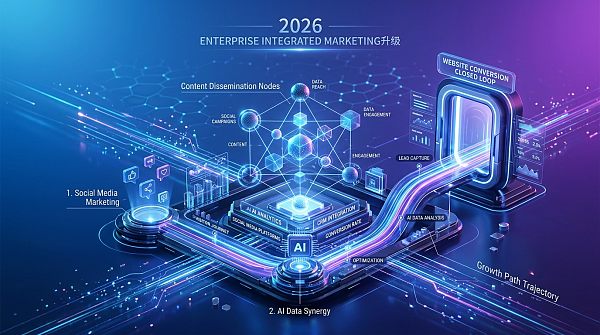
In 2026, the focus of Meta ad placement techniques will shift from “how to tweak parameters” to “how to help the system learn more accurately.” In other words, the advertising system itself is becoming increasingly intelligent, and what truly determines campaign performance is often not how complex the manual operations are, but whether the signals fed into the system are high quality.
If companies want to improve campaign performance, it is recommended to focus on the following aspects:
- Whether conversion event settings are accurate
If a company only optimizes for clicks, the system will ultimately only help you find “people who are easy to click”; if what is being optimized is form submissions, consultation requests, add-to-cart actions, or completed purchases, the system is more likely to find audiences with real value. - Whether the creative testing mechanism is systematic
In 2026, advertising creatives must be refreshed more frequently. Short videos, carousel images, UGC-style content, scenario comparison visuals, and customer testimonial creatives all need continuous testing, rather than relying on one or two sets of creatives to run long term. - Whether the landing page is consistent with the ad promise
If what users see after clicking does not match the ad copy, the bounce rate will be very high, and ad costs will naturally rise. This is also why many companies appear to have decent ad clicks on the surface, but conversions remain unsatisfactory. - Whether remarketing is refined enough
Users who visited a product page, watched 50% of a video, downloaded materials, or inquired without converting should be handled with different remarketing strategies rather than being retargeted uniformly. - Whether first-party data is being accumulated continuously
Social platform advertising is becoming increasingly dependent on a company’s own data assets. Whoever can continuously accumulate customer behavior data, inquiry quality, converted leads, and repurchase records will enable their advertising system to become more and more accurate over time.
For many companies, the problem is not that they do not know how to run ads, but that they have not established a closed loop of “advertising—page—data—review.” Only by connecting the website, content, keywords, search intent, and social media advertising can Meta ad placement techniques truly be transformed into replicable growth capabilities.
This is also why more and more companies are beginning to build website SEO and social media landing pages simultaneously. For example, for cross-border e-commerce independent sites or B2B corporate websites, by leveraging SEO optimization capabilities to combine keyword recommendations, long-tail keyword expansion, TDK generation, industry terminology adaptation, and original content production, companies can significantly improve the conversion efficiency after ad traffic enters the website, reducing the problem of “paying for clicks but failing to keep visitors on the page.”
4. Why LinkedIn B2B marketing and YouTube video marketing will become the key to high-quality growth
If we say
Related Articles
 Are you really hitting the right target with Google FB for truck bed exports?
 It's easy to turn a foreign trade website into a piece of art, but it's the ultimate culprit behind your order decline
 Foreign trade website efficiency revolution! Yiyingbao component upgrade + inquiry optimization, inquiries surge!



Related Products
 EasyCamp SaaS Smart Website Marketing SystemE-Yingbao SaaS Smart Website Marketing System: AI-powered, zero-code website building. Rapidly launch multilingual independent e-commerce sites in just 10 minutes. Global server acceleration and AI-driven SEO optimization empower businesses to efficiently connect with global markets. The seamless integration of technology and user-friendly operation makes building e-commerce sites incredibly simple.
 AI+SEM Intelligent Advertising Marketing SystemAI+SEM drives intelligent ad creation, empowering full-funnel precision advertising marketing. The system automatically generates weekly/monthly reports, AI recommends keywords and target countries, monitors core metrics in real-time with intelligent alerts, and enables one-click high-conversion ad solutions to help quickly acquire customers and improve ROI.
 AI+SEO Dual Engine Optimization ServiceEasyWin AI+SEO Dual Engine Optimization System leverages AI-powered keyword mining, content generation, and comprehensive technical optimization to help foreign trade enterprises acquire high-quality organic traffic, significantly improving search rankings and conversion rates.
 AI+SNS Social Media Marketing SystemYingbao AI+SNS Social Media Marketing System - Precision social capture for the social media era. Supports one-click content synchronization across major platforms like Facebook and LinkedIn. AI intelligently rewrites posts for enhanced relevance. 24/7 AI customer service and user profiling analysis empower businesses to efficiently expand into global markets.
 AI+SEO营销解决方案易营宝AI+SEO营销解决方案,通过AI批量写作、智能生成TDK、精准关键词扩词等功能,全面优化网站SEO效果,提升流量与转化率。助力企业构建高效智能网站新生态。
 AI+SEM Advertising Marketing SolutionsAI+SEM Advertising Marketing Solution leverages AI technology to deeply empower SEM ad campaigns. It automatically generates weekly/monthly reports using AI, presenting account data across multiple dimensions for comprehensive insights into campaign performance and trends. The system precisely recommends keywords and target countries, intelligently generates high-conversion ad copy, and enables one-click activation of efficient campaign plans to help businesses rapidly acquire customers. Simultaneously, it monitors core metrics in real time, intelligently identifies abnormal fluctuations, and issues timely alerts to ensure stable, high-return advertising results.
 Domain Name ServicesEasyWin provides professional domain name services, including intelligent queries, one-stop registration, brand protection, and full lifecycle management, helping businesses build a digital brand image.
 EasyOperate B2C Cross-Border E-Commerce Platform & Independent WebsiteEasyStore B2C Cross-border E-commerce Independent Store is an intelligent website building and cross-border e-commerce integrated solution independently developed by EasyStore Information Technology (Beijing) Co., Ltd. The system is specially designed for small and medium-sized as well as large export enterprises, integrating 'website building, operation, marketing, advertising, and conversion' into one, helping enterprises quickly establish cross-border e-commerce independent stores to achieve brand globalization and global sales growth.
The platform supports multiple languages, multiple currencies, and multi-channel marketing, with built-in AI intelligent translation and SEO optimization systems, suitable for mainstream markets such as Southeast Asia, Europe and America, Latin America, and the Middle East, assisting Chinese manufacturing enterprises in efficiently deploying international e-commerce strategies. SSL证书易营宝提供专业SSL安全证书服务,包括单域名和泛域名证书,确保网站数据传输加密、身份验证和完整性保护,助力企业建立安全可信的在线业务环境。









