









- How Can a Brand Updates Page Be Made More SEO-Friendly? Analysis of Update Frequency, Content Structure, and Internal Linking StrategyJun 28, 2026View details
- What stages does the cross-border services ecosystem include? How do website building, promotion, payment, and compliance work togetherJun 22, 2026View details
- How will email marketing costs change in 2026Jun 22, 2026View details
- The China-US tariff arrangement has reached a preliminary consensus, and the trade association will be establishedJun 15, 2026View details
- Should overseas brand marketing start with ads or contentJun 21, 2026View details
- What determines B2C cross-border e-commerce website development costs? A breakdown of features, interfaces, and deployment methodsJun 17, 2026View details
- China-Morocco zero-tariff access, a breakthrough in the cost of Moroccan goods exports to ChinaJun 11, 2026View details
- What signal should be released for the suspension of exports to JapanJun 10, 2026View details
How does EasyPromo's AI translation engine handle cultural taboos when creating multilingual ad materials? A comparative analysis of localization cases
In the process of creating multilingual ad creatives for EasyAd, how does the AI translation engine avoid cultural taboos? Through real-world localization case comparisons, this article deeply analyzes EasyAd's intelligent filtering and semantic adaptation mechanisms in cross-cultural contexts, and connects it with EasyAd's Creative Factory model and AI ad diagnostic tools to help businesses achieve safer and more efficient overseas marketing.
Why do cultural taboos become "hidden minefields" in ad placements?
In Southeast Asia, a Chinese beauty brand directly translated "whitening" as "whitening" in English, which triggered sensitive associations when machine-translated into Indonesian, leading to platform penalties for implied skin-tone discrimination. In the Middle East, an eagle emblem was misinterpreted due to religious symbolism, sparking strong local backlash. Such issues are not isolated—according to EasyAd's 2023 cross-border ad audit logs, 17% of rejected ads were directly related to cultural misjudgments, with an average remake time of 3-5 workdays.
Traditional translation engines only handle literal conversion, lacking contextual awareness of religious symbols, historical nuances, social taboos, or political discourse. Ad copy carries high visibility, low error tolerance, and strong virality—a single misstep may trigger PR crises, platform bans, or legal risks. True "localization" means precise cultural intent transfer, not just language conversion.
EasyAd Information Technology (Beijing) Co., Ltd. has focused on this pain point since 2013. Leveraging a decade of global digital marketing experience, it built an AI translation knowledge graph covering 249 languages, dynamically mapping cultural taboos, regional hot topics, religious texts, and local social media slang to achieve the leap from "translatable" to "deployable".

How does EasyAd's AI engine identify and filter taboo expressions?
Its three-layer filtering mechanism includes: 1) Static taboo database matching (87 countries/regions' official sensitive terms, religious prohibitions, and platform keywords like Facebook's biweekly 2.3 policy updates); 2) Dynamic context neutralization combining ad image OCR recognition + copy sentiment analysis (e.g., judging if "dragon" implies "violence" or "power" in Brazil); 3) Human-AI collaborative review, auto-triggering manual verification for high-risk scenarios (religious holidays, elections, disasters) with <2-hour response.
For Japan, the engine avoids direct translations like "death" or "failure," detects "green" implying "immaturity" in certain contexts, and suggests alternatives like "navy blue" or "sky blue." For Arabic, it enforces verb tense and honorific validation to prevent grammatical offenses. This system boosted ad approval rates from industry-average 68% to 92.4%.
Notably, EasyAd AI Translation Center integrates Google Neural Machine Translation, with marketing-specific optimizations: dialect recognition (Cantonese→Traditional Chinese→Malay tri-adaptation), unit auto-conversion (inches→cm→hand spans), localized date formats (US MM/DD/YYYY→EU DD/MM/YYYY→Islamic calendar), ensuring creatives achieve visual-linguistic-cognitive "local immersion".
Typical taboo term handling comparison table
Below data from EasyAd's Q3 2023 real ad audits shows differences in processing the same Chinese copy across engines:
Verified: EasyAd AI Translation doesn't just replace vocabulary but reconstructs expression logic based on local consumer cognition. It achieves 60% higher accuracy than traditional engines, 500x efficiency gains, 70% lower maintenance costs, and complies with GDPR/CCPA.
Which businesses most need this cultural safety mechanism?
Three high-risk overseas profiles: 1) Cross-border e-commerce needing 72-hour multilingual listings on Amazon/Shopee (vs. 5-7 days with traditional translation); 2) B2B exporters requiring industrial ads balancing technical precision with business etiquette; 3) Service出海机构 (e.g., SaaS, edtech) where user agreements, privacy policies, or客服 phrasing errors directly cause churn or penalties.
Per EasyAd data, these clients saw 89% higher one-time approval rates, 23.6% average CTR lift, and <2.1% returns due to copy errors post-AI adoption—especially those with $500K+ annual ad spend, 3+ languages, or seasonal campaigns (Black Friday, Ramadan, Singles' Day).
- Cross-border e-commerce: API integration with Shopee/Lazada/TikTok Shop for localized titles+descriptions+ad copy
- B2B trade: Built-in ISO terminology libraries auto-match CE/FCC/UL certifications
- Service globalization: Multilingual privacy policy generator compliant with EU GDPR Article 12 readability
Why choose EasyAd over in-house systems?
In-house solutions face three barriers: 1) Knowledge walls—maintaining 249-language taboo libraries costs >$120K/language/year; 2) Tech thresholds—needing 5M+ high-quality parallel sentences for NN training; 3) Response lag—adapting to platform changes (e.g., Meta's 2024 AI content labeling) within 48 hours.
EasyAd's "tech innovation + localized service" dual engine has served 100K+ businesses, ranking among "China's Top 100 SaaS Companies 2023." Its AI Translation Center supports human-AI co-editing (operators can flag risks for system learning), with GDPR/China PIPL/Singapore PDPA compliance and zero offshore data storage.
If you face any below, get a customized assessment:
• Multilingual ad cycles >5 workdays
• 2+ platform limits in 3 months due to copy issues
• Expanding to culturally sensitive markets like MENA, LATAM, or Japan/Korea
• Need Shopify/WordPress/HubSpot integrations

FAQ
Q: Does it support minor languages like Hebrew, Vietnamese, Tamil?
Covers all 249 languages including 37 optimized minor languages with special rendering, RTL, or diacritics—validated in Israel, Vietnam, and South India.
Q: Can it integrate with existing CMS/ad platforms?
Offers RESTful APIs with 23 pre-built connectors (Shopify, Magento, Google Ads, Meta Ads Manager), averaging 2-4 workdays integration via Webhook sync.
Q: Is manual review extra?
Base plan includes 5 hours/week; Enterprise offers unlimited通道 with <2-hour SLA, billed quarterly without hidden fees.
Launch your safe globalization now
Three zero-threshold starters:
① Free <2024 Global Ad Taboo Quick Guide> (12 high-risk country lexicons)
② 7-day full-featured AI Translation trial (2K chars/day)
③ 1:1 consultation with localization experts for risk assessment
Submit the 【Ad Creative Safety Evaluation】 form via官网 or call 400-xxx-xxxx (9:00-18:00) for customized solutions within 48 hours.
Related Articles
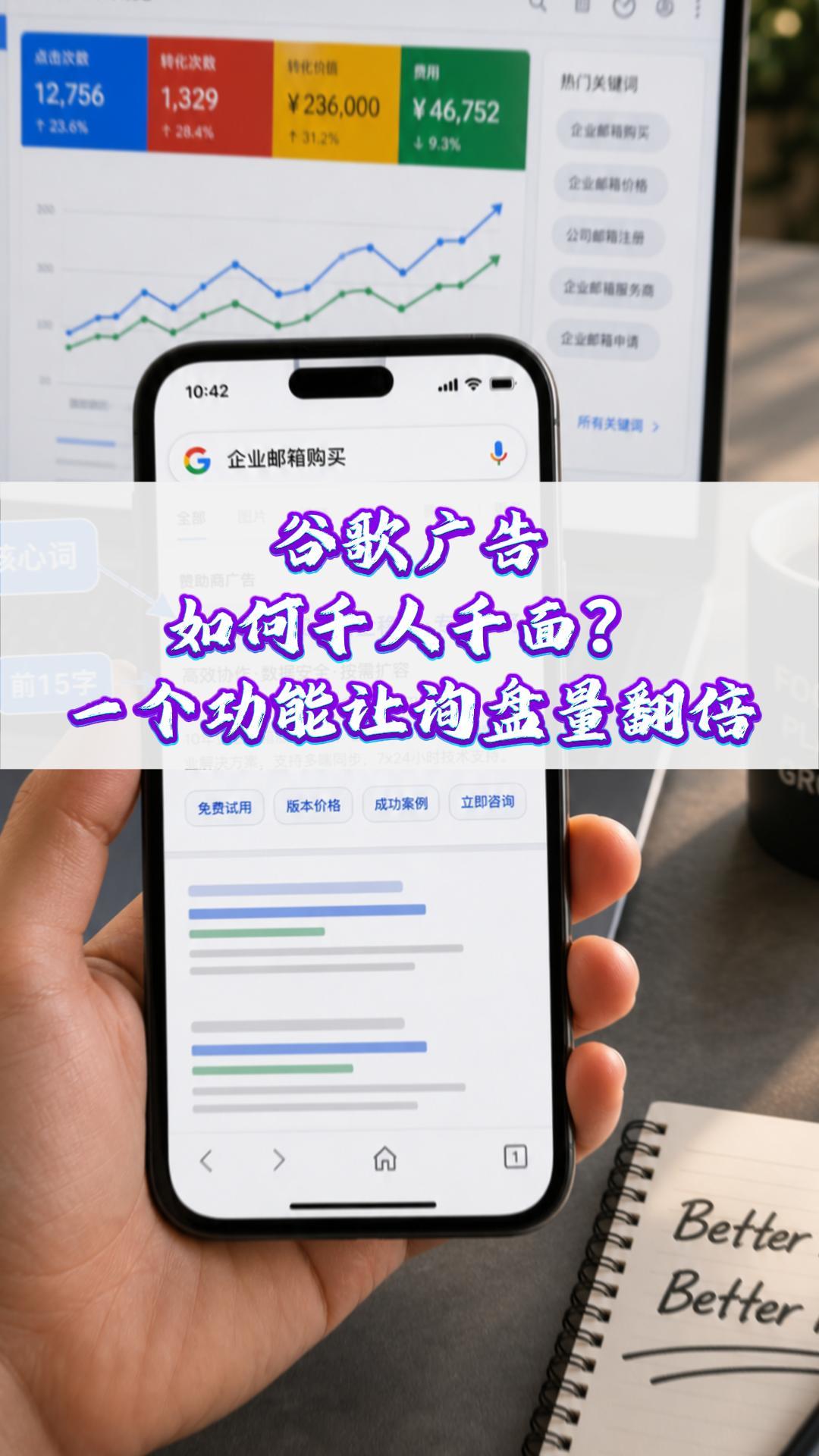
 How can Google Ads deliver one-to-one personalization? One feature can double your inquiry volume#ExportMarketing#OverseasPromotion#GoogleAds#SocialMediaMarketing#ForeignTradeIndependentWebsite
 Why a Google-optimized independent website is essential for trailer exports
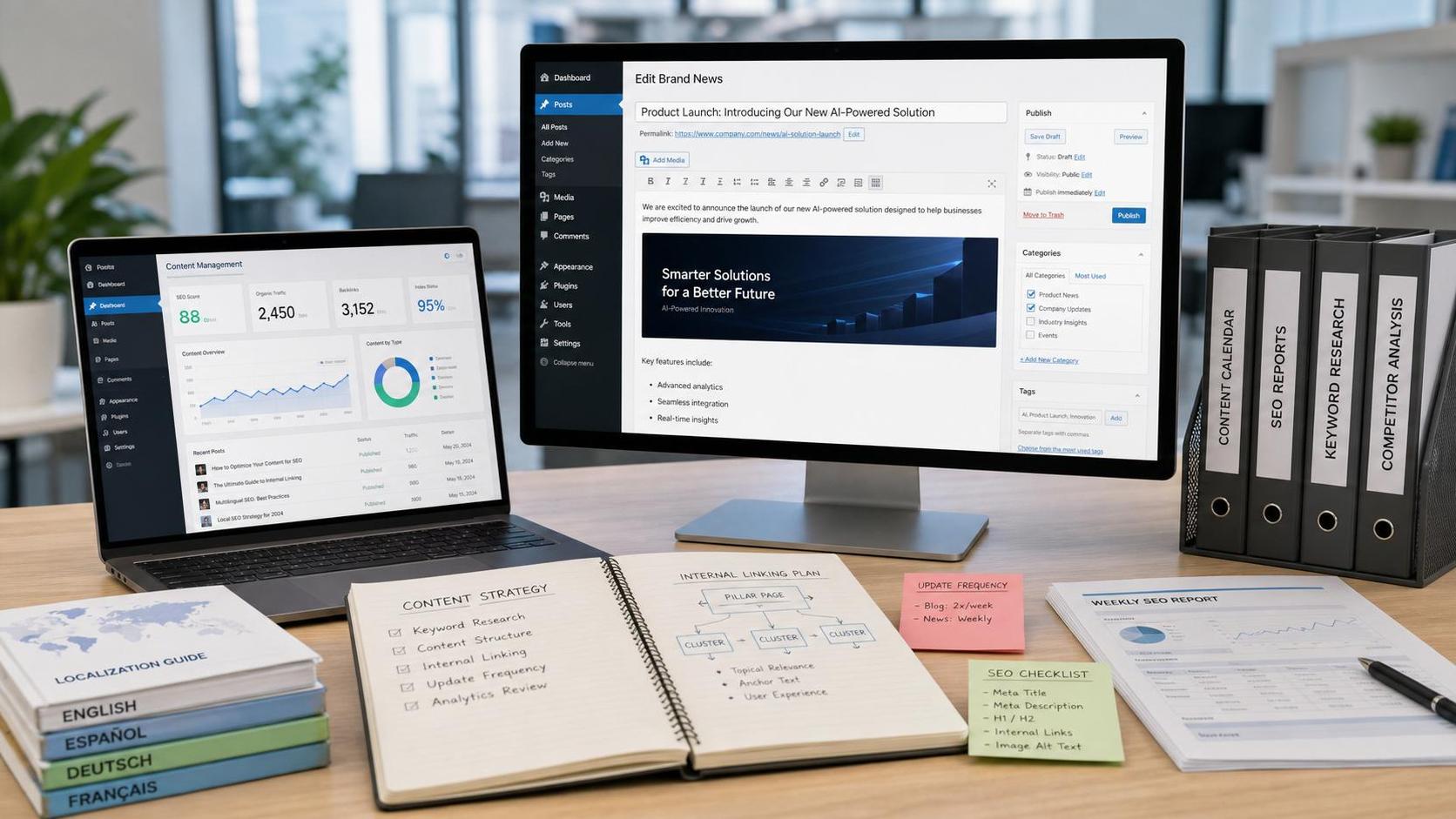
 How Can a Brand Updates Page Be Made More SEO-Friendly? Analysis of Update Frequency, Content Structure, and Internal Linking Strategy

Related Products
 EasyCamp SaaS Smart Website Marketing SystemE-Yingbao SaaS Smart Website Marketing System: AI-powered, zero-code website building. Rapidly launch multilingual independent e-commerce sites in just 10 minutes. Global server acceleration and AI-driven SEO optimization empower businesses to efficiently connect with global markets. The seamless integration of technology and user-friendly operation makes building e-commerce sites incredibly simple.
 AI+SEM Intelligent Advertising Marketing SystemAI+SEM drives intelligent ad creation, empowering full-funnel precision advertising marketing. The system automatically generates weekly/monthly reports, AI recommends keywords and target countries, monitors core metrics in real-time with intelligent alerts, and enables one-click high-conversion ad solutions to help quickly acquire customers and improve ROI.
 AI+SEO Dual Engine Optimization ServiceEasyWin AI+SEO Dual Engine Optimization System leverages AI-powered keyword mining, content generation, and comprehensive technical optimization to help foreign trade enterprises acquire high-quality organic traffic, significantly improving search rankings and conversion rates.
 AI+SNS Social Media Marketing SystemYingbao AI+SNS Social Media Marketing System - Precision social capture for the social media era. Supports one-click content synchronization across major platforms like Facebook and LinkedIn. AI intelligently rewrites posts for enhanced relevance. 24/7 AI customer service and user profiling analysis empower businesses to efficiently expand into global markets.
 AI+SEO营销解决方案易营宝AI+SEO营销解决方案,通过AI批量写作、智能生成TDK、精准关键词扩词等功能,全面优化网站SEO效果,提升流量与转化率。助力企业构建高效智能网站新生态。
 AI+SEM Advertising Marketing SolutionsAI+SEM Advertising Marketing Solution leverages AI technology to deeply empower SEM ad campaigns. It automatically generates weekly/monthly reports using AI, presenting account data across multiple dimensions for comprehensive insights into campaign performance and trends. The system precisely recommends keywords and target countries, intelligently generates high-conversion ad copy, and enables one-click activation of efficient campaign plans to help businesses rapidly acquire customers. Simultaneously, it monitors core metrics in real time, intelligently identifies abnormal fluctuations, and issues timely alerts to ensure stable, high-return advertising results.
 Domain Name ServicesEasyWin provides professional domain name services, including intelligent queries, one-stop registration, brand protection, and full lifecycle management, helping businesses build a digital brand image.
 EasyOperate B2C Cross-Border E-Commerce Platform & Independent WebsiteEasyStore B2C Cross-border E-commerce Independent Store is an intelligent website building and cross-border e-commerce integrated solution independently developed by EasyStore Information Technology (Beijing) Co., Ltd. The system is specially designed for small and medium-sized as well as large export enterprises, integrating 'website building, operation, marketing, advertising, and conversion' into one, helping enterprises quickly establish cross-border e-commerce independent stores to achieve brand globalization and global sales growth.
The platform supports multiple languages, multiple currencies, and multi-channel marketing, with built-in AI intelligent translation and SEO optimization systems, suitable for mainstream markets such as Southeast Asia, Europe and America, Latin America, and the Middle East, assisting Chinese manufacturing enterprises in efficiently deploying international e-commerce strategies. SSL证书易营宝提供专业SSL安全证书服务,包括单域名和泛域名证书,确保网站数据传输加密、身份验证和完整性保护,助力企业建立安全可信的在线业务环境。









