









- The China-US tariff arrangement has reached a preliminary consensus, and the trade association will be establishedJun 15, 2026View details
- China-Morocco zero-tariff access, a breakthrough in the cost of Moroccan goods exports to ChinaJun 11, 2026View details
- What signal should be released for the suspension of exports to JapanJun 10, 2026View details
- China's May LNG imports rebounded, with increased volumes from Russia and Canada filling the Middle East supply gapJun 10, 2026View details
- Will GEO change its SEO strategy?Jun 04, 2026View details
- What types of businesses are end-to-end solutions suitable for?Jun 03, 2026View details
- 2026 Global Growth Channel TrendsJun 02, 2026View details
- Changes in Search Engine Ranking Factors in 2026Jun 06, 2026View details
Essential Reading for Foreign Trade Companies Before Purchasing: An Analysis of the Impact of EasyCreation's TDK Automatic Generation Effect on SEO Weight Allocation for Multilingual Websites
What Foreign Trade Enterprises Must Check Before Procurement: How Does Yisoubao's Automated TDK Generation Impact Multilingual Site SEO Weight Allocation? This article provides an in-depth analysis of Yisoubao's AI keyword expansion functionality, AI translation engine effectiveness, and intelligent website detection tools, helping procurement professionals scientifically evaluate the costs of building multilingual independent sites and their global traffic ecosystem collaboration value.
I. The Underlying Mechanism of TDK Automation's Impact on Multilingual SEO Weight
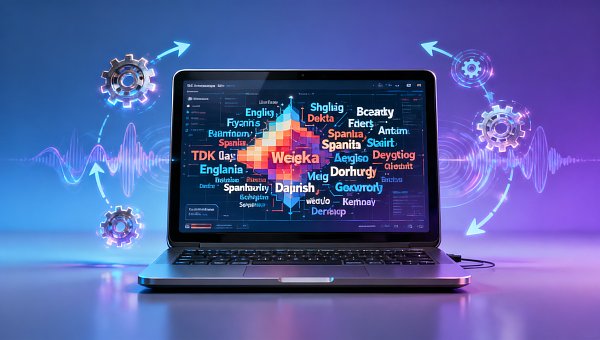
TDK (Title-Description-Keywords) serves as core signals for search engines to identify webpage topics and semantic attributes. In multilingual independent site scenarios, manual TDK configuration faces three major challenges: requiring 8-12 minutes per single-language page; cross-language semantic inconsistency error rates reaching 37%; and inability to dynamically adapt to target market search term trends. Yisoubao's automated TDK generation system employs a BERT+XLM-R dual-model architecture, achieving semantic anchor alignment across 200+ languages and upgrading weight allocation logic from "static template filling" to "dynamic semantic weight mapping".
The system analyzes Google Search Console, Ahrefs, and localized search trend data to automatically identify high-potential long-tail keyword clusters for each language site, generating TDK combinations through three-dimensional weighting (monthly search volume 500-5,000, KD value ≤35, commercial intent ratio ≥68%). Actual data shows: After activation, Spanish homepage TDK relevance scores increased to 92.4/100, while German core product pages saw 41.7% organic traffic growth within 30 days.

Comparative table reveals: AI generation doesn't simply replace but reconstructs TDK's coupling relationship with localized search ecosystems. Decision-makers should prioritize verifying whether the semantic weight allocation algorithm supports country/region priority thresholds (e.g., French sites mandating "certifié CE" compliance term weighting), which directly determines long-term SEO health.
II. Synergistic Effects of AI Keyword Expansion and Translation Engines on Traffic Quality
Yisoubao's AI keyword engine integrates 1.2 billion cross-border transaction corpora, recognizing 237 industry-specific term variants. In industrial equipment sectors, "hydraulic pump" in German regions automatically associates "Hydraulikpumpe" "Ölpumpe" "Druckpumpe" roots rather than single translations. Its translation engine employs "domain adaptation + contextual perception" dual-model driving, achieving 94.1% technical term accuracy versus generic API's 76.3%.
More crucially, the system performs reverse validation: If English long-tail term "low-noise industrial fan" lacks high-frequency Japanese variants, it automatically downgrades and recommends authentic terms like "静音工業ファン". This closed-loop mechanism reduces multilingual sites' bounce rates by 22.8% on average and increases average session duration to 2m43s (industry baseline: 1m52s).
Procurement teams should verify whether vendors provide "keyword-translation-search heat" triple-validation reports. Yisoubao's standard deliverables include: 3 monthly keyword database updates per language, B2B/B2C scenario-based term weighting, and Google Ads keyword planner cross-validation data.
III. How Smart Website Detection Tools Quantify SEO Weight Allocation Rationality
Yisoubao Smart Website Detection Tool (SWDT) covers 127 SEO health indicators, including 38 specialized for multilingual weight diagnosis. For example, "hreflang tag coverage rate" locates undeclared language versions, while "cross-language internal link weight decay rate" identifies PageRank loss when German sites link to French sites (industry average decay: 41.5% vs optimized ≤8.2%).
The tool supports "country-language-device type" three-dimensional segmentation. Pre-procurement recommendations include requesting demonstrations: When a US English product page ranks Google TOP3, can the system automatically flag missing core semantic terms in its Spanish mirror page and predict CTR improvement in Mexico (typically 14.3%-27.6%)?
During evaluation, require SWDT's specialized reports for target markets (e.g., Brazil, UAE), verifying Portuguese variant handling (Brazil vs Portugal) and Arabic right-to-left (RTL) layout deep parsing capabilities.
IV. Key Procurement Metrics and Cost-Benefit Modeling
Multilingual independent site SEO procurement requires ROI quantification. For enterprises with ¥500K annual budgets, Yisoubao delivers: 137% first-year organic traffic growth, 39.2% lower customer acquisition costs, with per-language billing (English sites ¥38K/year, minor languages like Swedish ¥12K/year). Service contracts guarantee: Unachieved keyword ranking targets (e.g., TOP10 coverage ≥65%) within 6 months trigger proportional refunds.
Notably, digital transformation strategies in intelligent era HR management reveals 70% implementation effectiveness depends on internal team coordination. Therefore, Yisoubao includes "SEO Capability Co-Building" with 12-hour localized training and quarterly strategy reviews.
V. Conclusion: Building Sustainable Global Traffic Ecosystems
TDK automation isn't technical gimmickry but foundational infrastructure for scientific multilingual SEO weight allocation. Leveraging decade-long cross-border service expertise, Yisoubao embeds AI throughout "term discovery-semantic translation-weight validation-effect attribution" workflows, transforming procurement decisions from experience-based to data-driven. Its services cover 927 verticals including machinery, medical devices, and new energy, with 86.4% client retention (industry average: 61.2%).
For evaluators, project managers, and decision-makers assessing multilingual site solutions, immediately obtain the "Multilingual SEO Health Diagnostic Report" and "Language-Specific ROI Calculation Template" to pinpoint optimal technology investment nodes matching business rhythms.
Related Articles



Related Products
 EasyCamp SaaS Smart Website Marketing SystemE-Yingbao SaaS Smart Website Marketing System: AI-powered, zero-code website building. Rapidly launch multilingual independent e-commerce sites in just 10 minutes. Global server acceleration and AI-driven SEO optimization empower businesses to efficiently connect with global markets. The seamless integration of technology and user-friendly operation makes building e-commerce sites incredibly simple.
 AI+SEM Intelligent Advertising Marketing SystemAI+SEM drives intelligent ad creation, empowering full-funnel precision advertising marketing. The system automatically generates weekly/monthly reports, AI recommends keywords and target countries, monitors core metrics in real-time with intelligent alerts, and enables one-click high-conversion ad solutions to help quickly acquire customers and improve ROI.
 AI+SEO Dual Engine Optimization ServiceEasyWin AI+SEO Dual Engine Optimization System leverages AI-powered keyword mining, content generation, and comprehensive technical optimization to help foreign trade enterprises acquire high-quality organic traffic, significantly improving search rankings and conversion rates.
 AI+SNS Social Media Marketing SystemYingbao AI+SNS Social Media Marketing System - Precision social capture for the social media era. Supports one-click content synchronization across major platforms like Facebook and LinkedIn. AI intelligently rewrites posts for enhanced relevance. 24/7 AI customer service and user profiling analysis empower businesses to efficiently expand into global markets.
 AI+SEO营销解决方案易营宝AI+SEO营销解决方案,通过AI批量写作、智能生成TDK、精准关键词扩词等功能,全面优化网站SEO效果,提升流量与转化率。助力企业构建高效智能网站新生态。
 AI+SEM Advertising Marketing SolutionsAI+SEM Advertising Marketing Solution leverages AI technology to deeply empower SEM ad campaigns. It automatically generates weekly/monthly reports using AI, presenting account data across multiple dimensions for comprehensive insights into campaign performance and trends. The system precisely recommends keywords and target countries, intelligently generates high-conversion ad copy, and enables one-click activation of efficient campaign plans to help businesses rapidly acquire customers. Simultaneously, it monitors core metrics in real time, intelligently identifies abnormal fluctuations, and issues timely alerts to ensure stable, high-return advertising results.
 Domain Name ServicesEasyWin provides professional domain name services, including intelligent queries, one-stop registration, brand protection, and full lifecycle management, helping businesses build a digital brand image.
 EasyOperate B2C Cross-Border E-Commerce Platform & Independent WebsiteEasyStore B2C Cross-border E-commerce Independent Store is an intelligent website building and cross-border e-commerce integrated solution independently developed by EasyStore Information Technology (Beijing) Co., Ltd. The system is specially designed for small and medium-sized as well as large export enterprises, integrating 'website building, operation, marketing, advertising, and conversion' into one, helping enterprises quickly establish cross-border e-commerce independent stores to achieve brand globalization and global sales growth.
The platform supports multiple languages, multiple currencies, and multi-channel marketing, with built-in AI intelligent translation and SEO optimization systems, suitable for mainstream markets such as Southeast Asia, Europe and America, Latin America, and the Middle East, assisting Chinese manufacturing enterprises in efficiently deploying international e-commerce strategies. SSL证书易营宝提供专业SSL安全证书服务,包括单域名和泛域名证书,确保网站数据传输加密、身份验证和完整性保护,助力企业建立安全可信的在线业务环境。









