









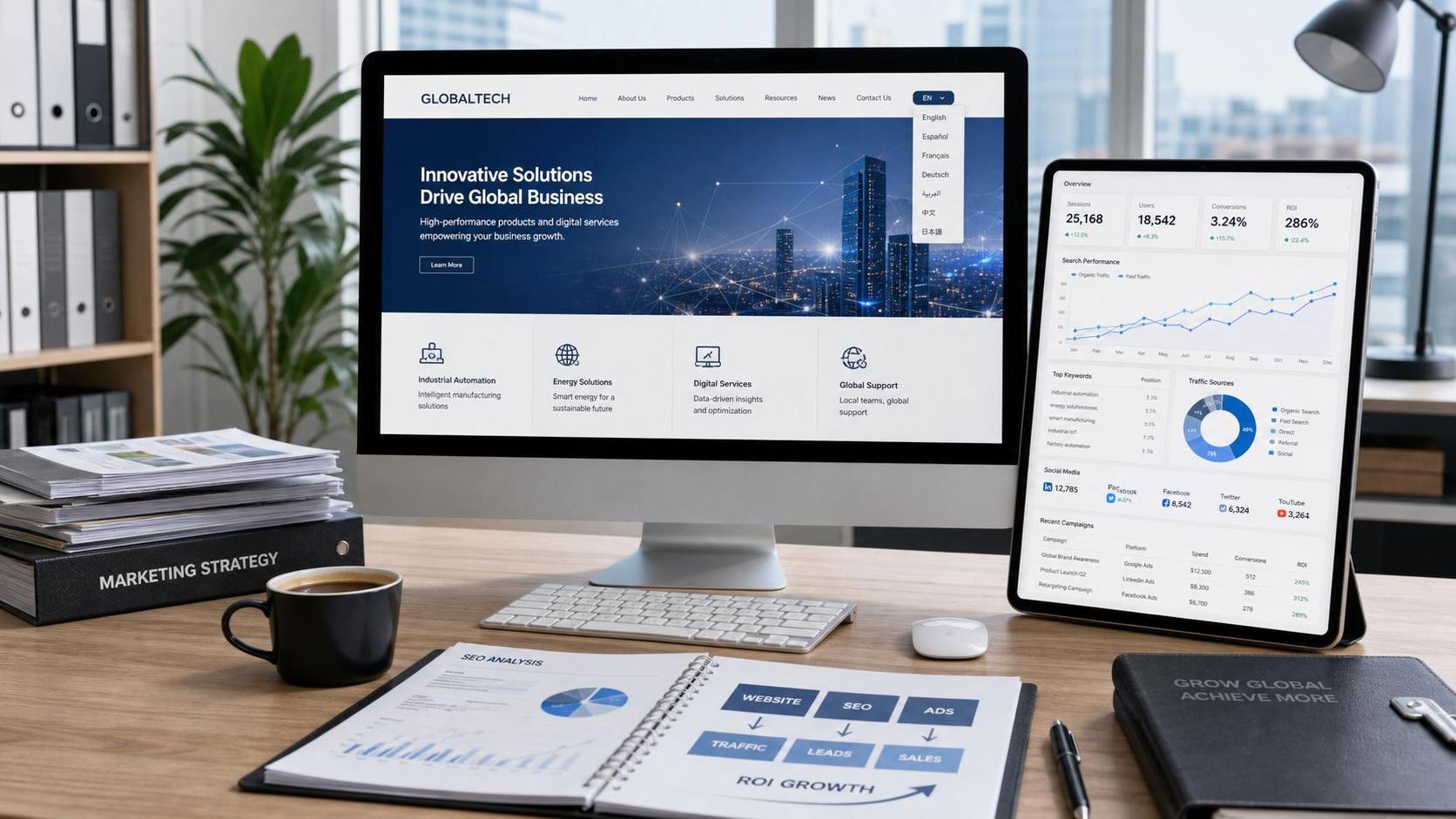
- Which channel has the highest ROI in the global traffic ecosystem? Comparative analysis of search, social media, and advertisingJul 10, 2026View details
- What multilingual website services are available in Sanya? Which model is more suitable for local businesses going global?Jul 08, 2026View details
- How to view the complete list of China SaaS companies in the top 100? Practical methods for screening website-building and marketing service providersJul 08, 2026View details
- How to view pricing in the global traffic ecosystem? Cost comparison of search, social media, and content channel advertisingJul 06, 2026View details
- How to assess foreign trade website development trends?Looking at 2026 changes from multilingual,AI content to conversion pathsJul 04, 2026View details
- What are the new trends in multilingual marketing data analytics tools in 2026? Focus on attribution、automation and complianceJul 04, 2026View details
- Is Brand Globalization Marketing Consulting Worth Buying? At What Stage Should Companies Bring It InJul 01, 2026View details
- Cross-Border Marketing Trend Research: Why More and More Companies Are Starting to Deploy AI Search and GEO OptimizationJun 30, 2026View details
How to build an independent foreign trade website for the Middle East market? An analysis of product selection, language, and payment layout
Opportunities for Foreign Trade Independent Sites in the Middle East Market Have Shifted from Traffic Competition to Localization Competition
How to do foreign trade independent sites in the Middle East market? Many companies’ first reaction is to run ads first and grab traffic. But from the changes over the past two years, what really widens the gap is often not the traffic entry point, but whether the website is close enough to local users’ habits.
The Middle East market has strong consumer spending power, and online purchasing intent is also rising. Especially in Gulf countries, the chain from mobile shopping, social media seeding to brand independent site conversion is becoming more mature, which brings more direct growth opportunities for foreign trade independent sites in the Middle East market.
But big opportunities do not mean you can simply copy the Europe and US approach. Middle Eastern users are more sensitive to language, payment, page trust, and shipping instructions. If a site only has an English version and then adds a generic payment gateway, it is usually hard to truly convert visits into inquiries and orders.
This also means that when planning a foreign trade independent site for the Middle East market, you should not only look at website-building speed, but also at the subsequent operating structure. Whether the product selection is on target, whether the language is natural, whether payment is smooth, all determine the conversion ceiling of the website.
Start with Demand, Then Talk About Hot-Selling Products: Product Selection Logic for Foreign Trade Independent Sites in the Middle East Market
When building a foreign trade independent site for the Middle East market, product selection should not only consider domestic supply chain advantages; it also needs to account for the local climate, lifestyle, and consumption preferences. The Middle East is not a single unified market, and the population structure, income level, and purchasing focus differ significantly from country to country.
From the perspective of easier entry, home goods, smart small appliances, auto accessories, outdoor products, personal care products, light luxury accessories, and gift categories usually have more opportunities. The reason is simple: these categories have display value and are more suitable for branding on an independent site.
However, what really affects conversion is not the product category name, but whether the product solves local market scenarios. For example, heat resistance, easy cleaning, suitability for large households, and suitability for festival gifting are selling points that often move users more than general specifications.
In actual business, it is recommended to break product selection judgment into three levels:
- Check demand frequency to determine whether the product is a necessity, an improvement item, or a festival-driven item.
- Check customer acquisition space to confirm whether it can cover the cost of customer acquisition and fulfillment.
- Check content expression to determine whether the product is suitable for amplifying its advantages through images and text, short videos, and advertising materials.
If it is a B2B business, a foreign trade independent site for the Middle East market also needs to further consider industry procurement characteristics. Products such as building materials, mechanical parts, packaging materials, and industrial equipment place more emphasis on certification, lead time, case studies, and local service explanations, rather than simple price display.
Language Is Not a Translation Issue, but the Trust Entry Point for Foreign Trade Independent Sites in the Middle East Market
When many companies build foreign trade independent sites for the Middle East market, they understand language as “adding an Arabic version.” This step is certainly important, but simply switching languages is far from enough, because what users perceive is the overall localization, not the amount of text.
Arabic pages need to consider reading direction, layout structure, button order, and information hierarchy. If the page is switched to Arabic, but the layout still follows English logic, the browsing experience will feel very awkward, and dwell time and conversion rate will usually be affected.
A clearer signal is that the Middle East market has very high expectations for “detail credibility.” If product titles, specification parameters, after-sales instructions, shipping commitments, and payment prompts are expressed rigidly, users will directly doubt the professionalism of the website.
A more stable approach is to use multilingual website-building capabilities, making Arabic and English core versions at the same time, and then supplement local content according to the target country. This can not only cover a wider audience, but also take into account search engine indexing and landing page conversion for ads.
- Homepage core selling points should be concise and direct, with less use of empty slogans.
- Product pages should highlight use cases, materials, applicable scenarios, and delivery instructions.
- Inquiry pages and checkout pages should keep information items as simple as possible to reduce drop-off.
If you want a foreign trade independent site in the Middle East market to run more steadily, local content should also cover SEO pages, advertising landing pages, and social media traffic pages simultaneously. Because when users enter the site from different entry points, the language style they see must be consistent for trust to build more easily.
The Payment Setup Is Right, and Conversion in the Middle East Market Will Improve Significantly
Middle Eastern users are willing to place orders, but they also value payment security. If a foreign trade independent site in the Middle East market only supports a single international credit card method, it usually loses part of the users who could have converted, especially in mobile ordering scenarios.
The core of the payment experience is not just “being able to pay,” but “being willing to pay and being able to pay smoothly.” Whether the page displays currency clearly, whether the checkout steps are clear, and whether there are alternative options after payment failure all directly affect order completion rates.
When planning a foreign trade independent site for the Middle East market, it is recommended to prioritize the following directions:
- Support international credit card payments and ensure a smooth mobile process.
- Integrate local common payment methods according to the target country.
- Display local currencies or clear exchange rate instructions to reduce decision hesitation.
- Clearly state shipping fees, taxes, and delivery time on the checkout page.
Many independent sites have low conversion rates not because the products are weak, but because there are too many information disconnects before payment. Once users discover unclear fees at the final step, or cannot see familiar payment labels, they are very likely to leave immediately, which is especially common in the Middle East market.
Website Structure, Customer Acquisition Channels, and Conversion Paths Must Be Designed Together
A foreign trade independent site in the Middle East market is not a project that can be made to run by optimizing a single point. Site structure, content planning, SEO, ad placement, social media touchpoints, and remarketing all need to be connected from the very beginning; otherwise, traffic entering the site will find it difficult to accumulate value.
For B2B inquiry-based websites, the focus is on the coordination of industry pages, product pages, case pages, and inquiry forms. For B2C brand sites, more emphasis is placed on homepage trust building, product detail page persuasiveness, payment experience, and repeat-purchase touchpoints.
From a growth perspective, a foreign trade independent site in the Middle East market is usually suitable for the parallel operation of “SEO + ads + social content.” SEO is responsible for long-term search demand, ads are responsible for testing hot products and conversion paths, and social media helps users complete initial awareness and interest accumulation off-site.
If a company wants to land faster, this type of project is more suitable for an integrated website-building and marketing solution. Platforms like 易营宝, which are AI-driven intelligent website-building and overseas marketing platforms, can promote multilingual website building, SEO optimization, ad placement, and content growth within the same system, reducing execution disconnects.
Especially in the Middle East market for foreign trade independent sites, involving language, localized pages, search visibility, and channel coordination, simply building one website is not enough. A truly effective solution is to make the website capable of being indexed, promoted, converted, and operated sustainably.
To Build a Foreign Trade Independent Site for the Middle East Market, First Make This Execution List Solid
Overall, a foreign trade independent site in the Middle East market is not just a track that competes on budget; it is a growth market that more strongly tests localization execution capability. Whoever can truly connect product selection, language, payment, and channel paths will more easily turn traffic into inquiries and visits into orders.
If you are preparing to enter the Middle East market with a foreign trade independent site, it is recommended to start by segmenting target countries, screening core products, and building a multilingual site architecture, then planning payment and marketing paths in parallel. After the foundation is solid, subsequent SEO accumulation, ad testing, and conversion improvement will be more certain.
Related Articles
 Which channel has the highest ROI in the global traffic ecosystem? Comparative analysis of search, social media, and advertising
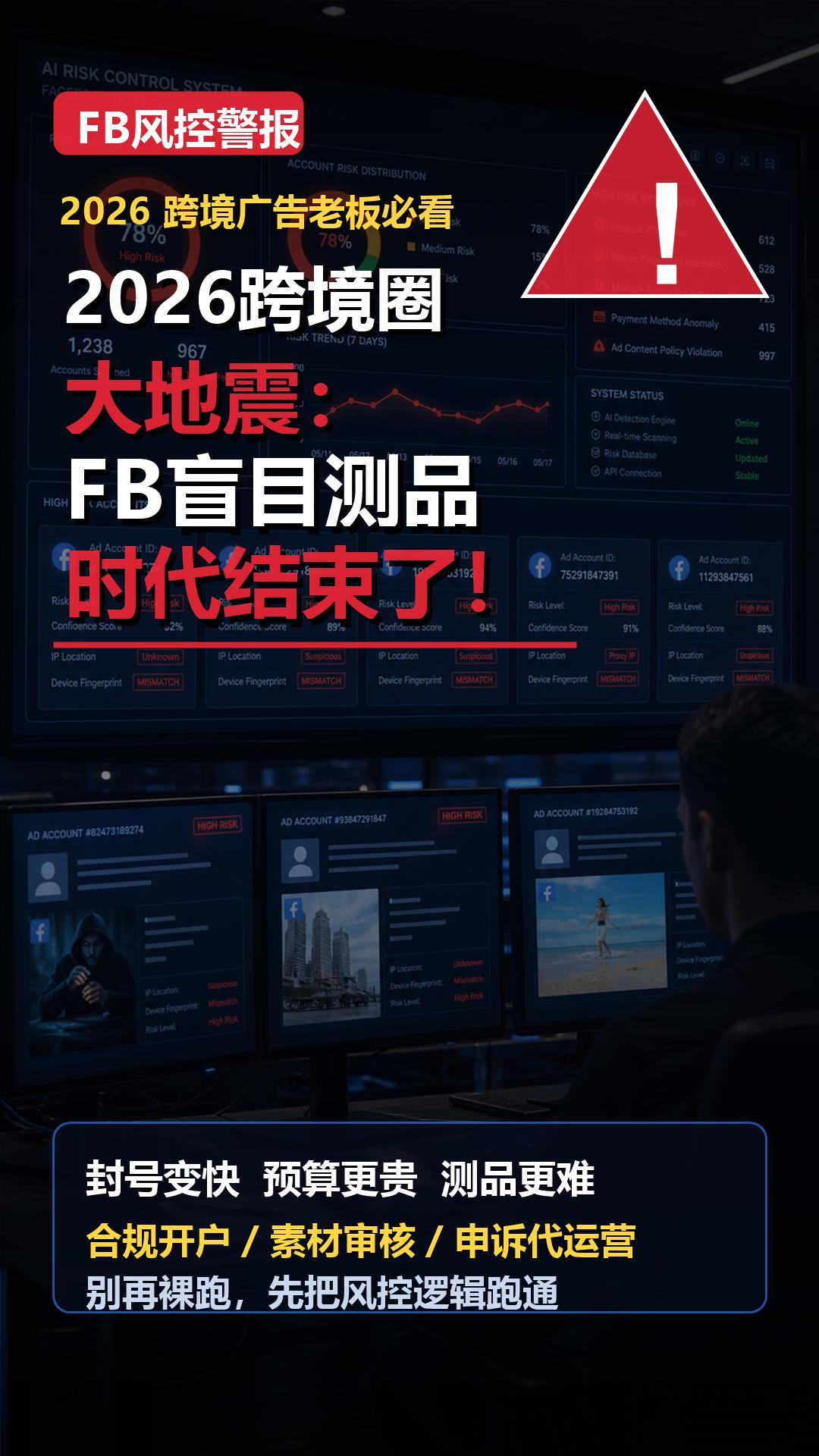
 The Era of Cross-Border Earthquakes in 2026: The Era of Blindly Testing FB Products Has Ended!
 Three key points of domestic-to-foreign trade most important, see if you really did your homework! Don’t take shortcuts.

Related Products
 EasyCamp SaaS Smart Website Marketing SystemE-Yingbao SaaS Smart Website Marketing System: AI-powered, zero-code website building. Rapidly launch multilingual independent e-commerce sites in just 10 minutes. Global server acceleration and AI-driven SEO optimization empower businesses to efficiently connect with global markets. The seamless integration of technology and user-friendly operation makes building e-commerce sites incredibly simple.
 AI+SEM Intelligent Advertising Marketing SystemAI+SEM drives intelligent ad creation, empowering full-funnel precision advertising marketing. The system automatically generates weekly/monthly reports, AI recommends keywords and target countries, monitors core metrics in real-time with intelligent alerts, and enables one-click high-conversion ad solutions to help quickly acquire customers and improve ROI.
 AI+SEO Dual Engine Optimization ServiceEasyWin AI+SEO Dual Engine Optimization System leverages AI-powered keyword mining, content generation, and comprehensive technical optimization to help foreign trade enterprises acquire high-quality organic traffic, significantly improving search rankings and conversion rates.
 AI+SNS Social Media Marketing SystemYingbao AI+SNS Social Media Marketing System - Precision social capture for the social media era. Supports one-click content synchronization across major platforms like Facebook and LinkedIn. AI intelligently rewrites posts for enhanced relevance. 24/7 AI customer service and user profiling analysis empower businesses to efficiently expand into global markets.
 AI+SEO营销解决方案易营宝AI+SEO营销解决方案,通过AI批量写作、智能生成TDK、精准关键词扩词等功能,全面优化网站SEO效果,提升流量与转化率。助力企业构建高效智能网站新生态。
 AI+SEM Advertising Marketing SolutionsAI+SEM Advertising Marketing Solution leverages AI technology to deeply empower SEM ad campaigns. It automatically generates weekly/monthly reports using AI, presenting account data across multiple dimensions for comprehensive insights into campaign performance and trends. The system precisely recommends keywords and target countries, intelligently generates high-conversion ad copy, and enables one-click activation of efficient campaign plans to help businesses rapidly acquire customers. Simultaneously, it monitors core metrics in real time, intelligently identifies abnormal fluctuations, and issues timely alerts to ensure stable, high-return advertising results.
 Domain Name ServicesEasyWin provides professional domain name services, including intelligent queries, one-stop registration, brand protection, and full lifecycle management, helping businesses build a digital brand image.
 EasyOperate B2C Cross-Border E-Commerce Platform & Independent WebsiteEasyStore B2C Cross-border E-commerce Independent Store is an intelligent website building and cross-border e-commerce integrated solution independently developed by EasyStore Information Technology (Beijing) Co., Ltd. The system is specially designed for small and medium-sized as well as large export enterprises, integrating 'website building, operation, marketing, advertising, and conversion' into one, helping enterprises quickly establish cross-border e-commerce independent stores to achieve brand globalization and global sales growth.
The platform supports multiple languages, multiple currencies, and multi-channel marketing, with built-in AI intelligent translation and SEO optimization systems, suitable for mainstream markets such as Southeast Asia, Europe and America, Latin America, and the Middle East, assisting Chinese manufacturing enterprises in efficiently deploying international e-commerce strategies. SSL证书易营宝提供专业SSL安全证书服务,包括单域名和泛域名证书,确保网站数据传输加密、身份验证和完整性保护,助力企业建立安全可信的在线业务环境。









