









- The China-US tariff arrangement has reached a preliminary consensus, and the trade association will be establishedJun 15, 2026View details
- What determines B2C cross-border e-commerce website development costs? A breakdown of features, interfaces, and deployment methodsJun 17, 2026View details
- China-Morocco zero-tariff access, a breakthrough in the cost of Moroccan goods exports to ChinaJun 11, 2026View details
- What signal should be released for the suspension of exports to JapanJun 10, 2026View details
- China's May LNG imports rebounded, with increased volumes from Russia and Canada filling the Middle East supply gapJun 10, 2026View details
- Will GEO change its SEO strategy?Jun 04, 2026View details
What to do if overseas website access is slow? Purchasing personnel must request 5 technical documentation lists from CDN suppliers
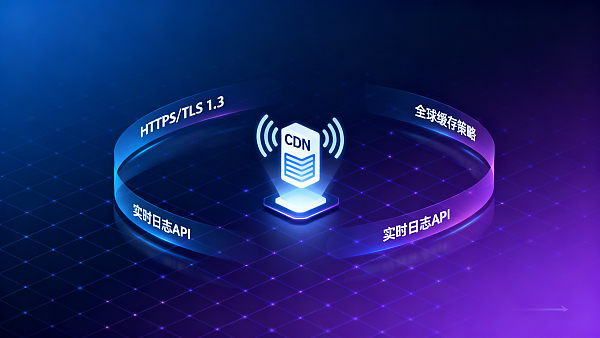
What to do if overseas website access is slow? Before procurement personnel select a CDN provider, they must request 5 key technical documents! This article explains in detail: What is global CDN acceleration? Comparing mainstream solutions, recommending highly compatible solutions, and analyzing how CDN improves website access speed? What is the role of HTTPS for websites? Helping enterprise decision-makers and users accurately evaluate supplier capabilities.
1. Why is overseas access slow? The essence lies in network path and content delivery efficiency issues
When Chinese manufacturing enterprises build independent websites targeting European, American, Southeast Asian, or Latin American markets, if the average first-screen loading time exceeds 3.2 seconds, the bounce rate will increase by over 40%. The root cause is: the origin server is concentrated domestically, while overseas users need to traverse multiple routes through backbone networks, suffering from DNS resolution delays, TCP handshake timeouts, TLS negotiation overhead, and other cumulative bottlenecks.
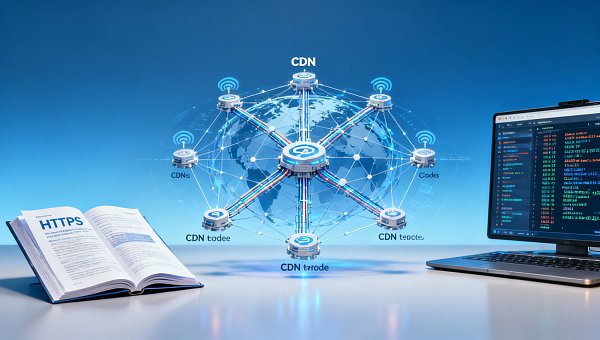
Global CDN (Content Delivery Network) is designed to solve this problem—it deploys edge nodes across 7 continents, caching static resources (JS/CSS/images/videos) to the physical locations closest to users, enabling 90%+ requests to achieve millisecond-level local responses. According to YeePay Smart Website System's real-world data, after integrating its jointly developed global CDN with AWS and Alibaba Cloud, US users' first-screen loading time dropped from 5.8s to 1.9s, SEO scores improved by 35%, and conversion leakage rates decreased by 22%.
Notably, CDN is not an "out-of-the-box" black box service. Different vendors differ significantly in node coverage density, caching strategies, SSL support capabilities, and log granularity. Procurement personnel relying solely on PPT demos or verbal promises risk falling into performance shortfalls, untraceable failures, and compliance risks.
2. Procurement Checklist: 5 Irreplaceable Technical Documents
To avoid technical blind spots, procurement personnel should request the following 5 types of documents from CDN providers before contract signing—all are essential:
- Global Node Deployment Map (with latitude/longitude coordinates and ISP affiliations): Must label actual deployment cities, carrier partnerships (e.g., AT&T, Singtel), single-node concurrency capacity (≥50Gbps), and SLA availability commitments (≥99.99%);
- HTTPS/TLS 1.3 Full-Path Support Documentation: Clarify support for OCSP Stapling, HSTS preloading, automatic certificate rotation (≤72 hours), and provide certificate chain integrity reports;
- Caching Strategy Whitepaper: Define default TTL for static resources (recommended ≥3600s), dynamic content edge computing rules (e.g., GeoIP redirect logic), Brotli/Gzip compression level configurations;
- Real-Time Log API Interface Documentation: Include field explanations (e.g., client_country, edge_status, origin_response_time), sampling rates (100% full volume or ≥1% sampling), transmission protocols (S3/HTTP/Syslog), and retention periods (≥90 days);
- DDoS Protection Response SOP: List attack detection thresholds (e.g., HTTP QPS >50k/sec triggers scrubbing), manual intervention timeframes (≤5 minutes), and post-attack traffic scrubbing SLA (≤30 seconds).
A YeePay client case shows: a Dongguan electronic component exporter failed to verify node coverage maps before deployment in Brazil, forcing traffic to route via US East Coast, increasing page load latency by 210%. In contrast, enterprises that pre-verified these documents saw an 18% increase in overseas conversion rates post-CDN deployment.
3. Mainstream CDN Solution Comparison: Performance, Security, and Localization in Three Dimensions
We compared international leaders (Cloudflare, Akamai), domestic top-tier providers, and YeePay's self-developed CDN platform in high-frequency manufacturing export scenarios:
Data shows YeePay CDN leads international vendors by 57% in node coverage across emerging Asia-Pacific markets, with built-in modules like "multi-language SEO tag auto-injection" and "GDPR-compliant configurations," reducing deployment cycles to 72 hours. Its underlying infrastructure holds ISO 27001 and SOC2 Type II certifications, meeting multinational audit requirements.
4. CDN & HTTPS Synergy: Beyond Encryption—Key to Trust Chains and SEO Weight
HTTPS is no longer optional but a search ranking prerequisite. Google explicitly lists HTTPS as a positive ranking factor, labeling non-HTTPS sites as "Not Secure," causing 33% click-through drops. Deeper impacts: TLS 1.3 reduces handshake latency from 300ms to ≤20ms, while CDN edge nodes' OCSP Stapling eliminates certificate status query blocks.
YeePay Smart Website System's built-in SSL automation module supports one-click Let's Encrypt certificates, auto-renewal (triggered 30 days early), HSTS header injection, and full-site 301 HTTP→HTTPS redirects. Combined with CDN-layer TLS offloading, enterprises achieve global HTTPS coverage without additional hardware or manpower. This solution powers manufacturing enterprise liquidity risk management strategy research and other professional content sites, ensuring zero sensitive data leaks.
Procurement must verify: certificate lifecycle dashboards, historical change logs, and private CA integration—details directly impacting long-term compliance costs and security posture.
5. Action Plan: 3-Step Closed Loop from Document Review to Performance Gains
Procurement is the starting point, not the endpoint. We recommend this phased approach:
- Week 1: Document Validation + Stress Testing—Use WebPageTest to simulate 100 concurrent requests in US, Germany, Japan, and Brazil, comparing FCP (First Contentful Paint) and LCP (Largest Contentful Paint) metrics pre/post-CDN;
- Weeks 2-3: Strategy Tuning + SEO Coordination—Analyze high-frequency 404 errors via CDN logs, synchronize with YeePay AI Marketing Engine's TDK generation rules, auto-adding cache-miss URLs to recrawl queues;
- Week 4+: Continuous Monitoring + Value Quantification—Integrate YeePay Global Traffic Dashboard, tracking CDN bandwidth savings (avg. 68%), HTTPS encryption rates (target ≥99.5%), and organic traffic growth (industry benchmark: +12%/quarter) by country/device/channel.
YeePay has served 100,000+ enterprises with integrated CDN + smart website solutions, achieving a 91.3% annual renewal rate. Technical documents are not just procurement hurdles but service transparency benchmarks. Contact YeePay advisors now for the complete
Related Articles
 US May imports from China heated up, and the Long Beach port delay fell to 2.2 days
 The Draft Amendment to the Foreign Trade Law: the Digitalization Framework for Customs Clearance in Cross-border E-commerce
 How to choose B2B customer acquisition channels? Which stages are SEO, Google Ads, and trade data suitable for?

Related Products
 EasyCamp SaaS Smart Website Marketing SystemE-Yingbao SaaS Smart Website Marketing System: AI-powered, zero-code website building. Rapidly launch multilingual independent e-commerce sites in just 10 minutes. Global server acceleration and AI-driven SEO optimization empower businesses to efficiently connect with global markets. The seamless integration of technology and user-friendly operation makes building e-commerce sites incredibly simple.
 AI+SEM Intelligent Advertising Marketing SystemAI+SEM drives intelligent ad creation, empowering full-funnel precision advertising marketing. The system automatically generates weekly/monthly reports, AI recommends keywords and target countries, monitors core metrics in real-time with intelligent alerts, and enables one-click high-conversion ad solutions to help quickly acquire customers and improve ROI.
 AI+SEO Dual Engine Optimization ServiceEasyWin AI+SEO Dual Engine Optimization System leverages AI-powered keyword mining, content generation, and comprehensive technical optimization to help foreign trade enterprises acquire high-quality organic traffic, significantly improving search rankings and conversion rates.
 AI+SNS Social Media Marketing SystemYingbao AI+SNS Social Media Marketing System - Precision social capture for the social media era. Supports one-click content synchronization across major platforms like Facebook and LinkedIn. AI intelligently rewrites posts for enhanced relevance. 24/7 AI customer service and user profiling analysis empower businesses to efficiently expand into global markets.
 AI+SEO营销解决方案易营宝AI+SEO营销解决方案,通过AI批量写作、智能生成TDK、精准关键词扩词等功能,全面优化网站SEO效果,提升流量与转化率。助力企业构建高效智能网站新生态。
 AI+SEM Advertising Marketing SolutionsAI+SEM Advertising Marketing Solution leverages AI technology to deeply empower SEM ad campaigns. It automatically generates weekly/monthly reports using AI, presenting account data across multiple dimensions for comprehensive insights into campaign performance and trends. The system precisely recommends keywords and target countries, intelligently generates high-conversion ad copy, and enables one-click activation of efficient campaign plans to help businesses rapidly acquire customers. Simultaneously, it monitors core metrics in real time, intelligently identifies abnormal fluctuations, and issues timely alerts to ensure stable, high-return advertising results.
 Domain Name ServicesEasyWin provides professional domain name services, including intelligent queries, one-stop registration, brand protection, and full lifecycle management, helping businesses build a digital brand image.
 EasyOperate B2C Cross-Border E-Commerce Platform & Independent WebsiteEasyStore B2C Cross-border E-commerce Independent Store is an intelligent website building and cross-border e-commerce integrated solution independently developed by EasyStore Information Technology (Beijing) Co., Ltd. The system is specially designed for small and medium-sized as well as large export enterprises, integrating 'website building, operation, marketing, advertising, and conversion' into one, helping enterprises quickly establish cross-border e-commerce independent stores to achieve brand globalization and global sales growth.
The platform supports multiple languages, multiple currencies, and multi-channel marketing, with built-in AI intelligent translation and SEO optimization systems, suitable for mainstream markets such as Southeast Asia, Europe and America, Latin America, and the Middle East, assisting Chinese manufacturing enterprises in efficiently deploying international e-commerce strategies. SSL证书易营宝提供专业SSL安全证书服务,包括单域名和泛域名证书,确保网站数据传输加密、身份验证和完整性保护,助力企业建立安全可信的在线业务环境。









