









- Which channel has the highest ROI in the global traffic ecosystem? Comparative analysis of search, social media, and advertisingJul 10, 2026View details
- What multilingual website services are available in Sanya? Which model is more suitable for local businesses going global?Jul 08, 2026View details
- How to view the complete list of China SaaS companies in the top 100? Practical methods for screening website-building and marketing service providersJul 08, 2026View details
- How to view pricing in the global traffic ecosystem? Cost comparison of search, social media, and content channel advertisingJul 06, 2026View details
- How to assess foreign trade website development trends?Looking at 2026 changes from multilingual,AI content to conversion pathsJul 04, 2026View details
- What are the new trends in multilingual marketing data analytics tools in 2026? Focus on attribution、automation and complianceJul 04, 2026View details
- Is Brand Globalization Marketing Consulting Worth Buying? At What Stage Should Companies Bring It InJul 01, 2026View details
- Cross-Border Marketing Trend Research: Why More and More Companies Are Starting to Deploy AI Search and GEO OptimizationJun 30, 2026View details
Does the multi-platform distribution system support automatic tagging? For example, automatic classification by content theme, region, and product line.
Does the multi-platform distribution system support automatic tagging? As a professional search engine optimization company and global marketing strategy consulting service provider, Easy Treasure provides a multi-platform distribution system that supports intelligent content recognition, enabling automatic classification by theme, region, and product line to help enterprises improve SEO efficiency and marketing precision.
How does automatic tagging capability support full-chain marketing decision-making?
In the integrated scenario of website + marketing services, content tagging has evolved from manual annotation to AI-driven real-time semantic parsing. Easy Treasure's multi-platform distribution system, based on NLP + CV dual-mode models, generates three-level tags before content publication: Level 1 for industry themes (e.g., "industrial manufacturing," "smart manufacturing"), Level 2 for geographic dimensions (precise to city level, supporting bilingual recognition in Chinese and English), and Level 3 for product line mapping (e.g., "precision machining, hardware fasteners" corresponding to "high-precision fastening solutions"). This process averages <3 seconds per piece, with an accuracy rate of 92.7% (based on internal Q4 2023 test data).
For market researchers, automatic tagging significantly reduces competitive product content analysis cycles—traditional manual tagging requires 7–10 person-days per thousand pieces, while the system completes the same volume in 2 hours. For enterprise decision-makers, the tagging system directly integrates with CRM and ad platforms, enabling closed-loop tracking of "content-lead-conversion." For quality control and after-sales personnel, abnormal tag fluctuations (e.g., a >15% drop in regional tag coverage) trigger automatic alerts, aiding in identifying localized operational gaps.
Notably, the system supports custom tag rule engines. For example, when detecting combinations of keywords like "CNC machining," "tolerance ±0.01mm," or "ISO 9001 certification," it automatically associates them with the precision machining, hardware fasteners product matrix and synchronizes them to corresponding overseas social media accounts and Google Shopping Feed.
Which scenarios most require automatic tagging capabilities?

Automatic tagging is not a universal feature; its value is exponentially amplified in specific business scenarios. We have identified 5 high-fit scenarios covering the full stakeholder chain from procurement decisions to end-consumer engagement:
- Cross-border distributor selection: The system automatically identifies client website language versions and local regulatory requirements (e.g., EU CE marks, US UL standards), matching product content to compliant tag libraries, reducing manual translation and legal review cycles (averaging 4.2 workdays saved per batch).
- Industrial B2B content distribution: For long-tail terms like "precision machining, hardware fasteners," the system extracts technical parameters (e.g., material grades, surface treatment processes, tensile strength) to generate structured tags, enabling more precise Rich Snippet displays in Google search results.
- After-sales knowledge base construction: Tagging maintenance manuals, FAQ videos by fault phenomena (e.g., "thread stripping," "thermal deformation displacement"), equipment models, and operating temperature ranges (-20°C to 80°C) reduces after-sales response time by 63%.
- Agent material distribution: Content packages with localized case studies, dialect voiceovers, and policy subsidy explanations are automatically assembled based on regional market characteristics (e.g., East China manufacturing clusters, Pearl River Delta electronics OEM), improving distribution efficiency by 3.8x.
- End-consumer education: Identifying user search intent (e.g., "how to choose stainless steel screws") and dynamically aggregating technical comparison charts, lifespan test reports, and installation tutorial videos to create personalized landing pages.
Automatic Tagging vs. Manual Tagging: Key Performance Comparison
The table below, based on operational data from 102 clients, contrasts the performance differences between the two models across core metrics:
Particularly noteworthy is automatic tagging's advantage in handling urgent demands: When an automotive parts client needed emergency adjustments to their tagging system due to new Southeast Asia export regulations, Easy Treasure's team completed rule configuration, historical content re-tagging, and multi-platform synchronization within 48 hours, compared to an estimated 11 workdays for manual solutions.
Why Choose Easy Treasure's Automatic Tagging System?

Easy Treasure's differentiated capabilities stem from three decade-long vertical industry barriers:
- Deeply coupled industry knowledge graphs: Embedded with 37 industrial manufacturing subdomain ontologies (including GB/T, ISO, DIN standard terminology mappings), its non-generic NLP models recognize "M8×1.25" as thread specifications rather than garbled code.
- Localized service response mechanisms: With tag strategy consultant stations in Beijing, Shenzhen, and Shanghai, it supports on-site client rule optimization (e.g., training Cantonese colloquial tags like "screw studs" for "hardware fasteners" in Guangdong).
- Dual compliance-security safeguards: All tag generation complies with Article 24 of China's Personal Information Protection Law on automated decision-making, provides fully auditable logs, and holds ISO 27001 certification.
Currently serving 10,000+ enterprise clients, the system maintains 91.5%–93.2% tag accuracy for industrial manufacturing clients over six consecutive quarters. To validate its performance in your specific scenarios, request a free trial: We'll provide a customized automatic tagging report for 3 sample content pieces, including parameter verification, product selection recommendations, and localized delivery cycle calculations.
FAQ
Top 5 client inquiries in 2023:
- Q: Can it integrate with our existing ERP/MES material coding systems?
A: Supports API connections to mainstream systems (SAP S/4HANA, Yonyou U9, Kingdee K/3), mapping ERP "BOM-level codes" to content tags within 3–5 workdays. - Q: Does it support speech-to-text + tagging for short videos/live streams?
A: Yes, using ASR + NER joint models with 96.4% accuracy for Mandarin, including technical terms (e.g., "anodizing," "gear hobbing"), linked to precision machining, hardware fasteners solution pages. - Q: Are tag rules updated quarterly?
A: Annual service packages include 4 free rule iterations (≤2 hours remote configuration each), with additional changes billed at ¥500/hour.
Related Articles
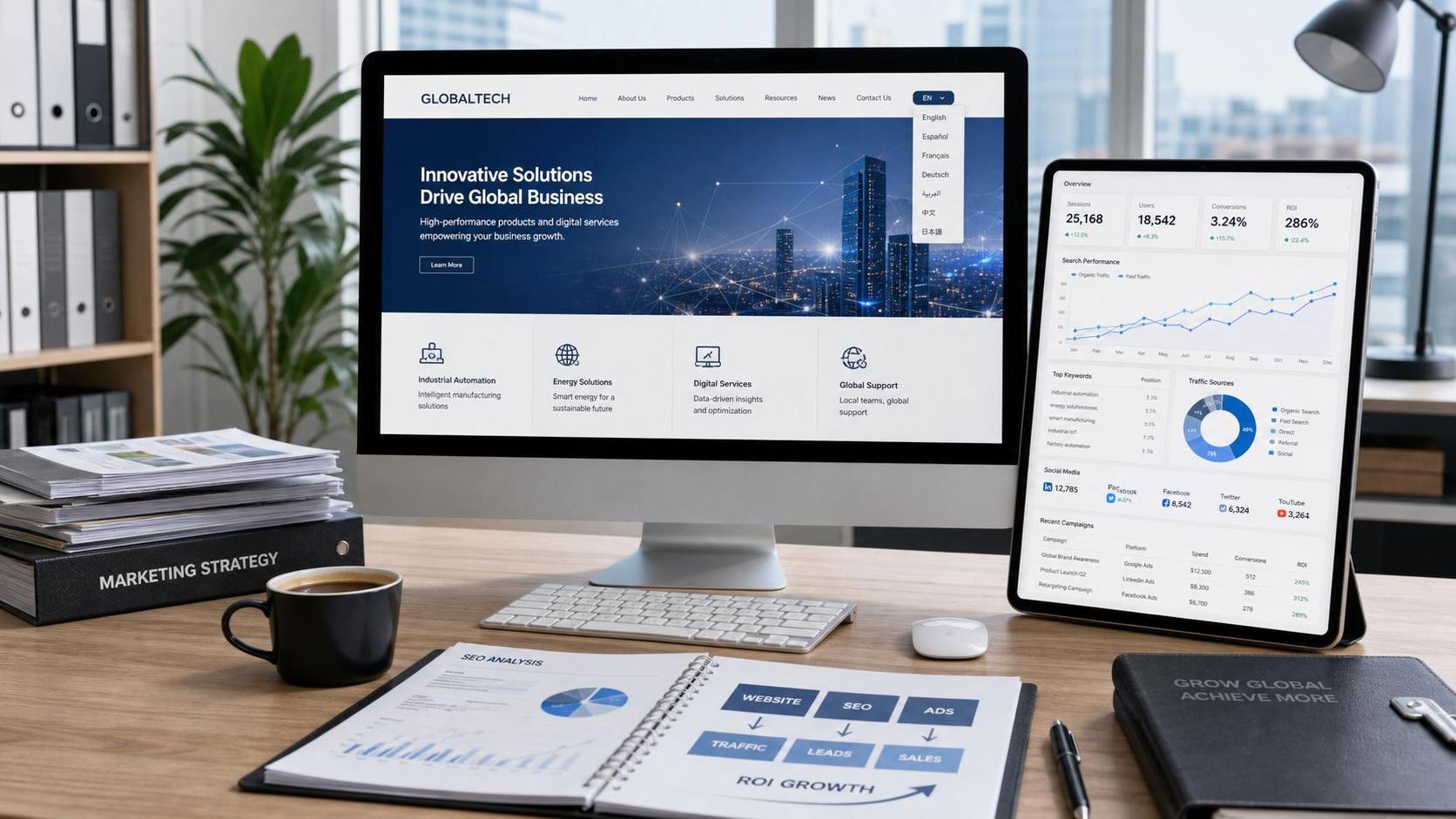
 Which channel has the highest ROI in the global traffic ecosystem? Comparative analysis of search, social media, and advertising
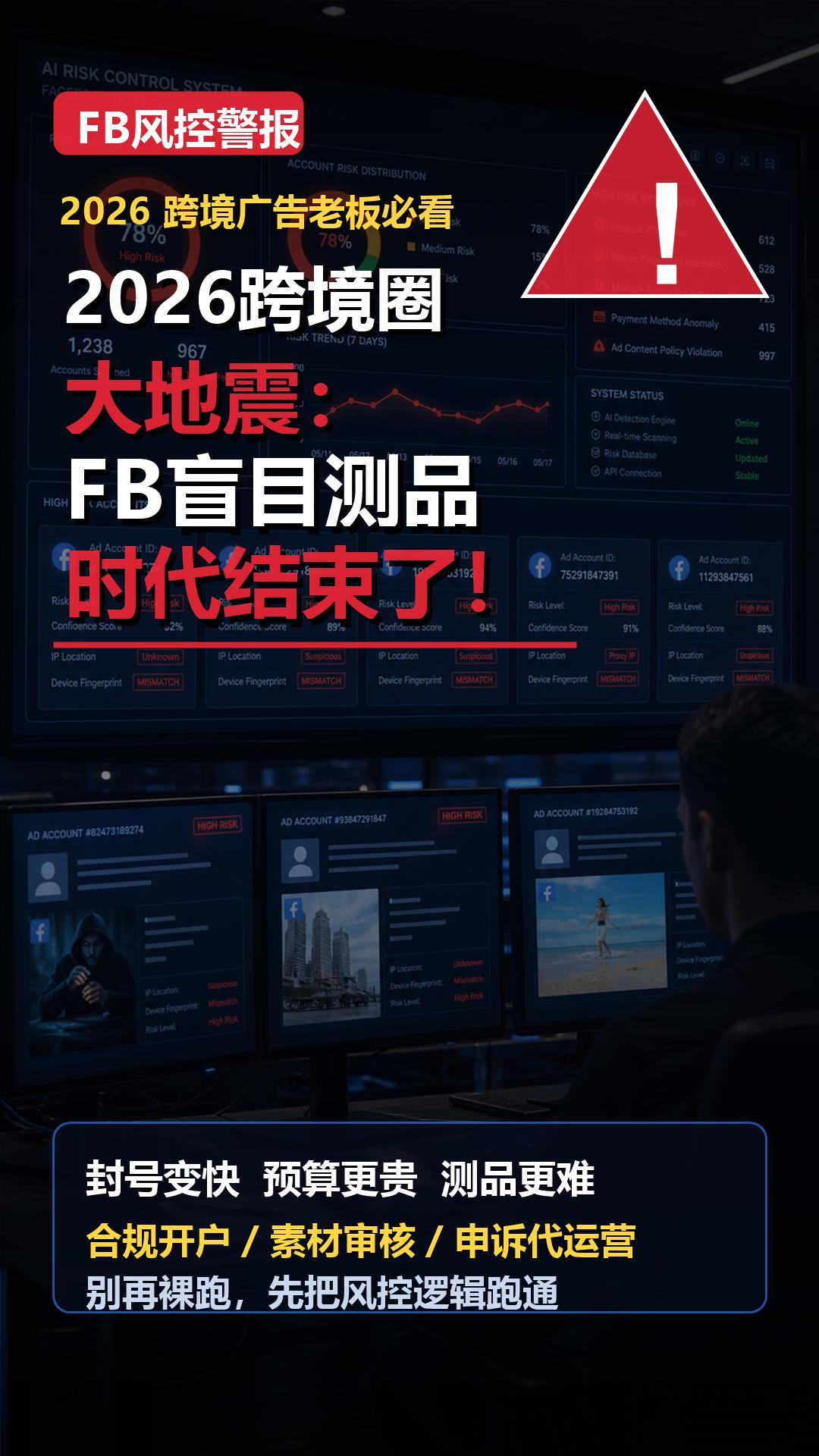
 The Era of Cross-Border Earthquakes in 2026: The Era of Blindly Testing FB Products Has Ended!
 Three key points of domestic-to-foreign trade most important, see if you really did your homework! Don’t take shortcuts.

Related Products
 EasyCamp SaaS Smart Website Marketing SystemE-Yingbao SaaS Smart Website Marketing System: AI-powered, zero-code website building. Rapidly launch multilingual independent e-commerce sites in just 10 minutes. Global server acceleration and AI-driven SEO optimization empower businesses to efficiently connect with global markets. The seamless integration of technology and user-friendly operation makes building e-commerce sites incredibly simple.
 AI+SEM Intelligent Advertising Marketing SystemAI+SEM drives intelligent ad creation, empowering full-funnel precision advertising marketing. The system automatically generates weekly/monthly reports, AI recommends keywords and target countries, monitors core metrics in real-time with intelligent alerts, and enables one-click high-conversion ad solutions to help quickly acquire customers and improve ROI.
 AI+SEO Dual Engine Optimization ServiceEasyWin AI+SEO Dual Engine Optimization System leverages AI-powered keyword mining, content generation, and comprehensive technical optimization to help foreign trade enterprises acquire high-quality organic traffic, significantly improving search rankings and conversion rates.
 AI+SNS Social Media Marketing SystemYingbao AI+SNS Social Media Marketing System - Precision social capture for the social media era. Supports one-click content synchronization across major platforms like Facebook and LinkedIn. AI intelligently rewrites posts for enhanced relevance. 24/7 AI customer service and user profiling analysis empower businesses to efficiently expand into global markets.
 AI+SEO营销解决方案易营宝AI+SEO营销解决方案,通过AI批量写作、智能生成TDK、精准关键词扩词等功能,全面优化网站SEO效果,提升流量与转化率。助力企业构建高效智能网站新生态。
 AI+SEM Advertising Marketing SolutionsAI+SEM Advertising Marketing Solution leverages AI technology to deeply empower SEM ad campaigns. It automatically generates weekly/monthly reports using AI, presenting account data across multiple dimensions for comprehensive insights into campaign performance and trends. The system precisely recommends keywords and target countries, intelligently generates high-conversion ad copy, and enables one-click activation of efficient campaign plans to help businesses rapidly acquire customers. Simultaneously, it monitors core metrics in real time, intelligently identifies abnormal fluctuations, and issues timely alerts to ensure stable, high-return advertising results.
 Domain Name ServicesEasyWin provides professional domain name services, including intelligent queries, one-stop registration, brand protection, and full lifecycle management, helping businesses build a digital brand image.
 EasyOperate B2C Cross-Border E-Commerce Platform & Independent WebsiteEasyStore B2C Cross-border E-commerce Independent Store is an intelligent website building and cross-border e-commerce integrated solution independently developed by EasyStore Information Technology (Beijing) Co., Ltd. The system is specially designed for small and medium-sized as well as large export enterprises, integrating 'website building, operation, marketing, advertising, and conversion' into one, helping enterprises quickly establish cross-border e-commerce independent stores to achieve brand globalization and global sales growth.
The platform supports multiple languages, multiple currencies, and multi-channel marketing, with built-in AI intelligent translation and SEO optimization systems, suitable for mainstream markets such as Southeast Asia, Europe and America, Latin America, and the Middle East, assisting Chinese manufacturing enterprises in efficiently deploying international e-commerce strategies. SSL证书易营宝提供专业SSL安全证书服务,包括单域名和泛域名证书,确保网站数据传输加密、身份验证和完整性保护,助力企业建立安全可信的在线业务环境。









