









- Can Zhejiang foreign trade independent websites still be developed today? Look at changes in traffic and lead generationJul 28, 2026View details
- What New Signals Are Emerging in Enterprise Services SaaS Marketing ReportsJul 27, 2026View details
- What Does a Global Traffic Ecosystem Service Provider Do? What Are the Differences from a Single Advertising AgencyJul 16, 2026View details
- What should you focus on in the latest enterprise SaaS report? From renewal rates and delivery costs to overseas growth opportunitiesJul 12, 2026View details
- What signals are worth paying attention to in a cross-border marketing trend report? B2B companies should look at these 6 signalsJul 11, 2026View details
- How to Read a Cross-Border Marketing Trends Report? Five Key Dimensions for Evaluating Channel OpportunitiesJul 11, 2026View details
- Which channel has the highest ROI in the global traffic ecosystem? Comparative analysis of search, social media, and advertisingJul 10, 2026View details
- What multilingual website services are available in Sanya? Which model is more suitable for local businesses going global?Jul 08, 2026View details
How does short-form video generate inquiries? From topic selection and landing pages to online lead handoff, the complete chain
Short videos bring inquiries, first see whether it is a complete path
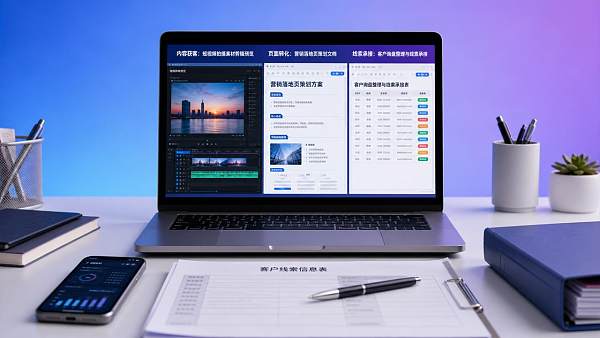
How short videos bring inquiries is never about update frequency, but whether the content, page, and handoff are integrated into one system. Many accounts seem to have decent views, yet they still fail to generate valid leads, because the problem is often not the traffic itself, but the lack of continued conversion after the traffic enters.
In a website + marketing service integrated scenario, short videos are more like a front-end touchpoint. They are responsible for attracting attention, screening intent, and triggering visits; what really determines inquiry quality is often the website structure on the back end, the landing page message, the form path, and the follow-up efficiency.
Especially for foreign trade, cross-border, and brand overseas expansion businesses, user habits, information density, and communication thresholds vary across markets. How short videos bring inquiries must be judged within the continuous chain of “content lead generation—page conversion—data feedback—lead handoff” to have real significance.
Why different scenarios produce different results in actual execution
The same short video lead generation approach does not work the same for manufacturing and cross-border retail. The former has a longer decision cycle and focuses more on craftsmanship, delivery, certification, and cooperation stability; the latter relies more on product presentation, price sensitivity, and immediate ordering intent. If the content angle is off, views and inquiries will be disconnected.
The more common difference comes from the lead generation threshold setting. High-ticket businesses are better suited to first letting visitors see case studies, parameters, and solution details before entering the form; low-ticket or quick-decision businesses need a shorter path. How short videos bring inquiries is not a single template, but an adjustment of content depth and conversion actions according to the transaction logic.
In Yi Ying Bao's long-term overseas growth service scenarios, short videos are usually viewed in a multi-channel collaboration framework. Because short videos are only the starting point, and what follows still requires seamless connection with independent websites, SEO, ad retargeting, and secondary social media touchpoints for inquiries to become more stable rather than relying on a single piece of content going viral by chance.
In high-frequency scenarios, topic selection determines whether the traffic is volume or intent
When doing foreign trade displays, the topic should answer “why it is worth contacting”
If a short video only showcases the product appearance, it can easily attract broad traffic, but it is hard to form inquiries. More effective topics usually revolve around production capacity, customization process, delivery control, certification standards, and application results, because these kinds of information are closer to real cooperation judgments.
In this kind of scenario, how short videos bring inquiries is mainly about first filtering out the people who are only there for entertainment, and then keeping those who are more likely to have supply-demand alignment. The closer the content is to the key questions before cooperation, the more likely the leads are to be effective.
When doing brand overseas expansion, the topic should lower the first-time understanding cost
Brand content cannot just talk about concepts. Users usually first look at the pain points of the scenario, then the product proof, and only then accept brand value. If a short video starts by staying in brand storytelling, it is often difficult to bring inquiries; starting with before-and-after use differences and realistic scenario demonstrations makes it easier to drive clicks to the page.
Therefore, how short videos bring inquiries first requires judging whether the content is “about the brand” or “about solving a problem”. The former is suitable for building awareness, while the latter is better for driving leads in.
After traffic enters the site, the landing page is the real dividing line
Many teams put a link at the end of the video and assume the conversion path is complete. In fact, the first five seconds after a visitor enters the page are what determine whether they will continue. Slow page loading, off-topic information, or overly long forms will directly consume the results of front-end content.
In overseas browsing environments, loading speed, multilingual presentation, and mobile experience are especially important. If a short video is distributed to multiple regions, but the page only supports a single language or loads too slowly, even a high click-through rate will be hard to convert into inquiries. Solutions like Yi Ying Bao foreign trade marketing-type (super) website are usually better suited to absorbing short video traffic, because they emphasize global access speed, mobile synchronization, multilingual management, and closed-loop analytics, allowing people “who finished watching the video” to move more smoothly to the next step.
A landing page does not have to be complicated, but it must answer three questions: who you are, what you can solve, and how to contact you next. When asking how short videos bring inquiries, a truly effective landing must clearly explain these three questions.
Whether lead handoff is smooth determines whether inquiries can keep moving forward
Another easily overlooked part of how short videos bring inquiries is the speed of handoff after a lead enters. Someone leaving a form does not mean communication will continue. Slow replies, repetitive questions, and mismatched materials can all cause leads that were originally interested to be lost quickly.
In actual application, handoff efficiency should at least achieve three things: first, distinguish source content and know what kind of video the lead watched; second, prepare corresponding materials so communication does not have to start from zero again; third, track the path from click to inquiry and find out what kind of content truly brings opportunities.
If the website itself has marketing closed-loop analytics capabilities, the value becomes even more obvious. For example, if page loading is kept at a relatively fast level, multilingual maintenance costs are relatively low, and conversion paths can still be reviewed, it is easier to determine how short videos bring inquiries, rather than only looking at the playback volume on the platform backend.
Misjudgments that easily occur before landing are often more fatal than the content itself
- Treating high views as the same as high inquiries, without checking whether the audience is close to real demand.
- Only optimizing the video creative, without synchronously optimizing the landing page structure and form path.
- Assuming all markets accept the same expression, while ignoring differences in language, rhythm, and information density.
- Only looking at front-end lead generation cost, without looking at back-end follow-up efficiency and secondary touchpoint capability.
- Treating the website as a display brochure, without supporting SEO, ad retargeting, and inquiry analytics.
These misjudgments are common because short videos look low-threshold and easily make people focus all attention on “what to post”. But what really affects the outcome is often the page adaptation, visit experience, and handoff mechanism behind it.
A more stable approach is to build your own judgment criteria by scenario
If you want to continuously verify how short videos bring inquiries, you can start with a smallest closed loop: choose three clear themes, each corresponding to three high-frequency needs; prepare an independent landing page for each theme; set different forms or tracking parameters; observe which kind of content is more likely to form effective communication.
For multi-market businesses, you should also prioritize confirming page performance and localization capability. A website foundation that supports multiple languages, global acceleration, mobile synchronization, and SEO friendliness will significantly affect subsequent traffic generation results. Especially when content needs to serve search, ads, and social media at the same time, the website cannot be just a link endpoint, but should become a data asset that can continuously accumulate traffic and inquiries.
From this perspective, how short videos bring inquiries is not a single content issue, but a question of whether a company has complete digital handoff capability. The value of deeply cultivating smart website building, SEO, social media, and ad collaboration services lies in turning scattered actions into a closed loop, rather than letting each channel fight its own battle.
What is more worth doing next is not blindly increasing publishing volume, but first sorting out which real needs the existing videos correspond to, then checking whether the page can establish trust in a short time, whether it is convenient to submit leads, and whether subsequent results can be tracked. Once these points are connected, short videos bring inquiries can truly move from accidental to replicable.
Related Articles
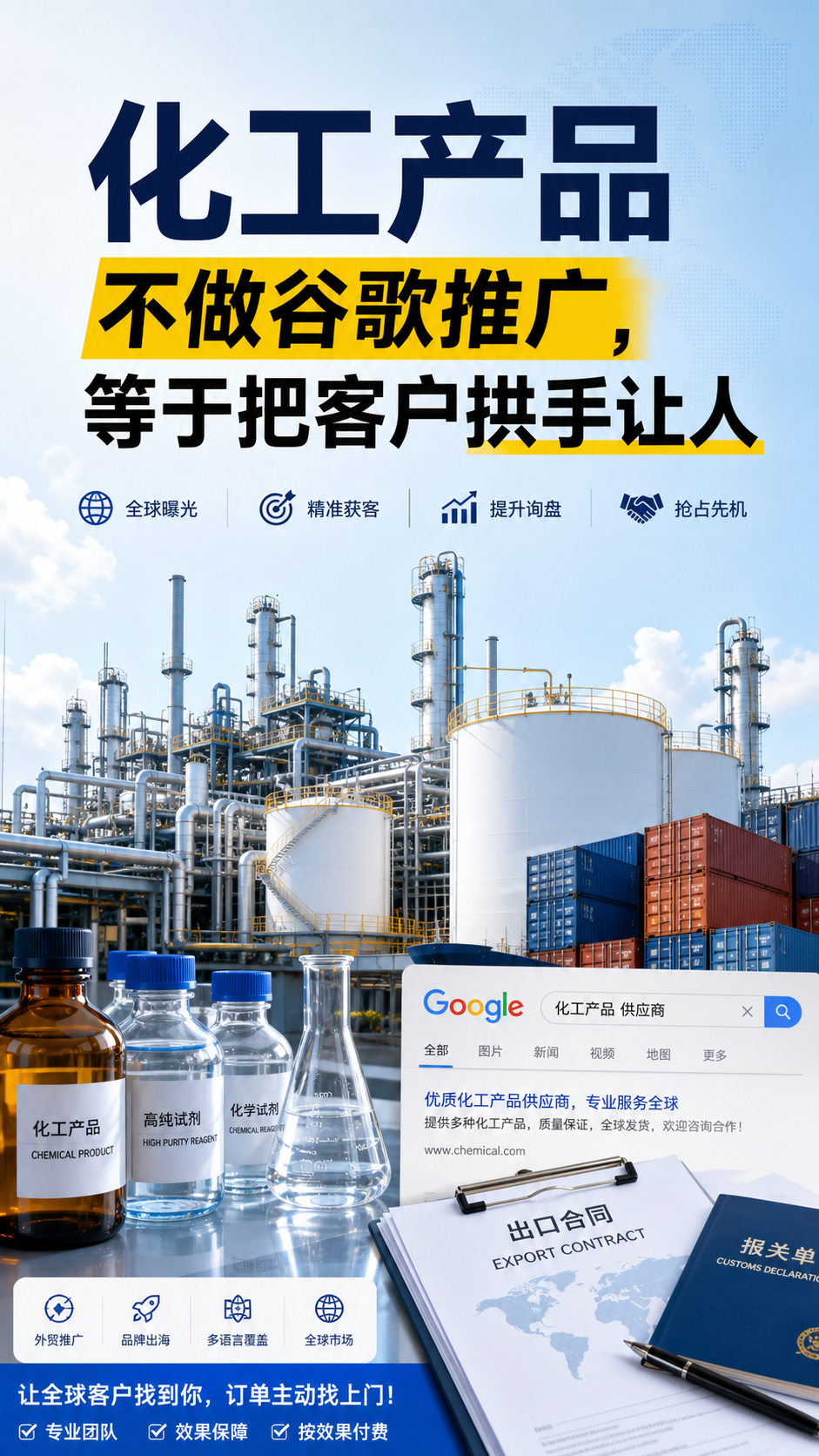
 Promoting chemical products on Google is essential—otherwise, you are effectively handing your customers over to competitors
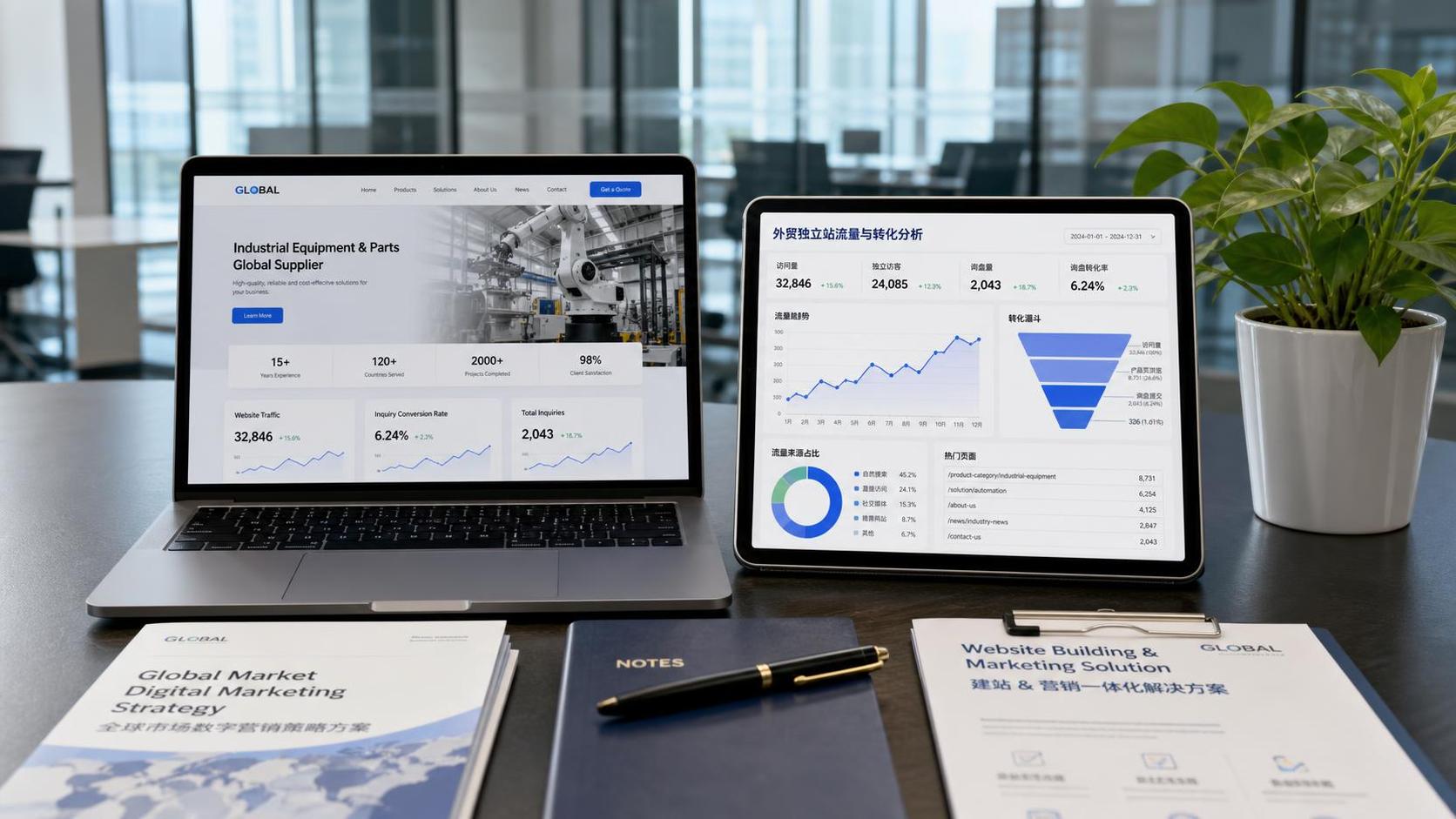
 Can Zhejiang foreign trade independent websites still be developed today? Look at changes in traffic and lead generation
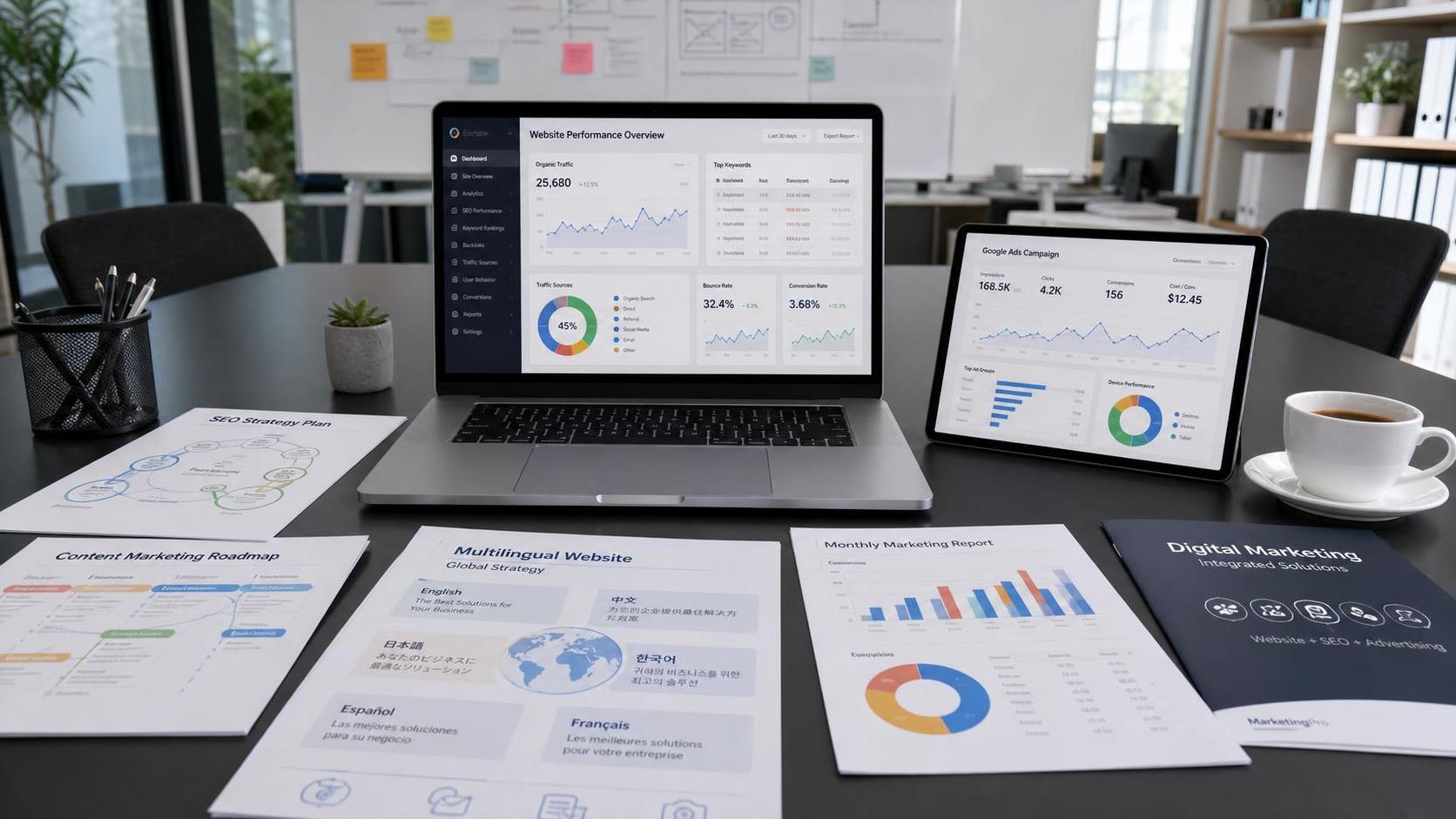
 What New Signals Are Emerging in Enterprise Services SaaS Marketing Reports
Related Products
 EasyCamp SaaS Smart Website Marketing SystemE-Yingbao SaaS Smart Website Marketing System: AI-powered, zero-code website building. Rapidly launch multilingual independent e-commerce sites in just 10 minutes. Global server acceleration and AI-driven SEO optimization empower businesses to efficiently connect with global markets. The seamless integration of technology and user-friendly operation makes building e-commerce sites incredibly simple.
 AI+SEM Intelligent Advertising Marketing SystemAI+SEM drives intelligent ad creation, empowering full-funnel precision advertising marketing. The system automatically generates weekly/monthly reports, AI recommends keywords and target countries, monitors core metrics in real-time with intelligent alerts, and enables one-click high-conversion ad solutions to help quickly acquire customers and improve ROI.
 AI+SEO Dual Engine Optimization ServiceEasyWin AI+SEO Dual Engine Optimization System leverages AI-powered keyword mining, content generation, and comprehensive technical optimization to help foreign trade enterprises acquire high-quality organic traffic, significantly improving search rankings and conversion rates.
 AI+SNS Social Media Marketing SystemYingbao AI+SNS Social Media Marketing System - Precision social capture for the social media era. Supports one-click content synchronization across major platforms like Facebook and LinkedIn. AI intelligently rewrites posts for enhanced relevance. 24/7 AI customer service and user profiling analysis empower businesses to efficiently expand into global markets.
 AI+SEO营销解决方案易营宝AI+SEO营销解决方案,通过AI批量写作、智能生成TDK、精准关键词扩词等功能,全面优化网站SEO效果,提升流量与转化率。助力企业构建高效智能网站新生态。
 AI+SEM Advertising Marketing SolutionsAI+SEM Advertising Marketing Solution leverages AI technology to deeply empower SEM ad campaigns. It automatically generates weekly/monthly reports using AI, presenting account data across multiple dimensions for comprehensive insights into campaign performance and trends. The system precisely recommends keywords and target countries, intelligently generates high-conversion ad copy, and enables one-click activation of efficient campaign plans to help businesses rapidly acquire customers. Simultaneously, it monitors core metrics in real time, intelligently identifies abnormal fluctuations, and issues timely alerts to ensure stable, high-return advertising results.
 Domain Name ServicesEasyWin provides professional domain name services, including intelligent queries, one-stop registration, brand protection, and full lifecycle management, helping businesses build a digital brand image.
 EasyOperate B2C Cross-Border E-Commerce Platform & Independent WebsiteEasyStore B2C Cross-border E-commerce Independent Store is an intelligent website building and cross-border e-commerce integrated solution independently developed by EasyStore Information Technology (Beijing) Co., Ltd. The system is specially designed for small and medium-sized as well as large export enterprises, integrating 'website building, operation, marketing, advertising, and conversion' into one, helping enterprises quickly establish cross-border e-commerce independent stores to achieve brand globalization and global sales growth.
The platform supports multiple languages, multiple currencies, and multi-channel marketing, with built-in AI intelligent translation and SEO optimization systems, suitable for mainstream markets such as Southeast Asia, Europe and America, Latin America, and the Middle East, assisting Chinese manufacturing enterprises in efficiently deploying international e-commerce strategies. SSL证书易营宝提供专业SSL安全证书服务,包括单域名和泛域名证书,确保网站数据传输加密、身份验证和完整性保护,助力企业建立安全可信的在线业务环境。









