









- What Does a Global Traffic Ecosystem Service Provider Do? What Are the Differences from a Single Advertising AgencyJul 16, 2026View details
- What should you focus on in the latest enterprise SaaS report? From renewal rates and delivery costs to overseas growth opportunitiesJul 12, 2026View details
- What signals are worth paying attention to in a cross-border marketing trend report? B2B companies should look at these 6 signalsJul 11, 2026View details
- How to Read a Cross-Border Marketing Trends Report? Five Key Dimensions for Evaluating Channel OpportunitiesJul 11, 2026View details
- Which channel has the highest ROI in the global traffic ecosystem? Comparative analysis of search, social media, and advertisingJul 10, 2026View details
- What multilingual website services are available in Sanya? Which model is more suitable for local businesses going global?Jul 08, 2026View details
- How to view the complete list of China SaaS companies in the top 100? Practical methods for screening website-building and marketing service providersJul 08, 2026View details
- How to view pricing in the global traffic ecosystem? Cost comparison of search, social media, and content channel advertisingJul 06, 2026View details
How to Evaluate Quotes from Arabic Website Development Companies
How should you evaluate a quotation from an Arabic website development company? Many businesses’ first reaction is “choose the cheapest one,” but what truly affects the result is often not the total price on the quotation sheet, but the language solution, functional scope, SEO capabilities, localization details, delivery standards, and ongoing operational support. Especially when targeting the Middle East market, an Arabic website is not simply about “translating a page”; it also involves right-to-left layout, regional language differences, form experience, server access speed, search engine indexing, and later multilingual maintenance costs. For businesses, the key to judging whether an Arabic website development company is worth choosing is not just looking at whether the price is high or low, but whether the quotation is transparent, whether the configuration matches business goals, and whether the long-term investment is controllable.
If you are screening service providers, the most effective way is to break down the quotation and review it item by item: website platform, design approach, number of pages, language processing, SEO setup, content upload, domain and server, after-sales support, secondary development, and marketing integration capabilities. Only by clearly understanding these items can you determine whether the quotation is truly “cost-effective” or a case of “low-price attraction followed by layer upon layer of extra charges.”
For Arabic website development quotations, first look at “what is included,” then look at “how much it costs”
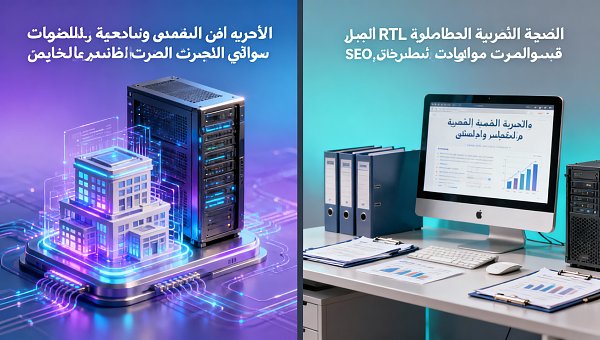
When businesses request quotations, the easiest trap to fall into is simply asking, “How much does it cost to build an Arabic website?” This is because different companies use very different quotation standards. Some quote the price of a template website, some include custom design, some only include a Chinese site plus additional Arabic pages, while others already include multilingual architecture, basic SEO, and later maintenance.
A quotation worth referencing should at least clearly specify the following:
- Website building method: template-based, semi-custom, or fully custom development
- Language solution: Arabic only, or synchronized Chinese-English-Arabic multilingual setup
- Number of pages: whether it includes the homepage, product pages, solution pages, news pages, contact page, etc.
- Design scope: whether a dedicated Arabic interface adaptation is provided and whether RTL right-to-left layout is supported
- Content processing: who is responsible for translation, proofreading, uploading, layout, and image replacement
- SEO basics: whether it includes URL rules, TDK settings, sitemap, hreflang tags, and mobile adaptation
- Technical deployment: server deployment region, access speed, SSL certificate, and backup mechanism
- After-sales maintenance: whether it includes the number of revisions, maintenance period, issue response, and training support
If a company’s quotation is very low but these items are not clearly explained, there is a high probability that additional charges will appear later. For technical evaluators and business decision-makers, what should really be compared is “who is more reasonable under the same configuration,” rather than making a superficial price comparison between two completely different delivery scopes.
Which factors directly affect quotations from Arabic website development companies
To understand how to choose Arabic website development services, you must first understand where quotation differences come from. Usually, what affects cost is not just the number of pages, but also the following key variables:
1. Difficulty of Arabic localization
Arabic is a right-to-left written language, and the page layout logic of a website is significantly different from Chinese and English. Navigation direction, button positions, text-image structure, and form input experience all need adaptation. If the content is only mechanically translated without adjusting the page structure, the final user experience is usually poor, and this adaptation work directly affects the quotation.
2. Whether the website is display-oriented or marketing-oriented
A standard showcase website focuses more on “information presentation,” while a marketing website places more emphasis on inquiry conversion, SEO indexing, landing page strategy, form design, and data tracking. The former usually has a lower budget, while the latter involves keyword layout, conversion path design, and operational interface configuration, so the price is higher, but it is also more suitable for export-oriented businesses whose goal is customer acquisition.
3. Whether multilingual linkage is needed
Many businesses do not build only an Arabic website; they also simultaneously build English, French, or other regional language sites. If the backend cannot be managed in a unified way, multilingual maintenance costs will rise rapidly. For businesses operating in overseas markets for the long term, a platform that supports unified content management, dynamic synchronization, and multilingual expansion is often more valuable than a one-time low-cost website build.
4. Whether SEO and subsequent marketing support are included
Launching a website is not the end point. If the service provider is only responsible for “building the website” but does not handle search optimization, content updates, and advertising integration, the business will later need to separately hire an SEO company, media buying team, or content team, making the overall cost even higher. An integrated service model of website + marketing services usually offers greater long-term ROI advantages.
How businesses should really judge whether a quotation is reasonable
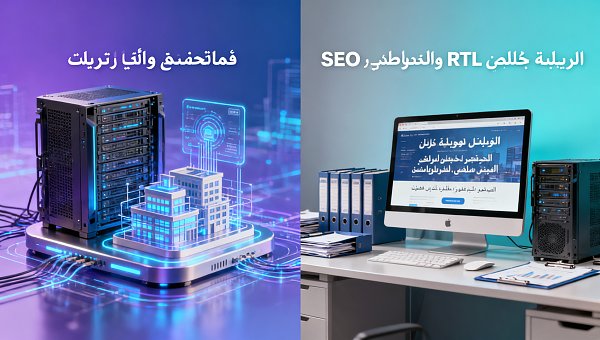
For information researchers, technical evaluators, and managers, the most practical method is not to stare at the total price, but to establish a set of evaluation criteria. It is recommended to focus on the following 5 points:
Check whether it supports business goals
If a business is building an Arabic website for brand display, then a basic version may be enough; if the goal is customer acquisition in the Middle East market, distributor recruitment, or cross-border inquiries, then the SEO structure, lead collection, content expansion capabilities, and mobile experience must be carefully evaluated. Different business goals mean different reasonable quotation ranges.
Check whether the quotation is transparent and can be broken down
A reliable Arabic website development company will usually list modules such as design, front-end, backend, language processing, SEO, deployment, and maintenance separately. The clearer the quotation, the easier it is for businesses to judge which items are essential and which are value-added. Conversely, if only a total price is given without explaining the scope, the risk is often greater.
Check whether the later maintenance cost is high
Some plans are cheap at the beginning, but once you change products, add pages, or switch language versions, you have to repeatedly pay high development fees. For after-sales maintenance staff and long-term operations teams, whether the backend is easy to use, whether it supports bulk updates, and whether it supports multilingual synchronization is more important than saving a few thousand yuan upfront.
Check whether it is adapted to search engines and overseas user habits
If an Arabic website does not have a standardized URL structure, internal tags, language identification, mobile experience, and loading speed optimization, it will be difficult to achieve stable performance in search engines such as Google. For decision-makers, this means that although the website appears to be online, there is no traffic and no inquiries, making it difficult to recover the investment.
Check whether the service provider has cross-market experience
A team with Middle East market experience has a clearer understanding of Arabic content style, page interaction habits, and localized marketing priorities, and also knows better how to connect website building with SEO, ad placement, and social media operations. This kind of experience is usually reflected in the quotation, but it is also more likely to translate into actual results.
What problems are usually hidden in low-priced Arabic website solutions
When comparing quotations, many businesses are attracted by “ultra-low-priced multilingual website building,” but a low price does not necessarily mean high cost performance. Common hidden risks include:
- Only translating text without adapting Arabic layout
- Using machine translation directly without industry terminology proofreading
- No basic SEO setup, making later optimization difficult
- Backend does not support independent management of Arabic content
- Quotation does not include content upload, image processing, and form configuration
- High maintenance charges after launch and slow modification response
- Unreasonable server deployment, resulting in poor access speed in the Middle East region
Therefore, when choosing Arabic website development, the question is not “can the lowest price get it done,” but “can this solution stably support overseas business over the next 1 to 3 years.” This is especially important for distributors, agents, and export-oriented enterprises, which should pay more attention to whether the website has scalability; otherwise, every additional language, every new section, and every campaign page added later will continuously increase costs.
How to choose a multilingual website platform to balance efficiency, SEO, and long-term operations
Platform selection is a key factor affecting quotations and later costs. A multilingual website platform suitable for overseas business should at least meet several conditions: support multilingual management, support Arabic RTL adaptation, facilitate SEO settings, allow convenient expansion, and make it easy for the operations team to update content.
For businesses that need to continuously expand overseas markets, relying purely on manual page-by-page translation and maintenance is inefficient and prone to errors. If a business is involved in cross-border e-commerce, B2B foreign trade, or service exports, using a multilingual solution with AI capabilities is more suitable. For example, Yiyingbao AI Translation Center supports mutual translation in 249 languages, can generate multilingual websites with one click, and supports dynamic content synchronization, human-machine collaborative editing, as well as adaptation of local units of measurement, date formats, and other details. The value of this kind of capability is reflected not only in translation speed, but also in later maintenance costs and cross-market expansion efficiency.
Especially for businesses that update content frequently, whether the platform can reduce long-term maintenance costs is more worthy of attention than the one-time website building price. This is because what truly creates a gap is often not the first version going online, but the update efficiency and marketing collaboration capabilities over the following months and years.
When choosing an Arabic website development company, it is recommended to directly ask these 7 questions
If you are screening suppliers, it is recommended to directly ask the following questions during communication, as this is more effective than simply “asking for a quotation sheet”:
- Does the quotation include Arabic RTL page adaptation?
- Who is responsible for translation content, and does it support manual proofreading or industry terminology optimization?
- Does it include basic SEO configuration and multilingual tag settings?
- Can the backend independently manage the Arabic version and support adding new languages later?
- After the website goes live, does it include maintenance, training, and revision services?
- Where is the server deployed, and how is access speed in the target market guaranteed?
- If pages, campaign topics, or marketing functions are added later, what are the charging rules?
These questions can quickly help businesses identify whether a service provider is a “one-time delivery type” or a “long-term growth partner.” For businesses hoping to connect website building with customer acquisition, this is especially important.
Summary: When reviewing quotations from Arabic website development companies, the key is to look at long-term value rather than one-time low prices
How should you evaluate a quotation from an Arabic website development company? In short: first look at the delivery scope, then localization capabilities; first look at later maintenance, then the initial price; first look at whether it supports SEO and marketing growth, then whether the pages look attractive. A solution truly worth choosing is not necessarily the lowest-priced one, but one that matches business goals, reduces long-term maintenance difficulty, and improves reach efficiency in the Middle East market.
If a business plans to expand into more language markets in the future, then multilingual capabilities should be included in consideration at the initial website-building stage. Whether for information research, technical evaluation, or management decision-making, it is recommended to use “whether it can support long-term growth” as the core criterion, rather than focusing only on the first quotation. Only an Arabic website development solution chosen this way has a better chance of truly bringing inquiries, brand influence, and sustainable returns.
Related Articles
Related Products
 EasyCamp SaaS Smart Website Marketing SystemE-Yingbao SaaS Smart Website Marketing System: AI-powered, zero-code website building. Rapidly launch multilingual independent e-commerce sites in just 10 minutes. Global server acceleration and AI-driven SEO optimization empower businesses to efficiently connect with global markets. The seamless integration of technology and user-friendly operation makes building e-commerce sites incredibly simple.
 AI+SEM Intelligent Advertising Marketing SystemAI+SEM drives intelligent ad creation, empowering full-funnel precision advertising marketing. The system automatically generates weekly/monthly reports, AI recommends keywords and target countries, monitors core metrics in real-time with intelligent alerts, and enables one-click high-conversion ad solutions to help quickly acquire customers and improve ROI.
 AI+SEO Dual Engine Optimization ServiceEasyWin AI+SEO Dual Engine Optimization System leverages AI-powered keyword mining, content generation, and comprehensive technical optimization to help foreign trade enterprises acquire high-quality organic traffic, significantly improving search rankings and conversion rates.
 AI+SNS Social Media Marketing SystemYingbao AI+SNS Social Media Marketing System - Precision social capture for the social media era. Supports one-click content synchronization across major platforms like Facebook and LinkedIn. AI intelligently rewrites posts for enhanced relevance. 24/7 AI customer service and user profiling analysis empower businesses to efficiently expand into global markets.
 AI+SEO营销解决方案易营宝AI+SEO营销解决方案,通过AI批量写作、智能生成TDK、精准关键词扩词等功能,全面优化网站SEO效果,提升流量与转化率。助力企业构建高效智能网站新生态。
 AI+SEM Advertising Marketing SolutionsAI+SEM Advertising Marketing Solution leverages AI technology to deeply empower SEM ad campaigns. It automatically generates weekly/monthly reports using AI, presenting account data across multiple dimensions for comprehensive insights into campaign performance and trends. The system precisely recommends keywords and target countries, intelligently generates high-conversion ad copy, and enables one-click activation of efficient campaign plans to help businesses rapidly acquire customers. Simultaneously, it monitors core metrics in real time, intelligently identifies abnormal fluctuations, and issues timely alerts to ensure stable, high-return advertising results.
 Domain Name ServicesEasyWin provides professional domain name services, including intelligent queries, one-stop registration, brand protection, and full lifecycle management, helping businesses build a digital brand image.
 EasyOperate B2C Cross-Border E-Commerce Platform & Independent WebsiteEasyStore B2C Cross-border E-commerce Independent Store is an intelligent website building and cross-border e-commerce integrated solution independently developed by EasyStore Information Technology (Beijing) Co., Ltd. The system is specially designed for small and medium-sized as well as large export enterprises, integrating 'website building, operation, marketing, advertising, and conversion' into one, helping enterprises quickly establish cross-border e-commerce independent stores to achieve brand globalization and global sales growth.
The platform supports multiple languages, multiple currencies, and multi-channel marketing, with built-in AI intelligent translation and SEO optimization systems, suitable for mainstream markets such as Southeast Asia, Europe and America, Latin America, and the Middle East, assisting Chinese manufacturing enterprises in efficiently deploying international e-commerce strategies. SSL证书易营宝提供专业SSL安全证书服务,包括单域名和泛域名证书,确保网站数据传输加密、身份验证和完整性保护,助力企业建立安全可信的在线业务环境。









