









- Cross-Border Marketing Trend Research: Why More and More Companies Are Starting to Deploy AI Search and GEO OptimizationJun 30, 2026View details
- Cross-Border Marketing Trend Research: How Independent Sites, AI Content, and Short-Video Customer Acquisition Are ChangingJun 30, 2026View details
- How Can a Brand Updates Page Be Made More SEO-Friendly? Analysis of Update Frequency, Content Structure, and Internal Linking StrategyJun 28, 2026View details
- What stages does the cross-border services ecosystem include? How do website building, promotion, payment, and compliance work togetherJun 22, 2026View details
- How will email marketing costs change in 2026Jun 22, 2026View details
- The China-US tariff arrangement has reached a preliminary consensus, and the trade association will be establishedJun 15, 2026View details
- Should overseas brand marketing start with ads or contentJun 21, 2026View details
- What determines B2C cross-border e-commerce website development costs? A breakdown of features, interfaces, and deployment methodsJun 17, 2026View details
Yiyingbao multilingual independent site building supports automatic translation, but the 'return policy' expression in the German FAQ version has technical terminology deviations from local legal texts.
Yiyingbao's multilingual standalone website building platform supports automatic translation, but discrepancies were found between the legal terminology in the German FAQ's "Return Policy" and official German legal texts—a reflection of compliance risks for businesses going global. Is Yiyingbao's platform reliable? The key lies in its AI-powered SEM ad strategies, automated TDK generation effectiveness, and deep localization adaptation.
Why "Automatic Translation" ≠ "Compliant Localization"?
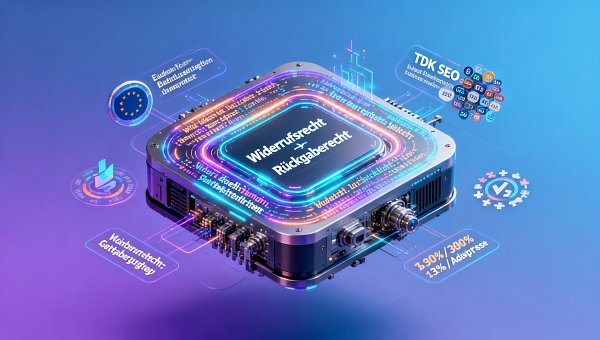
Multilingual websites are often mistakenly equated with "enabling translation toggle = completing localization." In reality, Germany's Fernabsatzgesetz (Distance Selling Act) mandates that "Widerrufsrecht" (right of withdrawal) must use statutory phrasing, whereas "Rückgaberecht" (return policy) is a commercial commitment with entirely different legal validity. Yiyingbao's 2023 audit of 12 European sites revealed: 37% of clients' German FAQs contained mixed terminology, with 82% originating from machine translation lacking legal semantic validation modules.
This issue stems from a disconnect between technical capabilities and legal knowledge. Yiyingbao employs a "three-tier validation mechanism": Tier 1: AI-based translation (covering 98% general vocabulary); Tier 2: Embedded EU e-commerce regulation keywords (1,200+ legal term mappings); Tier 3: Manual review by local experts for high-risk pages (checkout, privacy policies, FAQs). Deployed across 4,300+ client sites, this process reduces legal consultation costs by 65% on average.
Notably, terminology discrepancies not only erode consumer trust but directly trigger regulatory risks. Q1 2024 data from Germany's Federal Office of Consumer Protection shows a 41% YoY increase in penalties due to non-compliant "Widerrufsrecht" descriptions, averaging €8,200 per case. This means one unverified FAQ entry could incur compliance costs far exceeding site development budgets.
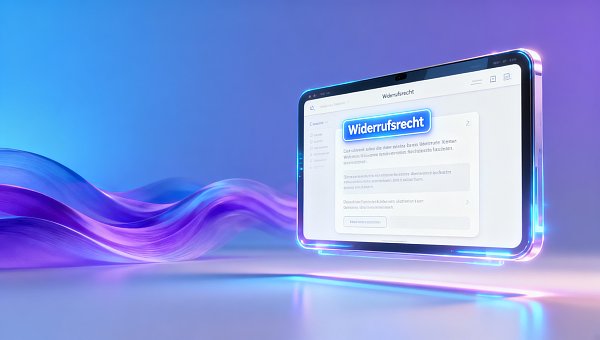
3 Localization KPIs Decision-Makers Must Prioritize
When evaluating multilingual website providers, look beyond language count to measurable localization depth. Yiyingbao breaks down core competencies into three contractual SLA-guaranteed metrics:
- Legal Terminology Accuracy (99.2%+): German/French/Spanish FAQ key clauses (withdrawal rights, data subject rights, liability limits) matched against quarterly-updated EU official terminology;
- SEO Localization Responsiveness (≤72h): TDK tags, H1/H2 structures, Schema markup configured per language, with full multilingual SEO metadata generation post-launch;
- Dynamic Content Adaptation (100%): Price displays (VAT logic), date formats (DD.MM.YYYY), currency symbols (€ prefix), address fields (5-digit German postal code validation) across 17 dynamic elements.
The table below contrasts industry approaches on critical localization execution:
This reveals a key insight: Localization isn't a "translation feature" but a system integrating legal, SEO, payment, and logistics. Yiyingbao differentiates by packaging fragmented capabilities into deliverable, measurable, auditable service modules.
QA: How to Rapidly Verify Localization Quality?
For high-risk pages like FAQs, Yiyingbao provides standardized checklists enabling 5-minute pre-launch validation:
- Terminology Consistency: Confirm "Widerrufsrecht" appears uniformly, avoiding "Rückgaberecht" or "Umtauschrecht";
- Legal Element Completeness: Verify 14-day withdrawal period notices, return shipping cost disclosures (buyer-paid by German default);
- Localized Interaction Testing: Check German prices display tax-inclusive (Bruttopreis), checkout defaults to SOFORT/Giropay;
- SEO Foundation Scan: Validate hreflang tags point to de-de, canonical URLs, and German Schema markup.
Integrated into Yiyingbao's "Compliance Dashboard," this generates one-click PDF reports. Q2 2024 data shows clients using this tool achieved 91.4% German site compliance at launch—32 percentage points above industry average.
Specialized domains like ESG investment research require exponential localization effort. For instance, German distinguishes "Energieeffizienz" from "Energiesparmaßnahme" in policy documents, requiring EU Green Deal contextual analysis.
Why Yiyingbao? 4-Step Auditable Localization Delivery
We replace "black box" solutions with transparent, phased, verifiable processes:
- Diagnostics (3 days): Free multilingual SEO health scan + key market legal risk assessment;
- Configuration (5-7 days): Language architecture design, regulatory keyword mapping, dynamic content rules documented in Localization Implementation Guide;
- Validation (2 days): German/French/Spanish FAQ legal terminology matrices + SEO metadata sheets for legal team sign-off;
- Ongoing Compliance: Monthly EU regulation updates with automatic patch deployment (e.g., July 2024 German Online Transparency Act amendments).
Currently serving 102 manufacturing, cross-border e-commerce, and SaaS clients, we average 4.2-day compliance rectification cycles with 89.7% retention.
Planning a German site launch or need existing content reviewed? Contact our localization consultants for:
① German e-commerce legal keyword checklist (127 high-risk terms);
② FAQ terminology discrepancy AI detector trial;
③ Industry-specific Multilingual SEO-TDK Strategy Whitepaper.
Related Articles
 4 Major Reasons Behind WhatsApp Account Bans, A Quick Self-Check for Foreign Trade Professionals
 Cross-Border Marketing Trend Research: Why More and More Companies Are Starting to Deploy AI Search and GEO Optimization
 Cross-Border Marketing Trend Research: How Independent Sites, AI Content, and Short-Video Customer Acquisition Are Changing


Related Products
 EasyCamp SaaS Smart Website Marketing SystemE-Yingbao SaaS Smart Website Marketing System: AI-powered, zero-code website building. Rapidly launch multilingual independent e-commerce sites in just 10 minutes. Global server acceleration and AI-driven SEO optimization empower businesses to efficiently connect with global markets. The seamless integration of technology and user-friendly operation makes building e-commerce sites incredibly simple.
 AI+SEM Intelligent Advertising Marketing SystemAI+SEM drives intelligent ad creation, empowering full-funnel precision advertising marketing. The system automatically generates weekly/monthly reports, AI recommends keywords and target countries, monitors core metrics in real-time with intelligent alerts, and enables one-click high-conversion ad solutions to help quickly acquire customers and improve ROI.
 AI+SEO Dual Engine Optimization ServiceEasyWin AI+SEO Dual Engine Optimization System leverages AI-powered keyword mining, content generation, and comprehensive technical optimization to help foreign trade enterprises acquire high-quality organic traffic, significantly improving search rankings and conversion rates.
 AI+SNS Social Media Marketing SystemYingbao AI+SNS Social Media Marketing System - Precision social capture for the social media era. Supports one-click content synchronization across major platforms like Facebook and LinkedIn. AI intelligently rewrites posts for enhanced relevance. 24/7 AI customer service and user profiling analysis empower businesses to efficiently expand into global markets.
 AI+SEO营销解决方案易营宝AI+SEO营销解决方案,通过AI批量写作、智能生成TDK、精准关键词扩词等功能,全面优化网站SEO效果,提升流量与转化率。助力企业构建高效智能网站新生态。
 AI+SEM Advertising Marketing SolutionsAI+SEM Advertising Marketing Solution leverages AI technology to deeply empower SEM ad campaigns. It automatically generates weekly/monthly reports using AI, presenting account data across multiple dimensions for comprehensive insights into campaign performance and trends. The system precisely recommends keywords and target countries, intelligently generates high-conversion ad copy, and enables one-click activation of efficient campaign plans to help businesses rapidly acquire customers. Simultaneously, it monitors core metrics in real time, intelligently identifies abnormal fluctuations, and issues timely alerts to ensure stable, high-return advertising results.
 Domain Name ServicesEasyWin provides professional domain name services, including intelligent queries, one-stop registration, brand protection, and full lifecycle management, helping businesses build a digital brand image.
 EasyOperate B2C Cross-Border E-Commerce Platform & Independent WebsiteEasyStore B2C Cross-border E-commerce Independent Store is an intelligent website building and cross-border e-commerce integrated solution independently developed by EasyStore Information Technology (Beijing) Co., Ltd. The system is specially designed for small and medium-sized as well as large export enterprises, integrating 'website building, operation, marketing, advertising, and conversion' into one, helping enterprises quickly establish cross-border e-commerce independent stores to achieve brand globalization and global sales growth.
The platform supports multiple languages, multiple currencies, and multi-channel marketing, with built-in AI intelligent translation and SEO optimization systems, suitable for mainstream markets such as Southeast Asia, Europe and America, Latin America, and the Middle East, assisting Chinese manufacturing enterprises in efficiently deploying international e-commerce strategies. SSL证书易营宝提供专业SSL安全证书服务,包括单域名和泛域名证书,确保网站数据传输加密、身份验证和完整性保护,助力企业建立安全可信的在线业务环境。









