









- What Does a Global Traffic Ecosystem Service Provider Do? What Are the Differences from a Single Advertising AgencyJul 16, 2026View details
- What should you focus on in the latest enterprise SaaS report? From renewal rates and delivery costs to overseas growth opportunitiesJul 12, 2026View details
- What signals are worth paying attention to in a cross-border marketing trend report? B2B companies should look at these 6 signalsJul 11, 2026View details
- How to Read a Cross-Border Marketing Trends Report? Five Key Dimensions for Evaluating Channel OpportunitiesJul 11, 2026View details
- Which channel has the highest ROI in the global traffic ecosystem? Comparative analysis of search, social media, and advertisingJul 10, 2026View details
- What multilingual website services are available in Sanya? Which model is more suitable for local businesses going global?Jul 08, 2026View details
- How to view the complete list of China SaaS companies in the top 100? Practical methods for screening website-building and marketing service providersJul 08, 2026View details
- How to view pricing in the global traffic ecosystem? Cost comparison of search, social media, and content channel advertisingJul 06, 2026View details
What are the practical details of Meta advertising techniques?
To improve your Meta advertising skills, you can't just look at the surface bids and creatives. You also need to combine social media marketing strategies, GEO precision marketing, and website traffic monitoring tools to connect the entire process of campaign execution, conversion, and post-campaign analysis, and truly maximize the effectiveness of your ads.
Why do many companies spend their budgets on Meta advertising but fail to generate effective leads?
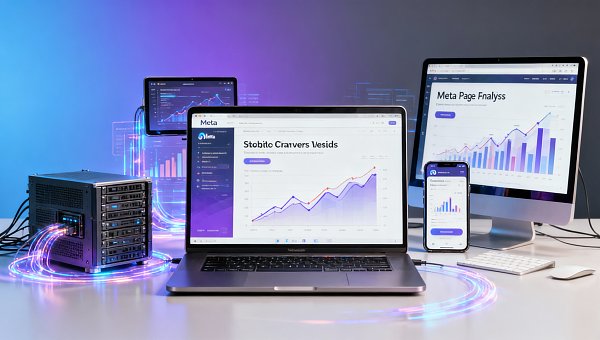
Many companies believe that Meta advertising skills are simply about "building ad groups, adjusting budgets, and creating images and videos." However, in a website + marketing service integrated scenario, advertising is just a traffic entry point. What truly determines conversion is the landing page structure, audience segmentation, data attribution, and whether follow-up is coordinated.
For information researchers, the most common problem is many clicks but few inquiries; for corporate decision-makers, the core issue is the inability to judge the quality of channels after budgeting; while project managers, distributors, and after-sales personnel are more concerned about whether the leads are accurate, whether the delivery schedule is clear, and whether the subsequent communication costs are controllable.
Based on experience, Meta advertising campaigns should be broken down into at least four stages: account setup, creative testing, conversion tracking, and data analysis. Optimizing only the first two steps typically results in a situation where click-through rates are acceptable, but cost-per-click continues to rise within 7 to 14 days.
Since 2013, Yiyingbao Information Technology (Beijing) Co., Ltd. has been deeply involved in global digital marketing services. It uses artificial intelligence and big data to drive the coordinated implementation of intelligent website building, SEO optimization, social media marketing and advertising, which is more suitable for solving the systemic problems of "ads generate traffic, but websites do not convert, and there is no basis for review".
Common failure points are usually not in the delivery button, but in the overall process flow.
- The audience is too broad, and interest tags and regional levels are not differentiated according to the three stages of cold start, volume expansion, and remarketing.
- The advertising materials only emphasize the product's selling points, without addressing user pain points, price sensitivity, and purchasing decision-making cycles.
- Slow landing page loading speed and cluttered first screen information result in a high drop-off rate in the first 3 seconds, wasting ad clicks.
- Without website traffic monitoring tools and event tracking, it's impossible to determine whether the issue is with the materials, the page, or the sales follow-up.
Understanding these three metrics is crucial to determining whether increasing your budget for Meta ads is worthwhile.
In practice, it is recommended to divide the metrics into three layers: the first layer is to look at exposure and clicks to judge the attractiveness of the creative materials; the second layer is to look at site dwell time, scroll depth, and form reach rate to judge the page's responsiveness; the third layer is to look at effective inquiries, transaction cycle, and repurchase probability to judge the true commercial value.
If businesses only focus on the cost per click, they are prone to misjudging the situation. Some ads have cheap clicks but lead to less than 10 seconds of engagement; while others have slightly higher click costs but result in longer session durations and higher conversion rates. The basis for judgment must shift from single-point placement to end-to-end operational management.
What are some practical tips for Meta advertising, and which aspects should be optimized first?
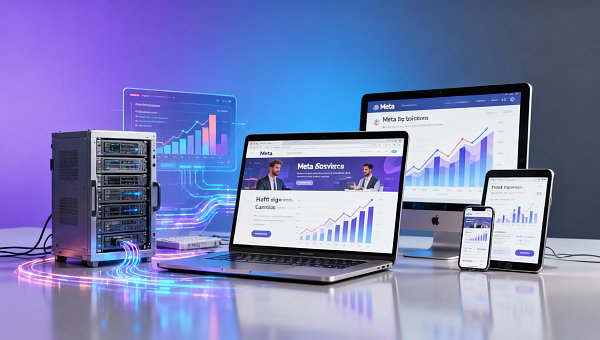
The truly effective technique for Meta advertising is not to increase the budget all at once, but to verify it in batches according to a testing schedule. It is generally recommended to run 3 to 5 sets of creatives, 2 to 3 audience groups, and 1 clear conversion goal during the cold start phase, observe the stability for the first 5 days, and then decide whether to increase the scale.
For B2B companies, especially those in industries with a strong need for integrated website and marketing services, the advertising account structure should align with the sales process. For example, separate "brand awareness," "inquiry acquisition," and "remarketing reactivation" instead of cramming them all into the same campaign; otherwise, it will be difficult to pinpoint issues later.
In terms of content, it's essential to adhere to the principle of "one core selling point + one scenario-based evidence + one action directive." For example, when targeting fragrance and lifestyle companies, if the website needs to balance brand display and business conversion, it can combine the visual page concepts related to fragrance, personal care, and beauty to emphasize packaging details, craftsmanship, and OEM process information.
Landing pages shouldn't just aim for "good looks." In practice, the first screen should clearly explain the target audience, key strengths, available inquiries, and next steps within 5 seconds; the middle section should then present case studies, service processes, and comparative information; and the bottom should include high-intent entry points such as forms, WhatsApp, or phone calls, forming a complete closed loop.
Key areas for optimization: account, creatives, page layout, and data.
The table below is suitable for quickly reviewing whether Meta advertising has a foundation for continuous optimization, and it is also suitable for corporate decision-makers to directly determine whether resources have been invested in the right areas when reviewing weekly campaigns.
Of these four stages, the most easily overlooked is "sales feedback." If the advertising side focuses on the number of forms, while the business side focuses on effective sales opportunities, then the two sets of data are inconsistent, making it difficult for the campaign team to complete truly valuable optimizations within two to four weeks.
When testing materials, what should be replaced first?
If the click-through rate is low, first change the cover, title, and the content in the first 3 seconds; if the click-through rate is normal but the conversion is poor, prioritize adjusting the landing page homepage and form path; if there are many forms but many invalid leads, go back and redo the audience package and ad copy to avoid attracting the wrong audience.
How should companies at different stages develop a strategy for integrating Meta advertising with their websites?
Meta advertising strategies are not a fixed template. There are significant differences in advertising objectives, page information density, and lead filtering methods between companies launching overseas for the first time, brands with existing independent websites, companies relying on channel distribution, and service-oriented companies requiring ongoing after-sales support.
For information researchers, the key is to first determine whether it is "suitable to invest"; for corporate decision-makers, the key is "at which stage is it more stable to allocate the budget"; for project leaders, the key is "whether the page, materials, tracking, and online integration can be completed within the established schedule".
Therefore, a more reasonable approach is to first stratify businesses based on their maturity level, and then determine the account structure and site functional modules. From YiYingBao's full-chain service perspective, advertising is never an isolated module, but should be designed in sync with intelligent website building, SEO accumulation, social media content, and remarketing strategies.
Three common business stages, and corresponding key areas for investment and engagement.
The table below is suitable for internal discussions within companies before project initiation, especially for teams with limited budgets, tight delivery cycles, and a desire to quickly validate market feedback.
If the company belongs to the fragrance and lifestyle brand category, the website is more suitable for adopting a modular streamlined layout, clear vertical hierarchy and immersive visual strategy, so that the large banner, grid-like product matrix, OEM timeline and advantage comparison card form a logical closed loop. This type of approach is often more conducive to the conversion of B-end inquiries.
When advancing the project, it is recommended to implement it in 6 stages.
- Prioritize markets and regions, starting with one core country or region, and then expanding to nearby markets.
- To understand the target audience, it is essential to differentiate between at least three communication logics: end consumers, distributors, and corporate buyers.
- Simultaneously build landing pages and conversion tracking; it is not recommended to launch the campaign first and then add tracking points later.
- Prepare at least three sets of material versions, each highlighting price, quality, delivery, or customization capabilities.
- Establish a weekly review mechanism to unify the messaging across advertising, website, and sales.
- The first round of elimination and ramp-up will be completed within 14 to 30 days to avoid long-term inefficient consumption.
What risks and misconceptions are companies most likely to overlook during procurement and execution?
When choosing Meta advertising services, many companies only ask "how much does it cost to place an ad" or "how much does it cost per lead," but they overlook more crucial purchasing decisions: whether it includes site redesign suggestions, whether it provides event tracking and data calibration, whether it can connect to multilingual pages, and whether it can implement GEO precision marketing strategies for different regions.
If the service provider only handles opening advertising accounts without addressing website integration and data attribution, businesses may find after a month that they have ad spending and reports, but the actual conversion rate of leads remains unclear. This is especially true in B2B businesses, where lead quality is often more important than the quantity of forms.
Another misconception is the over-reliance on "viral creatives." The core of Meta Ads strategy is not to gamble on a single blockbuster hit, but to establish a stable creative iteration mechanism. It is generally recommended to prepare 4 to 8 new creative directions each month to continuously cover new selling points, new scenarios, and new regional audiences.
For businesses with limited budgets, it's not necessary to go all out from the start. A more pragmatic approach is to begin with one main website, one primary conversion target, and two core customer groups; once website traffic monitoring tools and sales feedback mechanisms are running smoothly, then expand to more pages and product lines.
Five items to check directly before purchasing
- Can you provide an integrated solution that combines ad placement, page optimization, SEO basics, and data tracking, rather than individual services?
- Whether the frequency of weekly, monthly, and debriefing reports is clearly defined, and whether there are consistent metrics for advertising and sales.
- Does it support multilingual pages, localized content adjustments, and testing of material differences across different regions?
- Can different conversion paths be designed for distributors, end consumers, and project managers?
- Are there clear delivery milestones, such as a 7-day website setup schedule, a 14-day testing period, and a 30-day post-launch review target?
FAQ: Some of the most frequently asked practical questions by companies
How long does it take to see if a Meta ad campaign is on the right track?
Generally, you can start by checking click-through rate, visitor quality, and initial conversion behavior after 7 to 14 days. To determine the effectiveness of leads, it's usually necessary to observe for 2 to 4 weeks in conjunction with sales feedback. The decision-making cycle is even longer in B2B scenarios, so it's not recommended to jump to conclusions based on data from just the first 3 days.
Which businesses should prioritize investing in Meta advertising?
This is suitable for companies with clear market goals, basic website capabilities, the ability to quickly update content, and a willingness to review sales data in real time. If a company hasn't even prepared its page structure, contact information, and audience segmentation, simply increasing the advertising budget will often have limited effectiveness.
Why does a website directly affect the effectiveness of Meta ads?
Because advertising only brings people in, the website determines whether users stay, inquire, and trust the brand. Especially for B2B businesses, if the page cannot clearly demonstrate the process, qualification logic, delivery method, and differentiated advantages, even the cheapest traffic will be difficult to convert into sales.
How should I plan a website that balances brand image and conversion rates?
You can refer to the display logic of fragrance, hair care, and beauty products: use a lot of white space to focus the visual attention, use a banner with a smooth transition to support the product matrix, then use a timeline to break down the customization process, and use a data dashboard to show the scale and quality standards, so that the brand's aesthetics and business communication are online at the same time.
Why choose an integrated service team? It's better suited for long-term growth in Meta advertising.
The value of Meta advertising techniques lies not in generating a few inquiries in the short term, but in establishing a stable, replicable, and scalable growth mechanism. If websites, content, social media, advertising, and data analytics are scattered across different teams, problems such as inconsistent goals, delivery gaps, and low optimization efficiency often arise.
Founded in 2013 and headquartered in Beijing, China, E-Marketing Information Technology (Beijing) Co., Ltd. has long been committed to providing global digital marketing services driven by artificial intelligence and big data, and has provided growth support to over 100,000 companies. Its "technology innovation + localized service" model is particularly suitable for companies with diverse market, role, and language needs to establish a complete marketing chain.
If you are evaluating a Meta advertising campaign, prioritize asking these four key questions: Is your current website suitable for handling ad traffic? How should your audience be segmented? How should you set up your campaign testing cycle? And do pages in different regions need localization adjustments? Once these questions are clarified, budget utilization will typically be more stable.
If you need to further advance the project, you can also directly communicate to confirm parameters, optimize landing page structure, delivery cycle, customized solutions, lead tracking configuration, style direction, and pricing range. For companies that want to balance brand display and business conversion, integrated planning is usually easier to see a clear improvement path within 30 to 90 days compared to single-point placement.
Related Articles

Related Products
 EasyCamp SaaS Smart Website Marketing SystemE-Yingbao SaaS Smart Website Marketing System: AI-powered, zero-code website building. Rapidly launch multilingual independent e-commerce sites in just 10 minutes. Global server acceleration and AI-driven SEO optimization empower businesses to efficiently connect with global markets. The seamless integration of technology and user-friendly operation makes building e-commerce sites incredibly simple.
 AI+SEM Intelligent Advertising Marketing SystemAI+SEM drives intelligent ad creation, empowering full-funnel precision advertising marketing. The system automatically generates weekly/monthly reports, AI recommends keywords and target countries, monitors core metrics in real-time with intelligent alerts, and enables one-click high-conversion ad solutions to help quickly acquire customers and improve ROI.
 AI+SEO Dual Engine Optimization ServiceEasyWin AI+SEO Dual Engine Optimization System leverages AI-powered keyword mining, content generation, and comprehensive technical optimization to help foreign trade enterprises acquire high-quality organic traffic, significantly improving search rankings and conversion rates.
 AI+SNS Social Media Marketing SystemYingbao AI+SNS Social Media Marketing System - Precision social capture for the social media era. Supports one-click content synchronization across major platforms like Facebook and LinkedIn. AI intelligently rewrites posts for enhanced relevance. 24/7 AI customer service and user profiling analysis empower businesses to efficiently expand into global markets.
 AI+SEO营销解决方案易营宝AI+SEO营销解决方案,通过AI批量写作、智能生成TDK、精准关键词扩词等功能,全面优化网站SEO效果,提升流量与转化率。助力企业构建高效智能网站新生态。
 AI+SEM Advertising Marketing SolutionsAI+SEM Advertising Marketing Solution leverages AI technology to deeply empower SEM ad campaigns. It automatically generates weekly/monthly reports using AI, presenting account data across multiple dimensions for comprehensive insights into campaign performance and trends. The system precisely recommends keywords and target countries, intelligently generates high-conversion ad copy, and enables one-click activation of efficient campaign plans to help businesses rapidly acquire customers. Simultaneously, it monitors core metrics in real time, intelligently identifies abnormal fluctuations, and issues timely alerts to ensure stable, high-return advertising results.
 Domain Name ServicesEasyWin provides professional domain name services, including intelligent queries, one-stop registration, brand protection, and full lifecycle management, helping businesses build a digital brand image.
 EasyOperate B2C Cross-Border E-Commerce Platform & Independent WebsiteEasyStore B2C Cross-border E-commerce Independent Store is an intelligent website building and cross-border e-commerce integrated solution independently developed by EasyStore Information Technology (Beijing) Co., Ltd. The system is specially designed for small and medium-sized as well as large export enterprises, integrating 'website building, operation, marketing, advertising, and conversion' into one, helping enterprises quickly establish cross-border e-commerce independent stores to achieve brand globalization and global sales growth.
The platform supports multiple languages, multiple currencies, and multi-channel marketing, with built-in AI intelligent translation and SEO optimization systems, suitable for mainstream markets such as Southeast Asia, Europe and America, Latin America, and the Middle East, assisting Chinese manufacturing enterprises in efficiently deploying international e-commerce strategies. SSL证书易营宝提供专业SSL安全证书服务,包括单域名和泛域名证书,确保网站数据传输加密、身份验证和完整性保护,助力企业建立安全可信的在线业务环境。









