









- What stages does the cross-border services ecosystem include? How do website building, promotion, payment, and compliance work togetherJun 22, 2026View details
- How will email marketing costs change in 2026Jun 22, 2026View details
- The China-US tariff arrangement has reached a preliminary consensus, and the trade association will be establishedJun 15, 2026View details
- Should overseas brand marketing start with ads or contentJun 21, 2026View details
- What determines B2C cross-border e-commerce website development costs? A breakdown of features, interfaces, and deployment methodsJun 17, 2026View details
- China-Morocco zero-tariff access, a breakthrough in the cost of Moroccan goods exports to ChinaJun 11, 2026View details
- What signal should be released for the suspension of exports to JapanJun 10, 2026View details
- China's May LNG imports rebounded, with increased volumes from Russia and Canada filling the Middle East supply gapJun 10, 2026View details
In Meta advertising techniques, which step is most easily overlooked
When discussing Meta advertising techniques, many operators focus on creative materials, budget, and bids, neglecting the pre-campaign calibration of the target audience and conversion path. This crucial step often determines whether the advertising effect can be truly maximized.
For those responsible for daily ad campaigns, fluctuations in ad account performance are often not due to a lack of budget adjustment skills, but rather a failure to establish a closed loop between front-end clicks and back-end processing. Especially in integrated website and marketing service scenarios, if landing pages, event tracking, form paths, page speed, and multilingual experiences are not pre-calibrated, even the most sophisticated Meta ad placement techniques will struggle to maintain stable conversions.
Since its establishment in 2013, Yiyingbao Information Technology (Beijing) Co., Ltd. has long focused on providing collaborative services in intelligent website building, SEO optimization, social media marketing, and advertising placement. For companies looking to improve inquiry quality, reduce invalid clicks, and shorten optimization cycles, what is often overlooked is not how to click the ad button, but whether the infrastructure is properly prepared before the campaign begins.
Why is audience and conversion path alignment a key step in Meta advertising techniques?
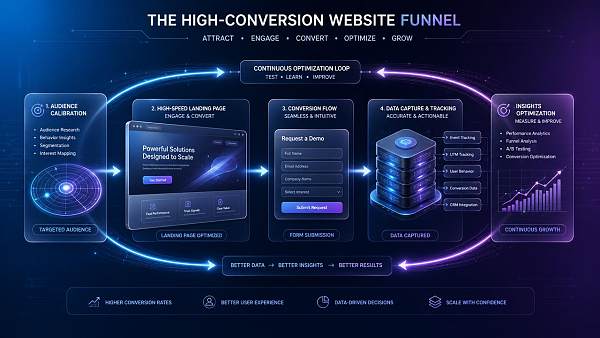
Many accounts seem to have clicks, impressions, and a high CTR in the first 7 days, but still lack stable inquiries after 7 days. The problem is usually not with the ad creative itself, but with a lack of coordination in the three key areas: "who saw the ad, where did they go after seeing it, and what did they do next." The real value of Meta ad placement techniques is to help the platform identify high-intent audiences more quickly, rather than simply pursuing cheap traffic.
First, consider the target audience, not just interest tags.
Many operators tend to stack 5 to 10 interest keywords at a time when building an audience, thinking that the more precise the better. In reality, in B2B scenarios, an overly narrow audience often leads to a longer learning period. The advertising system may not receive enough signals within 3 to 5 days, ultimately resulting in problems such as stagnant spending, unstable conversions, and excessively high ad frequency.
A more reasonable approach is to first split the audience into three layers: cold start audience, interactive retargeting audience, and high-intent remarketing audience. The cold start audience can be broadly targeted by region, job title, and industry behavior; retargeting can recover users who have visited the website in the past 30 days; and the high-intent audience should focus on users who have made form visits, clicked on WhatsApp, or stayed for more than 60 seconds.
Four checks for audience calibration
- Ensure that the target countries are consistent with the sales coverage area to avoid advertising in markets that cannot be reached.
- Do we differentiate between new and returning customers to avoid repeated contact that occurs more than 3 to 5 times?
- Should audiences be segmented by product line to avoid a single ad group carrying too many pricing demands?
- Whether to retain a sufficient sample size, single-group coverage is recommended to be tested again with at least 50,000 to 200,000 people.
In integrated website and marketing service projects, audience definition should not be limited to the Meta backend. It should also incorporate website visit data, SEO organic search terms, click-through rates on popular page areas, and form abandonment points to infer the user's true intent. The significance of this approach is that advertising is not optimized in isolation, but rather iterated upon based on the entire customer acquisition journey.
Looking at the path again, each step after clicking affects the cost.
A common misconception is that an ad click-through rate of 1.5% or even 2% or higher indicates a successful ad campaign. However, for conversion-driven campaigns, the real metrics to consider are reach rate, page load time, clarity of the first screen information, form completion rate, and secondary reach rate. If the landing page takes more than 3 seconds to load, many mobile users will have already dropped off before even entering the site.
For businesses targeting overseas markets, a website's processing capacity directly determines the effectiveness of Meta advertising strategies. For example, websites with global acceleration, multilingual management, mobile synchronization, and event tracking are more likely to convert clicks into inquiries. Solutions like EasyMarketing's Foreign Trade Marketing (Super) Website can load pages in under 1.5 seconds, support 100+ languages, 2500+ server nodes, and 120T of bandwidth, making them more suitable for cross-regional advertising.
The table below can help operators quickly identify the most easily overlooked link issues before deployment.
As the table shows, the real ineffectiveness of Meta advertising techniques often lies not within the ad interface, but outside of it. Only when traffic entry points, page placement, conversion tracking, and remarketing logic are all established can account optimization have a stable foundation.
How operators can perform this step well: A 5-step execution method from pre-deployment to post-deployment
For the execution team, the biggest fear is knowing where the problem lies but not knowing how to implement it. To transform Meta advertising techniques into replicable methods, it is recommended to follow 5 steps, each with clear checklists. The first round of calibration can usually be completed within 7 to 14 days.
Step 1: Define your conversion goals; don't treat "page views" as the result.
Effective objectives for B2B businesses are typically not single visits, but rather inquiries, document downloads, WhatsApp messages, and requests for demonstrations or quotes. If an account uses more than three objectives simultaneously, the system's learning process will be fragmented, and operators will find it difficult to determine which lead is truly generating business opportunities.
Step 2: Unify advertising information and website homepage commitment
The ad copy promises a "solution within 7 days," but the landing page only contains a brand introduction, which is why many clicks don't convert. It's recommended that the first screen clearly explain who you are, what solutions you provide, and how to contact you. Limiting form fields to 4 to 6 items is more conducive to conversion; excessively long forms significantly increase abandonment rates.
Step 3: Upgrade event tracking from "Installation Complete" to "Available"
Many teams believe they've completed the configuration simply by installing Pixel, but in reality, at least three types of events need to be verified: page views, key button clicks, and successful form submissions. For multilingual sites, it's also crucial to ensure that the events on pages in different languages are consistent; otherwise, inaccurate ad data feedback will affect subsequent automatic optimization.
Event calibration recommendation list
- Retest core page events after each redesign;
- Ad UTM parameters should be named consistently with those in site analytics tools;
- Forms and redirect links should be reviewed at least once a week.
- Set different conversion values for the inquiry page, thank you page, and download page.
Step 4: Establish tiered remarketing to avoid wasting acquired traffic.
The problem for most accounts isn't a lack of traffic, but rather the failure to reactivate early clickers. It's recommended to create at least three remarketing pools: those with high traffic from the past 7 days, those with deep browsing from the past 30 days, and those with historical interactions from the past 90 days. Use different content for each pool, such as case studies, pricing, feature comparisons, or incentives for inquiries. This approach typically yields more stable conversion rates than using cold traffic.
Step 5: Make the website, SEO, and advertising share the same data logic.
In an integrated website + marketing service model, advertising is not an isolated channel. Popular ad click keywords, SEO organic search terms, page dwell time, bounce rates, and inquiry sources should all be analyzed from the same perspective. A website system with marketing loop analysis capabilities allows operators to quickly identify which country, which page, and which type of keywords are most likely to generate effective leads.
To facilitate implementation, a common pre-launch checklist is provided below, suitable for weekly review within the team.
The value of these checklists lies in transforming Meta advertising techniques from experience-based operations into a standardized process. For companies expanding overseas, if their websites also possess AI-powered website building, multilingual management, SEO optimization, and marketing data analysis capabilities, advertising optimization efficiency will be significantly higher. Websites like YiYingBao's Foreign Trade Marketing (Super) Website are more suitable for manufacturing, cross-border e-commerce, B2B wholesale, brand overseas expansion, and service exports, enabling simultaneous use of PC and mobile sites and reducing multilingual maintenance costs.
Three common mistakes in Meta advertising campaigns that operators should avoid as early as possible.
In practice, many accounts struggle to perform well, not because they lack Meta ad placement skills, but because they repeatedly fall into the same traps. By avoiding these pitfalls in advance, you can usually reduce the trial-and-error time by 2 to 4 weeks.
Myth 1: High click-through rates for creative content equal good results.
High click-through rates only indicate "willingness to click," not "willingness to leave contact information." If the ads attract general interest traffic, while the website handles high-barrier forms, the conversion gap will be very obvious. Operators should monitor at least four metrics simultaneously: CTR, landing page views, form start rate, and form completion rate.
Myth 2: Frequent structural changes when the budget is low.
Many accounts are constantly changing their audience, creatives, and bids, resulting in repeated interruptions to the learning phase. It's generally recommended to make only minor observations and avoid large-scale rebuilds in the first 3 days; then, on the 7th day, adjust the page and audience based on conversion path data, rather than just focusing on the spend curve.
Myth 3: Separation of advertising team and website team
In integrated website and marketing services, the advertising team is responsible for driving traffic, the website team is responsible for handling the traffic, and the data team is responsible for analysis. If these three parties do not have a unified goal, it is easy to encounter problems such as "many clicks, but sales reports inaccurate leads." The best practice is to synchronize at least once a week: source page, keywords, region, device, lead quality, and follow-up results.
Implementation suggestions for operators
- First calibrate the audience and conversion path, then increase the budget;
- Event tracking and landing page usability are reviewed weekly.
- Put advertising data and website data in the same review sheet;
- Prioritize optimizing high-intent pages, rather than optimizing all pages equally.
In Meta advertising, the most easily overlooked step is actually audience and conversion path calibration before campaigning. This determines whether the system receives the correct signals and whether the website can convert clicks into follow-up leads. For businesses that need to manage website building, SEO, social media, and advertising, choosing a service solution with end-to-end capabilities is more likely to lead to stable growth than focusing on individual optimizations.
If you are evaluating suitable hosting websites and marketing collaboration solutions for your overseas business, or if you want to truly connect Meta campaigns, website conversions, and subsequent analytics, we recommend conducting a systematic review as soon as possible, taking into account your industry, country market, and lead objectives. Feel free to contact us immediately to obtain customized solutions, consult product details, and learn more about our solutions.
Related Articles
 Are you really hitting the right target with Google FB for truck bed exports?
 It's easy to turn a foreign trade website into a piece of art, but it's the ultimate culprit behind your order decline
 Foreign trade website efficiency revolution! Yiyingbao component upgrade + inquiry optimization, inquiries surge!



Related Products
 EasyCamp SaaS Smart Website Marketing SystemE-Yingbao SaaS Smart Website Marketing System: AI-powered, zero-code website building. Rapidly launch multilingual independent e-commerce sites in just 10 minutes. Global server acceleration and AI-driven SEO optimization empower businesses to efficiently connect with global markets. The seamless integration of technology and user-friendly operation makes building e-commerce sites incredibly simple.
 AI+SEM Intelligent Advertising Marketing SystemAI+SEM drives intelligent ad creation, empowering full-funnel precision advertising marketing. The system automatically generates weekly/monthly reports, AI recommends keywords and target countries, monitors core metrics in real-time with intelligent alerts, and enables one-click high-conversion ad solutions to help quickly acquire customers and improve ROI.
 AI+SEO Dual Engine Optimization ServiceEasyWin AI+SEO Dual Engine Optimization System leverages AI-powered keyword mining, content generation, and comprehensive technical optimization to help foreign trade enterprises acquire high-quality organic traffic, significantly improving search rankings and conversion rates.
 AI+SNS Social Media Marketing SystemYingbao AI+SNS Social Media Marketing System - Precision social capture for the social media era. Supports one-click content synchronization across major platforms like Facebook and LinkedIn. AI intelligently rewrites posts for enhanced relevance. 24/7 AI customer service and user profiling analysis empower businesses to efficiently expand into global markets.
 AI+SEO营销解决方案易营宝AI+SEO营销解决方案,通过AI批量写作、智能生成TDK、精准关键词扩词等功能,全面优化网站SEO效果,提升流量与转化率。助力企业构建高效智能网站新生态。
 AI+SEM Advertising Marketing SolutionsAI+SEM Advertising Marketing Solution leverages AI technology to deeply empower SEM ad campaigns. It automatically generates weekly/monthly reports using AI, presenting account data across multiple dimensions for comprehensive insights into campaign performance and trends. The system precisely recommends keywords and target countries, intelligently generates high-conversion ad copy, and enables one-click activation of efficient campaign plans to help businesses rapidly acquire customers. Simultaneously, it monitors core metrics in real time, intelligently identifies abnormal fluctuations, and issues timely alerts to ensure stable, high-return advertising results.
 Domain Name ServicesEasyWin provides professional domain name services, including intelligent queries, one-stop registration, brand protection, and full lifecycle management, helping businesses build a digital brand image.
 EasyOperate B2C Cross-Border E-Commerce Platform & Independent WebsiteEasyStore B2C Cross-border E-commerce Independent Store is an intelligent website building and cross-border e-commerce integrated solution independently developed by EasyStore Information Technology (Beijing) Co., Ltd. The system is specially designed for small and medium-sized as well as large export enterprises, integrating 'website building, operation, marketing, advertising, and conversion' into one, helping enterprises quickly establish cross-border e-commerce independent stores to achieve brand globalization and global sales growth.
The platform supports multiple languages, multiple currencies, and multi-channel marketing, with built-in AI intelligent translation and SEO optimization systems, suitable for mainstream markets such as Southeast Asia, Europe and America, Latin America, and the Middle East, assisting Chinese manufacturing enterprises in efficiently deploying international e-commerce strategies. SSL证书易营宝提供专业SSL安全证书服务,包括单域名和泛域名证书,确保网站数据传输加密、身份验证和完整性保护,助力企业建立安全可信的在线业务环境。









