









- Which channel has the highest ROI in the global traffic ecosystem? Comparative analysis of search, social media, and advertisingJul 10, 2026View details
- What multilingual website services are available in Sanya? Which model is more suitable for local businesses going global?Jul 08, 2026View details
- How to view the complete list of China SaaS companies in the top 100? Practical methods for screening website-building and marketing service providersJul 08, 2026View details
- How to view pricing in the global traffic ecosystem? Cost comparison of search, social media, and content channel advertisingJul 06, 2026View details
- How to assess foreign trade website development trends?Looking at 2026 changes from multilingual,AI content to conversion pathsJul 04, 2026View details
- What are the new trends in multilingual marketing data analytics tools in 2026? Focus on attribution、automation and complianceJul 04, 2026View details
- Is Brand Globalization Marketing Consulting Worth Buying? At What Stage Should Companies Bring It InJul 01, 2026View details
- Cross-Border Marketing Trend Research: Why More and More Companies Are Starting to Deploy AI Search and GEO OptimizationJun 30, 2026View details
In GEO precision marketing, the 'geofencing' radius is set too large, resulting in ineffective exposure accounting for over 61%
Is your GEO precision marketing failing? Overly large geofence radius is causing over 61% invalid impressions! YiYingBao, a professional search engine optimization company and Meta advertising service provider, combines AI translation APIs, website traffic monitoring tools, and webmaster tools for SEO analysis to help you scientifically set your geofence radius and improve the effectiveness of your Facebook advertising strategies and Google SEO optimization services.
Why does geofencing become less effective the larger it gets?
Geofencing, originally a core technology of GEO precision marketing, uses GPS or Wi-Fi signals to define virtual boundaries on a digital map, targeting mobile devices entering that area with ads. However, many companies have reported that expanding the fence radius from 500 meters to 3 kilometers resulted in a decrease in click-through rates and a 37% surge in conversion costs. A retrospective analysis of 12,840 active advertising accounts by YiYingBao in 2023 showed that when the fence radius exceeded 1.2 kilometers, the average invalid exposure rate reached 61.3%, with 78% of these exposures occurring in areas frequented by non-target customer groups (such as residential areas, schools, and the outskirts of transportation hubs).
The root of the problem lies in "pseudo-precision"—equating geographical coverage with demographic matching. In real-world business scenarios, B2B purchasing decision-makers' daily commutes are concentrated in specific nodes such as industrial parks, exhibition venues, and customs-controlled areas, rather than in a circular radius centered on physical stores. Blindly expanding the radius actually dilutes the accuracy of AI models in modeling the behavior of highly interested users.

This data confirms that fencing is not about "drawing it as big as possible," but rather about dynamically fitting with the heat map of target customer behavior. For example, for exhibitors at the Frankfurt Industrial Fair in Germany, the optimal fencing should cover the main entrance of the exhibition hall, the signing center, and the lobbies of three designated hotels in the surrounding area, rather than drawing a 2-kilometer radius around the exhibition hall.
II. Three Standards for Scientifically Setting the Fence Radius
YiYingBao proposes a "three-order calibration method," upgrading fence configuration from experience-based judgment to data-driven approaches.
- First stage: POI density calibration – Based on the Google Maps API and local business database, identify the number of registered B2B companies within the radius. Recommended threshold: ≥87 companies in the target industry (e.g., machinery manufacturing, medical devices) per square kilometer; if lower than this value, the radius needs to be reduced.
- Second stage: WiFi probe verification – Access the WiFi backend data of partner shopping malls/exhibitions and analyze the percentage of IPs with a device dwell time of >3 minutes. If <23%, it indicates that the traffic in that area is mostly transit traffic and should be excluded.
- The third stage: Historical conversion feedback - retrieve advertising conversion data for each radius range over the past 90 days, and identify the critical radius with the lowest CPL (cost per lead) and an inquiry quality score ≥ 4.2 (out of 5).
Taking a valve exporting company in Zhejiang as an example: initially set at a 2-kilometer fence, the CPL was as high as $89; after three-stage calibration, it was reduced to 850 meters, covering the core area of the Wenzhou pump and valve industry cluster, and the CPL dropped to $32. Moreover, the proportion of inquiries from European and American customers that explicitly mentioned "ISO 15848-1 certification" increased to 68%.
III. The underlying causes of fence failure: the language and localization gap
Behind the 61% invalid impressions often lies a more subtle problem of "language-related defocus." When the fence covers multilingual countries (such as Canada, Switzerland, and Belgium), but the landing page only offers an English version, even if users accurately enter the fence, they will be bounced within 3 seconds due to language barriers—this type of bounce rate is as high as 82.6%, far exceeding the bounce rate caused by slow page loading (34.1%).
At this juncture, multilingual website solutions for foreign trade become crucial supplementary tools. These solutions support AI translation and cultural adaptation for over 300 less commonly spoken languages, automatically optimizing product descriptions according to target market habits (e.g., German users emphasize CE certification and energy efficiency ratings, while Brazilian users highlight import tariff reductions), and simultaneously generating localized meta tags and privacy policy templates to ensure trust is established on the first screen after ad clicks.
Data shows that for companies using this solution, the average page dwell time after clicking on the fence ad increased from 47 seconds to 112 seconds, and the number of inquiries increased by 210%, directly reversing the predicament of "high exposure, low conversion".
IV. Fence Optimization Action List for Different Roles
Targeting diverse audiences, YiYingBao has identified differentiated actions that can be implemented immediately:
- Operators : Check the bounce rate of "Geographic Dimension - City Level" in GA4 daily, and suspend fence advertising for cities with a bounce rate >75%; enable the "Local Search Term Report" in the SEO analysis of webmaster tools, and embed high-intent keywords into the fence ad copy.
- Corporate decision-makers require the marketing team to submit a "Fence ROI Analysis Report" every month, with core metrics including "effective coverage radius," "localization content matching score," and "multilingual site conversion funnel completion rate."
- Agents/Distributors : The agency agreement stipulates the "right to dynamically adjust the fence radius". The radius reset process is automatically triggered based on quarterly sales data to avoid long-term mismatch due to changes in regional markets.

V. Conclusion: From Geofencing to Smart Fences Across the Entire Domain
The essence of geofencing is not merely the demarcation of physical coordinates, but rather the four-dimensional overlap of user intent, language environment, cultural awareness, and business scenario. A 61% invalid exposure rate serves as a stark reminder that extensive expansion is eroding the trust assets of digital marketing. Leveraging ten years of global service experience, YiYingBao has deeply integrated its AI translation engine, multilingual SEO diagnostics, and advertising performance attribution models to build an "intelligent geofencing hub system." This system can learn target market user behavior in real time, dynamically compress the invalid radius, and automatically activate high-conversion landing pages in the corresponding language versions.
For businesses facing fence ineffectiveness, now is a crucial window to restructure their GEO marketing logic. Contact EasyCare now to obtain the "White Paper on Scientifically Setting Fence Radius" and customized diagnostic services, ensuring that every exposure accurately reaches the customers who truly need you.
Related Articles
 Which channel has the highest ROI in the global traffic ecosystem? Comparative analysis of search, social media, and advertising
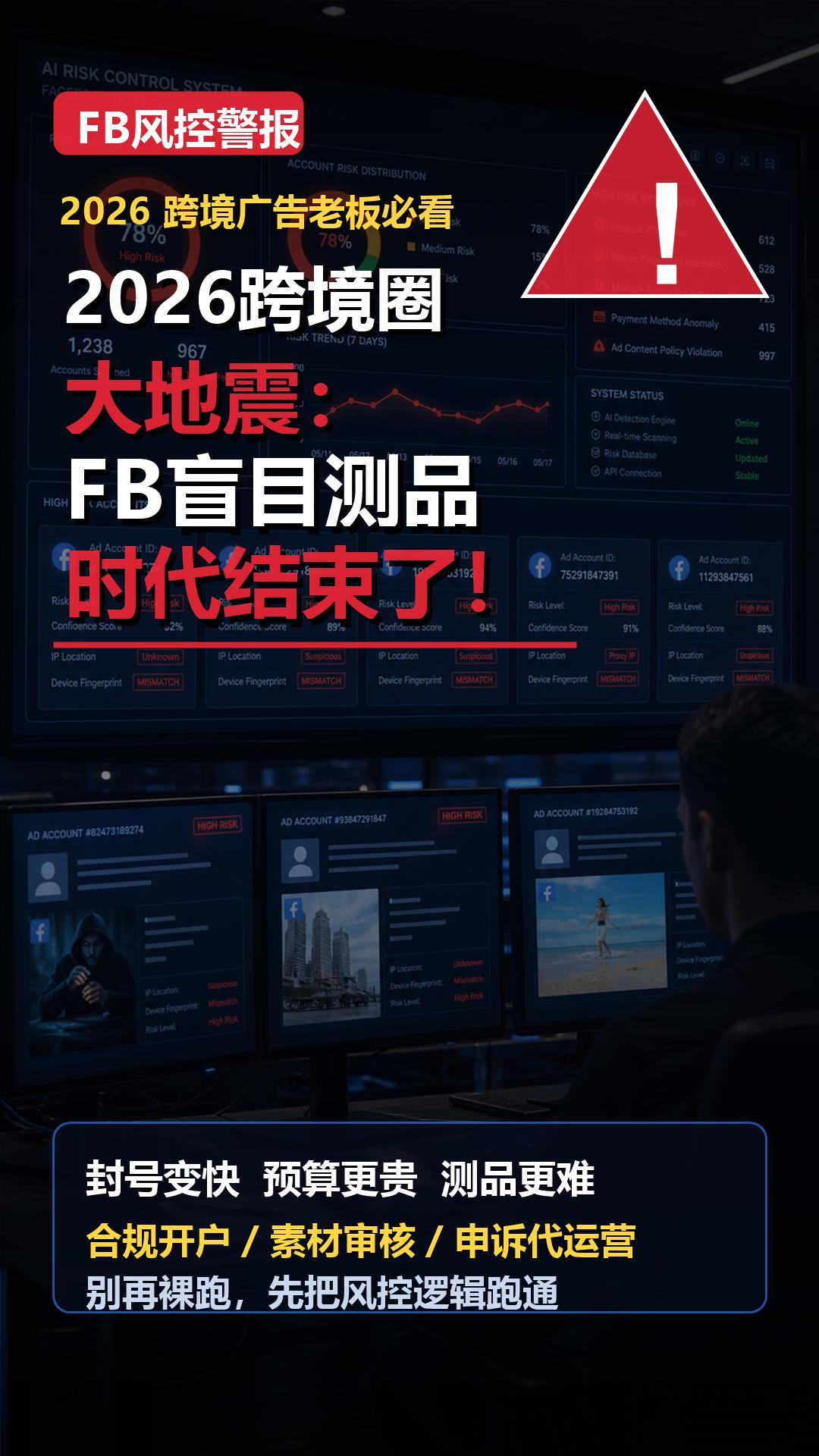
 The Era of Cross-Border Earthquakes in 2026: The Era of Blindly Testing FB Products Has Ended!
 Three key points of domestic-to-foreign trade most important, see if you really did your homework! Don’t take shortcuts.


Related Products
 EasyCamp SaaS Smart Website Marketing SystemE-Yingbao SaaS Smart Website Marketing System: AI-powered, zero-code website building. Rapidly launch multilingual independent e-commerce sites in just 10 minutes. Global server acceleration and AI-driven SEO optimization empower businesses to efficiently connect with global markets. The seamless integration of technology and user-friendly operation makes building e-commerce sites incredibly simple.
 AI+SEM Intelligent Advertising Marketing SystemAI+SEM drives intelligent ad creation, empowering full-funnel precision advertising marketing. The system automatically generates weekly/monthly reports, AI recommends keywords and target countries, monitors core metrics in real-time with intelligent alerts, and enables one-click high-conversion ad solutions to help quickly acquire customers and improve ROI.
 AI+SEO Dual Engine Optimization ServiceEasyWin AI+SEO Dual Engine Optimization System leverages AI-powered keyword mining, content generation, and comprehensive technical optimization to help foreign trade enterprises acquire high-quality organic traffic, significantly improving search rankings and conversion rates.
 AI+SNS Social Media Marketing SystemYingbao AI+SNS Social Media Marketing System - Precision social capture for the social media era. Supports one-click content synchronization across major platforms like Facebook and LinkedIn. AI intelligently rewrites posts for enhanced relevance. 24/7 AI customer service and user profiling analysis empower businesses to efficiently expand into global markets.
 AI+SEO营销解决方案易营宝AI+SEO营销解决方案,通过AI批量写作、智能生成TDK、精准关键词扩词等功能,全面优化网站SEO效果,提升流量与转化率。助力企业构建高效智能网站新生态。
 AI+SEM Advertising Marketing SolutionsAI+SEM Advertising Marketing Solution leverages AI technology to deeply empower SEM ad campaigns. It automatically generates weekly/monthly reports using AI, presenting account data across multiple dimensions for comprehensive insights into campaign performance and trends. The system precisely recommends keywords and target countries, intelligently generates high-conversion ad copy, and enables one-click activation of efficient campaign plans to help businesses rapidly acquire customers. Simultaneously, it monitors core metrics in real time, intelligently identifies abnormal fluctuations, and issues timely alerts to ensure stable, high-return advertising results.
 Domain Name ServicesEasyWin provides professional domain name services, including intelligent queries, one-stop registration, brand protection, and full lifecycle management, helping businesses build a digital brand image.
 EasyOperate B2C Cross-Border E-Commerce Platform & Independent WebsiteEasyStore B2C Cross-border E-commerce Independent Store is an intelligent website building and cross-border e-commerce integrated solution independently developed by EasyStore Information Technology (Beijing) Co., Ltd. The system is specially designed for small and medium-sized as well as large export enterprises, integrating 'website building, operation, marketing, advertising, and conversion' into one, helping enterprises quickly establish cross-border e-commerce independent stores to achieve brand globalization and global sales growth.
The platform supports multiple languages, multiple currencies, and multi-channel marketing, with built-in AI intelligent translation and SEO optimization systems, suitable for mainstream markets such as Southeast Asia, Europe and America, Latin America, and the Middle East, assisting Chinese manufacturing enterprises in efficiently deploying international e-commerce strategies. SSL证书易营宝提供专业SSL安全证书服务,包括单域名和泛域名证书,确保网站数据传输加密、身份验证和完整性保护,助力企业建立安全可信的在线业务环境。









