









- Cross-Border Marketing Trend Research: Why More and More Companies Are Starting to Deploy AI Search and GEO OptimizationJun 30, 2026View details
- Cross-Border Marketing Trend Research: How Independent Sites, AI Content, and Short-Video Customer Acquisition Are ChangingJun 30, 2026View details
- How Can a Brand Updates Page Be Made More SEO-Friendly? Analysis of Update Frequency, Content Structure, and Internal Linking StrategyJun 28, 2026View details
- What stages does the cross-border services ecosystem include? How do website building, promotion, payment, and compliance work togetherJun 22, 2026View details
- How will email marketing costs change in 2026Jun 22, 2026View details
- The China-US tariff arrangement has reached a preliminary consensus, and the trade association will be establishedJun 15, 2026View details
- Should overseas brand marketing start with ads or contentJun 21, 2026View details
- What determines B2C cross-border e-commerce website development costs? A breakdown of features, interfaces, and deployment methodsJun 17, 2026View details
How to Choose Between a B2B Foreign Trade Solution and a Traditional Solution
In the early stage of overseas expansion, first determine whether the focus is growth objectives or channel inertia
When enterprises expand into overseas markets, whether a B2B foreign trade solution or a traditional approach is more suitable often determines customer acquisition efficiency and growth potential. This article will combine the trend of integrated website and marketing services to help business decision-makers clearly understand the differences between the two and their applicable scenarios.

Many enterprises, in the early stage of going global, still rely on traditional methods such as trade shows, referrals, and offline visits. These approaches are not ineffective, but their growth speed, customer coverage, and data accumulation capabilities are often limited.
By contrast, a B2B foreign trade solution that integrates website + marketing services places greater emphasis on the coordination of official website conversion, search-based customer acquisition, content reach, advertising amplification, and lead management, making it more suitable for overseas business expansion that pursues sustainable growth.
Therefore, when discussing whether a B2B foreign trade solution or a traditional approach is more suitable, the key is not “which is more advanced”, but the company’s current stage, budget structure, customer decision-making cycle, and internal execution capability.
Under different business scenarios, why the selection logic is completely different
Even in foreign trade, differences in industry, average order value, order cycle, and market region determine that solution selection cannot be one-size-fits-all. The value of integrated website and marketing lies precisely in giving each scenario a clear matching path.
E-Marketing Information Technology (Beijing) Co., Ltd. was established in 2013 and is headquartered in Beijing. For many years, it has driven global digital marketing with artificial intelligence and big data, focusing on intelligent website building, SEO optimization, social media marketing, and advertising placement to help enterprises establish measurable overseas growth funnels.
In actual execution, traditional approaches are more like point-based breakthroughs and are suitable for niche markets that rely on relationship trust; B2B foreign trade solutions, on the other hand, lean toward systematic operations and are better suited for enterprises that hope to build brand assets and stable inquiry sources.
Scenario 1: Just entering overseas markets, prioritize demand validation
If you are in the trial stage, with insufficient market awareness and product selling points not yet clearly refined, traditional approaches make it easier in the short term to quickly reach customers and validate feedback on samples, pricing, and delivery.
However, without an official website, search visibility, and foundational content, even if customers are reached offline, it is still difficult to build follow-up trust. Therefore, at this stage, it is more suitable to run “lightweight digitalization + selective traditional channels” in parallel.
Scenario 2: Existing order foundation, looking to expand inquiry volume
When the business already has some overseas transaction records, the core issue is usually no longer whether it can sell, but how to continuously obtain new leads. At this point, when asking whether a B2B foreign trade solution or a traditional approach is more suitable, the answer often leans toward the former.
Because once the official website, SEO, content marketing, and advertising form a closed loop, scattered traffic can be converted into trackable inquiries, and keywords, pages, and advertising directions can be continuously optimized through data analysis.
Scenario 3: High average order value, long decision-making cycle, requiring deep trust
For industrial equipment, technical solutions, and complex project-based businesses, customer decision-making is often slower. Relying on traditional approaches alone makes it difficult to maintain stable influence across multiple decision points.
This type of scenario is more suitable for B2B foreign trade solutions, which gradually build professional credibility and shorten the time customers spend repeatedly comparing options through case pages, technical pages, industry content, search entry points, and remarketing mechanisms.
Scenario 4: Clear regional markets, relying on local relationship networks
If the business is concentrated in only a few countries, and orders highly depend on distributors, local agents, or long-term cooperative relationships, traditional approaches still have value, especially when maintaining deep cooperation, where efficiency is relatively high.
However, even in this case, it is still recommended to equip a basic official website and search visibility. This is because overseas customers almost always conduct online checks on a company’s background, product capabilities, and service stability before and after contact.
Put the differences into the same table, and the judgment becomes clearer
As can be seen from the table above, whether a B2B foreign trade solution or a traditional approach is more suitable is not a simple either-or choice, but depends on whether the goal is “market validation” or “scalable growth”.
Integrated website and marketing, why it is more suitable for medium- to long-term overseas expansion
In medium- to long-term competition, enterprises compete not only on products, but also on reach efficiency, content credibility, website conversion capability, and lead conversion efficiency. Single-point promotion is difficult to support sustainable growth.
The advantage of an integrated solution lies in turning “see you, understand you, trust you, contact you” into one continuous chain. Visitors coming from search can be captured through page structure, case content, form mechanisms, and automated follow-up.
At the technical infrastructure level, foundational website capabilities also affect the overseas experience. For example, when enterprises upgrade their networks, Internet Protocol Version 6(IPV6) features a 128-bit address length, native security mechanisms, and stronger scalability, which helps improve connection efficiency and long-term network carrying capacity.
For websites that rely on global access, more stable and more secure network infrastructure will directly affect page access, data transmission, and subsequent marketing coordination, and this is also an underlying condition that many enterprises tend to overlook.
If the budget is limited, how should you proceed more prudently
When the budget is limited, it is not recommended to heavily invest in all channels directly. A more reasonable approach is to first build a minimum viable overseas growth system, and then gradually scale up investment.
- First build an official website with conversion capability, rather than just making a display page.
- First lay out core keywords and high-intent pages, then expand the content matrix.
- First test a small amount of advertising and target markets, then decide whether to scale up investment.
- First retain effective traditional channels, then use digital methods to fill in the blank touchpoints.
If you are still struggling with whether a B2B foreign trade solution or a traditional approach is more suitable, this method is usually the most stable: traditional channels secure orders, digital channels drive incremental growth, and the website is responsible for unified conversion and accumulation.
A common misconception: having a website does not mean having a B2B foreign trade solution
Many enterprises mistakenly believe that once their official website goes live, they have completed digitalization for overseas expansion. In reality, a website without keyword strategy, content planning, inquiry mechanisms, and data analysis is just an electronic brochure.
Another misconception is to completely deny traditional channels. In fact, in trust-intensive markets, offline contact still plays an irreplaceable role, but it can no longer be the only source of customer acquisition.
Another easily overlooked point is foundational technology and security. For example, when enterprises upgrade their networks in global access scenarios, adopting capabilities such as Internet Protocol Version 6(IPV6) can enhance security, support multicast technology, and improve future scalability.
Implementation recommendation: combine by stage, rather than making a one-time bet
A truly efficient choice is not simply answering whether a B2B foreign trade solution or a traditional approach is more suitable, but designing a combined strategy by stage to ensure that every investment can generate compound returns.
- Trial stage: retain traditional channels while building an official website and foundational content.
- Scaling stage: increase coordination among SEO, advertising, and social media to expand inquiry volume.
- Brand stage: accumulate case studies, technical content, and localized pages to improve conversion rates.
- Optimization stage: continuously adjust keywords, pages, and channel structure based on data review.
For enterprises hoping to establish long-term overseas competitiveness, the integration of website + marketing services is becoming a more certain path. It not only brings leads, but also makes the growth process trackable, repeatable, and sustainable.
If you are currently evaluating whether a B2B foreign trade solution or a traditional approach is more suitable, it is recommended to first assess your target markets, existing channels, website foundation, and content capabilities, and then formulate a staged combined plan, which is more effective than blindly taking sides.
Related Articles
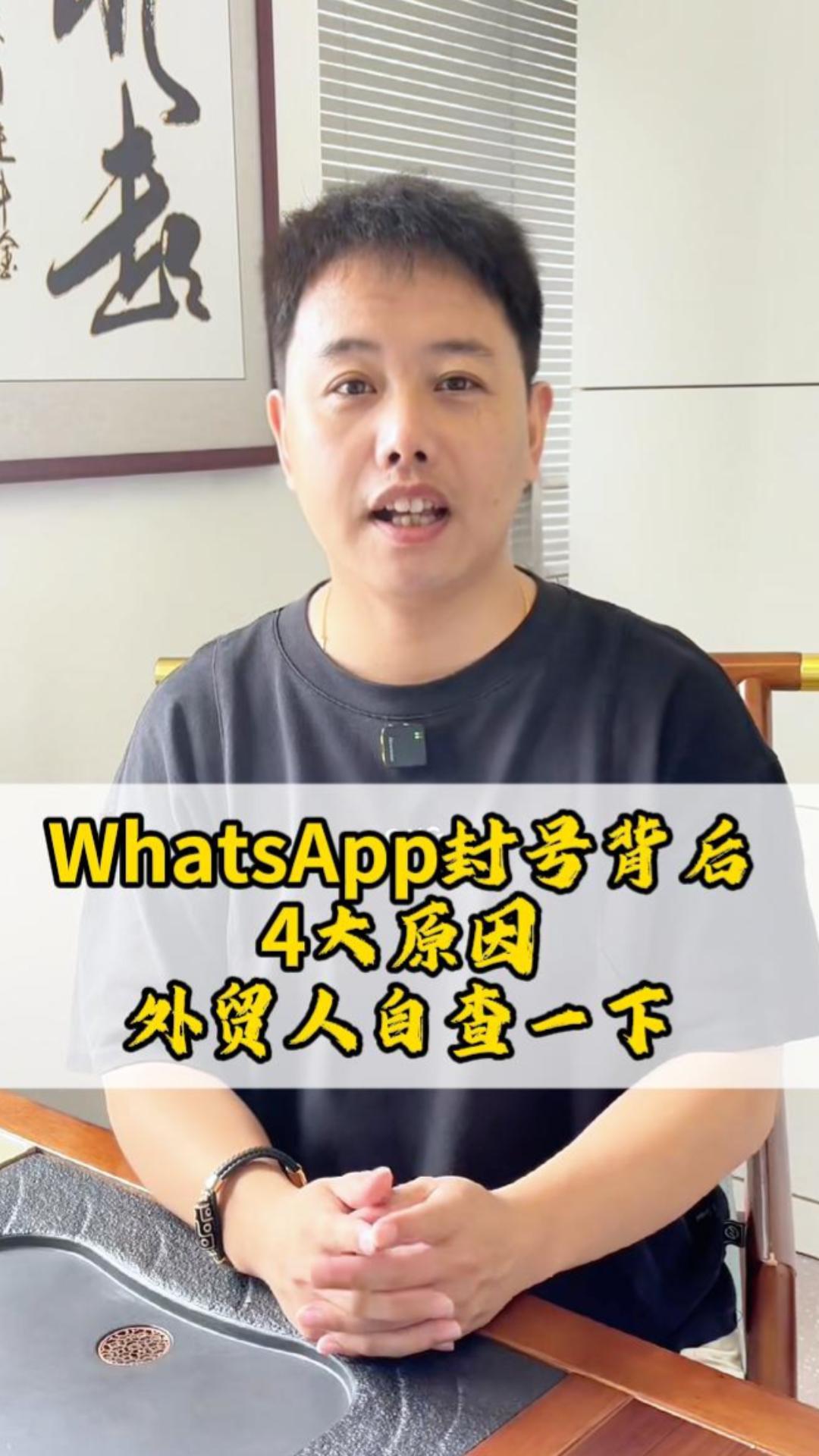
 4 Major Reasons Behind WhatsApp Account Bans, A Quick Self-Check for Foreign Trade Professionals
 Cross-Border Marketing Trend Research: Why More and More Companies Are Starting to Deploy AI Search and GEO Optimization
 Cross-Border Marketing Trend Research: How Independent Sites, AI Content, and Short-Video Customer Acquisition Are Changing


Related Products
 EasyCamp SaaS Smart Website Marketing SystemE-Yingbao SaaS Smart Website Marketing System: AI-powered, zero-code website building. Rapidly launch multilingual independent e-commerce sites in just 10 minutes. Global server acceleration and AI-driven SEO optimization empower businesses to efficiently connect with global markets. The seamless integration of technology and user-friendly operation makes building e-commerce sites incredibly simple.
 AI+SEM Intelligent Advertising Marketing SystemAI+SEM drives intelligent ad creation, empowering full-funnel precision advertising marketing. The system automatically generates weekly/monthly reports, AI recommends keywords and target countries, monitors core metrics in real-time with intelligent alerts, and enables one-click high-conversion ad solutions to help quickly acquire customers and improve ROI.
 AI+SEO Dual Engine Optimization ServiceEasyWin AI+SEO Dual Engine Optimization System leverages AI-powered keyword mining, content generation, and comprehensive technical optimization to help foreign trade enterprises acquire high-quality organic traffic, significantly improving search rankings and conversion rates.
 AI+SNS Social Media Marketing SystemYingbao AI+SNS Social Media Marketing System - Precision social capture for the social media era. Supports one-click content synchronization across major platforms like Facebook and LinkedIn. AI intelligently rewrites posts for enhanced relevance. 24/7 AI customer service and user profiling analysis empower businesses to efficiently expand into global markets.
 AI+SEO营销解决方案易营宝AI+SEO营销解决方案,通过AI批量写作、智能生成TDK、精准关键词扩词等功能,全面优化网站SEO效果,提升流量与转化率。助力企业构建高效智能网站新生态。
 AI+SEM Advertising Marketing SolutionsAI+SEM Advertising Marketing Solution leverages AI technology to deeply empower SEM ad campaigns. It automatically generates weekly/monthly reports using AI, presenting account data across multiple dimensions for comprehensive insights into campaign performance and trends. The system precisely recommends keywords and target countries, intelligently generates high-conversion ad copy, and enables one-click activation of efficient campaign plans to help businesses rapidly acquire customers. Simultaneously, it monitors core metrics in real time, intelligently identifies abnormal fluctuations, and issues timely alerts to ensure stable, high-return advertising results.
 Domain Name ServicesEasyWin provides professional domain name services, including intelligent queries, one-stop registration, brand protection, and full lifecycle management, helping businesses build a digital brand image.
 EasyOperate B2C Cross-Border E-Commerce Platform & Independent WebsiteEasyStore B2C Cross-border E-commerce Independent Store is an intelligent website building and cross-border e-commerce integrated solution independently developed by EasyStore Information Technology (Beijing) Co., Ltd. The system is specially designed for small and medium-sized as well as large export enterprises, integrating 'website building, operation, marketing, advertising, and conversion' into one, helping enterprises quickly establish cross-border e-commerce independent stores to achieve brand globalization and global sales growth.
The platform supports multiple languages, multiple currencies, and multi-channel marketing, with built-in AI intelligent translation and SEO optimization systems, suitable for mainstream markets such as Southeast Asia, Europe and America, Latin America, and the Middle East, assisting Chinese manufacturing enterprises in efficiently deploying international e-commerce strategies. SSL证书易营宝提供专业SSL安全证书服务,包括单域名和泛域名证书,确保网站数据传输加密、身份验证和完整性保护,助力企业建立安全可信的在线业务环境。









