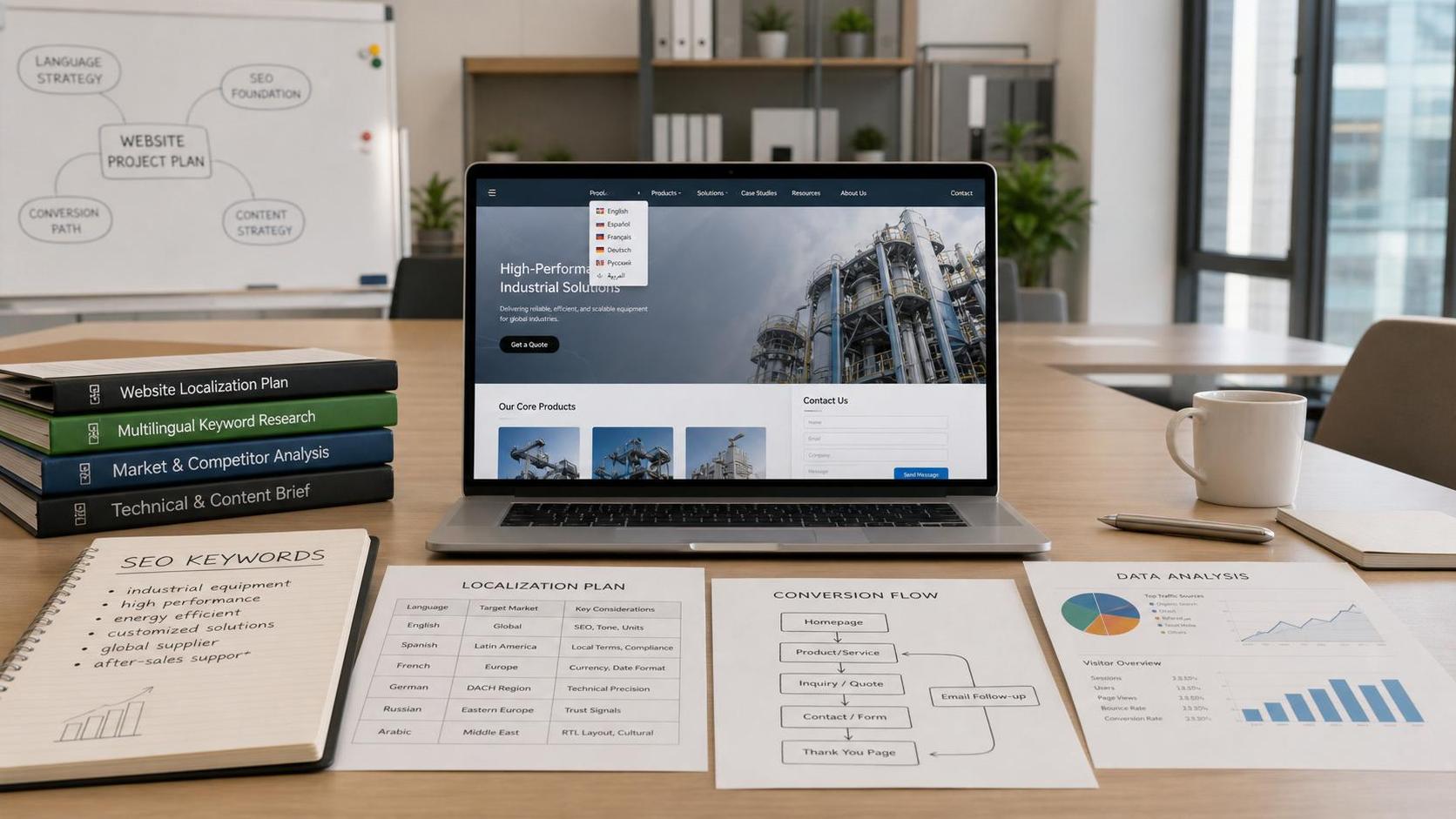
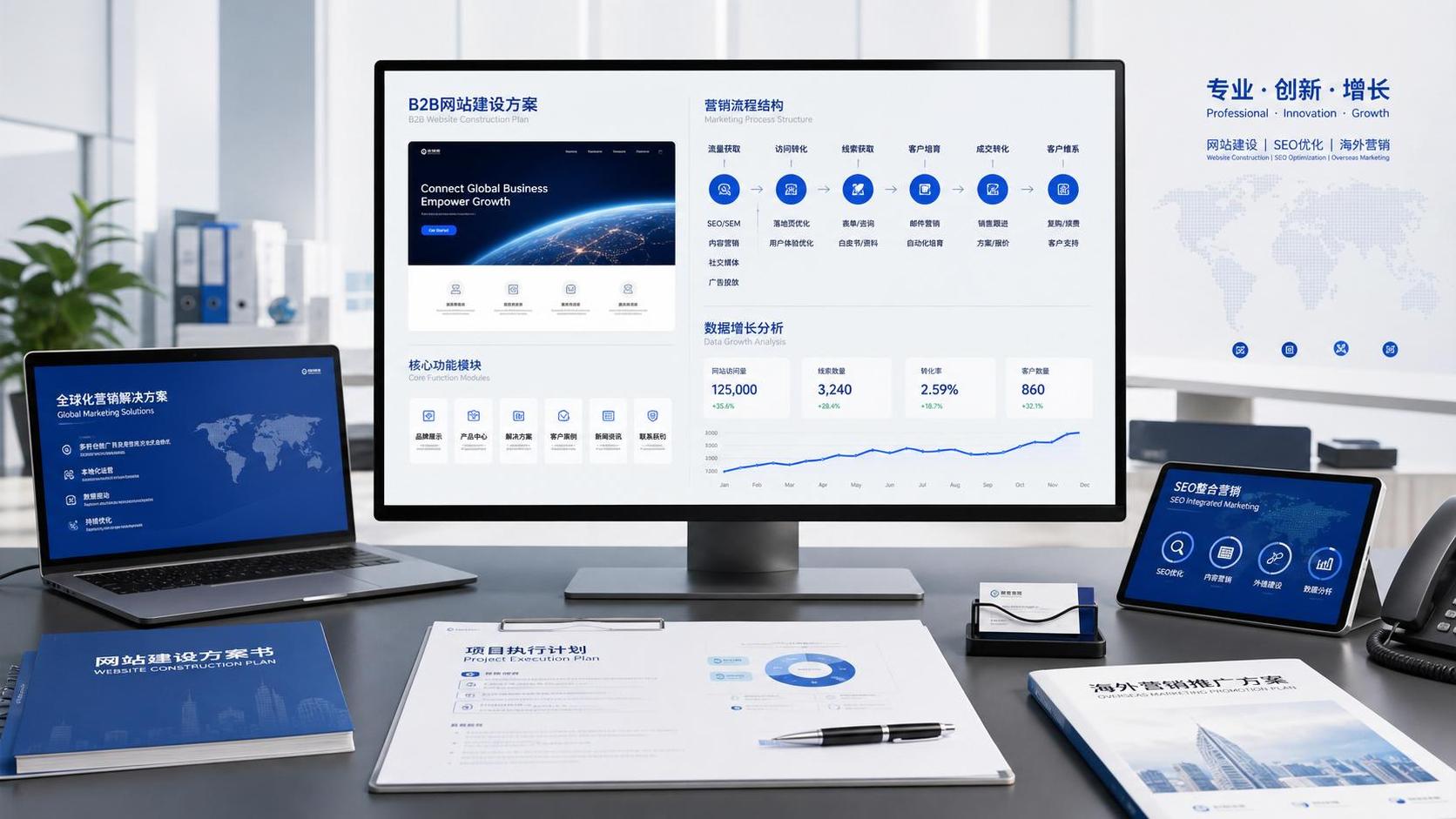
SEO checklist before launching a foreign trade website,helping companies identify technical,content,and indexing issues in advance,and laying a solid foundation for global customer acquisition。
Many companies understand the launch of a foreign trade website as “the pages are ready,and the domain name can be opened”,but what truly affects subsequent customer acquisition is often the SEO details that were not thoroughly checked before launch。
If problems such as failure to be indexed,slow loading,incorrect keyword direction,or disorganized multilingual pages are discovered only after the website goes live,the cost of later revisions will increase significantly,and the company may even miss the market opportunity window。
Therefore,the core purpose of an SEO check before launching a foreign trade website is not to pursue one-time perfection,but to ensure that the website has the basic conditions to be understood,crawled,and converted by search engines。
一、First confirm whether the website has the foundation to be crawled by search engines

The first step before launch is to check whether the website can be accessed normally by search engines such as Google。Many foreign trade websites have good page design,but search engines cannot crawl them due to technical settings。
Focus on checking whether robots.txt mistakenly blocks important pages,whether pages contain noindex tags,whether restrictions in the testing environment have been removed,and whether the sitemap has been generated correctly。
At the same time,confirm that important pages do not rely on complex scripts to display core content。For product,service,and case study pages,search engines should be able to directly identify the main text information。
It is recommended to use tools such as Google Search Console and Screaming Frog before launch to simulate crawling and discover broken links,redirect errors,and abnormal status codes in advance。
二、Do keywords and page structure match real overseas demand
SEO for foreign trade websites should not simply translate Chinese business terms into English。The search expressions,procurement stages,and key concerns of overseas customers are often different from the understanding of domestic teams。
Before launch,confirm whether core pages cover brand terms,product terms,application scenario terms,industry solution terms,and long-tail keywords with strong purchasing intent。
For example,for the same type of equipment product,overseas customers may search for specifications,certifications,wholesale,suppliers,custom services,or after-sales support,rather than only the product name。
The page structure should also be designed around search intent。The homepage should carry the brand and overall capabilities,category pages should carry the product range,and detail pages should address parameters,advantages,and inquiry-related questions。
If keywords and pages do not match,even if the website is indexed after launch,it will still be difficult to obtain effective traffic,and even harder to convert visitors into inquiry customers。
三、Does core page content sufficiently support inquiry conversion

Before launching a foreign trade website,content checks should not only look at whether there is text,but also whether the content can answer the questions overseas customers truly care about before placing an order。
Product pages should clearly present specifications,uses,advantages,applicable industries,packaging and transportation,certifications and qualifications,and frequently asked questions,avoiding only a few images and a simple description。
Service pages should explain what problems the company can solve for customers,whether customization is supported,what the delivery cycle is,what the cooperation process looks like,and whether after-sales and communication mechanisms are reliable。
The About Us page should not be only a company profile。For overseas buyers,factory capabilities,export experience,quality systems,and cooperation cases are more effective in building trust。
If the goal is to obtain inquiries,each key page should include a clear action entry,such as a form,email,WhatsApp,online consultation,or a download button for materials。
四、Technical performance directly affects rankings and conversions
Foreign trade websites serve global users,so access speed and stability are key items that must be checked before launch。Slow loading not only affects rankings,but also reduces visitors’ willingness to stay。
It is recommended to check server deployment regions,CDN configuration,image compression,code redundancy,cache strategies,and mobile loading performance,with particular attention to access speed in target markets。
The mobile experience is equally important。Overseas users may search for suppliers on mobile phones,so page layout,button size,form filling,and menu hierarchy all need to be tested in practice。
In addition,HTTPS certificates,canonical URLs,301 redirects,404 pages,breadcrumb navigation,and structured data all affect the website’s professionalism and search performance。
五、Multilingual and internationalization settings cannot rely only on translation
If the website includes multilingual versions,before launch it is important to check whether language paths,hreflang tags,page correspondence,and default language settings are correct。
Common issues include incorrect links between pages in different languages,automatic redirects interfering with crawling,duplicate indexing of the same content,and translated expressions that do not match local customer habits。
Truly effective international SEO should optimize titles,descriptions,currency units,contact methods,case expressions,and common local procurement questions based on the target market。
For key markets,it is recommended not to rely only on machine-translated pages,but to add localized content so that users feel the company understands the local industry environment and cooperation methods。
六、SEO tags and indexing checks that must be completed before launch
Title tags and description tags are the foundation of SEO for foreign trade websites。Each core page should have an independent title,avoiding the use of the same template across the entire site or keyword stuffing。
The title should include core keywords and product or service positioning,while remaining natural and readable。The description tag should highlight selling points,target audiences,and action guidance。
At the same time,check whether the hierarchy of H tags is clear,whether image alt text is accurate,whether URLs are concise and readable,and whether internal links can guide users to key pages。
After launch,the sitemap should be submitted immediately,and index status,crawl errors,organic traffic changes,and inquiry sources should be monitored to ensure SEO work enters a trackable state。
七、How companies can determine whether a website is ready to launch with confidence
For business managers,there is no need to get stuck in every technical detail before launching a foreign trade website,but they must confirm whether the website has a foundation for customer acquisition and risk control capabilities。
This can be judged from four dimensions:whether search engines can crawl it,whether target customers can understand it,whether pages can facilitate inquiries,and whether subsequent data can support continuous optimization。
If these four points are not completed,even if the website goes live on time,it only completes the display task and does not truly undertake the responsibilities of global marketing and customer development。
For companies lacking overseas SEO experience,choosing a service provider with integrated capabilities in website building,SEO,social media,and advertising can reduce repeated communication and trial-and-error costs。
For example,Eyingbao Information Technology is driven by artificial intelligence and big data,and can provide full-chain support around website building,SEO optimization,social media marketing,and advertising placement。
Conclusion:Pre-launch checks are the first threshold for customer acquisition through foreign trade websites
The value of an SEO checklist before launching a foreign trade website lies in addressing potential problems in advance,avoiding passive fixes to technical,content,and indexing gaps only after the website goes live。
A qualified foreign trade website should not only be accessible and visually appealing,but also be recognizable by search engines,trusted by overseas customers,and continuously bring effective inquiries to the company。
Only by completing checks on technology,keywords,content,performance,multilingual setup,and data monitoring before launch can companies truly make the website the starting point for growth in global markets。