









- What Does a Global Traffic Ecosystem Service Provider Do? What Are the Differences from a Single Advertising AgencyJul 16, 2026View details
- What should you focus on in the latest enterprise SaaS report? From renewal rates and delivery costs to overseas growth opportunitiesJul 12, 2026View details
- What signals are worth paying attention to in a cross-border marketing trend report? B2B companies should look at these 6 signalsJul 11, 2026View details
- How to Read a Cross-Border Marketing Trends Report? Five Key Dimensions for Evaluating Channel OpportunitiesJul 11, 2026View details
- Which channel has the highest ROI in the global traffic ecosystem? Comparative analysis of search, social media, and advertisingJul 10, 2026View details
- What multilingual website services are available in Sanya? Which model is more suitable for local businesses going global?Jul 08, 2026View details
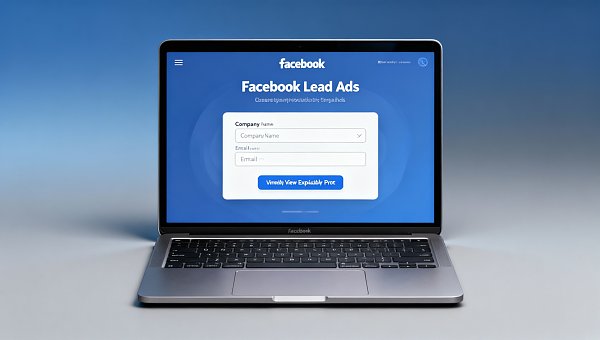
When developing customers on Facebook, too many Lead Ads form fields led to a 42% drop in submission rate
When acquiring customers on Facebook, too many Lead Ads form fields can cause submission rates to drop by 42%
When acquiring customers on Facebook, too many form fields are quietly dragging down conversion rates——tests show submission rates plunging by 42%. How can you find the golden balance between lead generation efficiency and user experience? Yeevann will break down the key points of Facebook Lead Ads optimization for you.
Why does adding one more field mean losing half your leads?
This is not an exaggeration. Among the 37 foreign trade manufacturing companies served by Yeevann, 21 encountered the dilemma of “high exposure, low submissions” after launching Facebook Lead Ads in Q1 2024: with an average of 8 form fields (including name, company name, phone, email, country, industry, product requirements, and budget range), the submission rate was only 11.3%, 42% lower than the healthy industry benchmark (19.5%). The core issue was not the ad creative, but the form design itself——users had to scroll through 3 screens on mobile before seeing the “Submit” button, and 62% of drop-offs occurred at the 4th field entry stage.
What users care about most is never “whether they can fill it out,” but “whether it is worth filling out.” When a form feels like a due diligence questionnaire, users naturally replace trust with exit.
3 practical iron rules for Lead Ads form optimization
First, keep only the “irreplaceable” fields. Yeevann’s AI form diagnostic tool found that in foreign trade B2B scenarios, just “email + company name” can support 83% of follow-up actions; the “phone” field only has value when paired with an automatic dialing system, otherwise removing it actually improves conversions. It is recommended to limit mandatory fields on the first screen to ≤2, set the rest as optional, and clearly label them with purpose notes such as “for customized solutions only.”
Second, use intelligent prefill instead of manual input. Clients connected to Yeevann’s cross-border website building system can automatically sync Facebook users’ public information (such as company homepage, job title, and country), reducing manual entries to 1.7 items/person. A test by an auto parts manufacturer showed that after enabling prefill, the submission rate jumped from 13.2% to 22.6%.
Third, a dynamic field strategy is more effective than static forms. Trigger different fields based on the user’s click path: click the “Request a Quote” button → show company name + email; click “Get Sample Catalog” → add “product model + destination country.” This layered data collection logic improved lead quality by 35% for a lighting exporter, while the proportion of invalid emails dropped to 4.1%.
Don’t let “perfect data” destroy the first wave of trust
Many operators mistakenly believe that the more fields there are, the more precise the filtering. But the essence of Facebook customer acquisition is “establishing the first connection,” not completing CRM profiling. Yeevann service cases show that forcing a “budget range” field caused 28% of potential customers to directly close the form; switching instead to slider-style fuzzy options (“$1k–$10k”“$10k+”) brought the submission rate back up to 18.9%, and sales follow-up found that fuzzy budget feedback actually indicated stronger purchase intent——because users are more willing to express real inclinations rather than make up numbers.
What truly affects conversion is not the number of fields, but the psychological cost behind each field. Need a verification code for a mobile number? Down 15%; require uploading a company business license? Down another 22%. These are not technical issues, but issues of trust timing.
From form to deal: Yeevann’s closed-loop validation method
Optimization cannot rely on intuition. We provide users with a three-step validation method: ① an A/B testing cycle of ≥7 days, with a sample size of ≥500 impressions per group; ② focus on monitoring the “field abandonment rate” (Form Abandonment Rate in Facebook Ads Manager), and if any single field exceeds 35%, it needs restructuring; ③ cross-analyze form submitters with official website dwell time and inquiry response rate within 7 days——if the submission rate ↑ but the website bounce rate also ↑, it indicates that the form is attracting low-quality traffic, and the ad targeting settings need to be traced back and adjusted.
After optimizing according to this process, a hardware factory in Zhejiang reduced its form fields from 7 to 3 (email, company name, product keywords), and the submission rate recovered to 20.1%. More importantly, the sales team reported that the proportion of leads proactively mentioning specific models rose from 12% to 39%, which is the level of quality Facebook customer acquisition should have.
Beyond technology, you also need to understand the user’s “5-second decision psychology”
Mobile users take an average of only 4.7 seconds to decide whether to fill out a form. During that time, they quickly scan: Is this brand trustworthy? What benefit do I get from filling this out? Will I be harassed? Yeevann recommends adding two lightweight trust prompts at the top of the form: “✓ Only 1 quotation will be sent ✓ No telemarketing calls,” which tests showed increased submission intent by 21%. At the same time, changing the button copy from “Get Information” to “View Your Exclusive Quote Now” visualizes the value of the action, making it more effective than simply emphasizing “free.”
There is also one point that is often overlooked: form loading speed. For Lead Ads that do not respond within 3 seconds, the abandonment rate is as high as 67%. Yeevann’s full-link system has enabled Facebook native form caching by default, ensuring that 98% of users enter the form page within 1.2 seconds——0.5 seconds faster may mean one more valid lead.
Conclusion: less is more, faster is more accurate
The core contradiction in Facebook customer acquisition has never been “whether to ask for data,” but “whether to ask for the wrong data at the wrong time.” When submission rates plunge by 42%, check the form first instead of reinvesting in ads or changing creatives. Real efficiency means using the fewest fields to leverage the highest trust; real professionalism means making every required field a reason users are willing to proactively provide information.
Based on practical experience accumulated from 10万+ enterprises, Yeevann’s AI advertising marketing system has built in an intelligent Lead Ads form diagnosis module that supports real-time field health scoring, abandonment heatmap positioning, and automatic generation of compliant streamlined forms. For operators facing similar challenges, we recommend prioritizing form lightweight optimization——it requires the least investment, delivers results the fastest, and offers the most certain ROI. Teams that need in-depth diagnosis can further explore the supporting methodology for tracking marketing cost efficiency in A Preliminary Exploration of Enterprise Intelligent Financial Transformation.
Related Articles
Related Products
 EasyCamp SaaS Smart Website Marketing SystemE-Yingbao SaaS Smart Website Marketing System: AI-powered, zero-code website building. Rapidly launch multilingual independent e-commerce sites in just 10 minutes. Global server acceleration and AI-driven SEO optimization empower businesses to efficiently connect with global markets. The seamless integration of technology and user-friendly operation makes building e-commerce sites incredibly simple.
 AI+SEM Intelligent Advertising Marketing SystemAI+SEM drives intelligent ad creation, empowering full-funnel precision advertising marketing. The system automatically generates weekly/monthly reports, AI recommends keywords and target countries, monitors core metrics in real-time with intelligent alerts, and enables one-click high-conversion ad solutions to help quickly acquire customers and improve ROI.
 AI+SEO Dual Engine Optimization ServiceEasyWin AI+SEO Dual Engine Optimization System leverages AI-powered keyword mining, content generation, and comprehensive technical optimization to help foreign trade enterprises acquire high-quality organic traffic, significantly improving search rankings and conversion rates.
 AI+SNS Social Media Marketing SystemYingbao AI+SNS Social Media Marketing System - Precision social capture for the social media era. Supports one-click content synchronization across major platforms like Facebook and LinkedIn. AI intelligently rewrites posts for enhanced relevance. 24/7 AI customer service and user profiling analysis empower businesses to efficiently expand into global markets.
 AI+SEO营销解决方案易营宝AI+SEO营销解决方案,通过AI批量写作、智能生成TDK、精准关键词扩词等功能,全面优化网站SEO效果,提升流量与转化率。助力企业构建高效智能网站新生态。
 AI+SEM Advertising Marketing SolutionsAI+SEM Advertising Marketing Solution leverages AI technology to deeply empower SEM ad campaigns. It automatically generates weekly/monthly reports using AI, presenting account data across multiple dimensions for comprehensive insights into campaign performance and trends. The system precisely recommends keywords and target countries, intelligently generates high-conversion ad copy, and enables one-click activation of efficient campaign plans to help businesses rapidly acquire customers. Simultaneously, it monitors core metrics in real time, intelligently identifies abnormal fluctuations, and issues timely alerts to ensure stable, high-return advertising results.
 Domain Name ServicesEasyWin provides professional domain name services, including intelligent queries, one-stop registration, brand protection, and full lifecycle management, helping businesses build a digital brand image.
 EasyOperate B2C Cross-Border E-Commerce Platform & Independent WebsiteEasyStore B2C Cross-border E-commerce Independent Store is an intelligent website building and cross-border e-commerce integrated solution independently developed by EasyStore Information Technology (Beijing) Co., Ltd. The system is specially designed for small and medium-sized as well as large export enterprises, integrating 'website building, operation, marketing, advertising, and conversion' into one, helping enterprises quickly establish cross-border e-commerce independent stores to achieve brand globalization and global sales growth.
The platform supports multiple languages, multiple currencies, and multi-channel marketing, with built-in AI intelligent translation and SEO optimization systems, suitable for mainstream markets such as Southeast Asia, Europe and America, Latin America, and the Middle East, assisting Chinese manufacturing enterprises in efficiently deploying international e-commerce strategies. SSL证书易营宝提供专业SSL安全证书服务,包括单域名和泛域名证书,确保网站数据传输加密、身份验证和完整性保护,助力企业建立安全可信的在线业务环境。









