









- What stages does the cross-border services ecosystem include? How do website building, promotion, payment, and compliance work togetherJun 22, 2026View details
- How will email marketing costs change in 2026Jun 22, 2026View details
- The China-US tariff arrangement has reached a preliminary consensus, and the trade association will be establishedJun 15, 2026View details
- Should overseas brand marketing start with ads or contentJun 21, 2026View details
- What determines B2C cross-border e-commerce website development costs? A breakdown of features, interfaces, and deployment methodsJun 17, 2026View details
- China-Morocco zero-tariff access, a breakthrough in the cost of Moroccan goods exports to ChinaJun 11, 2026View details
How can Facebook advertising be optimized for more precise targeting? Audience targeting and creative testing tips
How can Facebook advertising be more precise? Start by getting the three things of “people, content, and data” right
If you want Facebook advertising to be more precise, the issue is often not too little budget, but an audience pool that is too broad, materials that are judged too quickly, and optimization actions that are too slow. What really widens the gap is often whether the early-stage structure is clear, whether mid-stage testing has rhythm, and whether the later-stage scaling is aligned with the right metrics.
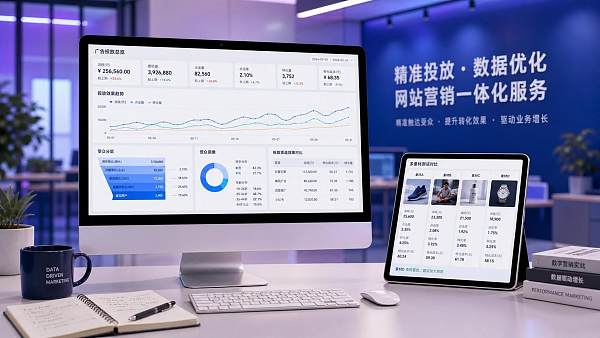
In actual business operations, Facebook advertising is not simply “upload materials, launch ads, get conversions.” It is more like a continuously iterated customer acquisition system. You need to know who is more likely to click, who is more likely to leave contact information, who is only browsing casually, and which materials can bring real conversions.
If the goal is to improve click-through rate, conversion rate, and ad spend efficiency, it is recommended to optimize the four links of audience targeting, creative testing, data review, and landing page experience together. Look less at single-point performance and more at the overall path performance, and the results will be more stable.
Do audience targeting first, or Facebook advertising will only get more and more scattered
Many accounts have poor conversion not because the product is unwanted, but because the audience was set too broad from the start. The first step in Facebook advertising is not blind scaling, but confirming the core audience profile first.
Start building from a three-layer audience structure
A relatively stable approach is to break the audience into cold audiences, engaged audiences, and similar audiences. The advantage of doing this is that the goals at each stage are clear, and it is easier to judge which layer the problem is in during subsequent optimization.
- Cold audiences: based on region, age, interests, job title, and consumer behavior.
- Engaged audiences: people who have watched videos, clicked forms, or visited the website.
- Similar audiences: expanded based on inquiry customers, add-to-cart users, and converted users.
This structure is especially suitable for foreign trade lead generation, cross-border e-commerce, and brand overseas expansion scenarios. The front end is responsible for finding people, the back end is responsible for filtering people, and the longer the data accumulates, the higher the precision of Facebook advertising.
Do not overload interest tags; first capture strong relevance signals
Many operators like to stack many interest tags at once, thinking that broader coverage is better. In fact, this can easily make audience labels messy, and the system has a harder time judging real preferences. A more effective approach is to first use strong relevance tags to build a clean sample.
For example, when advertising industrial equipment, you can first test around industry roles, purchasing roles, and upstream/downstream categories; when doing cross-border retail, you can prioritize buying behavior, brand preference, and content interaction. Precision first and scale later usually saves more budget than scaling first and then filtering.
Region and time period determine whether traffic is “worth the money”
Facebook advertising is not just about having traffic, but about traffic quality. Different countries, different cities, and different delivery time periods often have large differences in click cost and conversion quality.
It is recommended to split by region in the early stage to avoid mixing multiple markets in one campaign. In this way, you can more quickly see which market has cheap clicks but weak conversion, and which market has slightly higher costs but is easier to convert. When allocating budget by layer, prioritize markets with “high intent and high return on ad spend.”
Test creatives in detail to improve Facebook advertising click-through rate
The audience determines who sees the ad, and the creative determines whether people are willing to click. Many Facebook advertising results are not ideal not because the product has no advantage, but because the creative fails to state the key point clearly within the first three seconds.
Test angle first, then test format
Efficient testing is not about replacing dozens of images at once, but first testing the selling angle and then testing the presentation format. Because the core of what determines clicks is usually not color or layout, but whether the benefit point hits the need.
- First test selling points such as price advantage, delivery efficiency, case studies, and functional differences.
- Then test formats such as images, carousels, short videos, and comparison-style covers.
- Finally fine-tune the headline, call-to-action button, and opening copy.
This sequence makes it easier to find the variables that truly affect clicks and conversions, and also avoids the situation where “the creative changed a lot, but the result is still hard to understand.”
Short videos should not only talk about the brand; talk about the problem and the result first
Many industries are now using short videos to run Facebook advertising, but video often suffers from one common problem: the opening is too slow. Users have already swiped away before they understand what problem you are solving.
A more effective expression is to first present the pain point in the scene, then give the result directly, and then add proof. For example, “few inquiries,” “high mobile exit rate,” and “slow page loading” are more likely to catch attention than simply talking about the brand in a vague way.
If the landing page is carrying mobile traffic, then the page experience must keep up. Solutions like易营宝 AMP/MIP mobile intelligent website building are suitable for optimizing ad landing pages. Page load speed can be as fast as 0.5 seconds, and average load speed improves by 85%, which helps reduce bounce and traffic loss.
Creative testing should control variables; do not keep changing images and audiences at the same time
This is one of the most common mistakes in Facebook advertising. Many accounts change audience, placement, and copy at the same time. In the end, although the data changes, they still do not know what exactly caused the effect.
The more stable approach is to change only one core variable each time. For example, test three selling-point creatives under the same audience, or test two sets of interest audiences under the same creative. Only then will the test conclusion be meaningful, and subsequent scaling will be more grounded.
Only by reading the data correctly can you truly optimize Facebook advertising results
There are many data points in the ad dashboard, but not every number is worth staring at. To make Facebook advertising solid, the key is to look at metrics by stage, not just a single cost.
Different stages, different priorities
If the click-through rate is high but the conversion is poor, the problem is mostly not in the ad front end, but in the landing page experience or the conversion path. Conversely, if clicks are low but the conversion rate is high, it often means the creative expression is not strong enough and it is worth continuing to optimize exposure and clicks.
Do not ignore the landing page; it directly affects ad costs
More and more accounts are finding that with the same audience and creative, different landing page experiences lead to very different final conversion costs. This is especially true for mobile access. If the page opens slowly, the content hierarchy is messy, and the buttons are not obvious, then the previous ad optimization is easy to waste.
Looking at recent changes, platforms are paying more and more attention to real experience signals. This also means that Facebook advertising is not just about buying traffic, but also about page speed, content clarity, and conversion paths. For businesses that need to balance overseas promotion and mobile search performance,易营宝 AMP/MIP mobile intelligent website building can help ads land faster through dual-site unified management, automatic image compression, delayed loading, and other capabilities.
A more practical execution rhythm for Facebook advertising
If you want to make Facebook advertising more stable, you can move forward according to the rhythm below to avoid frequently making changes as soon as you start, which disrupts system learning.
- Step 1: First clarify the conversion goal, whether it is inquiry, add to cart, order placement, or private message.
- Step 2: Build the audience according to the three layers of cold, engaged, and similar.
- Step 3: Create the first batch of testing creatives around 3 to 5 selling points.
- Step 4: Test with the same budget, and prioritize eliminating low-click, low-conversion combinations.
- Step 5: Copy the winning creatives into high-quality regions and similar audiences for scaling.
- Step 6: Synchronize optimization of mobile page speed, form path, and inquiry入口.
This method may not look complicated, but during real execution, the most important thing is to stay patient. Do not pause frequently because of one day’s data fluctuation, and do not immediately copy dozens of ad sets because one creative suddenly performs well. Steady scaling usually saves more money than aggressive expansion.
Conclusion: The core of precise advertising is to keep making “verifiable optimizations”
In the end, Facebook advertising precision does not come from intuition, and it does not come from one-time scaling either. It comes from round after round of verifiable testing. First segment the audience, then test the creative, then use data to find the problem, and finally use a faster, more stable page to carry traffic. Only then can the whole path truly run smoothly.
For website building and integrated marketing service businesses, this systematic thinking is especially important. 易营宝 has deep experience in intelligent website building, SEO optimization, ad placement, and overseas growth services, and is more suitable for viewing placement, pages, and conversions together. In this way, Facebook advertising is not just about “getting clicks,” but about continuously bringing in higher-quality customer growth.
Related Articles



Related Products
 EasyCamp SaaS Smart Website Marketing SystemE-Yingbao SaaS Smart Website Marketing System: AI-powered, zero-code website building. Rapidly launch multilingual independent e-commerce sites in just 10 minutes. Global server acceleration and AI-driven SEO optimization empower businesses to efficiently connect with global markets. The seamless integration of technology and user-friendly operation makes building e-commerce sites incredibly simple.
 AI+SEM Intelligent Advertising Marketing SystemAI+SEM drives intelligent ad creation, empowering full-funnel precision advertising marketing. The system automatically generates weekly/monthly reports, AI recommends keywords and target countries, monitors core metrics in real-time with intelligent alerts, and enables one-click high-conversion ad solutions to help quickly acquire customers and improve ROI.
 AI+SEO Dual Engine Optimization ServiceEasyWin AI+SEO Dual Engine Optimization System leverages AI-powered keyword mining, content generation, and comprehensive technical optimization to help foreign trade enterprises acquire high-quality organic traffic, significantly improving search rankings and conversion rates.
 AI+SNS Social Media Marketing SystemYingbao AI+SNS Social Media Marketing System - Precision social capture for the social media era. Supports one-click content synchronization across major platforms like Facebook and LinkedIn. AI intelligently rewrites posts for enhanced relevance. 24/7 AI customer service and user profiling analysis empower businesses to efficiently expand into global markets.
 AI+SEO营销解决方案易营宝AI+SEO营销解决方案,通过AI批量写作、智能生成TDK、精准关键词扩词等功能,全面优化网站SEO效果,提升流量与转化率。助力企业构建高效智能网站新生态。
 AI+SEM Advertising Marketing SolutionsAI+SEM Advertising Marketing Solution leverages AI technology to deeply empower SEM ad campaigns. It automatically generates weekly/monthly reports using AI, presenting account data across multiple dimensions for comprehensive insights into campaign performance and trends. The system precisely recommends keywords and target countries, intelligently generates high-conversion ad copy, and enables one-click activation of efficient campaign plans to help businesses rapidly acquire customers. Simultaneously, it monitors core metrics in real time, intelligently identifies abnormal fluctuations, and issues timely alerts to ensure stable, high-return advertising results.
 Domain Name ServicesEasyWin provides professional domain name services, including intelligent queries, one-stop registration, brand protection, and full lifecycle management, helping businesses build a digital brand image.
 EasyOperate B2C Cross-Border E-Commerce Platform & Independent WebsiteEasyStore B2C Cross-border E-commerce Independent Store is an intelligent website building and cross-border e-commerce integrated solution independently developed by EasyStore Information Technology (Beijing) Co., Ltd. The system is specially designed for small and medium-sized as well as large export enterprises, integrating 'website building, operation, marketing, advertising, and conversion' into one, helping enterprises quickly establish cross-border e-commerce independent stores to achieve brand globalization and global sales growth.
The platform supports multiple languages, multiple currencies, and multi-channel marketing, with built-in AI intelligent translation and SEO optimization systems, suitable for mainstream markets such as Southeast Asia, Europe and America, Latin America, and the Middle East, assisting Chinese manufacturing enterprises in efficiently deploying international e-commerce strategies. SSL证书易营宝提供专业SSL安全证书服务,包括单域名和泛域名证书,确保网站数据传输加密、身份验证和完整性保护,助力企业建立安全可信的在线业务环境。









