









- Is Brand Globalization Marketing Consulting Worth Buying? At What Stage Should Companies Bring It InJul 01, 2026View details
- Cross-Border Marketing Trend Research: Why More and More Companies Are Starting to Deploy AI Search and GEO OptimizationJun 30, 2026View details
- Cross-Border Marketing Trend Research: How Independent Sites, AI Content, and Short-Video Customer Acquisition Are ChangingJun 30, 2026View details
- How Can a Brand Updates Page Be Made More SEO-Friendly? Analysis of Update Frequency, Content Structure, and Internal Linking StrategyJun 28, 2026View details
- What stages does the cross-border services ecosystem include? How do website building, promotion, payment, and compliance work togetherJun 22, 2026View details
- How will email marketing costs change in 2026Jun 22, 2026View details
What Is the Difference Between Website Localization Services and Pure AI Translation
What is the difference between website translation localization services and pure AI translation? The core difference is not whether Chinese can be converted into a foreign language, but whether overseas users can understand it, trust it, and be willing to submit an inquiry or place an order. For companies going global, pure AI translation is more like a low-cost language conversion tool, while website localization services systematically optimize language, culture, search habits, and conversion paths.
After launching multilingual websites, many companies find that although the pages have been "translated", overseas traffic is low, session duration is short, and inquiries are limited. The problem is often not the website building itself, but that the content has not truly been adapted to the target market. What is the difference between website translation localization services and pure AI translation? The answer directly affects whether the website can be indexed by search engines, whether it can be understood by customers, and the effectiveness of later marketing campaigns.
Why companies struggle to choose between "localization services" and "pure AI translation"
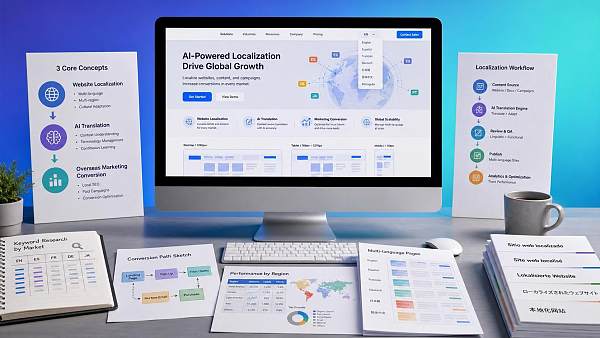
People searching for this question usually do not simply want to understand the concept of translation. Instead, when building an overseas website, a multilingual official website, or an independent website for international markets, they need to determine which solution better fits their business goals. Their core concerns are not translation technology, but cost, efficiency, results, and risk.
This is especially true for foreign trade companies, manufacturing factories, cross-border e-commerce sellers, and brands expanding overseas. They care more about a practical question: is the website content merely "translated", or can it truly support customer acquisition? If it is only a display-oriented page, pure AI translation may be enough. But if the website is responsible for SEO-driven customer acquisition, advertising traffic conversion, and brand building, the importance of localization increases significantly.
Where exactly is the difference between website localization services and pure AI translation
The focus of pure AI translation is to quickly convert one language into another. Its advantages are speed, low cost, and suitability for processing large volumes of content. It can help companies quickly generate multilingual drafts, solving the problem of going from nothing to something, and is especially suitable for standardized content such as product parameters, basic descriptions, and batch pages.
However, the goal of website localization services is not simply to "translate the literal meaning correctly" and stop there. It is to make the content align with local users' reading habits, expression styles, cultural understanding, and purchasing decision logic. In other words, localization is not a single translation action, but a set of content adaptation work oriented toward the target market.
For example, when introducing a manufacturing company, Chinese content often uses expressions such as "strong capabilities, guaranteed quality, welcome to visit our factory". If these are directly translated into English by AI, the grammar may not be wrong, but to European and American buyers they often sound vague. Truly effective localization rewrites the content into an information structure that better matches overseas procurement decisions, such as delivery capacity, certification standards, customization processes, case experience, and after-sales commitments.
Therefore, the most essential difference between website translation localization services and pure AI translation is this: the former serves business conversion, while the latter mainly serves language conversion. One prioritizes outcomes, the other prioritizes efficiency.
Why websites created with pure AI translation are often "readable but not useful"
When many companies build a multilingual website for the first time, they may feel that AI is already very powerful and wonder why it would still affect performance. The issue is that website content is not a collection of isolated sentences. It is an integrated whole closely connected to industry context, user intent, page structure, search keywords, and conversion paths.
The first common problem with pure AI translation is that terminology may be accurate, but the expression is not idiomatic. Overseas customers may generally understand the content, but they may feel that it reads like machine-assembled text and lacks professionalism. This unnatural expression directly affects trust, especially in B2B procurement scenarios, where customers are highly sensitive to a supplier's professionalism.
The second problem is ignoring search habits. Companies often translate Chinese keywords directly and insert them into pages, but overseas users may not search that way. For example, in China, terms such as "factory direct sales" and "source factory" are commonly used, but in the Google search environment, customers are more likely to search for terms such as "manufacturer", "OEM supplier", and "custom fabrication". Without keyword localization, it is difficult for pages to gain organic traffic.
The third problem is mismatched conversion messaging. Different markets vary greatly in how they accept calls to action. Some regions value immediate quotation requests more, while others focus more on downloading credentials, viewing case studies, or booking demos. AI can translate button text, but it is difficult for it to independently determine what kind of page structure is more likely to generate inquiries.
What work truly effective website localization usually includes
If companies understand localization as "manual polishing of a few paragraphs", they often underestimate the value of this work. Mature website localization services usually cover several levels, including content expression, page structure, keyword strategy, cultural adaptation, and conversion design.
First is naturalization at the language level, including terminology consistency, correction of industry expressions, tone adjustment, and splitting long sentences. The goal is not word-for-word translation, but to make overseas users feel as if they are communicating with a local company, rather than reading translated text.
Second is SEO-level localization. Search terms, question expressions, and content preferences vary across markets. A website truly built for Google SEO needs to reorganize titles, descriptions, category names, body keywords, and FAQ content around local search intent, rather than simply copying the structure of the Chinese website.
Third is conversion-level localization. This includes how trust elements are displayed, form field design, contact method layout, case content ordering, and CTA copy adjustments. These details may not seem like translation, but they directly affect bounce rate, session duration, and inquiry conversion rate.
Fourth is adaptation at the cultural and compliance level. Different regions have different expectations for privacy statements, Cookie notices, units of measurement, time formats, currency presentation, and image content. Website localization services can address these elements in advance, reducing friction and risk during later promotion.
From the perspective of customer acquisition results, which solution is more suitable for overseas marketing
If a company only needs a temporary multilingual display page, or wants to internally test overseas market response, pure AI translation is a reasonable starting point. It can quickly reduce initial investment, allowing the company to first build basic pages and validate product and market direction.
But if the website is responsible for long-term customer acquisition tasks, such as Google SEO optimization, Google Ads landing traffic, overseas social media traffic conversion, or building an independent brand website, then relying only on pure AI translation often leads to repeated rework later due to insufficient content quality. The costs saved upfront may be paid back through low customer acquisition efficiency, wasted advertising spend, and weak conversion.
For B2B companies that value inquiries, the value of localization is especially clear. When procurement-oriented customers visit a website, they are not looking at whether the language is "basically correct", but whether the company is professional, whether it understands their industry, and whether it is worth further communication. If the content lacks localization, it is difficult to build this sense of trust.
For B2C brand websites and cross-border e-commerce stores, localization also affects the purchase path. Selling point refinement, review wording, logistics descriptions, return and exchange policies, and promotional language all need to match local consumer habits. Pure AI translation can provide basic support, but it is difficult for it to independently complete transaction-oriented content optimization.
What criteria companies should focus on when choosing a solution
Rather than debating whether "AI is better or humans are better", a more practical approach is to first look at the goal of the website. If the goal is internal reference, short-term testing, or low-budget volume deployment, pure AI translation is sufficient as a first step. If the goal is search growth, advertising conversion, and long-term brand accumulation, localization should be included as a formal investment.
The second criterion is industry complexity. Industries with high professional barriers, such as industrial equipment, medical devices, electronics manufacturing, materials, and chemicals, require higher terminology accuracy and more credible expression. They are better suited to a combined approach of AI first translation plus professional localization optimization.
The third criterion is the number of target markets and the degree of difference between them. When entering multiple regions, companies cannot mechanically copy one English version of content across all countries. Even within English-speaking markets, the United States, the United Kingdom, and Southeast Asia differ in expression preferences and purchasing habits. In such cases, the value of localization is further amplified.
The fourth criterion is whether the content needs to support SEO. As long as a company wants its website to be indexed by Google and continuously bring in inquiries, it cannot stop at the translation level. Search engines evaluate whether a page truly matches user search intent, not whether the text comes from a machine or a human.
A more realistic approach is not choosing one or the other, but combining AI with localization
For most companies going global, the most suitable path is neither to completely reject AI nor to rely entirely on AI, but to put both in the right position. AI is suitable for handling multilingual drafts, batch pages, and basic data organization, while localization services are responsible for high-value pages, core selling points, keyword layout, and conversion content optimization.
The benefit of this approach is straightforward: it controls overall cost and launch speed while ensuring that key pages have marketing capability. For example, the homepage, core product pages, solution pages, About Us page, case study pages, and landing pages should usually be prioritized for in-depth localization, while news, help documents, or some parameter pages can adopt an AI-led strategy.
For companies that want to build long-term overseas growth capability, a more stable approach is to plan website development, content localization, SEO optimization, and advertising landing strategies within one unified framework. In this way, the website is not merely "translated into multiple languages", but truly becomes an overseas business platform that can be promoted, indexed, and converted.
Conclusion: what determines results is not the translation tool, but whether the website truly faces the target market
Returning to the original question: what is the difference between website translation localization services and pure AI translation? The former solves the question of "whether overseas users can understand, trust, and take action", while the latter solves the question of "whether content can be translated quickly". These two are not issues at the same level, so they cannot be compared only by one-time translation cost.
If a company only needs low-cost basic multilingual coverage, pure AI translation is an efficient choice. But if the website needs to support overseas customer acquisition, SEO growth, and brand conversion, localization services are closer to real business needs. For most companies going global, the most valuable solution is often to use AI to improve efficiency, and then use localization to ensure marketing effectiveness and market fit.
A website that can truly bring overseas customers is never just a "translated website", but a "website whose content has been reorganized for the target market". This is also the fundamental reason why traffic and inquiry results can differ significantly after a website goes live.
Related Articles
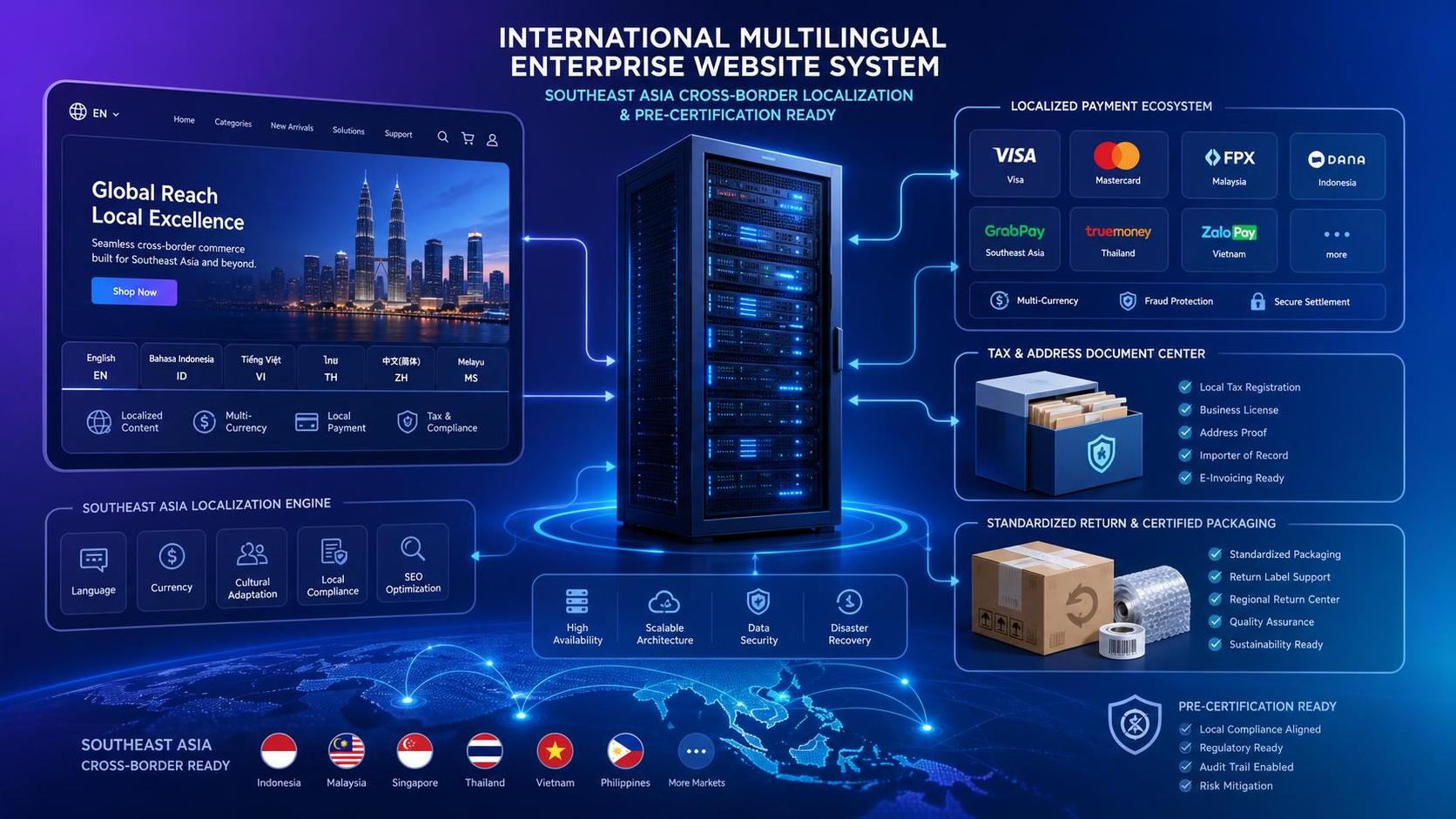
 Six Southeast Asian Countries Launch LocalFirst 2026,Localization Certification Moves Upfront
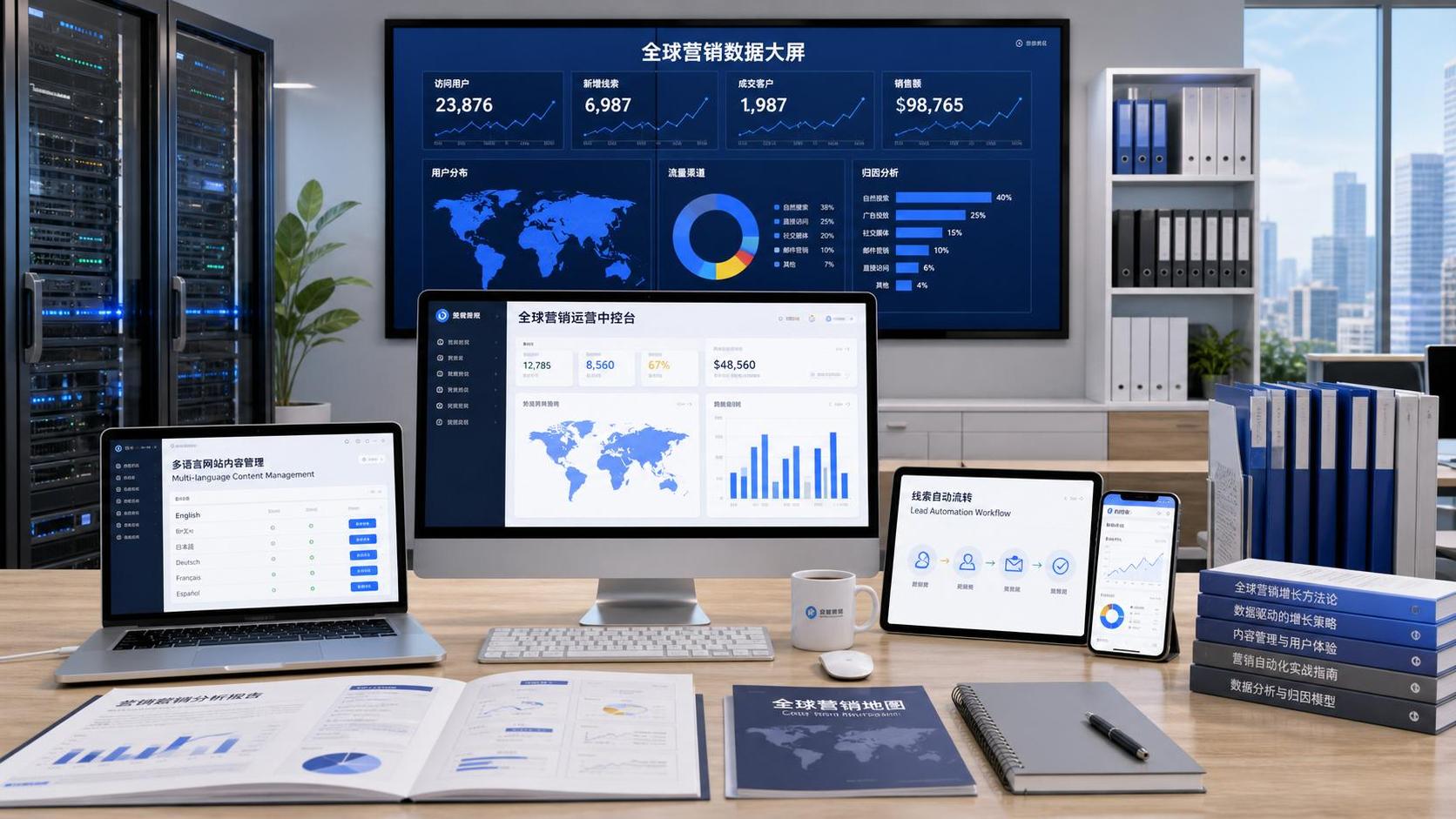
 How to choose a multilingual marketing system solution? Content management, lead distribution, and data attribution are key
 Are Local-Language Websites Necessary for the European Market? Analysis of Suitable Industries and Traffic Opportunities

Related Products
 EasyCamp SaaS Smart Website Marketing SystemE-Yingbao SaaS Smart Website Marketing System: AI-powered, zero-code website building. Rapidly launch multilingual independent e-commerce sites in just 10 minutes. Global server acceleration and AI-driven SEO optimization empower businesses to efficiently connect with global markets. The seamless integration of technology and user-friendly operation makes building e-commerce sites incredibly simple.
 AI+SEM Intelligent Advertising Marketing SystemAI+SEM drives intelligent ad creation, empowering full-funnel precision advertising marketing. The system automatically generates weekly/monthly reports, AI recommends keywords and target countries, monitors core metrics in real-time with intelligent alerts, and enables one-click high-conversion ad solutions to help quickly acquire customers and improve ROI.
 AI+SEO Dual Engine Optimization ServiceEasyWin AI+SEO Dual Engine Optimization System leverages AI-powered keyword mining, content generation, and comprehensive technical optimization to help foreign trade enterprises acquire high-quality organic traffic, significantly improving search rankings and conversion rates.
 AI+SNS Social Media Marketing SystemYingbao AI+SNS Social Media Marketing System - Precision social capture for the social media era. Supports one-click content synchronization across major platforms like Facebook and LinkedIn. AI intelligently rewrites posts for enhanced relevance. 24/7 AI customer service and user profiling analysis empower businesses to efficiently expand into global markets.
 AI+SEO营销解决方案易营宝AI+SEO营销解决方案,通过AI批量写作、智能生成TDK、精准关键词扩词等功能,全面优化网站SEO效果,提升流量与转化率。助力企业构建高效智能网站新生态。
 AI+SEM Advertising Marketing SolutionsAI+SEM Advertising Marketing Solution leverages AI technology to deeply empower SEM ad campaigns. It automatically generates weekly/monthly reports using AI, presenting account data across multiple dimensions for comprehensive insights into campaign performance and trends. The system precisely recommends keywords and target countries, intelligently generates high-conversion ad copy, and enables one-click activation of efficient campaign plans to help businesses rapidly acquire customers. Simultaneously, it monitors core metrics in real time, intelligently identifies abnormal fluctuations, and issues timely alerts to ensure stable, high-return advertising results.
 Domain Name ServicesEasyWin provides professional domain name services, including intelligent queries, one-stop registration, brand protection, and full lifecycle management, helping businesses build a digital brand image.
 EasyOperate B2C Cross-Border E-Commerce Platform & Independent WebsiteEasyStore B2C Cross-border E-commerce Independent Store is an intelligent website building and cross-border e-commerce integrated solution independently developed by EasyStore Information Technology (Beijing) Co., Ltd. The system is specially designed for small and medium-sized as well as large export enterprises, integrating 'website building, operation, marketing, advertising, and conversion' into one, helping enterprises quickly establish cross-border e-commerce independent stores to achieve brand globalization and global sales growth.
The platform supports multiple languages, multiple currencies, and multi-channel marketing, with built-in AI intelligent translation and SEO optimization systems, suitable for mainstream markets such as Southeast Asia, Europe and America, Latin America, and the Middle East, assisting Chinese manufacturing enterprises in efficiently deploying international e-commerce strategies. SSL证书易营宝提供专业SSL安全证书服务,包括单域名和泛域名证书,确保网站数据传输加密、身份验证和完整性保护,助力企业建立安全可信的在线业务环境。









