









- Can Zhejiang foreign trade independent websites still be developed today? Look at changes in traffic and lead generationJul 28, 2026View details
- What New Signals Are Emerging in Enterprise Services SaaS Marketing ReportsJul 27, 2026View details
- What Does a Global Traffic Ecosystem Service Provider Do? What Are the Differences from a Single Advertising AgencyJul 16, 2026View details
- What should you focus on in the latest enterprise SaaS report? From renewal rates and delivery costs to overseas growth opportunitiesJul 12, 2026View details
- What signals are worth paying attention to in a cross-border marketing trend report? B2B companies should look at these 6 signalsJul 11, 2026View details
- How to Read a Cross-Border Marketing Trends Report? Five Key Dimensions for Evaluating Channel OpportunitiesJul 11, 2026View details
Service Consumption Season Kickoff: Travel services exports and inbound consumption usher in new demands
Around the rollout related to the “Service Consumption Season,” the Ministry of Commerce has launched relevant arrangements for 2026, with a focus on tourism service exports and inbound consumption. The exact event timing was not clearly stated in the input information, but it has been confirmed that on June 2, 2026, the Ministry of Commerce jointly issued policy measures with 9 departments to promote tourism service exports and expand inbound consumption. The content involves multilingual tourism official website development, optimization of tax refund procedures for departures, and support for overseas visitors to book China services through digital platforms. For service providers in cross-border tourism platforms, hotel groups, destination marketing organizations, and overseas consumer-facing businesses, this is not only a signal to boost consumption, but also means that localized digital delivery, payment adaptation, and the online conversion path will receive greater attention.
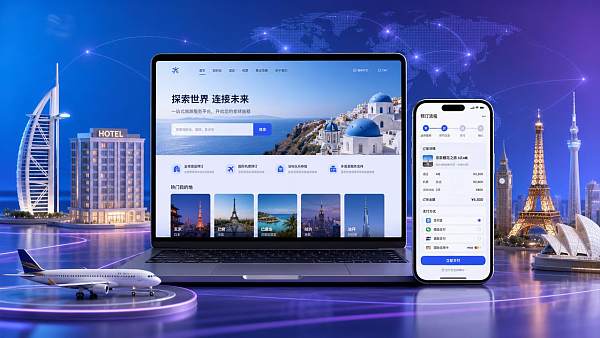
The directions clearly set out by this policy
Based on the information provided, on June 2, 2026, the Ministry of Commerce jointly issued the “Policy Measures on Promoting Tourism Service Exports and Expanding Inbound Consumption.” The measures explicitly call for advancing multilingual tourism official website development, optimizing departure tax refund procedures, and supporting overseas visitors in booking China services through digital platforms.
From the confirmed content, the policy focus is not limited to offline consumer convenience; it also covers online service reach, booking conversion, and the way information is presented to overseas users. The input information also points out that this policy will increase the demand of overseas B2C service providers, cross-border tourism platforms, hotel groups, and destination marketing organizations for China-localized digital infrastructure, with a focus on multilingual websites, GEO-optimized landing pages, and localized payment support.
The procurement chain and delivery process are being reexamined
Service providers facing overseas consumers will pay more attention to localized delivery
From an analytical perspective, the reason service providers directly targeting overseas travelers or overseas consumers may be affected is that the policy clearly supports booking China services through digital platforms. This means that relevant companies, in their business processes, cannot focus only on product launch; they must also pay attention to multilingual page presentation, booking process accessibility, and localized adaptation of the payment process. For such companies, what deserves more attention now is whether the website content, landing page structure, transaction page instructions, and refund/tax refund-related information display can support overseas users in completing orders and consumption decisions.
Cross-border platforms and channel partners need to pay attention to rule expression and data consistency
From an industry perspective, cross-border tourism platforms and channel distributors may be affected because they play an intermediary role in information delivery, transaction fulfillment, and service presentation. After the policy promotes multilingual website development, the platform side may need to check whether product pages, merchant information, service descriptions, and booking terms are consistent. The changes that need attention are mainly concentrated in page rule descriptions, service terms presentation, payment method configuration, order information transmission, and information prompts related to departure tax refunds. If front-end presentation is inconsistent with actual fulfillment information, additional friction may arise later in delivery and after-sales.
The procurement needs of hotel groups and destination marketing organizations will become more specific
Observably, hotel groups and destination marketing organizations may be affected because the policy directly addresses multilingual presentation and the online booking capabilities of overseas users, which will shift their demand for localized digital infrastructure from “promotional display” to “transaction-ready.” The business links most likely to be affected usually lie in website development, themed page production, content translation and proofreading, payment interface adaptation, and marketing landing page optimization. For buyers, they need to pay attention to whether suppliers can provide delivery capabilities that fit the business scenario, especially in terms of multilingual content accuracy, page update efficiency, payment configuration, and ongoing operations and maintenance support.
Service supply chains need to adapt to more detailed delivery requirements
From an analytical perspective, service companies providing website development, page optimization, payment integration, and content localization for tourism, hospitality, and cross-border platforms may also directly take on the new demand. The core issue for such companies is not single-point development work, but whether delivery standards will be more oriented toward actual conversion and compliant expression. What needs attention is not abstract technical capability, but whether project documents, page copy, payment processes, order instructions, after-sales information, and multilingual versions can form a consistent delivery experience, avoiding repeated rework by the buyer during execution.
What companies should now pay closer attention to in practical terms
First check whether online touchpoints align with overseas user habits
From an analytical perspective, the policy has already listed multilingual tourism official website development as a clear signal. Relevant companies should first review whether their existing websites, booking pages, and mobile entry points have the basic usability required for overseas users. This is not simply about adding language versions; it is about whether page information is complete, whether service descriptions are clear, whether the booking entry is smooth, and whether content remains consistent across different languages.
Payment and booking paths need synchronized inspection
What is now more worthy of attention is that supporting overseas visitors in booking China services through digital platforms means the importance of localized payment and order fulfillment capabilities is rising. If a company is involved in platform cooperation, direct website orders, or multi-channel distribution, it should重点检查 payment settings, booking confirmation processes, order notifications, and after-sales instructions to see whether they can support overseas users in completing closed-loop transactions. The input information does not provide a more detailed execution path, so this part is better understood as something enterprises need to prepare for in advance, rather than an already unified implementation result.
Information presentation related to departure tax refunds cannot be ignored
From an observational standpoint, although optimizing departure tax refund procedures belongs to the policy direction, it will also affect front-end corporate delivery. Enterprises involved in inbound consumer fulfillment need to pay attention to whether product or service display pages, store information, consumption prompts, and customer service instructions need to be updated in sync with tax refund facilitation-related wording. Since the input information does not provide specific procedural details, companies should currently maintain stronger information update capabilities to avoid inconsistencies between marketing promotion and actual service delivery.
Procurement documents and supplier capability evaluations may become more granular
From a practical perspective, as the need for localized digital infrastructure grows, buyers in tender documents, comparison criteria, or project requirement statements may pay more attention to multilingual delivery, page optimization, payment adaptation, and ongoing maintenance capabilities. For service providers, it is necessary to prepare verifiable technical documentation, delivery explanations, project timelines, and operations support plans in advance. This is better understood as buyer-side requirements potentially becoming more detailed, rather than as a unified template already in place.
This looks more like an execution signal than a final judgment
The key point conveyed by this information is not only the direction of expanding inbound consumption, but also bringing “how services are seen, understood, and booked by overseas users” into an actionable scope. Putting the keywords multilingual official websites, departure tax refund facilitation, and digital platform booking support together shows that the policy is focusing on the end-to-end chain from information touchpoint to transaction fulfillment to consumption completion.
At the same time, caution is still needed. Observably, the current stage is more suitable to be understood as a clear execution signal and market preparation signal, rather than as if all details have already been fully implemented. Going forward, it remains necessary to continue watching whether official statements become further refined, whether various platforms and buyers adjust project requirements, and what new standardized demands the industry will feed back in actual delivery.
For the industry, the change has moved from the direction layer into the preparation layer
Taken together, the significance of this policy information lies in the fact that the promotion of tourism service exports and inbound consumption is no longer just an incentive at the traffic level; it has begun to touch specific links such as localized digital infrastructure, online booking capabilities, and service information expression. For relevant companies, it is not appropriate at present to regard this as a confirmed short-term result; instead, it should be seen as a forward signal that business processes, procurement arrangements, and delivery standards may be gradually adjusted.
Logically speaking, this information is better understood as a rules-based dynamic that needs continuous tracking. What has been clearly stated is the policy direction and focus areas; what still needs observation is the follow-up execution path, changes in procurement standards, the way platforms are implemented locally, and the feedback from enterprises in actual fulfillment.
Basis of this article and follow-up verification directions
This article was generated based on the news title, event timing, and summary provided by the user. The confirmed information is limited to the relevant title content, the indication that the event timing was “not clearly stated in the article,” and the summary description of the policy measures jointly issued by the Ministry of Commerce and 9 departments on June 2, 2026 to promote tourism service exports and expand inbound consumption.
For such events, the source types that can usually be continuously verified include official announcements, releases from regulatory agencies, information from the competent trade authorities, industry association information, standard-setting organization documents, and reports from authoritative media. However, since the current input does not provide a specific official source link, the exact official source link still needs continuous verification later.
Content worth continuing to watch includes: whether policy details become clearer, whether the relevant execution paths become more specific, whether procurement or tender documents show corresponding changes, whether the delivery requirements for platforms and service providers are adjusted, and whether industry feedback and enterprise execution results form a clearer market signal.
Related Articles


Related Products
 EasyCamp SaaS Smart Website Marketing SystemE-Yingbao SaaS Smart Website Marketing System: AI-powered, zero-code website building. Rapidly launch multilingual independent e-commerce sites in just 10 minutes. Global server acceleration and AI-driven SEO optimization empower businesses to efficiently connect with global markets. The seamless integration of technology and user-friendly operation makes building e-commerce sites incredibly simple.
 AI+SEM Intelligent Advertising Marketing SystemAI+SEM drives intelligent ad creation, empowering full-funnel precision advertising marketing. The system automatically generates weekly/monthly reports, AI recommends keywords and target countries, monitors core metrics in real-time with intelligent alerts, and enables one-click high-conversion ad solutions to help quickly acquire customers and improve ROI.
 AI+SEO Dual Engine Optimization ServiceEasyWin AI+SEO Dual Engine Optimization System leverages AI-powered keyword mining, content generation, and comprehensive technical optimization to help foreign trade enterprises acquire high-quality organic traffic, significantly improving search rankings and conversion rates.
 AI+SNS Social Media Marketing SystemYingbao AI+SNS Social Media Marketing System - Precision social capture for the social media era. Supports one-click content synchronization across major platforms like Facebook and LinkedIn. AI intelligently rewrites posts for enhanced relevance. 24/7 AI customer service and user profiling analysis empower businesses to efficiently expand into global markets.
 AI+SEO营销解决方案易营宝AI+SEO营销解决方案,通过AI批量写作、智能生成TDK、精准关键词扩词等功能,全面优化网站SEO效果,提升流量与转化率。助力企业构建高效智能网站新生态。
 AI+SEM Advertising Marketing SolutionsAI+SEM Advertising Marketing Solution leverages AI technology to deeply empower SEM ad campaigns. It automatically generates weekly/monthly reports using AI, presenting account data across multiple dimensions for comprehensive insights into campaign performance and trends. The system precisely recommends keywords and target countries, intelligently generates high-conversion ad copy, and enables one-click activation of efficient campaign plans to help businesses rapidly acquire customers. Simultaneously, it monitors core metrics in real time, intelligently identifies abnormal fluctuations, and issues timely alerts to ensure stable, high-return advertising results.
 Domain Name ServicesEasyWin provides professional domain name services, including intelligent queries, one-stop registration, brand protection, and full lifecycle management, helping businesses build a digital brand image.
 EasyOperate B2C Cross-Border E-Commerce Platform & Independent WebsiteEasyStore B2C Cross-border E-commerce Independent Store is an intelligent website building and cross-border e-commerce integrated solution independently developed by EasyStore Information Technology (Beijing) Co., Ltd. The system is specially designed for small and medium-sized as well as large export enterprises, integrating 'website building, operation, marketing, advertising, and conversion' into one, helping enterprises quickly establish cross-border e-commerce independent stores to achieve brand globalization and global sales growth.
The platform supports multiple languages, multiple currencies, and multi-channel marketing, with built-in AI intelligent translation and SEO optimization systems, suitable for mainstream markets such as Southeast Asia, Europe and America, Latin America, and the Middle East, assisting Chinese manufacturing enterprises in efficiently deploying international e-commerce strategies. SSL证书易营宝提供专业SSL安全证书服务,包括单域名和泛域名证书,确保网站数据传输加密、身份验证和完整性保护,助力企业建立安全可信的在线业务环境。









