









- How to view pricing in the global traffic ecosystem? Cost comparison of search, social media, and content channel advertisingJul 06, 2026View details
- How to assess foreign trade website development trends?Looking at 2026 changes from multilingual,AI content to conversion pathsJul 04, 2026View details
- What are the new trends in multilingual marketing data analytics tools in 2026? Focus on attribution、automation and complianceJul 04, 2026View details
- Is Brand Globalization Marketing Consulting Worth Buying? At What Stage Should Companies Bring It InJul 01, 2026View details
- Cross-Border Marketing Trend Research: Why More and More Companies Are Starting to Deploy AI Search and GEO OptimizationJun 30, 2026View details
- Cross-Border Marketing Trend Research: How Independent Sites, AI Content, and Short-Video Customer Acquisition Are ChangingJun 30, 2026View details
How to recover from a decline in indexing in the French-language region of a multilingual website?Check these 6 issues first
French-region indexing has suddenly declined,don’t rush to rewrite the pages first
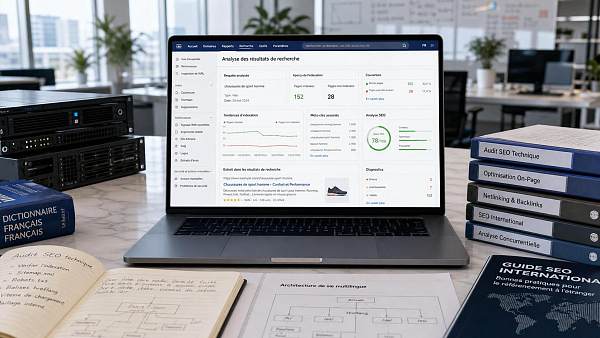
How can a multilingual website recover from a drop in indexing in the French region?Many teams’ first reaction is to change titles and add content,only to make things more chaotic the more they change。A more prudent approach is to first determine whether the problem lies in content quality,or in technical signals。
Indexing fluctuations on French sites usually do not have mysterious causes。Mismatched language tags,conflicting indexing strategies,an increase in duplicate pages,crawl anomalies,unstable server responses,and insufficient localization often have a more direct impact than the copy itself。
In cross-regional marketing projects,the French region is also relatively special。It involves France,and may also cover Belgium,French-speaking Canada,and French-speaking markets in Africa。Once the page structure is handled roughly,search engines can easily judge it as inaccurate。
If the website is simultaneously responsible for website building,SEO,ad landing pages,and multilingual customer acquisition tasks,technical troubleshooting needs to be placed even further ahead。First identify the exact cause,then decide whether to fix rules,change the architecture,or adjust the rhythm of content distribution。
Where to look first for the most error-prone areas:how to quickly judge 6 issues
During actual troubleshooting,it is not recommended to view all anomalies together。First use a judgment table to separate signals,risks,and processing priorities,and recovery efficiency will be higher。
If more than two items in the table are triggered at the same time,how to recover from a drop in indexing in the French region of a multilingual website is usually not a single-point issue,but the result of overlapping technical and content signals。
The French pages clearly exist,so why are they still not being indexed correctly?
The first thing to check is whether the language tags are truly correct。Many sites have a French directory,but do not have a complete hreflang closed loop。Search engines therefore treat French pages as near-duplicate copies of English pages,and indexing will naturally shrink。
A more common situation is that the French page has canonical set to point to the main-language page。In this way,the webmaster thinks they are doing canonicalization,but search engines will understand it as “the French page is only a duplicate page”。
During troubleshooting,it is recommended to focus on confirming three things:
- Whether each French page has a self-referencing canonical。
- Whether hreflang is mutually recognized in both directions,rather than being a one-sided declaration。
- Whether the French version is submitted separately through the sitemap and continuously updated。
If an integrated website-building and overseas marketing platform is used,this part can usually be fixed uniformly at the template layer。For projects running multiple sites and multiple markets in parallel,this is more reliable than manually changing pages one by one,and is also more suitable for later expansion。
When indexing declines,is duplicate content dragging down the French region?
Yes,and it is not necessarily plagiarism in the traditional sense。What is most easily overlooked in multilingual websites is “structural duplication”。For example,the same product page only changes currency and contact methods,while the main body of the text is almost identical。
Such pages can be distinguished by humans,but search engines may not give enough judgment of independent value。Once pages in the French region are judged to contribute limited value,they may first receive less crawling,and then less indexing。
It should be noted that machine translation itself may not directly cause non-indexing。The real problem is that after translation,the pages have no local semantic differences,nor do they include application scenarios,delivery explanations,certification materials,or after-sales information commonly seen in the French market。
When judging,you can look at three signals:highly duplicated titles,completely consistent paragraph structures,and core conversion modules that only switch languages。If they appear at the same time,it is recommended to prioritize page layering,rather than rewriting all pages in one go。
Why do crawling and server issues affect the French directory first?
Because the French directory is often not the main traffic entrance,and its authority foundation is relatively weak。Once the server fluctuates or crawl budget is limited,search engines are more likely to reduce the visit frequency of this part of the pages first。
If there have recently been program upgrades,cache switching,CDN adjustments,or URL rewriting,the French directory especially needs log checks。Many indexing declines are not because pages disappear,but because crawlers frequently encounter overly long 302 chains,intermittent 403,or regional access timeouts。
In actual application,technical troubleshooting can proceed in this order:
- Spot-check the return codes of French pages to confirm there are no abnormal redirects。
- Check search engine crawl logs and compare crawl frequency before and after for the French directory。
- Test access speed from European nodes and confirm whether time to first byte has become significantly slower。
- Verify robots rules to avoid accidentally blocking directories or parameter pages。
For sites that take website building,SEO,and ad placement into account,technical-layer stability is especially critical。When ad pages,store pages,and official website pages share the same system,as long as the underlying response fluctuates,indexing in the French region may be the first to decline。
The content has already been translated into French,so why can search performance still not recover?
At this point,it is necessary to see whether “translation completed” equals “localization completed”。How to recover from a drop in indexing in the French region is where many projects get stuck。The pages have French text,but lack the information that French users will truly search for and use to make judgments。
For example,industrial product pages only have product parameters,but no delivery time,certifications,or applicable industries;cross-border store pages only have product descriptions,but no tax,shipping,or return and exchange explanations;B2B official websites only have company introductions,but no French cases or regional service capabilities。
Search engines increasingly value completeness and scenario matching when evaluating multilingual pages。In other words,translating the text is only the foundation;whether the page can truly serve the French market determines whether indexing can recover steadily。
In recent years,many global marketing service providers have put AI translation,template-based website building,SEO signal management,and localization supplementation into one process。The value of doing this lies in the fact that technical rules and market expression can be corrected at the same time,avoiding a situation where tags are fixed on one side while thin content continues to be produced on the other。
To recover indexing in the French region,what should be fixed first,and how should the cycle be judged?
If the problems are concentrated in tags,canonical,sitemaps,and crawl paths,recovery is usually relatively fast。As long as they are resubmitted and crawling remains stable,the French directory may start expanding again within a few weeks。
If the core problem is too many duplicate pages,or French content has long lacked local value,the recovery cycle will be extended。Because this type of problem requires not only fixing indexing,but also rebuilding the search engine’s judgment of page independence。
A more stable execution method is to split the repair into three steps:
- First fix the technical foundation to ensure it can be crawled,recognized,and indexed。
- Then clean up duplicate structures and merge low-value pages。
- Finally supplement the page information and content depth truly needed by the French market。
For sites covering multiple regions such as Europe,North America,and Southeast Asia,this step-by-step repair is more suitable for long-term operation。Platforms like 易营宝 that simultaneously provide intelligent website building,SEO optimization,and overseas marketing systems usually view indexing,conversion,and regional expansion within the same data logic,which is closer to real business goals than simply staring at indexing numbers。
Returning to the initial question,how can a multilingual website recover from a drop in indexing in the French region?The key is not “changing quickly”,but “identifying accurately”。First clarify the 6 core issues one by one,then decide the repair sequence,which is often more effective than blindly redesigning。The next step can be to first establish a French-directory troubleshooting checklist,review tags,indexing,crawling,response,and localization one by one,and then combine logs with indexing data to judge priorities。
Related Articles
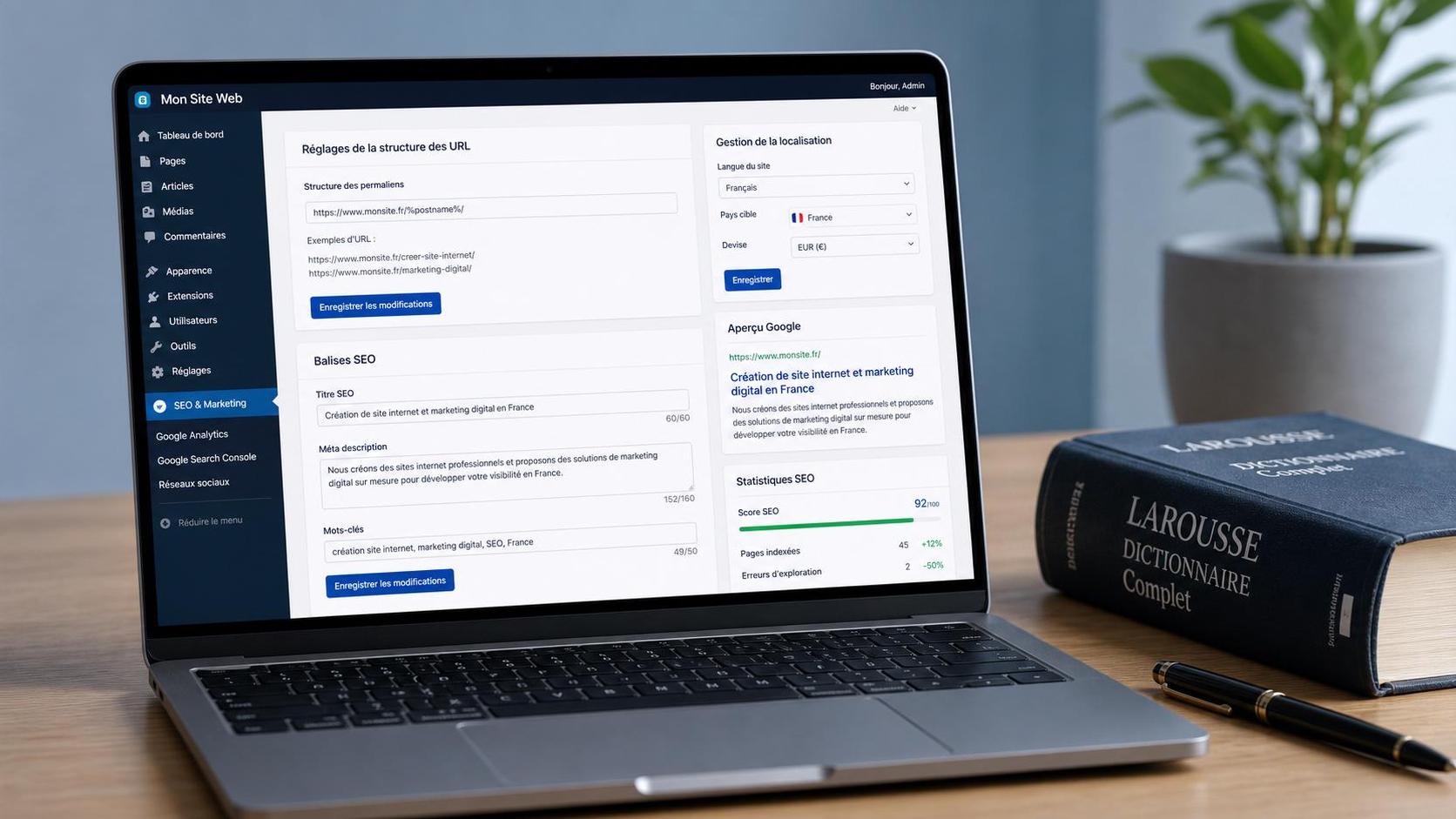
 What should you pay attention to when building a French website?From localized wording、URL structure to SEO tag settings
![]() Will the multilingual TDK generated by AI have inconsistent brand terminology?How to unify the termbase and review
Will the multilingual TDK generated by AI have inconsistent brand terminology?How to unify the termbase and review Brazil Requires IoT Independent Websites to Display FCC/ANATEL Dual Certification Switching


Related Products
 EasyCamp SaaS Smart Website Marketing SystemE-Yingbao SaaS Smart Website Marketing System: AI-powered, zero-code website building. Rapidly launch multilingual independent e-commerce sites in just 10 minutes. Global server acceleration and AI-driven SEO optimization empower businesses to efficiently connect with global markets. The seamless integration of technology and user-friendly operation makes building e-commerce sites incredibly simple.
 AI+SEM Intelligent Advertising Marketing SystemAI+SEM drives intelligent ad creation, empowering full-funnel precision advertising marketing. The system automatically generates weekly/monthly reports, AI recommends keywords and target countries, monitors core metrics in real-time with intelligent alerts, and enables one-click high-conversion ad solutions to help quickly acquire customers and improve ROI.
 AI+SEO Dual Engine Optimization ServiceEasyWin AI+SEO Dual Engine Optimization System leverages AI-powered keyword mining, content generation, and comprehensive technical optimization to help foreign trade enterprises acquire high-quality organic traffic, significantly improving search rankings and conversion rates.
 AI+SNS Social Media Marketing SystemYingbao AI+SNS Social Media Marketing System - Precision social capture for the social media era. Supports one-click content synchronization across major platforms like Facebook and LinkedIn. AI intelligently rewrites posts for enhanced relevance. 24/7 AI customer service and user profiling analysis empower businesses to efficiently expand into global markets.
 AI+SEO营销解决方案易营宝AI+SEO营销解决方案,通过AI批量写作、智能生成TDK、精准关键词扩词等功能,全面优化网站SEO效果,提升流量与转化率。助力企业构建高效智能网站新生态。
 AI+SEM Advertising Marketing SolutionsAI+SEM Advertising Marketing Solution leverages AI technology to deeply empower SEM ad campaigns. It automatically generates weekly/monthly reports using AI, presenting account data across multiple dimensions for comprehensive insights into campaign performance and trends. The system precisely recommends keywords and target countries, intelligently generates high-conversion ad copy, and enables one-click activation of efficient campaign plans to help businesses rapidly acquire customers. Simultaneously, it monitors core metrics in real time, intelligently identifies abnormal fluctuations, and issues timely alerts to ensure stable, high-return advertising results.
 Domain Name ServicesEasyWin provides professional domain name services, including intelligent queries, one-stop registration, brand protection, and full lifecycle management, helping businesses build a digital brand image.
 EasyOperate B2C Cross-Border E-Commerce Platform & Independent WebsiteEasyStore B2C Cross-border E-commerce Independent Store is an intelligent website building and cross-border e-commerce integrated solution independently developed by EasyStore Information Technology (Beijing) Co., Ltd. The system is specially designed for small and medium-sized as well as large export enterprises, integrating 'website building, operation, marketing, advertising, and conversion' into one, helping enterprises quickly establish cross-border e-commerce independent stores to achieve brand globalization and global sales growth.
The platform supports multiple languages, multiple currencies, and multi-channel marketing, with built-in AI intelligent translation and SEO optimization systems, suitable for mainstream markets such as Southeast Asia, Europe and America, Latin America, and the Middle East, assisting Chinese manufacturing enterprises in efficiently deploying international e-commerce strategies. SSL证书易营宝提供专业SSL安全证书服务,包括单域名和泛域名证书,确保网站数据传输加密、身份验证和完整性保护,助力企业建立安全可信的在线业务环境。









