









- What stages does the cross-border services ecosystem include? How do website building, promotion, payment, and compliance work togetherJun 22, 2026View details
- The China-US tariff arrangement has reached a preliminary consensus, and the trade association will be establishedJun 15, 2026View details
- Should overseas brand marketing start with ads or contentJun 21, 2026View details
- What determines B2C cross-border e-commerce website development costs? A breakdown of features, interfaces, and deployment methodsJun 17, 2026View details
- China-Morocco zero-tariff access, a breakthrough in the cost of Moroccan goods exports to ChinaJun 11, 2026View details
- What signal should be released for the suspension of exports to JapanJun 10, 2026View details
Thailand Industrial Expo opens, China smart manufacturing focuses on AI production line visualization
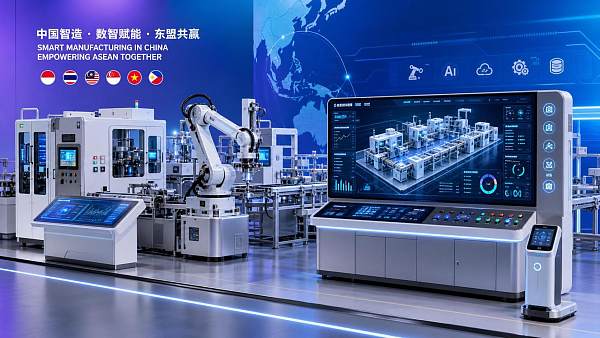
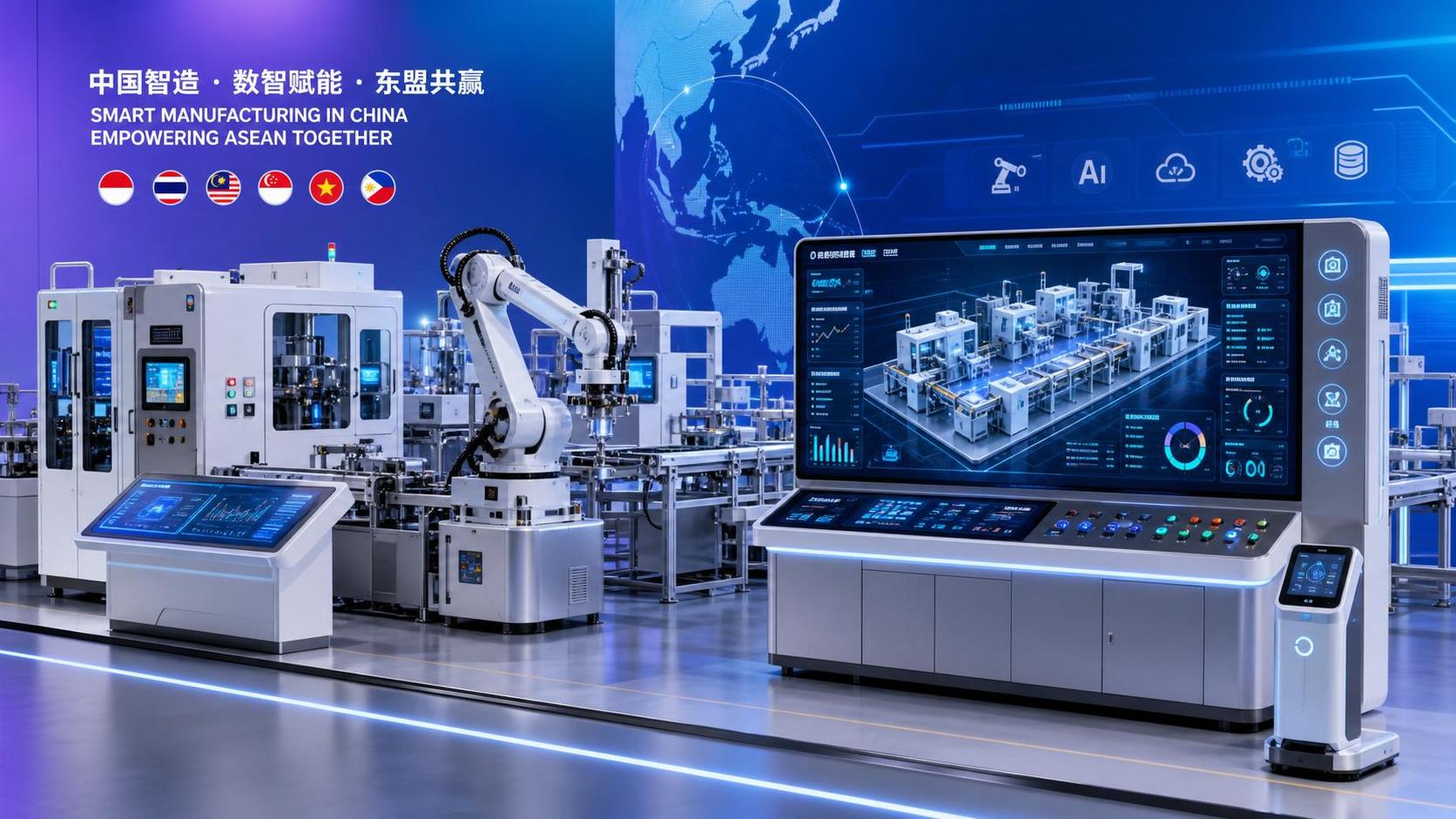
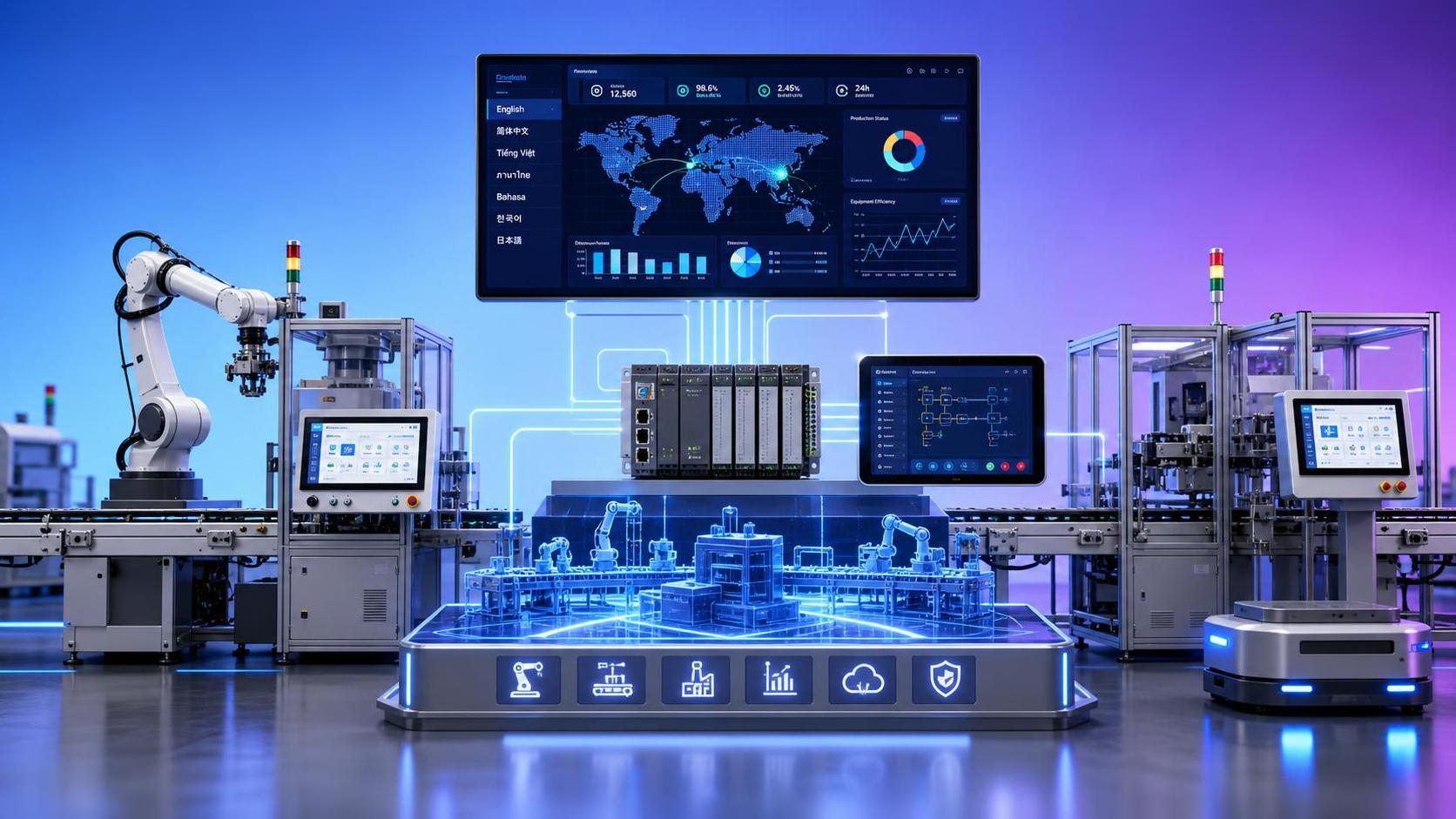
The Thailand International Industrial Manufacturing Expo, opening on June 17, 2026, is once again bringing smart manufacturing and automation to the forefront of regional procurement and supplier evaluation. Combined with the Chinese exhibitors featured at this year’s exhibition, including AI-driven production line digital twins, remote operations and maintenance dashboards, and multilingual device interaction interfaces, this dynamic trend is drawing industry attention not only because of the exhibits themselves, but also because Southeast Asian buyers are using it as a lens to assess Chinese suppliers. The focus is now expanding from equipment capabilities to digital service capabilities, delivery support capabilities, and the visibility of after-sales service capabilities, which will affect the preparation of compliance materials for manufacturers, exporters, buyers, after-sales service providers, and related parties.
Confirmed signals released by the exhibition
According to the confirmed information, from June 17 to 20, 2026, the Thailand International Industrial Manufacturing Expo will be held at the IMPACT Exhibition Center in Bangkok, with a focus on smart manufacturing and automation.
The confirmed information also shows that there are more than 200 Chinese exhibitors, of which 73% are showcasing AI-driven production line digital twins, remote operations and maintenance dashboards, and multilingual device interaction interfaces.
From the available information, it can be confirmed that these exhibits have become an important window for Southeast Asian buyers to evaluate the digital service capabilities of Chinese suppliers. In addition to the above, this article does not extend to specific policy texts, certification clauses, procurement systems, or regulatory arrangements.
The buyer evaluation path is shifting toward the transaction stage
For exporters, exhibition capabilities are beginning to affect pre-award review
From an analytical perspective, when buyers make digital twins, remote O&M interfaces, and multilingual interactions their focus, exporters are first affected in pre-sales technical communication, tender document preparation, and sample demonstration sessions. Previously, the emphasis was on equipment parameters and production capacity explanations; moving forward, there may be a need to simultaneously reflect interface language adaptation, remote service processes, operation data visualization methods, and after-sales response mechanisms.
More importantly, such changes do not necessarily mean the introduction of unified regulatory updates, but in actual trade, buyers’ evaluation criteria often take shape as market entry thresholds before unified rules are established. For enterprises, it is necessary to pay attention to whether technical documents, demo materials, delivery instructions, and after-sales commitments remain consistent in order to reduce disputes caused by functional misunderstandings after the deal is closed.
For procurement parties, supplier screening criteria may become more front-loaded
From an industry perspective, the links most likely to be affected for buyers are supplier comparisons, technical clarification, and verification of after-sales service capabilities. This exhibition is described as a key window for Southeast Asian buyers to assess the digital service capabilities of Chinese suppliers, which means that some procurement decisions are now incorporating the question of whether visualized operations and maintenance and cross-language collaboration can be provided into the front-end assessment.
In practical terms, what buyers need to focus on is not whether a single display interface is advanced, but whether the technical materials, operating instructions, training support, and subsequent maintenance arrangements submitted by the supplier can form a verifiable delivery loop. If future tender documents or procurement specifications set clearer requirements for digital services, the screening criteria may become further refined.
For after-sales and supply chain service links, the boundaries of delivery responsibility are drawing more attention
Observations show that the concentration of remote O&M dashboards and multilingual device interaction interfaces will also affect the responsibility division between after-sales service providers and supply chain service companies. The reason is that once digital service capabilities become part of the transaction decision, the confirmation method after delivery, the content of training support, fault traceability materials, and cross-language communication efficiency may all become components of procurement acceptance and service evaluation.
Such impacts are currently more appropriately understood as market signals at the implementation level rather than as already unified mandatory rules. However, for parties involved in equipment exports, installation and commissioning, spare parts service, and customer support, organizing service records, technical explanations, and issue traceability materials in advance has already become practically necessary.
Several practical items that need to be prepared right now
Can technical materials correspond to digital service demonstrations
From an analytical standpoint, enterprises should first check whether their external demonstration content is consistent with formal technical documents. If the exhibition or business communications place emphasis on AI production line visualization, remote operations and maintenance, or multilingual interfaces, the product descriptions, functional boundary explanations, acceptance conditions, and service lists provided to customers should also maintain wording consistency as much as possible, avoiding a disconnect between demonstrated capabilities and actual delivery documents.
Do tender documents and procurement checklists now include new requirements
What is currently more worth paying attention to is whether buyers in subsequent market implementation will write digital service capabilities into inquiry documents, tender terms, technical annexes, or supplier onboarding requirements. Since no specific implementation details have been provided in the input information, it is not yet possible to determine whether a unified standard has formed. However, related companies should continue to pay attention to whether the language of the interface, remote support, operational visibility, and training delivery terms in procurement documents is becoming more extensive.
Do compliance and certification materials need supplementary explanation
From a practical perspective, although the existing information does not provide any new certification or standard numbers, enterprises still need to pay attention to whether the materials related to equipment delivery, software function descriptions, operational safety, after-sales support, and quality traceability are complete. Especially in export scenarios, the relationship between product documents, test reports, functional manuals, and after-sales commitment documents may affect customers’ judgment of a supplier’s compliance capabilities.
Can post-delivery service commitments be verified
Observations show that after buyers include digital service capabilities in their assessment, companies must not only demonstrate what they can do, but also prepare to explain how they deliver, how they maintain, and how they trace issues. This will directly relate to delivery cycle explanations, remote support processes, issue feedback records, and multilingual service arrangements. At this stage, it is more appropriate to regard these as capability proofs that need to be prepared in advance rather than as a fixed, unified acceptance system.
This looks more like a market implementation signal than a single exhibition topic
From an editorial perspective, the core significance of this information lies not in the centralized display of a certain new technology, but in the fact that the evaluation criteria used by regional buyers for Chinese manufacturing suppliers are undergoing visible change. In addition to equipment performance, digital services, cross-language communication, and remote operations and maintenance capabilities are increasingly being incorporated into more practical procurement evaluation scenarios.
At the same time, judgment should remain restrained. Based on the available information, this change cannot yet be directly defined as having formed a unified regulatory rule or mandatory certification threshold. What is more reasonable to understand is that the market side is releasing clearer implementation signals, and whether these will further materialize in procurement systems, certification channels, tender texts, or delivery acceptance still requires ongoing observation.
From exhibition phenomena to transaction rules, subsequent developments still need to be watched
Taken together, the information conveyed by the 2026 Thailand International Industrial Manufacturing Expo reflects that the dimensions of competition faced by Chinese manufacturers in the Southeast Asian market are expanding. AI-driven production line digital twins, remote operations and maintenance dashboards, and multilingual device interaction interfaces are no longer just display items; they may gradually become the basis for procurement communication, supplier screening, and after-sales coordination.
Therefore, the current more appropriate interpretation of this information is as a market rule change signal worth tracking: it is not yet enough to be seen as a fully landed unified system, but it has already indicated that relevant enterprises need to prepare technical materials, service explanations, and delivery support capabilities earlier in order to respond to changes in the buyer evaluation path.
Source basis of this article and follow-up verification direction
This article was generated based on the event title, event timing, and event summary provided by the user, and the confirmed facts are limited to the relevant exhibition time, location, theme, the approximate range of the number of Chinese exhibitors, the proportion of exhibits, and the statements used to evaluate digital service capabilities.
For such events, subsequent verification should usually also combine official announcements, releases from regulatory bodies, customs or trade authority information, industry association information, standard organization documents, and reports from authoritative media. Since no specific official source link was provided in the input, this article cannot further verify specific official texts. The content that still needs observation includes: whether clearer procurement requirements appear, whether certification implementation channels change, whether tender documents are updated, whether industry feedback emerges, and whether enterprises’ actual execution conditions align.
Related Articles
Related Products
 EasyCamp SaaS Smart Website Marketing SystemE-Yingbao SaaS Smart Website Marketing System: AI-powered, zero-code website building. Rapidly launch multilingual independent e-commerce sites in just 10 minutes. Global server acceleration and AI-driven SEO optimization empower businesses to efficiently connect with global markets. The seamless integration of technology and user-friendly operation makes building e-commerce sites incredibly simple.
 AI+SEM Intelligent Advertising Marketing SystemAI+SEM drives intelligent ad creation, empowering full-funnel precision advertising marketing. The system automatically generates weekly/monthly reports, AI recommends keywords and target countries, monitors core metrics in real-time with intelligent alerts, and enables one-click high-conversion ad solutions to help quickly acquire customers and improve ROI.
 AI+SEO Dual Engine Optimization ServiceEasyWin AI+SEO Dual Engine Optimization System leverages AI-powered keyword mining, content generation, and comprehensive technical optimization to help foreign trade enterprises acquire high-quality organic traffic, significantly improving search rankings and conversion rates.
 AI+SNS Social Media Marketing SystemYingbao AI+SNS Social Media Marketing System - Precision social capture for the social media era. Supports one-click content synchronization across major platforms like Facebook and LinkedIn. AI intelligently rewrites posts for enhanced relevance. 24/7 AI customer service and user profiling analysis empower businesses to efficiently expand into global markets.
 AI+SEO营销解决方案易营宝AI+SEO营销解决方案,通过AI批量写作、智能生成TDK、精准关键词扩词等功能,全面优化网站SEO效果,提升流量与转化率。助力企业构建高效智能网站新生态。
 AI+SEM Advertising Marketing SolutionsAI+SEM Advertising Marketing Solution leverages AI technology to deeply empower SEM ad campaigns. It automatically generates weekly/monthly reports using AI, presenting account data across multiple dimensions for comprehensive insights into campaign performance and trends. The system precisely recommends keywords and target countries, intelligently generates high-conversion ad copy, and enables one-click activation of efficient campaign plans to help businesses rapidly acquire customers. Simultaneously, it monitors core metrics in real time, intelligently identifies abnormal fluctuations, and issues timely alerts to ensure stable, high-return advertising results.
 Domain Name ServicesEasyWin provides professional domain name services, including intelligent queries, one-stop registration, brand protection, and full lifecycle management, helping businesses build a digital brand image.
 EasyOperate B2C Cross-Border E-Commerce Platform & Independent WebsiteEasyStore B2C Cross-border E-commerce Independent Store is an intelligent website building and cross-border e-commerce integrated solution independently developed by EasyStore Information Technology (Beijing) Co., Ltd. The system is specially designed for small and medium-sized as well as large export enterprises, integrating 'website building, operation, marketing, advertising, and conversion' into one, helping enterprises quickly establish cross-border e-commerce independent stores to achieve brand globalization and global sales growth.
The platform supports multiple languages, multiple currencies, and multi-channel marketing, with built-in AI intelligent translation and SEO optimization systems, suitable for mainstream markets such as Southeast Asia, Europe and America, Latin America, and the Middle East, assisting Chinese manufacturing enterprises in efficiently deploying international e-commerce strategies. SSL证书易营宝提供专业SSL安全证书服务,包括单域名和泛域名证书,确保网站数据传输加密、身份验证和完整性保护,助力企业建立安全可信的在线业务环境。









