









- What should you focus on in the latest enterprise SaaS report? From renewal rates and delivery costs to overseas growth opportunitiesJul 12, 2026View details
- What signals are worth paying attention to in a cross-border marketing trend report? B2B companies should look at these 6 signalsJul 11, 2026View details
- How to Read a Cross-Border Marketing Trends Report? Five Key Dimensions for Evaluating Channel OpportunitiesJul 11, 2026View details
- Which channel has the highest ROI in the global traffic ecosystem? Comparative analysis of search, social media, and advertisingJul 10, 2026View details
- What multilingual website services are available in Sanya? Which model is more suitable for local businesses going global?Jul 08, 2026View details
- How to view the complete list of China SaaS companies in the top 100? Practical methods for screening website-building and marketing service providersJul 08, 2026View details
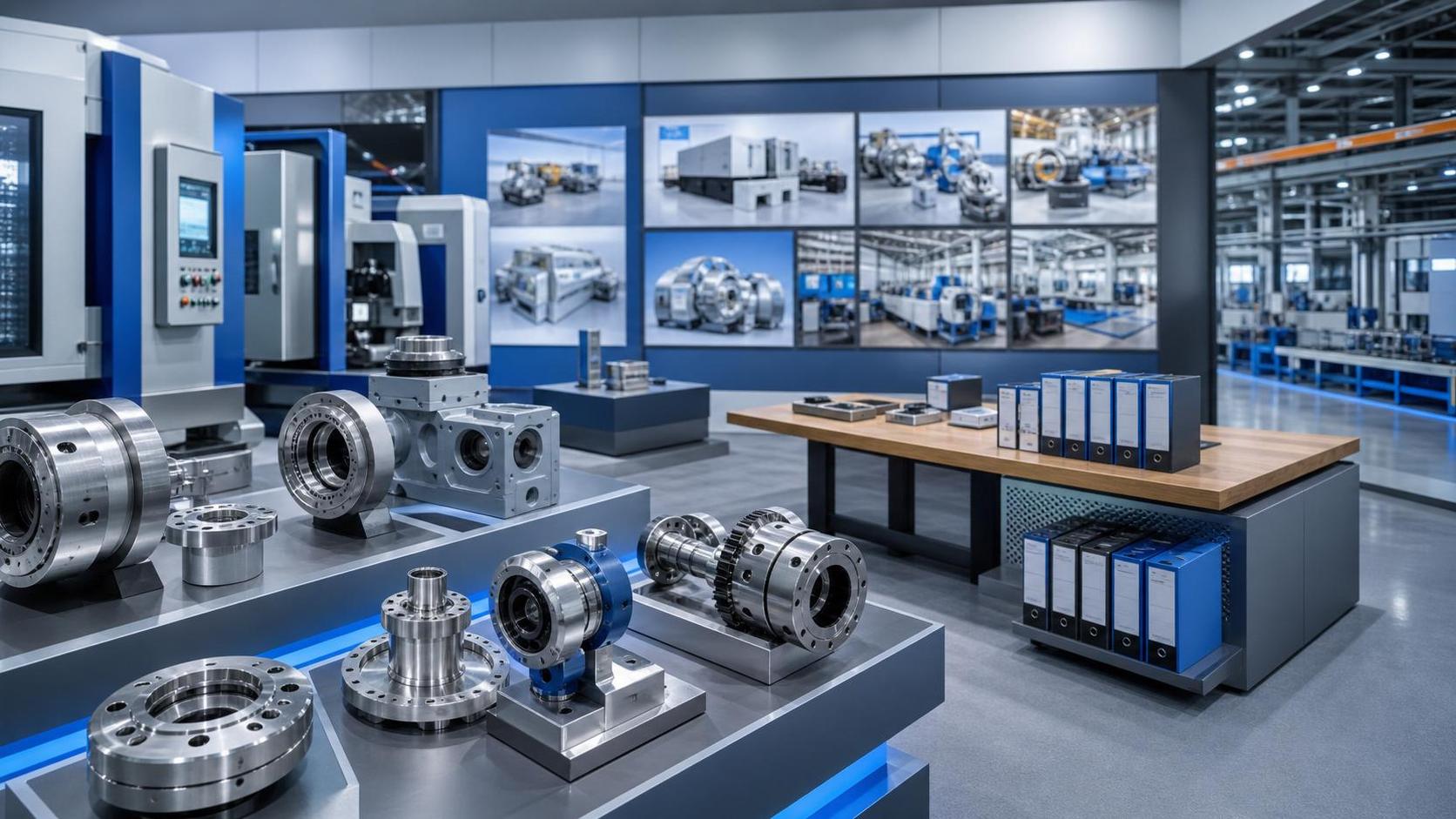
How to create a machinery industry foreign trade website solution? Product categories, inquiry logic, and recommended case page structure
Mechanical Industry Foreign Trade Website Solutions: First Solve Classification, Inquiry, and Trust
How should a mechanical industry foreign trade website solution be built? The core is never just about the visual design. For businesses dealing with machinery, equipment, spare parts, and production line solutions, the website must first let customers quickly understand what you sell, what you can do, and what you have done.

Many website problems do not lie in insufficient content, but in misplaced information structure. After entering the homepage, customers cannot find the corresponding products; after entering the product page, they cannot see the key parameters; when they want to send an inquiry, they have to jump around repeatedly.
This also means that a mechanical industry foreign trade website solution must be built around the procurement decision path, rather than organized around the company’s internal department structure. Who is responsible for searching, who is responsible for evaluation, and who is responsible for contact—the page should serve that person.
In actual business, overseas buyers usually first confirm the application scenario, then look at technical specifications, and then compare delivery capability, certification status, and project experience. A mechanical industry foreign trade website solution that can convert must be developed in line with this sequence.
How to Organize Product Categories so Customers Won’t Get Lost
Mechanical industry products often have many models, complex parameters, and a high degree of customization. If categories are organized only by internal codes, customers will find them hard to understand. A more effective mechanical industry foreign trade website solution usually adopts a three-layer categorization logic.
Layer 1: Categorize by Product Type
This layer solves the question of “what exactly do you sell?” For example, packaging machinery, conveying equipment, numerical control components, hydraulic systems, and industrial cutting tools. The naming should be straightforward and avoid using only brand codes or internal abbreviations.
Layer 2: Categorize by Application Scenario
This layer solves the question of “whether it fits my project.” It can be developed by industry scenarios such as food processing, automotive parts, warehousing and logistics, metal processing, and building materials production, so customers can identify themselves more quickly.
Layer 3: Categorize by Procurement Decision Criteria
This layer is often ignored, but it has strong conversion value. It can be further divided by production capacity, automation level, material standards, certification requirements, installation methods, and customization capability to help customers screen quickly.
If the product line is very long, it is recommended to add filters instead of putting all models into one list. A mature mechanical industry foreign trade website solution is not afraid of having many pages; what it fears is that customers cannot find the correct entry point.
- Category names should prioritize customer search terms, not the company’s internal terminology
- Product listings should display images, key parameters, applicable industries, and inquiry buttons
- Product detail pages should retain related recommendations to avoid interrupting customer browsing
- For customized equipment, add an “Select a Model by Requirement” entry
How to Design the Inquiry Logic So Leads Won’t Be Blocked at the Door
Many websites make the inquiry button very prominent, but still receive few leads. The problem is usually not the button position, but that the inquiry logic does not match the machinery procurement process. A mechanical industry foreign trade website solution cannot pursue only “leave your email address”; it must reduce communication costs.
Before sending an inquiry, mechanical buyers care most about three things: whether you can make it, whether you understand the requirements, and whether you can deliver stably. Therefore, the form design should collect information around these three points while making customers willing to submit it.
It Is Recommended to Adopt a Two-Tier Inquiry Structure
- The first layer is a short form, suitable for quick submission on mobile devices, keeping only name, email, and a brief description of the requirement.
- The second layer is a detailed form, suitable for high-intent customers to supplement project parameters, drawings, quantity, and delivery requirements.
The advantage of this approach is very direct. Initial leads will not be lost because the form is too long, and high-quality customers also have space to explain the project background at one time. For high-ticket machinery equipment, this kind of inquiry mechanism is especially important.
Each Key Page Should Have a Clear Action Point
The homepage should have a main entry, category pages should have quick consultation, product pages should have targeted inquiry, and case pages should have similar project consultation. An inquiry is not an independent page; it is a continuous action within the entire mechanical industry foreign trade website solution.
From a conversion-efficiency perspective, several details should also be added: support for drawing uploads, support for target market selection, support for annual purchase volume input, and support for certification standard notes. In this way, the sales team can judge priorities more quickly after receiving the lead.
Case Page Structure Suggestions: The Focus Is Not on Display, But on Proof
For a mechanical industry foreign trade website solution, a case page is not a news column, nor is it a simple photo album. What customers really want to confirm when viewing cases is: have you handled similar situations before, what were the results, and how high is the cooperation risk.
A More Practical Case Page Structure
- Project background: client industry, region, and application scenario
- Core requirements: capacity, precision, materials, on-site constraints
- Solution: equipment configuration, process combination, delivery method
- Implementation results: improved efficiency, better stability, labor savings
- Extended action: view similar equipment or submit project requirements directly
If you can add on-site photos, installation points, test results, and client region information, the sense of trust will increase significantly. However, note that a case cannot just say “pleasant cooperation” and similar empty statements; it must include project details and result information.
Looking further, case pages can also drive SEO in reverse. Because different cases naturally correspond to different long-tail search terms, such as the application of a certain type of equipment in a certain industry, customized solutions under a certain standard, and project delivery experience in a certain region.
What Basic Modules Should a Deployable Mechanical Industry Foreign Trade Website Solution Include
From the perspective of website execution, a mechanical industry foreign trade website solution should at least cover the following modules, and each module should承担 a specific task rather than simply “looking complete.”
If a company also wants long-term customer acquisition, the website cannot stop at the display layer. A platform like Yiyingbao, which integrates websites and marketing services, combines AI intelligent website building, multilingual deployment, SEO optimization, advertising placement, and data tracking into one system.
The advantage of this is that the mechanical industry foreign trade website solution is no longer just about launching a site, but about forming a closed loop of “website can be indexed, pages can convert, and leads can be tracked,” making overseas customer acquisition more sustainable.
The Most Common Pitfalls During Implementation, and a More Stable Approach
Based on recent projects, the common problems in mechanical industry foreign trade website solutions mainly fall into four categories, and most of them directly affect inquiry quality.
- Focusing only on the homepage image and ignoring product structure, resulting in weak search traffic conversion
- Writing parameters too completely without highlighting key points, making it hard for customers to capture the core information
- Case pages containing only photos, without project background and result data
- A single inquiry entry, with poor submission experience on mobile devices
A more stable approach is to first sort out the target market, procurement scenarios, and product line, and then decide the column structure and content priorities. The website should not be finished first and content filled in later; instead, conversion logic should be defined first and then the pages organized.
If a company targets North America, Europe, the Middle East, or Southeast Asia at the same time, multilingual support, page speed, inquiry distribution, and SEO rules must also be planned in sync. Otherwise, after the site goes live, promotion costs are often magnified.
In summary, a truly effective mechanical industry foreign trade website solution should first clarify product categories, then design the inquiry logic properly, make case page evidence solid, and then combine website building, SEO, and marketing systems to form a sustainable customer acquisition capability. Only then does the website come closer to business results, rather than being just an online facade.
Related Articles
 How to create a machinery industry foreign trade website solution? Product categories, inquiry logic, and recommended case page structure
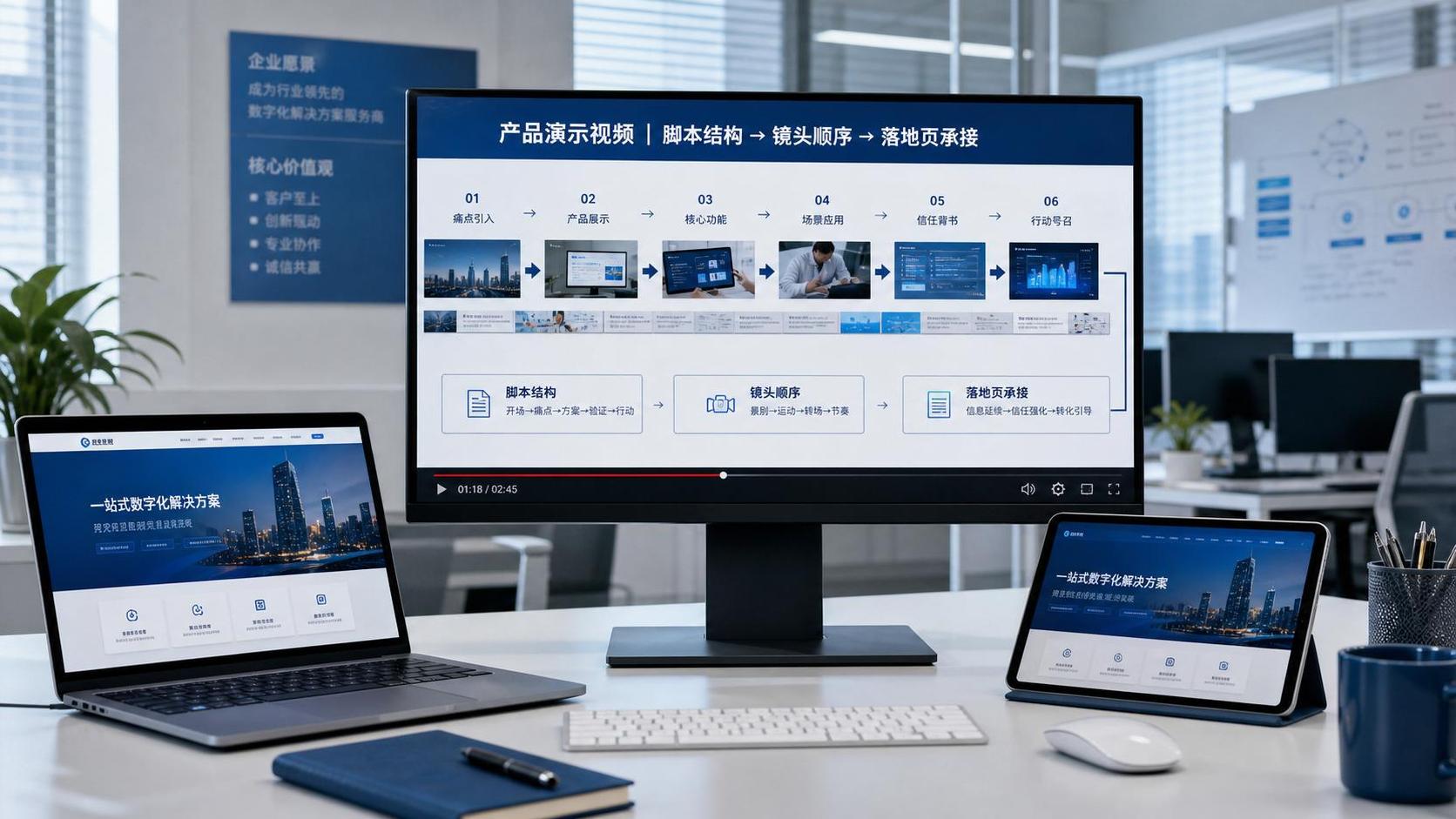
 How to make product demo production more conversion-friendly? Script structure, camera shot sequence, and page alignment
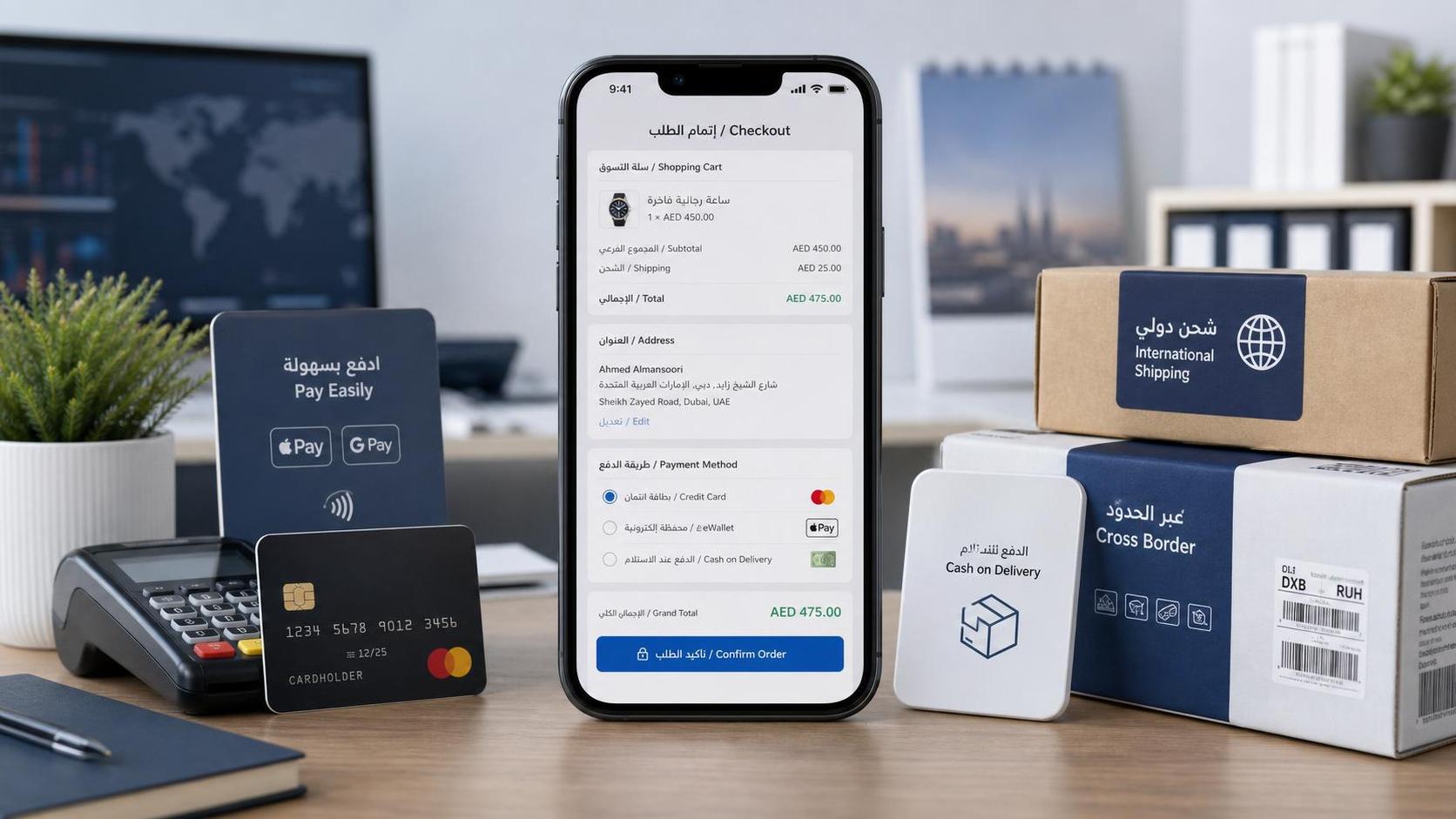
 What payment and website combination yields high conversion rates in the Middle East market? Configuration recommendations for independent websites.
Related Products
 EasyCamp SaaS Smart Website Marketing SystemE-Yingbao SaaS Smart Website Marketing System: AI-powered, zero-code website building. Rapidly launch multilingual independent e-commerce sites in just 10 minutes. Global server acceleration and AI-driven SEO optimization empower businesses to efficiently connect with global markets. The seamless integration of technology and user-friendly operation makes building e-commerce sites incredibly simple.
 AI+SEM Intelligent Advertising Marketing SystemAI+SEM drives intelligent ad creation, empowering full-funnel precision advertising marketing. The system automatically generates weekly/monthly reports, AI recommends keywords and target countries, monitors core metrics in real-time with intelligent alerts, and enables one-click high-conversion ad solutions to help quickly acquire customers and improve ROI.
 AI+SEO Dual Engine Optimization ServiceEasyWin AI+SEO Dual Engine Optimization System leverages AI-powered keyword mining, content generation, and comprehensive technical optimization to help foreign trade enterprises acquire high-quality organic traffic, significantly improving search rankings and conversion rates.
 AI+SNS Social Media Marketing SystemYingbao AI+SNS Social Media Marketing System - Precision social capture for the social media era. Supports one-click content synchronization across major platforms like Facebook and LinkedIn. AI intelligently rewrites posts for enhanced relevance. 24/7 AI customer service and user profiling analysis empower businesses to efficiently expand into global markets.
 AI+SEO营销解决方案易营宝AI+SEO营销解决方案,通过AI批量写作、智能生成TDK、精准关键词扩词等功能,全面优化网站SEO效果,提升流量与转化率。助力企业构建高效智能网站新生态。
 AI+SEM Advertising Marketing SolutionsAI+SEM Advertising Marketing Solution leverages AI technology to deeply empower SEM ad campaigns. It automatically generates weekly/monthly reports using AI, presenting account data across multiple dimensions for comprehensive insights into campaign performance and trends. The system precisely recommends keywords and target countries, intelligently generates high-conversion ad copy, and enables one-click activation of efficient campaign plans to help businesses rapidly acquire customers. Simultaneously, it monitors core metrics in real time, intelligently identifies abnormal fluctuations, and issues timely alerts to ensure stable, high-return advertising results.
 Domain Name ServicesEasyWin provides professional domain name services, including intelligent queries, one-stop registration, brand protection, and full lifecycle management, helping businesses build a digital brand image.
 EasyOperate B2C Cross-Border E-Commerce Platform & Independent WebsiteEasyStore B2C Cross-border E-commerce Independent Store is an intelligent website building and cross-border e-commerce integrated solution independently developed by EasyStore Information Technology (Beijing) Co., Ltd. The system is specially designed for small and medium-sized as well as large export enterprises, integrating 'website building, operation, marketing, advertising, and conversion' into one, helping enterprises quickly establish cross-border e-commerce independent stores to achieve brand globalization and global sales growth.
The platform supports multiple languages, multiple currencies, and multi-channel marketing, with built-in AI intelligent translation and SEO optimization systems, suitable for mainstream markets such as Southeast Asia, Europe and America, Latin America, and the Middle East, assisting Chinese manufacturing enterprises in efficiently deploying international e-commerce strategies. SSL证书易营宝提供专业SSL安全证书服务,包括单域名和泛域名证书,确保网站数据传输加密、身份验证和完整性保护,助力企业建立安全可信的在线业务环境。









