









- What Does a Global Traffic Ecosystem Service Provider Do? What Are the Differences from a Single Advertising AgencyJul 16, 2026View details
- What should you focus on in the latest enterprise SaaS report? From renewal rates and delivery costs to overseas growth opportunitiesJul 12, 2026View details
- What signals are worth paying attention to in a cross-border marketing trend report? B2B companies should look at these 6 signalsJul 11, 2026View details
- How to Read a Cross-Border Marketing Trends Report? Five Key Dimensions for Evaluating Channel OpportunitiesJul 11, 2026View details
- Which channel has the highest ROI in the global traffic ecosystem? Comparative analysis of search, social media, and advertisingJul 10, 2026View details
- What multilingual website services are available in Sanya? Which model is more suitable for local businesses going global?Jul 08, 2026View details
7 common reasons for local payment gateway integration failure in Russian-language standalone website development
In Russian-language standalone website development, failed local payment gateway integration is evolving from a technical issue into a delivery tipping point
Over the past 12 months, among the Russian-speaking market clients served by Easy Biz, more than 63% of project delays were directly related to failed payment gateway integration——and this ratio increased by 9 percentage points quarter-over-quarter in Q2. This is not an isolated technical fault, but the result of the combined effects of the accelerated iteration of the compliance environment in the Russian-speaking market, the deep restructuring of local financial infrastructure, and the mismatch in capability models among website development service providers.
More notably, failures are no longer concentrated in the pre-launch testing phase, but are increasingly appearing on days 3–7 after phased rollout. This means the problem has penetrated beyond the development layer and now directly affects the clearing chain and merchant qualification coordination process.
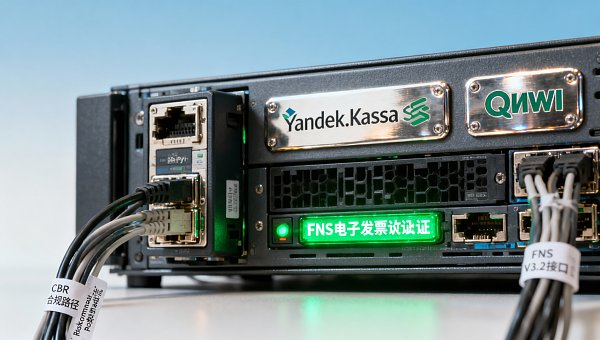
Seven high-frequency risk zones are essentially the outward manifestation of gaps across three types of capabilities
Based on a retrospective analysis of 2300+ Russian-speaking client cases, we found that 7 high-frequency causes can be attributed to three categories of gaps: compliance understanding gaps, system integration gaps, and local operations gaps. They are nested within one another, and fixing a single point often triggers a chain reaction.
- The API key was not bound to the Yandex.Money or SberPay merchant ID (rather than the platform-level ID), causing callback URL verification to consistently return 403;
- A ruble settlement account type compliant with the requirements of CBR (Central Bank of Russia) Directive No. 834-P was not configured, causing the clearing channel to be silently blocked;
crossorigin="anonymous"was not declared when loading the frontend JS SDK, triggering blockage by Yandex.Kassa's CSP policy;- The order amount field was not enforced to use the
decimal(15,2)format, and decimal overflow triggered SberBank risk-control circuit breaking; - The FNS (Federal Tax Service of Russia) electronic invoice API V3.2, mandatory since April 2024, was not updated and synchronized;
- A production certificate was mistakenly used in the test environment, while Russian-speaking region CA institutions (such as КиберУниверситет) do not support cross-environment reuse;
- Roskomnadzor data localization filing was not completed, so once user payment information was relayed through an overseas CDN, it triggered automatic payment rejection.
Behind these details lies the website development team's lack of a visceral understanding of the underlying logic that “regulation is the interface” in the Russian-speaking market. A typical scenario is: the client has obtained SberPay access approval, but because the standalone website domain was not synchronously registered in the FNS system, every transaction was flagged as an “unregistered channel,” and the conversion rate dropped by 57% within 48 hours.
The impact has long gone beyond the technical scope and is reshaping the granularity of project management
When the payment failure rate exceeds 12%, the SEO authority of a standalone website enters a negative cycle: bounce rate rises→dwell time shortens→Google algorithm lowers ranking→organic traffic declines→ad CTR decreases. This forces B2B clients, who originally focused on inquiry conversion, to intervene earlier in traffic quality governance.
A deeper impact lies in changes to the budget structure. In 2023, the average investment in payment modules for Russian-speaking market projects accounted for 18% of the total website development cost, and by H1 2024 it had risen to 29%. Of this, nearly 40% was used for third-party compliance audits and localization adaptation rather than development itself. This also means project managers need to introduce licensed payment consultants for the Russian-speaking market during the requirements confirmation stage, rather than waiting until the later stages of development.
The response approach is shifting from “getting the interface connected” to “co-building a trusted clearing chain”
Easy Biz's self-developed cross-border e-commerce system has preset Russian-speaking market payment gateways into a “compliance-ready state”: it includes a CBR-certified ruble settlement path simulator, an FNS electronic invoice automatic generation engine, and a Roskomnadzor data-flow topology detection module. But this is only the starting point.
The real transformation lies in the collaboration mechanism. For example, in the solutions we provide for manufacturing clients, we break down the payment chain into three verifiable nodes: merchant qualification validity (verified in real time by licensed Russian agents), clearing channel health (probed hourly through the SberBank Open API), and end-user experience consistency (automatically identifying payment button focus-loss zones based on Yandex.Metrica heatmaps). This level of granularity makes problem localization precise, shifting from “unable to pay” to “the user triggered a SberBank 3D-Secure redirection delay while entering the 4th digit of the card number.” Research on Liquidity Risk Management Strategies for Manufacturing Enterprises points out that amid the current high uncertainty of cross-border capital flows, the observability of the payment chain itself has become a critical prerequisite for liquidity management.
For follow-up judgment, you can first look at these three signals
There is no need to wait for a full project review. If any one of the following signals appears, it indicates hidden risks in the payment module:
- In the bank account certificate provided by the client, the account type is marked as “расчетный” rather than explicitly identified as “для приема платежей через интернет”;
- The error code returned by the test environment contains the prefix “ERR_RU_” (such as ERR_RU_4002) rather than a standard HTTP status code;
- The matching rate between the “payment completed” event in Yandex.Metrica and the “purchase” event in Google Analytics is lower than 89%.
These signals point to the same fact: Russian-language standalone website development is no longer simply a technical delivery task, but requires the structural coupling of local financial compliance capabilities, real-time clearing monitoring capabilities, and user behavior data analysis capabilities. Among the clients served by Easy Biz, projects adopting the “phased compliance verification” model (that is, launching the corresponding regulatory item verification after each payment step is completed) saw the average delivery cycle shortened by 31%, with the first-month payment success rate remaining stable above 92.4%.
As a next step, it is recommended to first review whether the current partner payment gateway has passed the annual CBR compliance audit, and check whether its documentation clearly specifies adaptation to FNS V3.2 and Roskomnadzor Directive No. 152-FZ. Beyond technical details, what truly determines success or failure is whether each payment failure in the Russian-speaking market can be turned into a deep calibration of local business rules.
Related Articles

Related Products
 EasyCamp SaaS Smart Website Marketing SystemE-Yingbao SaaS Smart Website Marketing System: AI-powered, zero-code website building. Rapidly launch multilingual independent e-commerce sites in just 10 minutes. Global server acceleration and AI-driven SEO optimization empower businesses to efficiently connect with global markets. The seamless integration of technology and user-friendly operation makes building e-commerce sites incredibly simple.
 AI+SEM Intelligent Advertising Marketing SystemAI+SEM drives intelligent ad creation, empowering full-funnel precision advertising marketing. The system automatically generates weekly/monthly reports, AI recommends keywords and target countries, monitors core metrics in real-time with intelligent alerts, and enables one-click high-conversion ad solutions to help quickly acquire customers and improve ROI.
 AI+SEO Dual Engine Optimization ServiceEasyWin AI+SEO Dual Engine Optimization System leverages AI-powered keyword mining, content generation, and comprehensive technical optimization to help foreign trade enterprises acquire high-quality organic traffic, significantly improving search rankings and conversion rates.
 AI+SNS Social Media Marketing SystemYingbao AI+SNS Social Media Marketing System - Precision social capture for the social media era. Supports one-click content synchronization across major platforms like Facebook and LinkedIn. AI intelligently rewrites posts for enhanced relevance. 24/7 AI customer service and user profiling analysis empower businesses to efficiently expand into global markets.
 AI+SEO营销解决方案易营宝AI+SEO营销解决方案,通过AI批量写作、智能生成TDK、精准关键词扩词等功能,全面优化网站SEO效果,提升流量与转化率。助力企业构建高效智能网站新生态。
 AI+SEM Advertising Marketing SolutionsAI+SEM Advertising Marketing Solution leverages AI technology to deeply empower SEM ad campaigns. It automatically generates weekly/monthly reports using AI, presenting account data across multiple dimensions for comprehensive insights into campaign performance and trends. The system precisely recommends keywords and target countries, intelligently generates high-conversion ad copy, and enables one-click activation of efficient campaign plans to help businesses rapidly acquire customers. Simultaneously, it monitors core metrics in real time, intelligently identifies abnormal fluctuations, and issues timely alerts to ensure stable, high-return advertising results.
 Domain Name ServicesEasyWin provides professional domain name services, including intelligent queries, one-stop registration, brand protection, and full lifecycle management, helping businesses build a digital brand image.
 EasyOperate B2C Cross-Border E-Commerce Platform & Independent WebsiteEasyStore B2C Cross-border E-commerce Independent Store is an intelligent website building and cross-border e-commerce integrated solution independently developed by EasyStore Information Technology (Beijing) Co., Ltd. The system is specially designed for small and medium-sized as well as large export enterprises, integrating 'website building, operation, marketing, advertising, and conversion' into one, helping enterprises quickly establish cross-border e-commerce independent stores to achieve brand globalization and global sales growth.
The platform supports multiple languages, multiple currencies, and multi-channel marketing, with built-in AI intelligent translation and SEO optimization systems, suitable for mainstream markets such as Southeast Asia, Europe and America, Latin America, and the Middle East, assisting Chinese manufacturing enterprises in efficiently deploying international e-commerce strategies. SSL证书易营宝提供专业SSL安全证书服务,包括单域名和泛域名证书,确保网站数据传输加密、身份验证和完整性保护,助力企业建立安全可信的在线业务环境。









