









- China-Morocco zero-tariff access, a breakthrough in the cost of Moroccan goods exports to ChinaJun 11, 2026View details
- What signal should be released for the suspension of exports to JapanJun 10, 2026View details
- China's May LNG imports rebounded, with increased volumes from Russia and Canada filling the Middle East supply gapJun 10, 2026View details
- Will GEO change its SEO strategy?Jun 04, 2026View details
- What types of businesses are end-to-end solutions suitable for?Jun 03, 2026View details
- 2026 Global Growth Channel TrendsJun 02, 2026View details
Is a Google AMP mobile website still necessary?
Does a Google AMP mobile website still need to be created? Looking at it today, the answer is no longer a simple “yes” or “no”. In the past, AMP was seen as a shortcut for mobile acceleration; now, Core Web Vitals, responsive front-end design, CDN, edge caching, and AI website-building tools have already enabled ordinary web pages to achieve very good loading experiences. What truly needs to be evaluated is not whether to follow another technical term, but whether a Google AMP mobile website can bring higher indexing efficiency, more stable performance, and more reasonable maintenance investment in the current business context.
The value of AMP has shifted from a “default bonus item” to a “scenario-based choice”
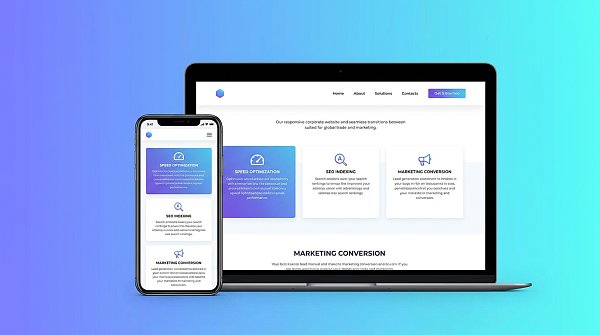
AMP is essentially a lightweight standard for mobile web pages. By restricting scripts, simplifying page structure, and strengthening caching mechanisms, it reduces rendering bottlenecks and makes pages open faster. In the early days, when mobile networks and device performance were relatively weak, Google AMP mobile websites had a clear advantage.
But the mobile internet environment has changed. Today, many corporate websites, independent websites, and content sites use responsive architectures combined with performance optimization, and can also keep first-screen speed, interaction latency, and visual stability at a good level. In other words, AMP is no longer the only way to achieve a better mobile experience.
This is also why, when discussing Google AMP mobile websites, more and more judgment is centered on “whether it is worth maintaining” rather than “whether it can be done”.
Why this issue still deserves attention today
Website development and marketing services are moving toward integration. A site not only carries brand presentation, but also natural search lead generation, ad landing, content accumulation, and conversion tracking. Once the technical solution is chosen incorrectly, the impact is not just page speed; it also affects content publishing efficiency, data consistency, and coordination of subsequent ad campaigns.
Especially in overseas business scenarios, a site often needs to balance multiple languages, multi-region access, search engine friendliness, and ad landing page conversion. Eyingbao has long served foreign trade enterprises, manufacturing factories, cross-border e-commerce sellers, and brand overseas expansion businesses, forming a complete chain in intelligent website building, SEO optimization, ad placement, and AI search visibility enhancement. Against this kind of business background, whether a Google AMP mobile website should continue to be invested in must be judged from the perspective of overall growth efficiency.
If a technical solution only improves local speed, but makes template maintenance, deployment of tracking tags, component reuse, and content management more complicated, then it may not be suitable for today’s website system.
To decide whether to keep a Google AMP mobile website, focus on four dimensions
1. Whether the performance gains are real
If the current mobile site has already achieved a good score through image compression, lazy loading, code splitting, and caching strategies, the incremental value brought by a Google AMP mobile website may be limited. Conversely, if the original site architecture is outdated, the scripts are too heavy, and the templates are cumbersome, AMP may still become a transitional solution.
2. Whether the maintenance cost is controllable
Many enterprises encounter dual-version maintenance issues in actual operation. The content, styles, structure, and tracking tags of the regular version and the AMP version all need to be synchronized; if there is even a slight omission, duplicate indexing, data deviation, or page experience fragmentation may occur. When evaluating technology, you cannot only look at launch cost; you must also consider ongoing operating cost.
3. Whether the SEO gains are verifiable
Google does not currently treat AMP as a ranking prerequisite. What truly affects performance is still content quality, page experience, structured data, crawling efficiency, and external signals. Therefore, the SEO value of a Google AMP mobile website is more like a part of performance optimization rather than an independent ranking dividend.
4. Whether the conversion path is complete
Fast pages do not equal high conversion. Forms, online communication, event tracking, remarketing tags, and product recommendation modules all determine marketing results. If AMP limits key interactions, or makes access to analytics tools more complicated, its help to the business will be weakened.
In which scenarios does a Google AMP mobile website still make sense
A Google AMP mobile website has not completely lost its place; it is just more suitable for specific scenarios. For example, in information-heavy, mobile-traffic-intensive content sites with relatively simple page functions, AMP may still improve access stability.
For some overseas marketing landing pages, if the main goal is fast loading, clear messaging, and a single conversion action, adopting a lighter page standard is also valuable. But such pages do not necessarily have to be AMP; a high-performance responsive landing page can also be used as a replacement.
This point is especially obvious in industrial manufacturing websites. Taking precision machining, hardware components related pages as an example, what truly affects inquiries is usually not a single speed metric, but whether the product center is clear, whether the application scenarios are complete, whether quality control and production capabilities are visualized, and whether the contact channels are globally accessible. Structured content blocks, matrix-style displays, and a smooth connection from technical explanation to business conversion are often more critical than whether AMP is used.
From website building to marketing collaboration, what matters more today is the overall architecture
Today’s website development is not just about creating pages; it is more about connecting search, ads, social media, and AI search entry points. Eyingbao, with AI-driven website building and overseas marketing platforms at its core, provides one-stop capabilities from multilingual website development, B2B foreign trade sites, cross-border stores to SEO, ads, and GEO optimization. Essentially, it is solving the system problem of whether a site is “promotable, indexable, and convertible”.
From this perspective, a Google AMP mobile website is only an optional branch in the site architecture. If an enterprise already has cloud-based intelligent website building, unified template management, performance optimization components, and data tracking capabilities, then prioritizing optimization of the main site experience is usually more cost-effective than maintaining AMP separately.
- Unified URL system, reducing duplicate indexing and content synchronization pressure.
- Unified tracking tag strategy, ensuring consistency across SEO, ads, and remarketing data channels.
- Unified component management, making multilingual and multi-region page iteration more efficient.
- Unified performance optimization, evaluating speed, stability, and conversion experience within the same framework.
When making an actual assessment, it is better to first answer these questions
If you want to determine whether a Google AMP mobile website still needs to be maintained, you can first sort out the current situation instead of immediately overturning or keeping it.
- Has the actual mobile access speed already met business requirements.
- Has the AMP page contributed clear organic traffic or indexing advantages.
- Can the current team maintain dual-version pages at a low cost.
- Are the forms, tracking, and recommendation modules on the page restricted by AMP.
- Is there a plan to introduce AI website building, multilingual expansion, or more complex marketing components in the future.
If most of these questions point to “the main site is already optimizable, the dual-version burden is relatively high, and the marketing chain needs to be unified”, then the necessity of a Google AMP mobile website usually decreases. On the contrary, if content traffic dependence is obvious, the page structure is simple, and the short-term performance bottleneck is hard to solve, keeping AMP still has practical value.
The conclusion is not about AMP itself, but whether the business goal matches
Google AMP mobile websites are not obsolete technology, nor are they the standard solution for all mobile sites today. They are more like an optimization path that can still be adopted under specific conditions. For websites that emphasize long-term SEO growth, content operation efficiency, ad synergy, and conversion closed loops, whether to choose AMP depends on whether it can serve overall growth, rather than creating new maintenance costs.
A more stable next step is to put page performance, crawling performance, conversion paths, and operational complexity on the same evaluation sheet, and compare Google AMP mobile websites with high-performance responsive solutions. Establish judgment criteria first, then decide whether to keep, replace, or use locally; this is often more effective than directly chasing a technical label.
Related Articles
 Central and Eastern Europe’s trade and investment mechanism, a digital service that is highly aligned with user expectations
 AI search traffic interception boost: GEO penetration rate reaches 71%, zero click-through rate exceeds 58%
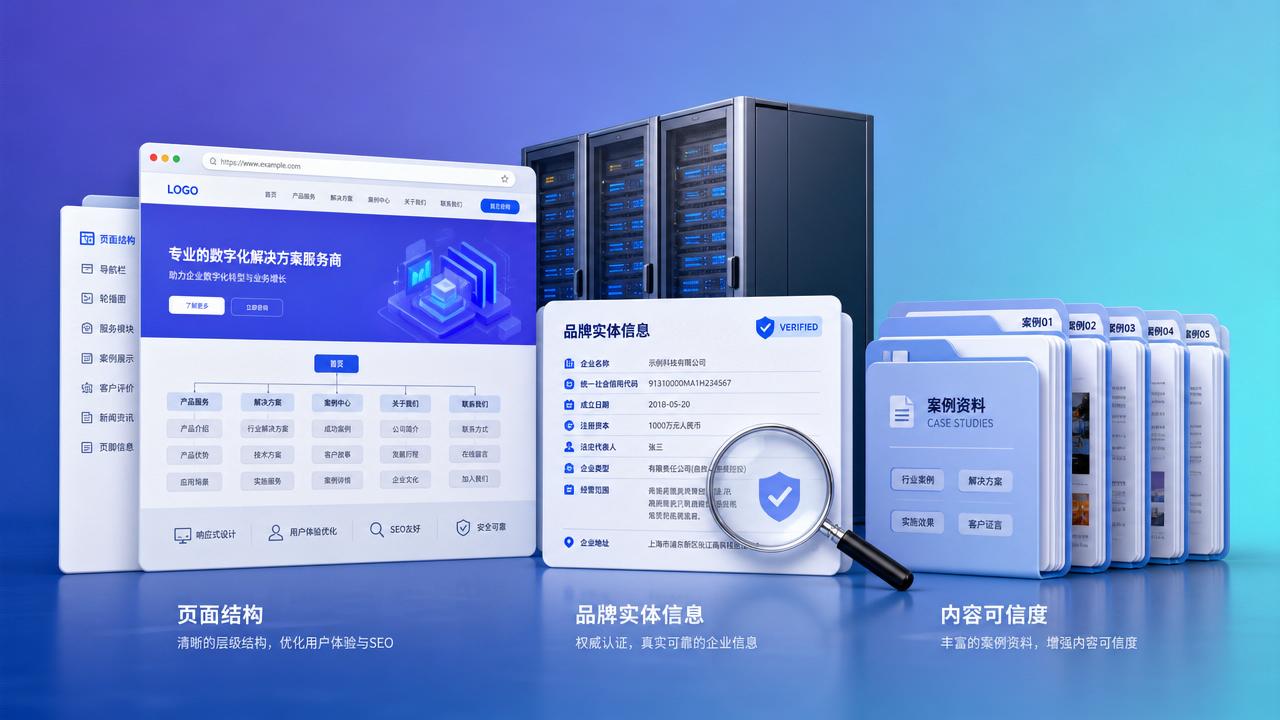
 How to make a website recommended by AI search? Page structure, entities, and content credibility are key


Related Products
 EasyCamp SaaS Smart Website Marketing SystemE-Yingbao SaaS Smart Website Marketing System: AI-powered, zero-code website building. Rapidly launch multilingual independent e-commerce sites in just 10 minutes. Global server acceleration and AI-driven SEO optimization empower businesses to efficiently connect with global markets. The seamless integration of technology and user-friendly operation makes building e-commerce sites incredibly simple.
 AI+SEM Intelligent Advertising Marketing SystemAI+SEM drives intelligent ad creation, empowering full-funnel precision advertising marketing. The system automatically generates weekly/monthly reports, AI recommends keywords and target countries, monitors core metrics in real-time with intelligent alerts, and enables one-click high-conversion ad solutions to help quickly acquire customers and improve ROI.
 AI+SEO Dual Engine Optimization ServiceEasyWin AI+SEO Dual Engine Optimization System leverages AI-powered keyword mining, content generation, and comprehensive technical optimization to help foreign trade enterprises acquire high-quality organic traffic, significantly improving search rankings and conversion rates.
 AI+SNS Social Media Marketing SystemYingbao AI+SNS Social Media Marketing System - Precision social capture for the social media era. Supports one-click content synchronization across major platforms like Facebook and LinkedIn. AI intelligently rewrites posts for enhanced relevance. 24/7 AI customer service and user profiling analysis empower businesses to efficiently expand into global markets.
 AI+SEO营销解决方案易营宝AI+SEO营销解决方案,通过AI批量写作、智能生成TDK、精准关键词扩词等功能,全面优化网站SEO效果,提升流量与转化率。助力企业构建高效智能网站新生态。
 AI+SEM Advertising Marketing SolutionsAI+SEM Advertising Marketing Solution leverages AI technology to deeply empower SEM ad campaigns. It automatically generates weekly/monthly reports using AI, presenting account data across multiple dimensions for comprehensive insights into campaign performance and trends. The system precisely recommends keywords and target countries, intelligently generates high-conversion ad copy, and enables one-click activation of efficient campaign plans to help businesses rapidly acquire customers. Simultaneously, it monitors core metrics in real time, intelligently identifies abnormal fluctuations, and issues timely alerts to ensure stable, high-return advertising results.
 Domain Name ServicesEasyWin provides professional domain name services, including intelligent queries, one-stop registration, brand protection, and full lifecycle management, helping businesses build a digital brand image.
 EasyOperate B2C Cross-Border E-Commerce Platform & Independent WebsiteEasyStore B2C Cross-border E-commerce Independent Store is an intelligent website building and cross-border e-commerce integrated solution independently developed by EasyStore Information Technology (Beijing) Co., Ltd. The system is specially designed for small and medium-sized as well as large export enterprises, integrating 'website building, operation, marketing, advertising, and conversion' into one, helping enterprises quickly establish cross-border e-commerce independent stores to achieve brand globalization and global sales growth.
The platform supports multiple languages, multiple currencies, and multi-channel marketing, with built-in AI intelligent translation and SEO optimization systems, suitable for mainstream markets such as Southeast Asia, Europe and America, Latin America, and the Middle East, assisting Chinese manufacturing enterprises in efficiently deploying international e-commerce strategies. SSL证书易营宝提供专业SSL安全证书服务,包括单域名和泛域名证书,确保网站数据传输加密、身份验证和完整性保护,助力企业建立安全可信的在线业务环境。









