- Non-tarifaire à la frontière sino-marocaine, importation marocaine de marchandises chinoises, baisse des coûts à explorerJun 11, 2026Voir les détails
- Quel signal opérationnel la suspension des exportations vers le Japon libère-t-elleJun 10, 2026Voir les détails
- Les importations chinoises de GNL ont rebondi en mai, les importations supplémentaires de la Russie et du Canada comblent le déficit au Moyen-OrientJun 10, 2026Voir les détails
- GEO va-t-il modifier sa stratégie SEO ?Jun 04, 2026Voir les détails
- À quelles activités les solutions de bout en bout conviennent-elles ?Jun 03, 2026Voir les détails
- Tendances des canaux de croissance mondiale 2026Jun 02, 2026Voir les détails
Le site mobile Google AMP est-il encore nécessaire ?
Google AMP mobile websites: are they still necessary? Today, the answer is no longer a simple “yes” or “no”. In the past, AMP was seen as a shortcut to mobile acceleration; now, Core Web Vitals, responsive front-end design, CDN, edge caching, and AI website-building tools have already enabled ordinary web pages to achieve excellent loading experiences. What truly needs to be assessed is not whether to follow another technical term, but whether Google AMP mobile websites can bring higher indexing efficiency, more stable performance, and more reasonable maintenance input to the current business.
The value of AMP has shifted from a “default bonus item” to a “scenario-based choice”
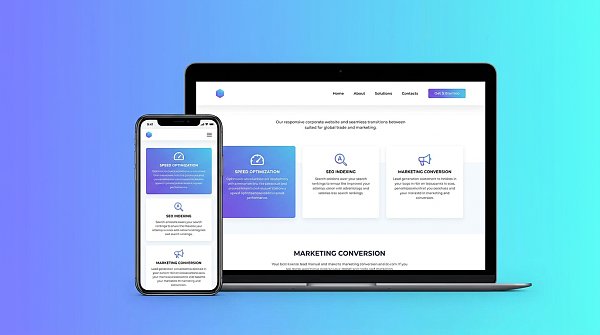
AMP is essentially a lightweight standard for mobile web pages. By limiting scripts, simplifying page structure, and strengthening caching mechanisms, it reduces rendering blocking and makes pages load faster. In the early days of mobile networks and weaker terminal performance, Google AMP mobile websites therefore had a clear advantage.
But the mobile internet environment has changed. Today, many corporate sites, independent sites, and content sites use responsive architectures combined with performance optimization, and can also keep first-screen speed, interaction latency, and visual stability at a good level. In other words, AMP is no longer the only means of achieving a mobile experience.
This is also why, when discussing Google AMP mobile websites, more and more judgments are centered on “whether it is worth maintaining” rather than “whether it can be done”.
Why this issue still deserves attention today
Website construction and marketing services are moving toward integration. A site not only carries brand presentation, but also natural search customer acquisition, advertising landing, content accumulation, and conversion tracking. Once the technical solution is chosen incorrectly, what is affected is not only page speed, but also content publishing efficiency, data consistency, and subsequent advertising collaboration.
Especially in overseas business scenarios, a website often needs to balance multiple languages, multi-region access, search engine friendliness, and ad landing page conversion. Yiyingbao has long served foreign trade enterprises, manufacturing factories, cross-border e-commerce sellers, and brands going global, and has formed a complete chain in intelligent website building, SEO optimization, advertising placement, and AI search visibility improvement. Against this business background, whether Google AMP mobile websites should continue to be invested in must be judged from the overall growth efficiency.
If a technical solution only improves local speed, but makes template maintenance, node deployment, component reuse, and content management more complicated, then it may no longer be suitable for the current website system.
When deciding whether to keep Google AMP mobile websites, focus on four dimensions
1. Does the performance gain really exist
If the current mobile site has already achieved good scores through image compression, deferred loading, code splitting, and caching strategies, the incremental value brought by Google AMP mobile websites may be limited. Conversely, if the original site architecture is old, scripts are too heavy, and templates are cumbersome, AMP may still become a transitional solution.
2. Is the maintenance cost controllable
Many enterprises encounter dual-version maintenance issues in actual operation. The regular version and the AMP version must synchronize content, styles, structure, and tracking points; if there is any omission, duplicate indexing, data deviation, or fragmented page experience may occur. When evaluating technology, you cannot only look at launch costs, but also long-term operational costs.
3. Can the SEO benefit be verified
Google does not currently treat AMP as a prerequisite for ranking. What really affects performance is still content quality, page experience, structured information, crawl efficiency, and external signals. Therefore, the SEO value of Google AMP mobile websites is more like a part of performance optimization, rather than an independent ranking dividend.
4. Is the conversion path complete
Fast pages do not equal high conversion. Forms, online communication, event tracking, remarketing tags, and product recommendation modules all determine marketing results. If AMP restricts key interactions, or makes analytics tool integration complicated, then its help to the business will be weakened.
In which scenarios do Google AMP mobile websites still have practical meaning
Google AMP mobile websites have not completely lost their place; they are simply more suitable for specific scenarios. For example, in information-heavy, high mobile traffic, and content-based sites with relatively simple page functions, AMP may still improve access stability.
For some overseas promotional landing pages, if the main goal is fast loading, clear delivery, and a single conversion action, adopting a lighter page specification also has value. But such pages do not necessarily have to use AMP; high-performance responsive landing pages can also be used instead.
In industrial manufacturing websites, this point is especially obvious. Taking precision machining, hardware components-related pages as an example, what truly affects inquiries is usually not a single speed metric, but whether the product center is clear, whether the application scenarios are complete, whether quality control and production capacity are visualized, and whether contact channels are globally accessible. Structured content blocks, matrix-style displays, and smooth connection from technical explanation to commercial conversion are often more critical than whether AMP is used.
From website building to marketing collaboration, what matters more today is the overall architecture
Today’s website construction is not just about making pages, but about connecting search, advertising, social media, and AI search entry points. Yiyingbao, with AI-driven website building and overseas marketing platforms at its core, provides one-stop capabilities from multilingual website building, B2B foreign trade sites, cross-border malls to SEO, advertising, and GEO optimization, essentially solving the system problem of whether a site is “promotable, indexable, and convertible”.
From this perspective, Google AMP mobile websites are only an optional branch within the site architecture. If an enterprise already has cloud-based intelligent website building, unified template management, performance optimization components, and data tracking capabilities, then prioritizing optimization of the main site experience is usually more cost-effective than maintaining AMP separately.
- A unified URL system reduces duplicate indexing and content synchronization pressure.
- A unified tracking strategy ensures consistency across SEO, advertising, and retargeting data paths.
- Unified component management makes multilingual and multi-region page iteration more efficient.
- Unified performance optimization evaluates speed, stability, and conversion experience within the same framework.
Before making a practical assessment, it may be better to first answer these questions
If you want to judge whether Google AMP mobile websites still need to be continued, you can first sort out the current situation rather than directly pushing for replacement or retention.
- Has the actual mobile access speed already met business requirements.
- Has the AMP page contributed clear organic traffic or indexing advantages.
- Can the current team maintain dual-version pages at low cost.
- Are the forms, tracking, and recommendation modules on the page limited by AMP.
- Is there a future plan to introduce AI website building, multilingual expansion, or more complex marketing components.
If most of these questions point to “the main site has already been optimized, the dual-version burden is too high, and the marketing chain needs unification”, then the necessity of Google AMP mobile websites will usually decline. On the contrary, if content traffic depends heavily on it, the page structure is simple, and the short-term performance bottleneck is hard to solve, keeping AMP still has practical value.
The conclusion is not about AMP itself, but whether the business goals match
Google AMP mobile websites are not an outdated technology, nor are they the standard answer for all mobile sites today. They are more like an optimization path that can still be adopted under specific conditions. For websites that emphasize long-term SEO growth, content operation efficiency, advertising collaboration, and conversion loops, the key to choosing AMP is whether it can serve overall growth, rather than creating new maintenance costs.
A more stable next step is to put page performance, crawl performance, conversion paths, and operation and maintenance complexity on the same evaluation sheet, and compare Google AMP mobile websites with high-performance responsive solutions side by side. Establish the judgment criteria first, then decide whether to retain, replace, or use locally; this is often more effective than directly chasing a technical label.
- Yiyingbao
- Création de site web
- SEO
- Marketing à l'international
- Site indépendant
- Commerce extérieur B2B
- Site web multilingue
- Optimisation SEO
- Création de site web intelligente
- Création de sites web multilingues
- Outils de création de site
- Création de sites web par IA
- Commerce électronique transfrontalier
- GEO
- Diffusion publicitaire
- Optimisation GEO
- Boutique en ligne transfrontalière
- Site mobile Google AMP
- Pages d’atterrissage publicitaires
Articles connexes
 Mécanisme d’investissement commercial Chine-Europe centrale et orientale, les services numériques attirent l’attention
 Le trafic de recherche IA s’accélère : le taux de pénétration GEO atteint 71%, le taux de clics nul dépasse 58%
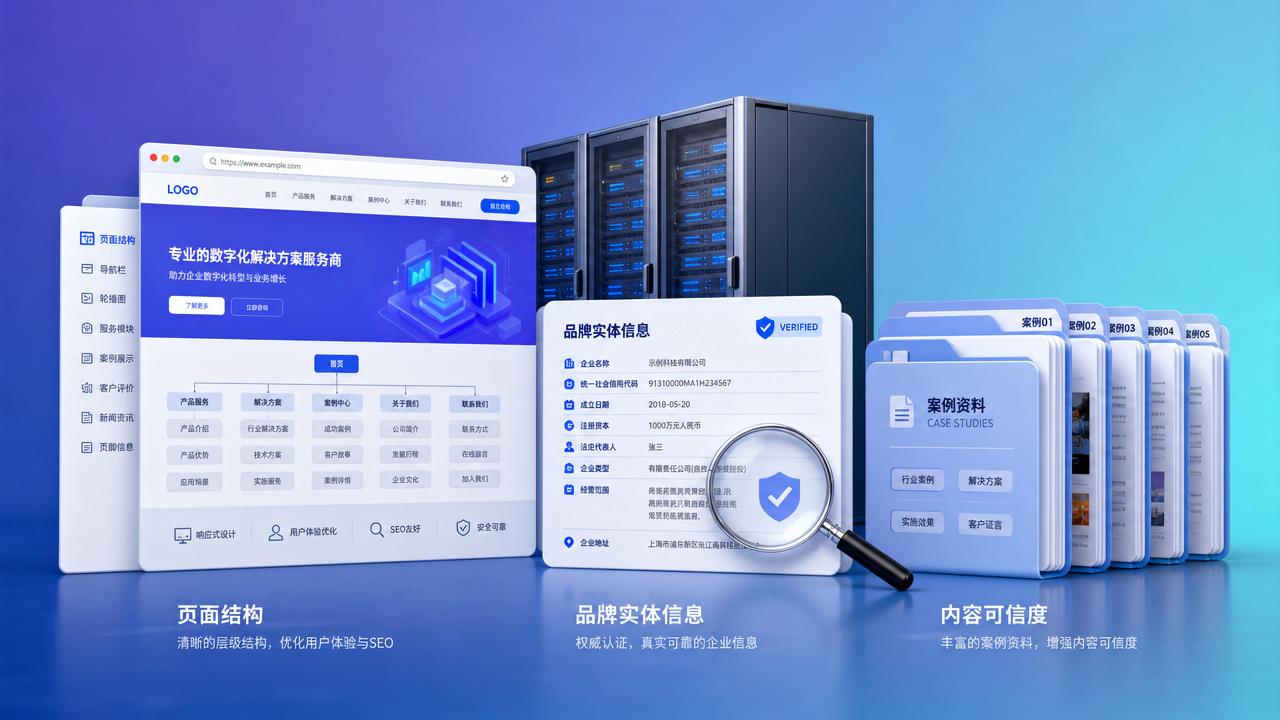
 Comment faire en sorte qu'un site web soit recommandé par la recherche IA?La structure de la page, les informations d'entité et la crédibilité du contenu sont essentielles


Produits connexes
 EasyCamp SaaS Système intelligent de création de sites Web et de marketingSystème intelligent de marketing web E-Yingbao SaaS : création de sites web sans code, basée sur l'IA. Créez rapidement des sites e-commerce multilingues indépendants en seulement 10 minutes. L'accélération mondiale des serveurs et l'optimisation SEO basée sur l'IA permettent aux entreprises de se connecter efficacement aux marchés mondiaux. La fusion harmonieuse entre technologie et convivialité rend la création d'une présence e-commerce internationale remarquablement simple.
 Service d'optimisation du système double moteur AI+SEOLe système d'optimisation double moteur AI+SEO d'YiYingBao, grâce à l'exploitation intelligente de mots-clés par l'IA, la génération de contenu et une optimisation technique complète, aide les entreprises de commerce extérieur à obtenir un trafic naturel de haute qualité, améliorant considérablement le classement des recherches et le taux de conversion.
 Système de marketing publicitaire intelligent AI+SEMAI+SEM propulse une création publicitaire intelligente, permettant un marketing publicitaire précis sur toute la chaîne. Le système génère automatiquement des rapports hebdomadaires/mensuels, l'IA recommande des mots-clés et des pays de diffusion, surveille en temps réel les indicateurs clés et fournit des alertes intelligentes, lance en un clic des solutions de diffusion à haut taux de conversion, aidant à acquérir rapidement des clients et à améliorer le ROI.
 Système de marketing sur les réseaux sociaux AI+SNSSystème de marketing intelligent Yingyingbao AI+SNS pour les réseaux sociaux - Capture sociale précise pour l'ère des réseaux sociaux. Prend en charge la synchronisation du contenu en un clic sur les principales plateformes, notamment Facebook et LinkedIn. La réécriture des publications alimentée par l'IA améliore la localisation. Un service client intelligent disponible 24 h/24, 7 j/7 et l'analyse du profil des utilisateurs permettent aux entreprises de se développer efficacement sur les marchés mondiaux.
 Solutions marketing publicitaire IA+SEMLes solutions publicitaires SEM basées sur l'IA exploitent l'intelligence artificielle pour améliorer considérablement la gestion des campagnes SEM. Grâce à l'IA, elles génèrent des rapports hebdomadaires et mensuels qui présentent les données des comptes sous plusieurs angles, permettant ainsi une supervision complète des performances et des tendances publicitaires. L'IA fournit des recommandations précises sur les mots-clés et les pays cibles, rédige de manière intelligente des textes publicitaires à fort taux de conversion et lance des campagnes efficaces en un seul clic, accélérant ainsi l'acquisition de clients pour les entreprises. Parallèlement, le système surveille les indicateurs clés en temps réel, identifie intelligemment les fluctuations anormales et émet des alertes en temps opportun, garantissant ainsi des performances publicitaires stables et des rendements élevés.
 AI+SEO营销解决方案易营宝AI+SEO营销解决方案,通过AI批量写作、智能生成TDK、精准关键词扩词等功能,全面优化网站SEO效果,提升流量与转化率。助力企业构建高效智能网站新生态。
 Services de noms de domaineEasy Marketing propose des services professionnels de noms de domaine, comprenant la recherche intelligente, l'enregistrement en un clic, la protection de marque et la gestion complète du cycle de vie, aidant les entreprises à construire une image de marque numérique.
 EasySell B2C Place de Marché Transfrontalière, Site Indépendant易营宝B2C跨境商城独立站是由易营宝信息科技(北京)有限公司自主研发的智能建站与跨境电商一体化解决方案。系统专为中小型及大型出口企业打造,集“建站、运营、营销、投放、转化”于一体,帮助企业快速打造跨境电商独立站,实现品牌出海与全球销售增长。
平台支持多语言、多币种、多渠道营销,内置AI智能翻译与SEO优化系统,适配东南亚、欧美、拉美、中东等主流市场,助力中国制造企业高效布局国际电商版图。 B2B2C双模式独立站解决方案易营宝推出的B2B2C双模式独立站解决方案,专为同时开展批发与零售业务的企业打造。平台支持商品价格展示、商品多规格管理、购物车与购物车弹窗、购物车总价计算,以及统一批量询价等功能,帮助企业以更高效、更直观的方式触达B端与C端客户。通过云建站、大数据分析与广告智能投放体系,助力企业打破渠道壁垒,实现国内外市场拓展与品牌价值提升。