









- How to assess foreign trade website development trends?Looking at 2026 changes from multilingual,AI content to conversion pathsJul 04, 2026View details
- What are the new trends in multilingual marketing data analytics tools in 2026? Focus on attribution、automation and complianceJul 04, 2026View details
- Is Brand Globalization Marketing Consulting Worth Buying? At What Stage Should Companies Bring It InJul 01, 2026View details
- Cross-Border Marketing Trend Research: Why More and More Companies Are Starting to Deploy AI Search and GEO OptimizationJun 30, 2026View details
- Cross-Border Marketing Trend Research: How Independent Sites, AI Content, and Short-Video Customer Acquisition Are ChangingJun 30, 2026View details
- How Can a Brand Updates Page Be Made More SEO-Friendly? Analysis of Update Frequency, Content Structure, and Internal Linking StrategyJun 28, 2026View details
Do GEO Optimization Services Still Need Ongoing Maintenance After Launch
Many companies ask: After a GEO optimization service goes live, does it still require ongoing maintenance? The answer is usually yes. AI search rules, content performance, and user needs are constantly changing. Only long-term optimization and data tracking can steadily improve exposure, indexing, and conversion results.
For foreign trade companies, manufacturing factories, cross-border e-commerce brands, and overseas expansion service providers, GEO is not a static project delivered once and for all. Instead, it is an ongoing initiative that evolves in sync with website content, search entry points, user behavior, and the conversion funnel. Especially in an integrated website + marketing service scenario, companies care more about whether they can continue to acquire customers after launch, whether lead quality improves, and whether maintenance investment remains controllable.
If GEO optimization services are understood as “completed once launched,” problems often appear in 3 stages: rapid growth in indexing in the early stage, performance fluctuations in the mid-term, and stagnation in traffic and inquiries in the later stage. A truly effective approach is to integrate website development, content, SEO, advertising, and AI search visibility into the same operating mechanism, with monthly reviews and quarterly upgrades.
Why GEO Optimization Services Still Require Ongoing Maintenance After Launch

Does a GEO optimization service still require ongoing maintenance after launch? From an actual operations perspective, the answer is not only “yes”; the maintenance frequency directly affects the stability of results over the following 6 to 12 months. The reason is not insufficient quality at the time of launch, but the fact that the search ecosystem itself is always changing.
Both AI Search and Traditional Search Are Dynamically Adjusting
Whether it is Google organic search or the content retrieval logic used for AI Q&A and generative search results, ranking weight may change within 30 days, 60 days, or even 90 days. A content structure that works when a page goes live does not mean it will maintain the same crawl rate, snippet rate, and click-through rate 3 months later.
Common changes are mainly concentrated in 4 areas
- Whether the content still matches users’ new questions and new scenarios
- Whether the page structure is easy for search engines and AI models to understand
- Whether internal links and landing pages support the extension of conversion paths
- Whether competitors continue to update and capture visibility for core keywords
The essence of GEO maintenance is not repair, but amplifying existing assets
When companies implement GEO, they have usually already invested in website development, multilingual pages, product materials, case content, and marketing landing pages. If ongoing maintenance is lacking after launch, these content assets can easily show performance divergence within 6 to 12 weeks: a small number of pages continue to grow, most pages receive insufficient exposure, and the overall utilization rate of the investment ultimately remains low.
The value of ongoing maintenance lies in using data to determine which pages deserve additional content, which keywords need alternative expressions, and which country-specific sites require stronger localization. This allows existing website assets to continue generating compound returns, rather than remaining in a state of “launched but not operated.”
If companies want to see the difference between “launch” and “ongoing maintenance” more intuitively, they can refer to the common performance ranges in the table below.
As the table shows, the key question around whether GEO optimization services still require ongoing maintenance after launch is not “whether to do it,” but whether the company wants to turn a one-time website investment into a long-term, accumulative overseas customer acquisition capability. This is especially important for B2B inquiry-driven websites, because decision-making cycles often last from 2 weeks to 3 months, and content reach must remain continuously available.
Which Companies Most Need to Establish a Long-Term GEO Maintenance Mechanism
Not all companies need the same level of maintenance. However, as long as a business relies on its official website for customer acquisition, search exposure, or multilingual content distribution, long-term GEO maintenance is usually a necessary configuration. Especially under an integrated website + marketing service model, maintenance is not an additional cost, but a fundamental action to ensure ROI.
3 typical company scenarios
- Foreign trade manufacturing companies: with many product models and application industries, they need to add at least 2 to 8 scenario-based content pieces every month.
- Cross-border brand independent websites: with fast SKU updates and short campaign cycles, they usually need weekly checks on page performance and content retrieval results.
- Multilingual overseas expansion companies: when covering more than 3 language versions, localized expressions and regional search intent need to be revised quarterly.
Common risks when maintenance is insufficient
The first type of risk is content aging. For example, after product parameters are updated, old pages may still be crawled, which can lead to inaccurate inquiries. The second type of risk is a shift in search intent: users now pay more attention to delivery time, MOQ, certifications, and application solutions, rather than simply product names. The third type of risk is being surpassed by competing pages. Especially in the North American, European, and Southeast Asian markets, competitors usually update on a weekly basis.
For many B2B companies, the official website is not a brochure, but a 24-hour online overseas sales entry point. Without maintenance, the website may appear to still exist on the front end, while the back end may experience problems such as reduced crawling, declining clicks, and weaker lead quality. These issues often become clearly visible only after the 4th month.
What Core Tasks Are Usually Included in Ongoing GEO Maintenance
When companies evaluate GEO services, they should not only look at whether “optimization has been done,” but also whether there is a maintenance closed loop after launch. An executable maintenance plan should usually cover 4 dimensions: content, technology, data, and conversion, and should form a monthly and quarterly rhythm.
5 basic actions for monthly maintenance
- Check the indexing, crawling, and accessibility status of core pages
- Update the titles, summaries, and structural expressions of 2 to 10 key pages
- Add industry Q&A, application scenarios, or purchasing guide content
- Optimize internal links to connect product pages, case pages, and landing pages
- Review inquiry entry points, button clicks, form submissions, and bounce data
3 upgrade actions for quarterly maintenance
Quarterly work focuses more on strategic upgrades and is usually carried out once every 90 days. It includes expanding keyword clusters, restructuring multilingual pages, upgrading content templates, and optimizing structures for AI search snippet visibility. These actions do not necessarily need to be done every week, but they determine the website’s growth ceiling for the next 6 months.
To make procurement and execution easier, GEO maintenance work can be divided into the standard modules shown in the table below.
This type of maintenance does not mean frequently making major changes to the website. Instead, it means making fast, incremental iterations without damaging the existing structure. For most companies, continuous optimization is more cost-efficient than rebuilding everything at once, and it is also more beneficial for accumulating long-term search assets.
What Companies Should Focus on When Choosing GEO Maintenance Services
Once companies understand the answer to whether GEO optimization services still require ongoing maintenance after launch, the next step is to determine whether the service provider can truly make maintenance result-oriented. During procurement, it is recommended not to ask only about price, but to first review service boundaries, execution methods, and feedback mechanisms.
4 key evaluation dimensions
- Whether the provider has collaborative capabilities in website development, content, SEO, and advertising, rather than offering only a single-point service
- Whether the provider can support multilingual sites, overseas markets, and B2B conversion logic
- Whether the provider offers monthly data tracking, issue lists, and adjustment recommendations
- Whether the provider can connect GEO with official website inquiries, landing pages, and social media traffic acquisition
Why integrated services are more suitable for long-term maintenance
Because GEO results are rarely determined by content alone. Page loading speed, website structure, language versions, consistency of advertising landing pages, and social media backlink distribution all affect final performance. If the service is split among 3 to 5 suppliers, the data chain and execution rhythm can easily become disconnected, resulting in slow problem discovery and long adjustment cycles.
Platform-based service providers like 易营宝, which have capabilities in AI-powered intelligent website building, multilingual website development, Google SEO optimization, advertising placement, and GEO optimization, are better suited to helping overseas expansion companies establish a unified operating system. For companies targeting markets in North America, Europe, Southeast Asia, Japan and South Korea, the Middle East, and Latin America, this model can significantly reduce communication costs and shorten the cycle from problem discovery to optimization execution.
How GEO Maintenance Can Work with Websites and Marketing Systems to Truly Drive Conversions
Many companies treat GEO as a “traffic project,” but from a business results perspective, it should be more of a “conversion infrastructure.” If a company only pursues exposure without optimizing on-site engagement, even large amounts of traffic will be difficult to convert into inquiries. A truly effective approach is to allow GEO to form a closed loop with the official website structure, content matrix, advertising pages, and social media touchpoints.
A common collaborative path
- First, use a website building system to create a clear information architecture, ensuring complete product, application, case, and contact entry points.
- Then, use GEO and SEO to lay out core keywords, question keywords, and scenario keywords to improve search and AI visibility.
- Next, combine advertising placement and social media distribution to guide high-intent traffic to key landing pages.
- Finally, adjust page messaging in reverse based on form submissions, dwell time, and inquiry content.
The final goal of maintenance should focus on 3 outcomes
First, improve stable exposure in target countries and target languages, rather than short-term peaks. Second, increase the proportion of content that can be understood and cited by AI search. Third, guide more visitors into consultation, quotation, sample request, or partnership communication stages. As long as companies upgrade the maintenance goal from “whether content has been published” to “whether a conversion path has been formed,” the value of GEO investment will become clearer.
For companies that have already built overseas independent websites, GEO is not a project that ends at launch. It is a long-term growth initiative that requires monthly maintenance and quarterly upgrades. Especially under an integrated website + marketing service model, ongoing maintenance can truly connect website development, content, search, advertising, and AI visibility, reducing wasted traffic while improving inquiry quality and conversion efficiency.
If you are evaluating whether GEO optimization services still require ongoing maintenance after launch, or if you want to develop a more robust long-term operation plan for a foreign trade official website, cross-border e-commerce store, or multilingual brand site, it is recommended to establish an executable maintenance mechanism as early as possible. By combining 易营宝’s integrated capabilities in intelligent website building, SEO/GEO optimization, and overseas marketing collaboration, companies can more efficiently complete a full-funnel upgrade from exposure to customer acquisition. Contact us now to get a customized plan and learn about a continuous GEO optimization solution better suited to your business stage.
Related Articles
 What types of companies are GEO generative engine optimization services suitable for?Analysis of differences from traditional SEO
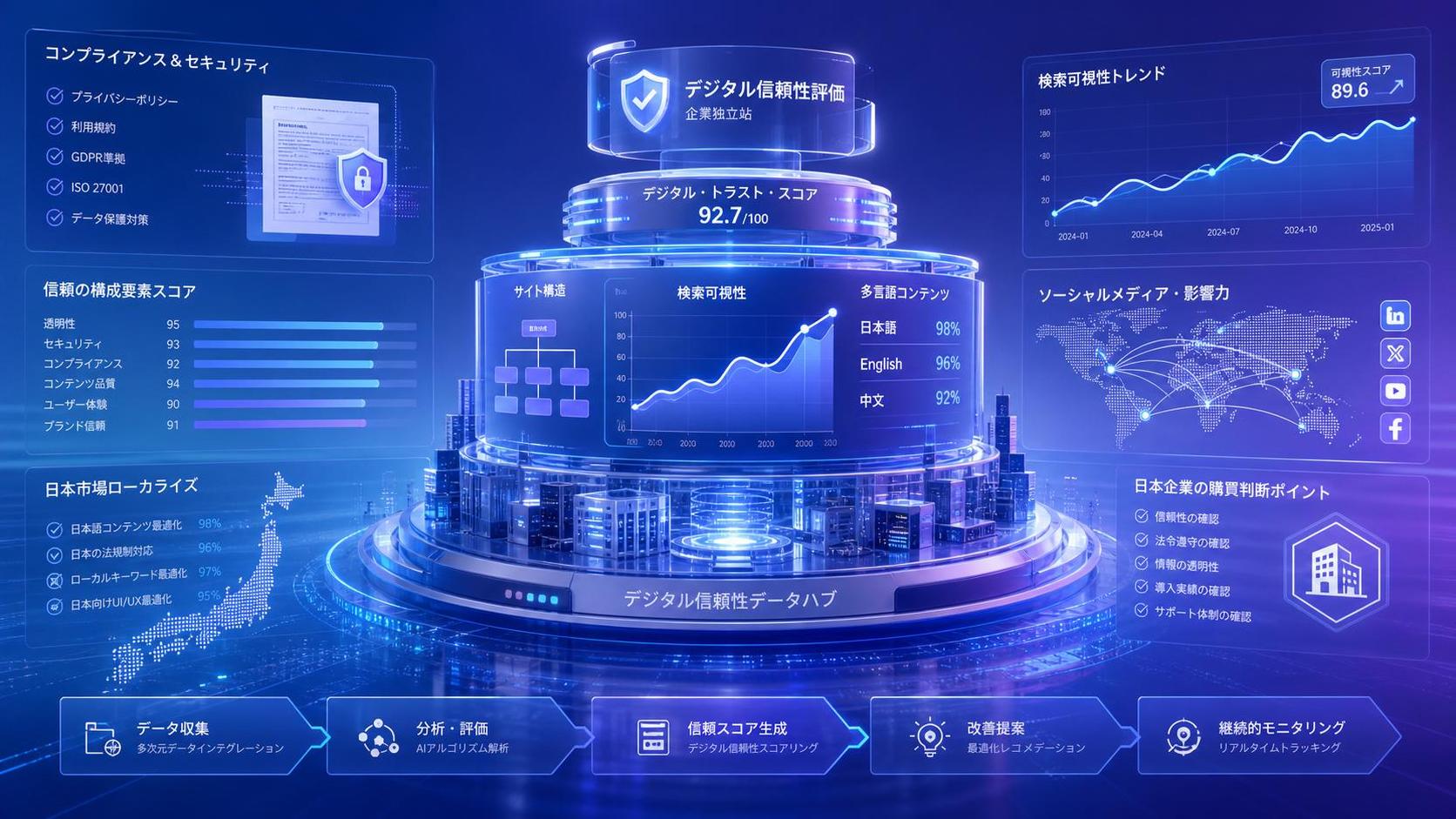
 Japan Launches JGTI Platform, Supplier Digital Trust Becomes a Pre-Procurement Signal
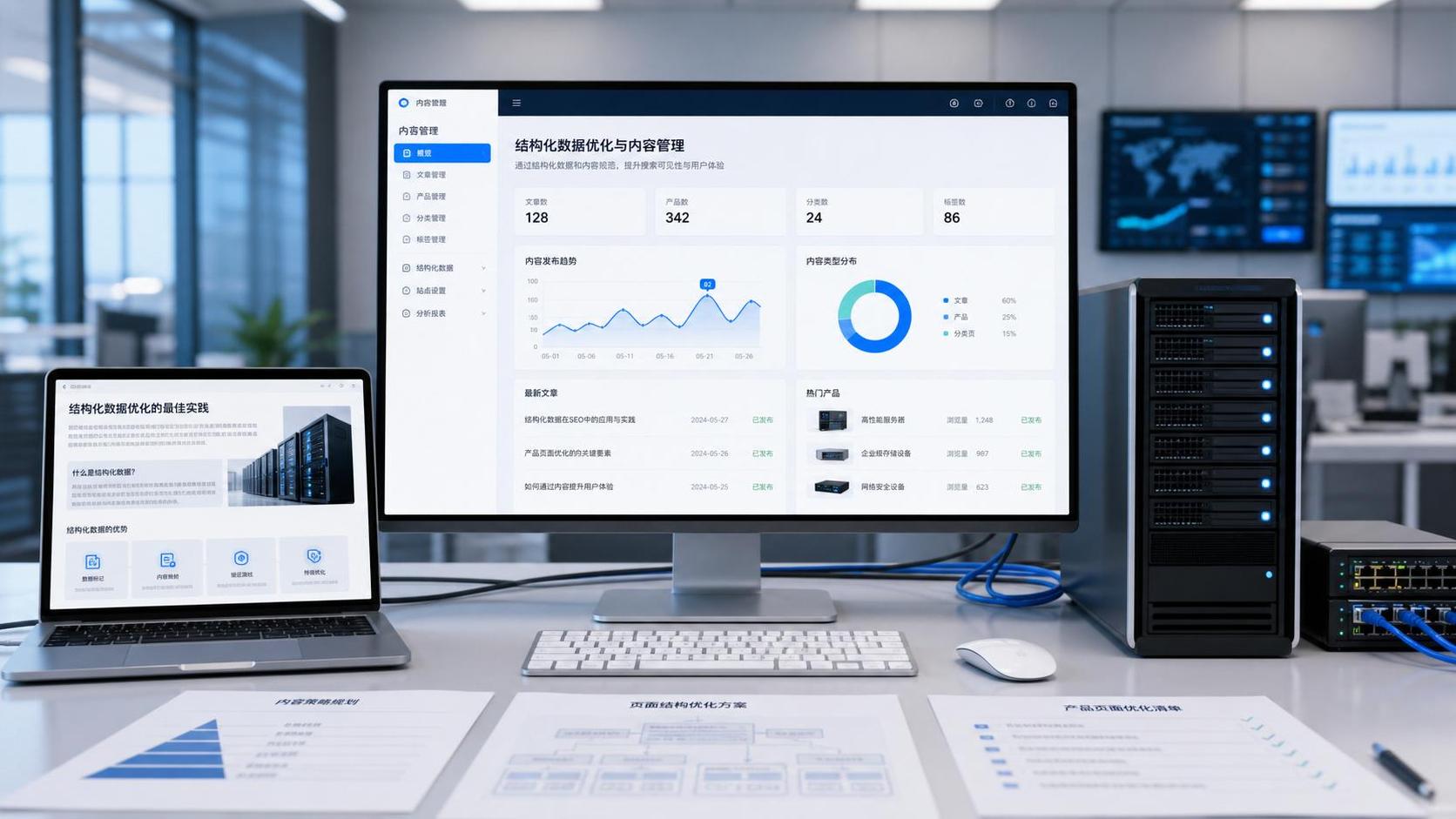
 How to Optimize Structured Data for Better Indexing? A Practical Guide to Product, Article, and FAQ Markup

Related Products
 EasyCamp SaaS Smart Website Marketing SystemE-Yingbao SaaS Smart Website Marketing System: AI-powered, zero-code website building. Rapidly launch multilingual independent e-commerce sites in just 10 minutes. Global server acceleration and AI-driven SEO optimization empower businesses to efficiently connect with global markets. The seamless integration of technology and user-friendly operation makes building e-commerce sites incredibly simple.
 AI+SEM Intelligent Advertising Marketing SystemAI+SEM drives intelligent ad creation, empowering full-funnel precision advertising marketing. The system automatically generates weekly/monthly reports, AI recommends keywords and target countries, monitors core metrics in real-time with intelligent alerts, and enables one-click high-conversion ad solutions to help quickly acquire customers and improve ROI.
 AI+SEO Dual Engine Optimization ServiceEasyWin AI+SEO Dual Engine Optimization System leverages AI-powered keyword mining, content generation, and comprehensive technical optimization to help foreign trade enterprises acquire high-quality organic traffic, significantly improving search rankings and conversion rates.
 AI+SNS Social Media Marketing SystemYingbao AI+SNS Social Media Marketing System - Precision social capture for the social media era. Supports one-click content synchronization across major platforms like Facebook and LinkedIn. AI intelligently rewrites posts for enhanced relevance. 24/7 AI customer service and user profiling analysis empower businesses to efficiently expand into global markets.
 AI+SEO营销解决方案易营宝AI+SEO营销解决方案,通过AI批量写作、智能生成TDK、精准关键词扩词等功能,全面优化网站SEO效果,提升流量与转化率。助力企业构建高效智能网站新生态。
 AI+SEM Advertising Marketing SolutionsAI+SEM Advertising Marketing Solution leverages AI technology to deeply empower SEM ad campaigns. It automatically generates weekly/monthly reports using AI, presenting account data across multiple dimensions for comprehensive insights into campaign performance and trends. The system precisely recommends keywords and target countries, intelligently generates high-conversion ad copy, and enables one-click activation of efficient campaign plans to help businesses rapidly acquire customers. Simultaneously, it monitors core metrics in real time, intelligently identifies abnormal fluctuations, and issues timely alerts to ensure stable, high-return advertising results.
 Domain Name ServicesEasyWin provides professional domain name services, including intelligent queries, one-stop registration, brand protection, and full lifecycle management, helping businesses build a digital brand image.
 EasyOperate B2C Cross-Border E-Commerce Platform & Independent WebsiteEasyStore B2C Cross-border E-commerce Independent Store is an intelligent website building and cross-border e-commerce integrated solution independently developed by EasyStore Information Technology (Beijing) Co., Ltd. The system is specially designed for small and medium-sized as well as large export enterprises, integrating 'website building, operation, marketing, advertising, and conversion' into one, helping enterprises quickly establish cross-border e-commerce independent stores to achieve brand globalization and global sales growth.
The platform supports multiple languages, multiple currencies, and multi-channel marketing, with built-in AI intelligent translation and SEO optimization systems, suitable for mainstream markets such as Southeast Asia, Europe and America, Latin America, and the Middle East, assisting Chinese manufacturing enterprises in efficiently deploying international e-commerce strategies. SSL证书易营宝提供专业SSL安全证书服务,包括单域名和泛域名证书,确保网站数据传输加密、身份验证和完整性保护,助力企业建立安全可信的在线业务环境。









