









- How to assess foreign trade website development trends?Looking at 2026 changes from multilingual,AI content to conversion pathsJul 04, 2026View details
- What are the new trends in multilingual marketing data analytics tools in 2026? Focus on attribution、automation and complianceJul 04, 2026View details
- Is Brand Globalization Marketing Consulting Worth Buying? At What Stage Should Companies Bring It InJul 01, 2026View details
- Cross-Border Marketing Trend Research: Why More and More Companies Are Starting to Deploy AI Search and GEO OptimizationJun 30, 2026View details
- Cross-Border Marketing Trend Research: How Independent Sites, AI Content, and Short-Video Customer Acquisition Are ChangingJun 30, 2026View details
- How Can a Brand Updates Page Be Made More SEO-Friendly? Analysis of Update Frequency, Content Structure, and Internal Linking StrategyJun 28, 2026View details
Is short video marketing service suitable for traditional manufacturing?
Are short video marketing services suitable for traditional manufacturing? The answer is not a simple yes or no. It depends on a company’s product characteristics, customer types, sales process, and content execution capabilities. For many traditional manufacturing companies, short video is not a tool to replace existing customer acquisition methods, but a new entry point for showcasing factory strength, product details, and delivery capabilities with a lower communication barrier.
Especially in the context of the coordinated development of website building, SEO optimization, advertising, and overseas social media, short video is no longer just a brand exposure tool. It can take on multiple roles, including driving traffic, building trust, and supporting inquiry conversion. For manufacturing managers, the real question is not whether to do it, but whether it is worth doing, how it should be done, and how to receive and convert the traffic after it is generated.
Why Traditional Manufacturing Companies Are Reassessing Short Video Marketing
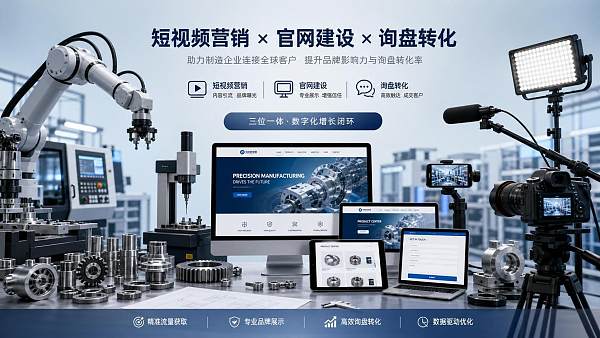
In the past, many manufacturing companies naturally felt distant from short video, believing that it was more suitable for catering, retail, beauty, or consumer goods industries, and had little relevance to more specialized products such as equipment, components, and industrial materials. However, in recent years, the market environment has changed significantly, and the way customers obtain information is also changing.
Whether they are domestic procurement managers or overseas B2B buyers, more and more people first use videos to quickly judge whether a company is professional. Compared with plain text introductions or static images, short videos can more intuitively present production sites, equipment processes, quality inspection workflows, application cases, and team collaboration. These are exactly the elements that traditional manufacturing companies need most when building trust.
For manufacturing companies with longer sales cycles, customers often will not place an order immediately because of one video, but they may form an initial impression through the video and then visit the official website, submit an inquiry, add a sales contact, or continue searching for the company’s brand information. In other words, the value of short video marketing services is reflected more in front-end awareness and mid-funnel trust acceleration than in one-off transactions.
What Types of Manufacturing Companies Are Suitable for Short Video Marketing Services
Not all traditional manufacturing companies can use short video in the same way. The companies that are truly more suitable for deploying short video marketing usually fall into several categories. The first category is companies whose products have advantages in visual presentation, such as machinery and equipment, automated production lines, metal processing, packaging equipment, furniture and building materials, and electronics manufacturing, because the product operation process itself has strong demonstration value.
The second category is companies that need to prove delivery capabilities and factory strength. Many buyers are not only concerned about individual product specifications, but also whether the company truly has stable production capacity, mature processes, quality inspection standards, and project experience. Short videos can present these capabilities, which are relatively difficult to dynamically demonstrate on traditional official websites, in a form that is easier to understand.
The third category is manufacturing companies that are in the stage of brand upgrading or overseas expansion. Whether competing in the domestic market or developing foreign trade business, companies need new traffic entry points. By connecting short videos with the official website, independent website, Google SEO pages, advertising landing pages, or social media profiles, it becomes easier to build a complete digital marketing closed loop.
Conversely, if a company’s products are highly standardized, lack differentiated selling points, and the internal team has no content collaboration capability, then even if short videos are launched, they may exist only as a formality and be difficult to convert into effective inquiries. Whether it is suitable does not depend on the industry label, but on whether the company has content worth presenting, an audience that can be reached, and a conversion path that can receive the traffic.
What Manufacturing Companies Care About Most Is Not Views, but Whether It Can Bring Customers
This is also the core real intent behind most managers searching for whether short video marketing services are suitable for traditional manufacturing. Companies do not lack an account for publishing videos; what they lack is a marketing solution that can be linked to customer acquisition goals. If there is only filming without strategy, only views without traffic reception, and only content without conversion, short video can easily become a promotional activity rather than a business tool.
The truly valuable metrics for short video in manufacturing are usually not a single number of likes or completion rate, but data closer to business outcomes, such as whether official website visits increase, whether inquiry forms increase, whether advertising cost per click decreases, whether customer trust before sales communication improves, and whether customers can understand product advantages more quickly.
Therefore, when manufacturing companies choose short video marketing services, they should first evaluate whether the service provider understands the marketing logic of industrial products. Purchasing decisions for industrial products are usually more rational and place greater emphasis on qualifications, cases, lead times, certifications, price ranges, and after-sales support. If short video content only pursues excitement, creativity, and entertainment, but fails to answer these key questions, it will be difficult to generate real business value.
What Should Traditional Manufacturing Companies Actually Film for Short Video Content
Many companies have delayed taking action not because they do not want to do it, but because they do not know what to film. In fact, manufacturing companies do not lack content. What they lack is a way to turn professional content into expressions that customers can understand and are willing to watch. Compared with vague introductions to corporate culture, it is more worthwhile to film the information that customers care about most before purchasing.
For example, real factory scenes, production processes, equipment operation, product testing, quality control, sampling processes, packaging and shipment, project cases, after-sales support, engineer explanations, and industry application scenarios are all highly suitable content directions for short videos. Although this content may not be flashy, it is very helpful for target customers to make judgments and better matches the real marketing needs of the manufacturing industry.
If a company targets overseas markets, it can further create multilingual short video content, or split Chinese materials into platform-specific versions suitable for different regions. Combined with multilingual website building, overseas social media operations, and search engine optimization, the content will no longer be just single-platform exposure, but will become a long-term accumulated digital asset.
A good manufacturing short video is not about making the company look like an internet celebrity. It is about helping customers quickly understand within dozens of seconds what you can do, how well you can do it, and why you are worth contacting. Only this kind of content has the opportunity to support subsequent inquiry conversion.
Short Video Marketing Services Should Be Evaluated Together with the Official Website, SEO, and Advertising
Many traditional manufacturing companies fail when trying short video because they treat it as an isolated project. After a video is published, there is no official website to receive the traffic, no form entry point, no search content to supplement it, and no sales follow-up mechanism. In the end, the traffic disperses, and business owners feel that short video is ineffective.
In fact, short video is best viewed within the company’s overall digital marketing system. For example, videos can be responsible for attracting attention, the official website can build a professional image and receive inquiries, SEO content can satisfy customers’ information needs when they conduct further searches, and advertising can expand reach among high-potential audiences. When the four work together, the results are far greater than operating them separately.
For manufacturing factories that want to expand into overseas markets, this integrated approach is especially important. Before contacting a company, overseas buyers often verify information across platforms. They may first see a video on social media, then search for the brand term and enter the official website, then view product pages, case pages, and certifications, and finally submit an inquiry. If any part of this process is missing, conversion efficiency will be affected.
This is also why more and more companies are beginning to choose integrated website and marketing service solutions. Compared with simply filming videos, a service package covering intelligent website building, SEO optimization, advertising, social media content, and data tracking is closer to the growth system that manufacturing companies truly need.
How Companies Should Judge Whether It Is Worth Investing Before They Start
For managers, the most practical way to determine whether short video marketing services are suitable for their company is not to first ask whether it can go viral, but to first evaluate four questions. First, does the company have enough content materials that can be presented? Second, will target customers use videos to learn about suppliers? Third, can the existing official website or independent website receive the traffic? Fourth, can the sales team follow up on leads generated by the content?
If at least three of these four conditions are met, short video usually has a relatively high trial value. Even if it cannot quickly generate a large number of orders in the early stage, it is highly likely to help the company increase exposure, improve customer perception, and shorten the trust-building process before a transaction.
In terms of investment approach, it is also not recommended that manufacturing companies pursue large-scale content volume from the very beginning. A more prudent approach is to first conduct a small-scale content test around several core product lines, key markets, or typical application scenarios, and then use data to determine which topics are more likely to bring visits, consultations, and inquiries. This better matches the manufacturing industry’s business logic of valuing cost control and result verification.
Conclusion: Suitability Depends on Whether Short Video Is Designed as a Growth Tool
Returning to the original question: are short video marketing services suitable for traditional manufacturing? The answer is that they are suitable for a considerable number of manufacturing companies, especially those that want to improve brand trust, expand markets, increase inquiries, and support the construction of official website and overseas marketing systems. However, the premise is that companies cannot treat short video merely as filming a few promotional clips. Instead, they need to incorporate it into a complete customer acquisition and conversion process.
For traditional manufacturing, the significance of short video is not simply following a trend. Rather, in an environment where purchasing decisions are becoming increasingly online and global customer touchpoints are becoming increasingly fragmented, it establishes a more efficient way to present and communicate. As long as the content direction is correct, the platform selection is reasonable, and the conversion path is clear, short video can absolutely become an effective part of digital marketing for manufacturing companies.
If a company also has capabilities in official website building, SEO planning, advertising, and social media operations, the value of short video will be further amplified. It is not an isolated communication activity, but an important entry point that helps traditional manufacturing companies be seen, understood, trusted, and ultimately generate real business opportunities more quickly.
Related Articles
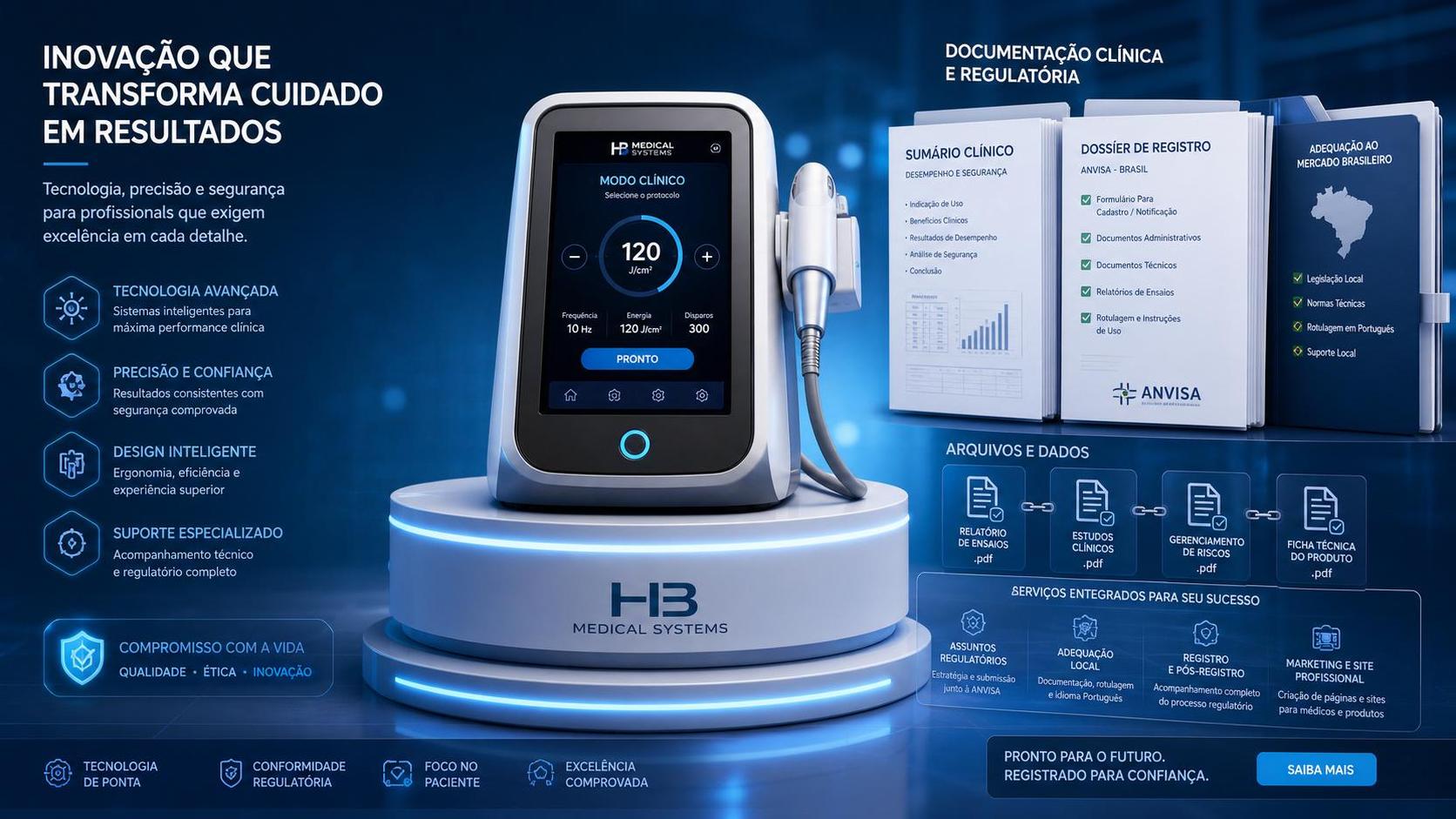
 Brazil ANVISA Requires Medical Device Independent Websites to Add Portuguese Clinical Summaries
 How to Configure Payments for Cross-Border E-Commerce Independent Website Development? A Guide to Choosing PayPal, Credit Cards, and Local Payments
 CBP Electronic Compliance Portal Goes Live, B2B Independent Websites Need API Customs Declaration for U.S. Orders


Related Products
 EasyCamp SaaS Smart Website Marketing SystemE-Yingbao SaaS Smart Website Marketing System: AI-powered, zero-code website building. Rapidly launch multilingual independent e-commerce sites in just 10 minutes. Global server acceleration and AI-driven SEO optimization empower businesses to efficiently connect with global markets. The seamless integration of technology and user-friendly operation makes building e-commerce sites incredibly simple.
 AI+SEM Intelligent Advertising Marketing SystemAI+SEM drives intelligent ad creation, empowering full-funnel precision advertising marketing. The system automatically generates weekly/monthly reports, AI recommends keywords and target countries, monitors core metrics in real-time with intelligent alerts, and enables one-click high-conversion ad solutions to help quickly acquire customers and improve ROI.
 AI+SEO Dual Engine Optimization ServiceEasyWin AI+SEO Dual Engine Optimization System leverages AI-powered keyword mining, content generation, and comprehensive technical optimization to help foreign trade enterprises acquire high-quality organic traffic, significantly improving search rankings and conversion rates.
 AI+SNS Social Media Marketing SystemYingbao AI+SNS Social Media Marketing System - Precision social capture for the social media era. Supports one-click content synchronization across major platforms like Facebook and LinkedIn. AI intelligently rewrites posts for enhanced relevance. 24/7 AI customer service and user profiling analysis empower businesses to efficiently expand into global markets.
 AI+SEO营销解决方案易营宝AI+SEO营销解决方案,通过AI批量写作、智能生成TDK、精准关键词扩词等功能,全面优化网站SEO效果,提升流量与转化率。助力企业构建高效智能网站新生态。
 AI+SEM Advertising Marketing SolutionsAI+SEM Advertising Marketing Solution leverages AI technology to deeply empower SEM ad campaigns. It automatically generates weekly/monthly reports using AI, presenting account data across multiple dimensions for comprehensive insights into campaign performance and trends. The system precisely recommends keywords and target countries, intelligently generates high-conversion ad copy, and enables one-click activation of efficient campaign plans to help businesses rapidly acquire customers. Simultaneously, it monitors core metrics in real time, intelligently identifies abnormal fluctuations, and issues timely alerts to ensure stable, high-return advertising results.
 Domain Name ServicesEasyWin provides professional domain name services, including intelligent queries, one-stop registration, brand protection, and full lifecycle management, helping businesses build a digital brand image.
 EasyOperate B2C Cross-Border E-Commerce Platform & Independent WebsiteEasyStore B2C Cross-border E-commerce Independent Store is an intelligent website building and cross-border e-commerce integrated solution independently developed by EasyStore Information Technology (Beijing) Co., Ltd. The system is specially designed for small and medium-sized as well as large export enterprises, integrating 'website building, operation, marketing, advertising, and conversion' into one, helping enterprises quickly establish cross-border e-commerce independent stores to achieve brand globalization and global sales growth.
The platform supports multiple languages, multiple currencies, and multi-channel marketing, with built-in AI intelligent translation and SEO optimization systems, suitable for mainstream markets such as Southeast Asia, Europe and America, Latin America, and the Middle East, assisting Chinese manufacturing enterprises in efficiently deploying international e-commerce strategies. SSL证书易营宝提供专业SSL安全证书服务,包括单域名和泛域名证书,确保网站数据传输加密、身份验证和完整性保护,助力企业建立安全可信的在线业务环境。









