









- The China-US tariff arrangement has reached a preliminary consensus, and the trade association will be establishedJun 15, 2026View details
- What determines B2C cross-border e-commerce website development costs? A breakdown of features, interfaces, and deployment methodsJun 17, 2026View details
- China-Morocco zero-tariff access, a breakthrough in the cost of Moroccan goods exports to ChinaJun 11, 2026View details
- What signal should be released for the suspension of exports to JapanJun 10, 2026View details
- China's May LNG imports rebounded, with increased volumes from Russia and Canada filling the Middle East supply gapJun 10, 2026View details
- Will GEO change its SEO strategy?Jun 04, 2026View details
Should AI search optimization and traditional SEO be done separately?
AI search optimization and traditional SEO are not a simple either-or replacement relationship. What really needs to be answered is not “whether to separate them,” but which foundational capabilities can be shared and which strategies must be restructured. For businesses that rely on official websites for customer acquisition, independent site growth, and overseas inquiry conversion, this judgment has already directly affected content investment, technical development, and traffic efficiency.
Especially under the integrated website + marketing service trend, the search entry point is becoming more complex. Search engines are still important, but more and more users will first ask AI, and then decide whether to click the official website, a comparison page, or case content. In other words, companies seeking growth need to compete not only to be “found,” but also to be “cited, recommended, and trusted.”
First, understand what each one is optimizing

The core goal of traditional SEO is to help web pages achieve better crawling, indexing, ranking, and clicks in search results. It focuses on keyword layout, page structure, link relationships, speed experience, and overall site authority.
AI search optimization goes one step further. It not only cares whether web pages can be understood by search engines, but also whether the content can be extracted, summarized, cited, and organized into answers by AI systems. The key here has expanded from “ranking competition” to “semantic supply.”
Simply put, traditional SEO is more like competing for an entry position, while AI search optimization is more like competing for a seat in the answer box. The goals are different, but the underlying logic is not disconnected.
Why you can no longer focus only on traditional SEO
The key change in the industry is not just traffic diversion, but that the user decision-making path has become shorter. In the past, users would open multiple search results and screen them themselves; now, many questions are first condensed by AI into a few conclusions, and whether a company can enter those conclusions has a huge impact.
This change is especially obvious for foreign trade, manufacturing, cross-border e-commerce, and brand global expansion businesses. Multilingual official websites, product pages, solution pages, and industry case studies are no longer just for people to read; they are also being used to build “trustworthy knowledge sources” for search engines and AI systems.
For Yiyingbao’s long-term overseas growth scenarios, the core idea is to place website building, content, SEO, advertising, and AI visibility within the same growth framework. The benefit of doing this is that the website does not exist in isolation, but serves as the foundation for customer acquisition, continuously carrying search, social media, advertising, and AI-recommended traffic.
The overlapping part determines why they should not be completely split apart
If AI search optimization and traditional SEO are completely separated, it often leads to duplicate development. Because the two share many underlying conditions, and these conditions are exactly what determine whether a site has long-term value.
- Content must be real, complete, and verifiable, avoiding empty buzzwords.
- Page structure must be clear, with title hierarchy, summaries, lists, and Q&A information easy to understand.
- The website’s technical foundation must be stable, with smooth crawling, fast loading, and a qualified mobile experience.
- Brand information must be consistent, including company introduction, service boundaries, case studies, and contact methods.
- Trust signals must be sufficient, such as security protocols, copyright information, customer testimonials, and update frequency.
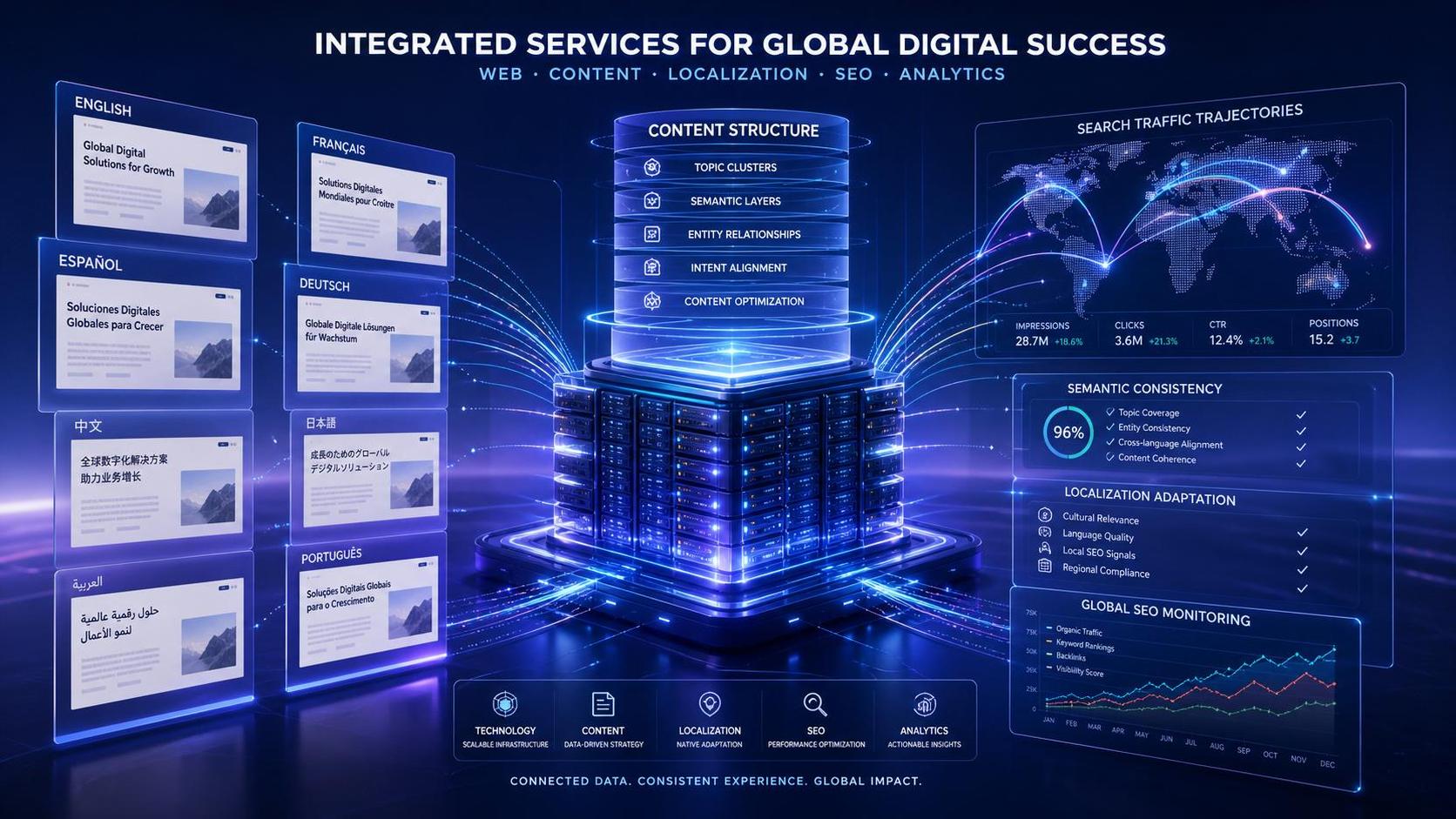
This is also why an integrated platform is more likely to deliver results. If the website system, content management, technical optimization, and marketing data are fragmented, many optimization actions will be interrupted midway, which ultimately affects both SEO and AI search optimization.
The real difference is mainly reflected in content organization and result presentation
Although the foundational capabilities are shared, the two approaches differ in emphasis. Traditional SEO places more emphasis on the correspondence between pages and keywords, while AI search optimization places more emphasis on topic coverage, semantic clarity, and information extractability.
Therefore, AI search optimization is not about simply changing the title of an existing SEO article. It is about upgrading on-site information from “being readable” to “being stably understood by machines.”
How should investments be combined in actual business operations
A more stable approach is not to split the work into two completely independent teams, but to share one underlying site and data system, and then make dual-direction adaptations in content strategy.
First, turn the official website into a trustworthy content foundation
The official website is still a core asset. Product capabilities, industry solutions, case studies, delivery processes, FAQs, and multilingual versions should all be deposited into pages that can be indexed, rather than being scattered only across social media or sales materials.
This also involves a technical point that is easily overlooked: website security and reliable access. For e-commerce platforms, corporate websites, membership systems, and API interfaces, HTTPS is no longer an add-on, but a basic requirement. Capabilities such as SSL certificates are not only about encrypted transmission, but also about identity verification, content integrity, and browser trust.
If SHA-256, 2048-bit keys, OCSP stapling, and HSTS support can be combined, and HTTP-to-HTTPS automatic redirection and mixed-content fixes are properly handled, the site’s performance in security, loading, and stability will simultaneously benefit traditional SEO and AI search optimization.
Shift content from “writing pages” to “building topics”
A common traditional SEO approach is one keyword matched to one piece of content. This method is still effective, but it is not enough for AI search optimization. What is needed more is to build a complete information network around a topic.
- Under the same topic, create foundational pages, scenario pages, case pages, and FAQ pages.
- Provide clear definitions for core viewpoints and avoid vague descriptions.
- Write key data, parameters, processes, and boundary conditions as clearly as possible.
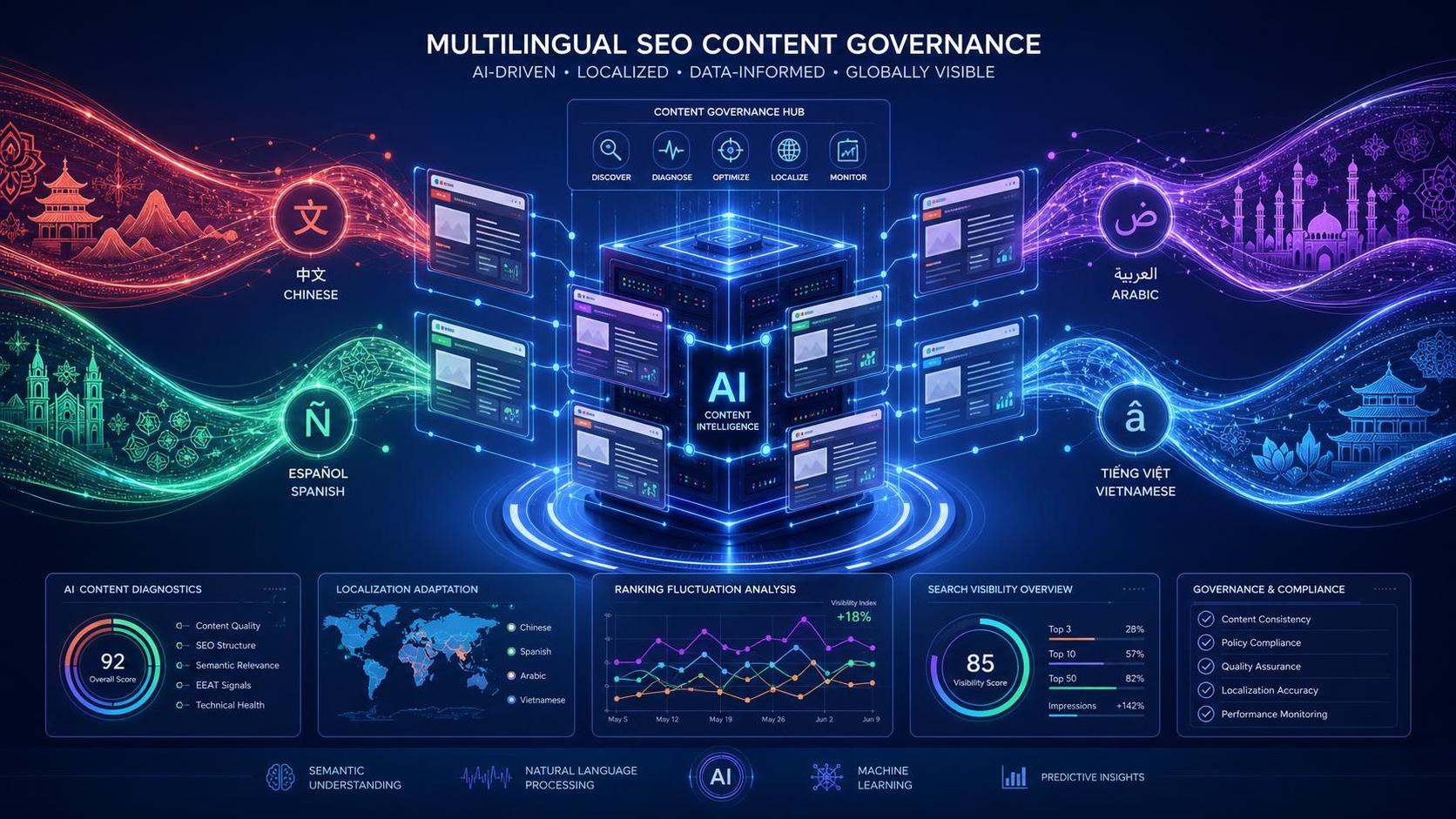
- Keep multilingual content semantically consistent and avoid conflicting regional versions.
This structure is especially suitable for foreign trade websites, cross-border e-commerce stores, and global brand websites. Because user questions themselves span multiple dimensions such as products, delivery, region, certification, logistics, and advertising.
Which scenarios should prioritize AI search optimization
Not every business needs the same level of investment, but the following scenarios are usually worth prioritizing.
- The decision-making cycle is long, requiring repeated comparisons of solutions and service capabilities.
- The product is highly specialized, and users are accustomed to asking first and screening suppliers later.
- The business depends on overseas markets, with strong demand for multilingual search.
- Advertising costs keep rising, requiring the establishment of long-term organic traffic assets.
- The official website bears inquiry conversion and cannot only be used for display without indexing and trust building.
From this perspective, a platform like Yiyingbao, which integrates intelligent website building, SEO, advertising, social media, and GEO capabilities, is better suited to carrying medium- to long-term growth tasks. Because the competition for search visibility is ultimately won by system synergy, not by isolated tricks.
If you want to judge whether the strategy is effective, keep an eye on these signals
If you are planning to move into AI search optimization, it may be worth using a few standard criteria first to judge whether the current site already has the basic conditions.
- Whether the brand name, product name, and service name are consistent across pages and external channels.
- Whether key pages answer real business questions rather than just piling up selling points.
- Whether content can be broken down into clear paragraphs, lists, parameters, and scenario explanations.
- Whether the site is secure, stable, and supports continuous updates and multi-site management.
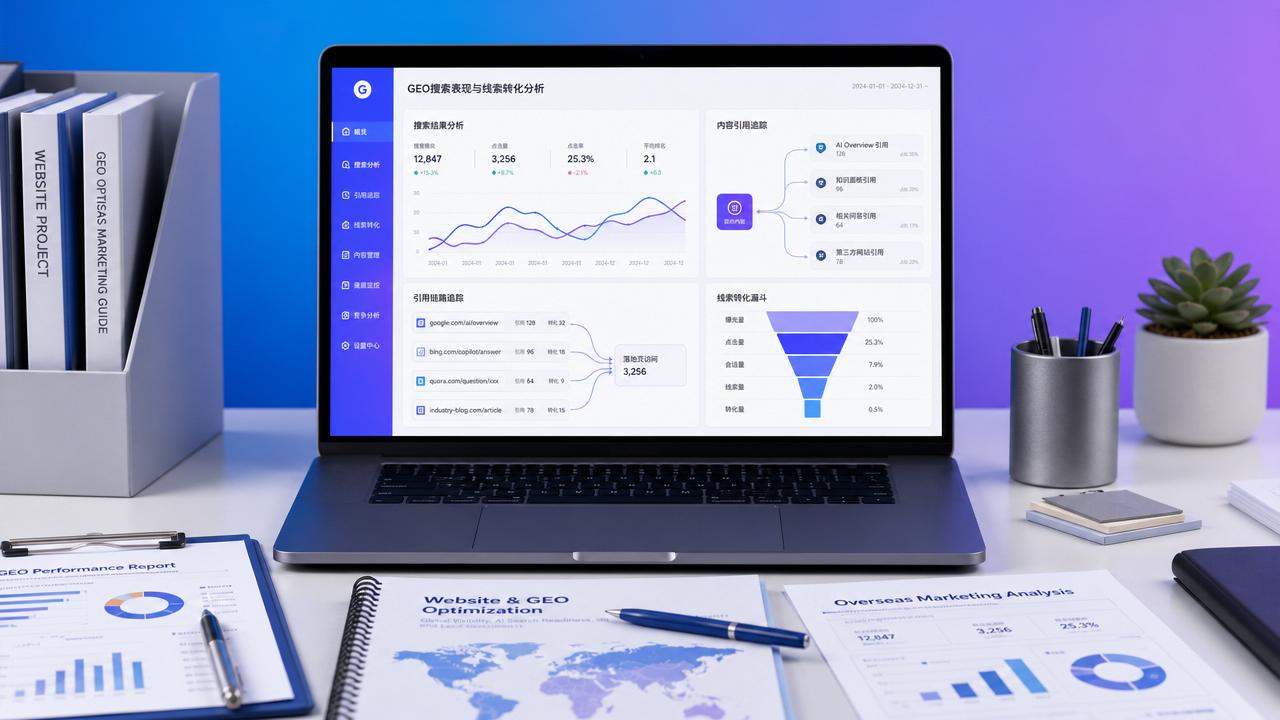
- Whether organic traffic, inquiry quality, and AI-originated visits can be tracked and analyzed.
If these fundamentals are still incomplete, build the foundation first; that is more effective than rushing to chase individual hot keywords. Especially when using a one-stop system, the smoother the certificate deployment, indexing structure, page templates, and content update process are, the more stable the subsequent scale-up effect will be.
Whether to separate them is not the key issue; the key lies in execution
Returning to the original question, AI search optimization and traditional SEO are not recommended to be completely separated, but they also should not be mixed together and executed using the old method. The more reasonable path is to share the technical foundation, unify site assets, coordinate content planning, and then supplement topic expression, trust signals, and structured presentation according to the AI answer mechanism.
If you are evaluating the next step, you can start from three directions: sort out whether the existing site has security and indexing foundations, check whether the content can support AI understanding, and then compare whether traffic acquisition channels are overly dependent on a single source. Once these three things are clear, it is often more certain to decide how to allocate resources than to blindly follow trends.
Related Articles
Related Products
 EasyCamp SaaS Smart Website Marketing SystemE-Yingbao SaaS Smart Website Marketing System: AI-powered, zero-code website building. Rapidly launch multilingual independent e-commerce sites in just 10 minutes. Global server acceleration and AI-driven SEO optimization empower businesses to efficiently connect with global markets. The seamless integration of technology and user-friendly operation makes building e-commerce sites incredibly simple.
 AI+SEM Intelligent Advertising Marketing SystemAI+SEM drives intelligent ad creation, empowering full-funnel precision advertising marketing. The system automatically generates weekly/monthly reports, AI recommends keywords and target countries, monitors core metrics in real-time with intelligent alerts, and enables one-click high-conversion ad solutions to help quickly acquire customers and improve ROI.
 AI+SEO Dual Engine Optimization ServiceEasyWin AI+SEO Dual Engine Optimization System leverages AI-powered keyword mining, content generation, and comprehensive technical optimization to help foreign trade enterprises acquire high-quality organic traffic, significantly improving search rankings and conversion rates.
 AI+SNS Social Media Marketing SystemYingbao AI+SNS Social Media Marketing System - Precision social capture for the social media era. Supports one-click content synchronization across major platforms like Facebook and LinkedIn. AI intelligently rewrites posts for enhanced relevance. 24/7 AI customer service and user profiling analysis empower businesses to efficiently expand into global markets.
 AI+SEO营销解决方案易营宝AI+SEO营销解决方案,通过AI批量写作、智能生成TDK、精准关键词扩词等功能,全面优化网站SEO效果,提升流量与转化率。助力企业构建高效智能网站新生态。
 AI+SEM Advertising Marketing SolutionsAI+SEM Advertising Marketing Solution leverages AI technology to deeply empower SEM ad campaigns. It automatically generates weekly/monthly reports using AI, presenting account data across multiple dimensions for comprehensive insights into campaign performance and trends. The system precisely recommends keywords and target countries, intelligently generates high-conversion ad copy, and enables one-click activation of efficient campaign plans to help businesses rapidly acquire customers. Simultaneously, it monitors core metrics in real time, intelligently identifies abnormal fluctuations, and issues timely alerts to ensure stable, high-return advertising results.
 Domain Name ServicesEasyWin provides professional domain name services, including intelligent queries, one-stop registration, brand protection, and full lifecycle management, helping businesses build a digital brand image.
 EasyOperate B2C Cross-Border E-Commerce Platform & Independent WebsiteEasyStore B2C Cross-border E-commerce Independent Store is an intelligent website building and cross-border e-commerce integrated solution independently developed by EasyStore Information Technology (Beijing) Co., Ltd. The system is specially designed for small and medium-sized as well as large export enterprises, integrating 'website building, operation, marketing, advertising, and conversion' into one, helping enterprises quickly establish cross-border e-commerce independent stores to achieve brand globalization and global sales growth.
The platform supports multiple languages, multiple currencies, and multi-channel marketing, with built-in AI intelligent translation and SEO optimization systems, suitable for mainstream markets such as Southeast Asia, Europe and America, Latin America, and the Middle East, assisting Chinese manufacturing enterprises in efficiently deploying international e-commerce strategies. SSL证书易营宝提供专业SSL安全证书服务,包括单域名和泛域名证书,确保网站数据传输加密、身份验证和完整性保护,助力企业建立安全可信的在线业务环境。









