









- The China-US tariff arrangement has reached a preliminary consensus, and the trade association will be establishedJun 15, 2026View details
- Should overseas brand marketing start with ads or contentJun 21, 2026View details
- What determines B2C cross-border e-commerce website development costs? A breakdown of features, interfaces, and deployment methodsJun 17, 2026View details
- China-Morocco zero-tariff access, a breakthrough in the cost of Moroccan goods exports to ChinaJun 11, 2026View details
- What signal should be released for the suspension of exports to JapanJun 10, 2026View details
- China's May LNG imports rebounded, with increased volumes from Russia and Canada filling the Middle East supply gapJun 10, 2026View details
Common Reasons Why Google Ads Costs Are High
Google Ads costs are high, and what is often exposed first is a system issue
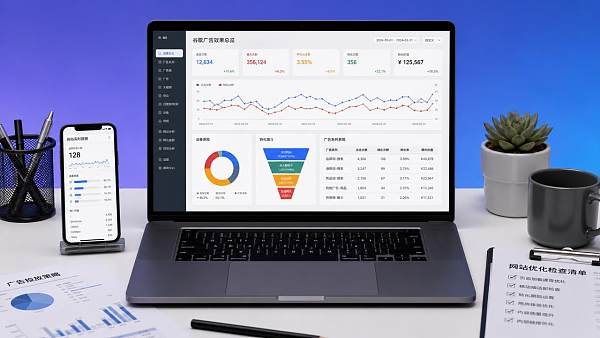
Google Ads costs are high. On the surface, it may look like CPCs are rising, but the more common reason is that the website, account, and lead handoff have not formed a complete chain. Spending budget quickly does not necessarily mean the market is too expensive; it may also mean that traffic is being consumed by low-quality search terms, vague audiences, and landing pages with persistently low conversion.
In website and marketing service integration scenarios, this issue is even more obvious. Because ad accounts do not operate in isolation, website structure, page speed, form design, multilingual adaptation, and data return quality all directly affect the actual cost of Google Ads. For overseas business, high spend does not only mean high media costs; it also means that there are waste points in the customer acquisition path.
What is even more worth noting is that the cost issue differs at different business stages. New websites are often expensive because of trial-and-error, while older websites are often expensive because of structural aging, and multi-region campaigns are often expensive because language and regional targeting decisions miss the mark. Only by breaking the scenario apart can the budget direction become clearer.
In actual campaigns, first identify what kind of “expensive” it is
Some accounts have high CPCs, but stable conversion rates; some accounts have not-so-expensive clicks, yet the final customer acquisition cost keeps rising. The former is mostly related to industry competition and keyword quality, while the latter often comes from landing pages, forms, data tracking, and sales lead filtering. To determine whether Google Ads is truly “expensive,” you cannot look only at daily spend.
In practice, the more common method is to look at four sets of data at the same time: CPC, conversion rate, qualified inquiry rate, and final deal contribution. If front-end conversions are normal but back-end quality is poor, the problem is usually not in the media layer; if front-end clicks are high, dwell time is short, and bounce rate is high, then you need to go back to keyword and page match quality.
When a new website is just launched, Google Ads is often expensive because the “foundation is not solid”
Newly launched independent sites or multilingual official websites often show high spend and low response at the beginning of campaigns. The reason is not that a new account is bound to lose money, but that the website has not yet built enough trust signals. Too little page content, weak product value communication, and unclear form entry points can all make Google Ads ineffective as click buy-ins.
In this kind of scenario, what is most easily overlooked is the website’s own promotability. Many companies launch ads first and then fill in the pages later, but the result is that ad promises and page content do not align, and users cannot find the core information after clicking. For B2B inquiry websites, cases, qualifications, delivery capabilities, and response methods are indispensable; for cross-border stores, price, logistics, reviews, and payment experience are even more critical.
If the website foundation is weak, simply expanding the budget usually will not lower costs. A more stable approach is to first sync and organize the main product pages, landing pages, conversion forms, and data tracking points, then gradually scale spend.
When keyword strategy misses the mark, budget is most likely to be eaten up by traffic that merely “looks relevant”
The high cost of many accounts is not because bids are too aggressive, but because the keyword scope is too broad. Especially in the early stage of Google Ads campaigns, if broad match is used extensively, the system will quickly bring traffic, but that traffic may not have real purchase intent or inquiry intent.
A more common scenario is a mix of product terms and informational terms. For example, users may only want to understand specifications, tutorials, or definitions, but they are treated as high-intent traffic and sent to an inquiry page. Clicks look effective, but conversion costs keep getting higher. For cross-border e-commerce independent sites, category terms and brand terms should be managed separately; for B2B official websites, model terms, solution terms, and regional terms should also be grouped and tested.
If you need to balance customer acquisition through ads and organic growth, search keyword data is usually fed back into content optimization. For example, with the help of SEO optimization capabilities, continuously carrying out keyword recommendations, expansion, TDK generation, and long-tail term judgment can identify high-converting intent terms earlier and reduce the long-term cost of trial keywords.
Landing pages are not showcase pages, and weak conversion directly drives up Google Ads costs
Many pages are designed to be very complete, but they are not necessarily suitable for receiving ad traffic. The reason is that official website showcase pages pursue comprehensive information, while ad landing pages need a clearer route. Too many entry points, too scattered content, and too slow loading all make users leave within seconds.
This issue is even more pronounced in multilingual campaigns. If an English page is merely translated literally, and the industry terminology, delivery commitments, and form wording do not match local usage, even precise clicks will be difficult to convert. When 易营宝 serves multi-region markets over the long term, it usually looks at website, ads, content, and localization together, rather than only adjusting account bids. Because once page relevance improves, quality scores and conversion rates often improve at the same time.
- Does the homepage directly respond to search intent, rather than only displaying brand slogans.
- Is mobile loading stable, and are the buttons and forms clear enough.
- Is the inquiry path too long, and are there duplicate fields or invalid verification.
- Does the page content remain consistent with ad copy, keywords, and regional language.
Under different business scenarios, the key points of judgment are indeed different
The cost structure of Google Ads for cross-border stores and B2B official websites is not the same. Stores focus more on the purchase path after product clicks, while B2B focuses more on the authenticity of leads and the subsequent deal cycle. Putting both into the same campaign logic often leads to misjudged budgets and performance.
Therefore, when evaluating Google Ads costs, it is best to first define whether the business goal is orders, inquiries, or brand reach. Different goals mean different acceptable unit conversion costs, and the optimization actions should certainly not be one-size-fits-all.
When data return is inaccurate, the system will push the budget in the wrong direction
There is another common source of high cost, and it does not happen on the front end, but in the data layer. For example, if phone clicks, WhatsApp inquiries, form submissions, and secondary conversions are not correctly returned, the system will automatically learn from incomplete data and eventually keep allocating budget to people who appear highly converting but are actually of average quality.
This situation is most likely to occur when ads and websites are managed separately. The site has been revised, but the tracking points were not updated; the form changed, but the conversion rules were not synchronized; the leads entered the CRM, but the data did not flow back to the ad system. What the finance team sees is rising costs, and what the operations team sees is that “the system is still learning,” but the real problem is actually already in the data chain.
If you want to reduce long-term trial-and-error costs, you can put content, the site, and data monitoring into a unified optimization rhythm. For example, through an SEO optimization system that supports multilingual localization, original content generation, ranking monitoring, and optimization recommendation reports, you can first improve content and page quality, and then use more complete data to correct ad allocation direction.
What really needs to be compressed is not just spend, but ineffective consumption
Google Ads costs are high. In many cases, the reason is not that the budget was cut too much, nor that the platform simply raised prices, but that the account structure, keyword strategy, landing page handoff, and data return are not coordinated. Looking only at daily spend makes it hard to identify which layer the problem is in; once you return to the specific business scenario, the waste link becomes easier to find.
A more stable approach before launching is to first sort out whether the site is suitable for promotion, and then check whether keyword intent, page matching, conversion definitions, and regional strategies are aligned. Only by tightening these foundational actions can Google Ads costs truly come down, rather than being temporarily suppressed and then rebounding.
If further optimization is needed, you can move forward in the sequence of “search term cleanup — page handoff correction — conversion return validation — region-by-region review.” This makes budget direction clearer and also lays a more stable growth foundation for subsequent SEO, website building, and ad coordination.
Related Articles

Related Products
 EasyCamp SaaS Smart Website Marketing SystemE-Yingbao SaaS Smart Website Marketing System: AI-powered, zero-code website building. Rapidly launch multilingual independent e-commerce sites in just 10 minutes. Global server acceleration and AI-driven SEO optimization empower businesses to efficiently connect with global markets. The seamless integration of technology and user-friendly operation makes building e-commerce sites incredibly simple.
 AI+SEM Intelligent Advertising Marketing SystemAI+SEM drives intelligent ad creation, empowering full-funnel precision advertising marketing. The system automatically generates weekly/monthly reports, AI recommends keywords and target countries, monitors core metrics in real-time with intelligent alerts, and enables one-click high-conversion ad solutions to help quickly acquire customers and improve ROI.
 AI+SEO Dual Engine Optimization ServiceEasyWin AI+SEO Dual Engine Optimization System leverages AI-powered keyword mining, content generation, and comprehensive technical optimization to help foreign trade enterprises acquire high-quality organic traffic, significantly improving search rankings and conversion rates.
 AI+SNS Social Media Marketing SystemYingbao AI+SNS Social Media Marketing System - Precision social capture for the social media era. Supports one-click content synchronization across major platforms like Facebook and LinkedIn. AI intelligently rewrites posts for enhanced relevance. 24/7 AI customer service and user profiling analysis empower businesses to efficiently expand into global markets.
 AI+SEO营销解决方案易营宝AI+SEO营销解决方案,通过AI批量写作、智能生成TDK、精准关键词扩词等功能,全面优化网站SEO效果,提升流量与转化率。助力企业构建高效智能网站新生态。
 AI+SEM Advertising Marketing SolutionsAI+SEM Advertising Marketing Solution leverages AI technology to deeply empower SEM ad campaigns. It automatically generates weekly/monthly reports using AI, presenting account data across multiple dimensions for comprehensive insights into campaign performance and trends. The system precisely recommends keywords and target countries, intelligently generates high-conversion ad copy, and enables one-click activation of efficient campaign plans to help businesses rapidly acquire customers. Simultaneously, it monitors core metrics in real time, intelligently identifies abnormal fluctuations, and issues timely alerts to ensure stable, high-return advertising results.
 Domain Name ServicesEasyWin provides professional domain name services, including intelligent queries, one-stop registration, brand protection, and full lifecycle management, helping businesses build a digital brand image.
 EasyOperate B2C Cross-Border E-Commerce Platform & Independent WebsiteEasyStore B2C Cross-border E-commerce Independent Store is an intelligent website building and cross-border e-commerce integrated solution independently developed by EasyStore Information Technology (Beijing) Co., Ltd. The system is specially designed for small and medium-sized as well as large export enterprises, integrating 'website building, operation, marketing, advertising, and conversion' into one, helping enterprises quickly establish cross-border e-commerce independent stores to achieve brand globalization and global sales growth.
The platform supports multiple languages, multiple currencies, and multi-channel marketing, with built-in AI intelligent translation and SEO optimization systems, suitable for mainstream markets such as Southeast Asia, Europe and America, Latin America, and the Middle East, assisting Chinese manufacturing enterprises in efficiently deploying international e-commerce strategies. SSL证书易营宝提供专业SSL安全证书服务,包括单域名和泛域名证书,确保网站数据传输加密、身份验证和完整性保护,助力企业建立安全可信的在线业务环境。









