









- What should you focus on in the latest enterprise SaaS report? From renewal rates and delivery costs to overseas growth opportunitiesJul 12, 2026View details
- What signals are worth paying attention to in a cross-border marketing trend report? B2B companies should look at these 6 signalsJul 11, 2026View details
- How to Read a Cross-Border Marketing Trends Report? Five Key Dimensions for Evaluating Channel OpportunitiesJul 11, 2026View details
- Which channel has the highest ROI in the global traffic ecosystem? Comparative analysis of search, social media, and advertisingJul 10, 2026View details
- What multilingual website services are available in Sanya? Which model is more suitable for local businesses going global?Jul 08, 2026View details
- How to view the complete list of China SaaS companies in the top 100? Practical methods for screening website-building and marketing service providersJul 08, 2026View details
How to choose a PPC outsourcing provider? Check account ownership, optimization frequency, and KPIs first
Why Can’t You Just Focus on the Quote for PPC Outsourcing
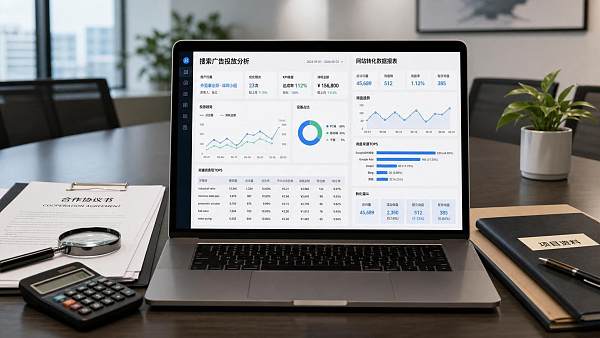
PPC outsourcing may look like you are buying traffic, but what you are really buying is execution capability, data transparency, and a continuous optimization mechanism. The quotation is of course important, but what truly determines whether the budget is worthwhile is often not the service fee itself, but whether the account is controllable, whether the delivery is timely, and whether the attribution is accurate.
This is even more obvious in website and marketing integration scenarios. Advertising is not an isolated action. The front end is the landing page, website structure, and conversion path; the back end is lead quality, sales follow-up, and attribution judgment. If PPC outsourcing only manages ad placement and ignores pages and conversions, the results are usually hard to stabilize.
A more common situation is that communication goes smoothly in the early stage, but after launch it turns out that the account is not under your own name, full data cannot be seen, optimization actions are not transparent, and KPI definitions do not match expectations. By the time the budget has been spent, it is already very difficult to push back.
Therefore, when choosing a PPC outsourcing service provider, clarify the key rules first, then discuss pricing and discounts. This is usually more stable than comparing quotes first and then talking about details.
Why Is Account Ownership Always Emphasized
This is one of the easiest points to overlook in PPC outsourcing, yet it has the greatest impact on later control. To put it simply, account ownership means who opens the advertising account, who owns the analytics tools, conversion tracking, material data, and historical campaign records, and who ultimately has management authority.
If a service provider uses its own master account for sub-management, the launch may be faster in the short term, but there are three hidden risks later. First, after the cooperation ends, historical data may not be fully migrated. Second, the relationship between budget spend and platform rebates is not transparent. Third, when switching service providers, the learning cost has to start from scratch.
A more stable approach is for the advertiser to own the master account, while the service provider manages it through authorization. In this way, even if the team changes, the account assets, audience accumulation, and conversion data still remain in your own hands.
If the project also involves independent website development, SEO, and ad placement at the same time, this point needs to be confirmed in advance. Platforms like 易营宝 that provide integrated services covering website building, SEO, social media, and advertising usually connect the website, delivery, and attribution data together. This is very helpful for improving the completeness of lead tracking, but the premise is still that authority boundaries must be clearly defined.
Confirm These Items Before Signing
- Who opens the advertising account, and whether administrator rights can be transferred.
- Who owns GA4, conversion API, form tracking, and phone tracking.
- Whether materials, keywords, audience lists, and historical reports can be exported.
- The data handover cycle and method after cooperation ends.
How Should Optimization Frequency Be Judged, Is More Frequent Always Better
Many people ask whether PPC outsourcing is only responsible if the account is adjusted every day. The answer is not that simple. Optimization frequency matters, but what matters more is whether the optimization is based on effective data and whether it is carried out around a clear goal.
For accounts with a small budget and limited conversions, making major changes every day can actually interrupt system learning. For accounts with higher budgets, more delivery regions, and a large number of keywords, more detailed daily monitoring is required; otherwise, abnormal spend can quickly scale up.
In practice, it is better to break “optimization frequency” into three layers. The first layer is daily monitoring, checking spend, abnormal clicks, search term quality, and conversion fluctuations. The second layer is weekly actions, adjusting bids, negative keywords, creative rotation, and audience filtering. The third layer is monthly review, revisiting channel structure, page performance, and lead quality.
If a service provider can only say “we will keep optimizing,” then there is basically no basis for judgment. What is more reference-worthy is whether it can clearly list what is done each week, under what circumstances keywords are added, under what circumstances delivery is paused, and who is responsible for adjustments when page conversion is low.
How Transparent Does the Data Need to Be for PPC Outsourcing to Be Reliable
The thing PPC outsourcing fears most is that it “looks busy, but is actually unclear.” Many reports focus on CTR, impressions, and average CPC. These are not useless, but they can only explain the delivery process, not the business outcome.
More valuable data transparency should at least answer four questions: where the money went, which terms brought effective conversions, which pages received the traffic, and which leads eventually entered the sales follow-up process.
If the service provider can connect the advertising platform, website analytics, and CRM lead status, the judgment will be closer to real business. This is especially true for projects targeting overseas customer acquisition, where website language versions, regional pages, and ad audiences often affect each other, and it is easy to misjudge when only looking at the platform backend.
This is also why many companies are more willing to choose a team that understands both website development and marketing operations. Over the long term, 易营宝 does multilingual independent websites, Google ads, SEO, and overseas social media operations. Its value is not just having more channels, but being able to view landing pages, tracking, and traffic acquisition within one framework, reducing the back-and-forth of “the ads say there is a problem with the page, the page says the traffic is not accurate.”
What Should Be Visible in the Reports
- Cost breakdown by channel, campaign, keyword, and search term.
- Conversion differences across countries, languages, and devices.
- Landing page bounce rate, dwell time, form submissions, and phone click data.
- Invalid leads, duplicate leads, and the proportion of high-intent leads.
How Should KPI Be Set to Avoid Future Disputes
Many PPC outsourcing collaborations fail not because the team is unwilling to work, but because the KPI was not aligned from the start. The service provider says the conversion target has been achieved, while the business side feels the leads have no value; in essence, the two sides are using different statistical criteria.
A more stable approach is to divide KPI into three layers. The first layer looks at the process, such as impressions, CTR, and CPC. The second layer looks at results, such as forms, calls, adding WhatsApp, and inquiry submissions. The third layer looks at quality, such as valid lead rate, target market match rate, and sales contact rate.
If the project cycle is short and you only focus on orders but ignore reality, that is not practical, because orders are heavily affected by price, delivery, and sales rhythm. A more reasonable approach is to first define effective leads clearly, and then gradually extend them to business opportunities and deals.
There is a common misunderstanding here: not all conversions are equal to value. For example, downloading materials, dwell time, and page views have some reference significance, but they are not suitable to be directly used as core KPIs. Otherwise, PPC outsourcing can easily be optimized toward a direction that “looks good but is not useful.”
Which Service Providers Are More Suitable for Long-Term Cooperation, Rather Than Short-Term Traffic Chasing
To judge whether a PPC outsourcing service provider is worth long-term cooperation, the key is not how many case studies it has, but whether it can handle complex scenarios. For example, multilingual websites, multi-region delivery, long B2B decision cycles, and high-frequency B2C testing all require a team that not only knows advertising, but also understands pages, data, and market differences.
If the business itself involves overseas independent website development, SEO long-term growth, and advertising synergy, choosing a service provider with stronger integrated capabilities usually saves communication costs. The reason is very practical: ad performance is greatly affected by page speed, form path, and content match. When split across multiple teams, responsibility boundaries become blurry.
From this perspective, 易营宝, founded in 2013, is more like an integrated service model. Driven by AI and big data, it covers intelligent website building, multilingual official websites, cross-border malls, Google Ads, SEO, social media, and GEO optimization. For projects that require “website + marketing service integration,” this kind of capability structure is more suitable for building a long-term reusable growth system, rather than only short-term traffic acquisition.
However, no matter which company you choose, it must ultimately be reflected in the contract and execution. The scope of service, authority, reporting frequency, testing cycle, KPI paths, and exit mechanism are all more important to define clearly than verbal promises.
What Key Questions Should Be Asked Before Going Live
When you have already screened down to two or three candidate service providers, the final round of communication should ideally focus on real execution rather than listening to case stories again. The more specific the questions, the easier it is to see whether the other party has truly handled similar projects.
- How the first-month budget is allocated, and how long the testing period lasts.
- If there are many leads but poor quality, whether to prioritize changing keywords, audiences, or pages.
- Whether it can work with website landing page iterations instead of only adjusting ads.
- What reports are delivered each month, and whether the raw data is included.
- When performance is abnormal for two consecutive weeks, whether there is an emergency response mechanism.
PPC outsourcing is essentially continuous collaboration, not one-time delivery. A truly reliable service provider will incorporate early testing, page acceptance, data attribution, and later iteration into the solution, rather than only promising a nice-looking number.
If you first clarify account ownership, optimization frequency, data transparency, and KPI, and then compare price, case studies, and service fees, it is usually easier to choose the right partner. The next step can be to organize the existing website, conversion path, and target market first, and then compare one by one based on these dimensions to judge which PPC outsourcing model best matches the current business stage.
Related Articles
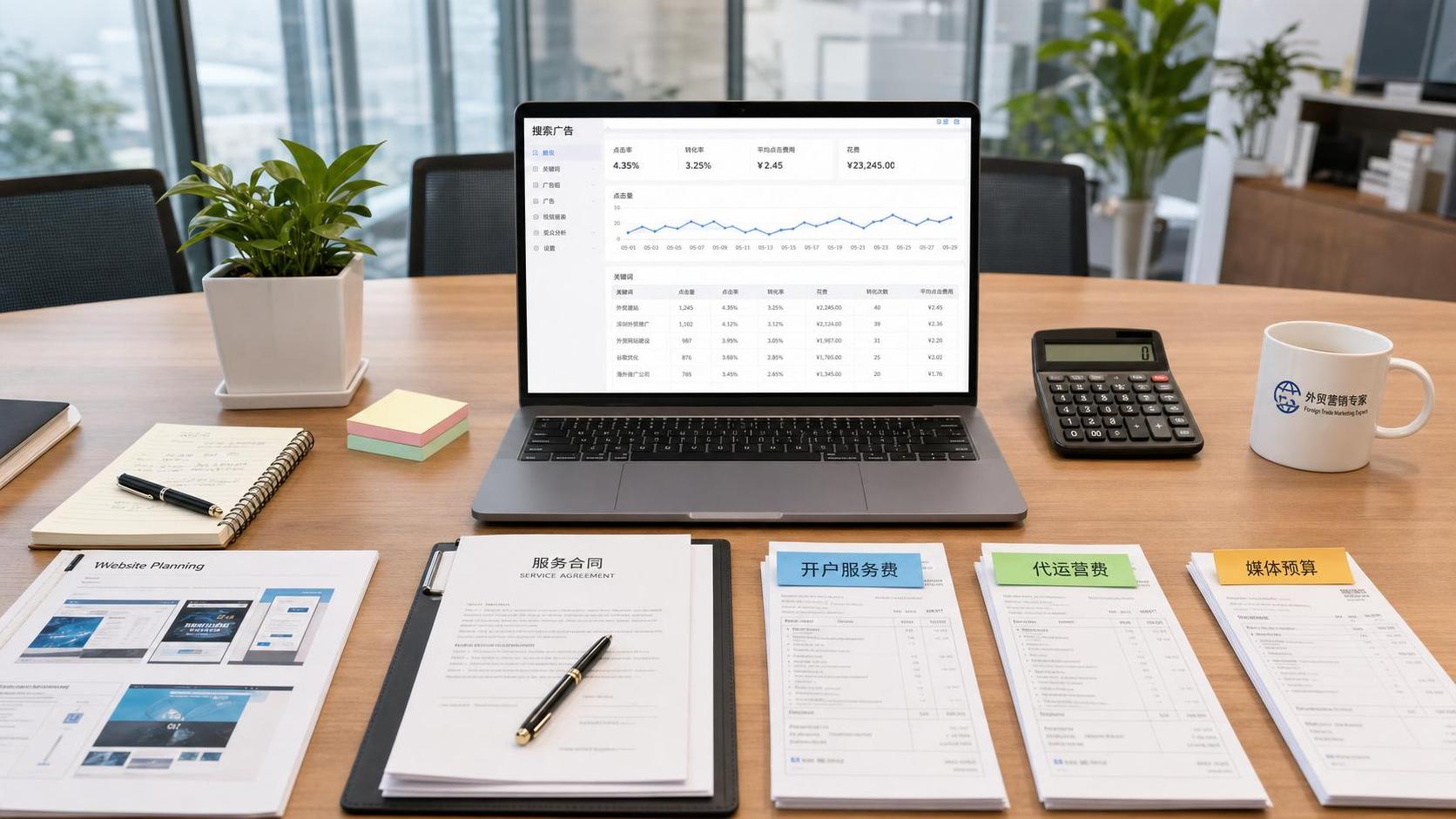
 How is Google Ads promotion service charged? Separate account management, account setup, and media budget for a closer look
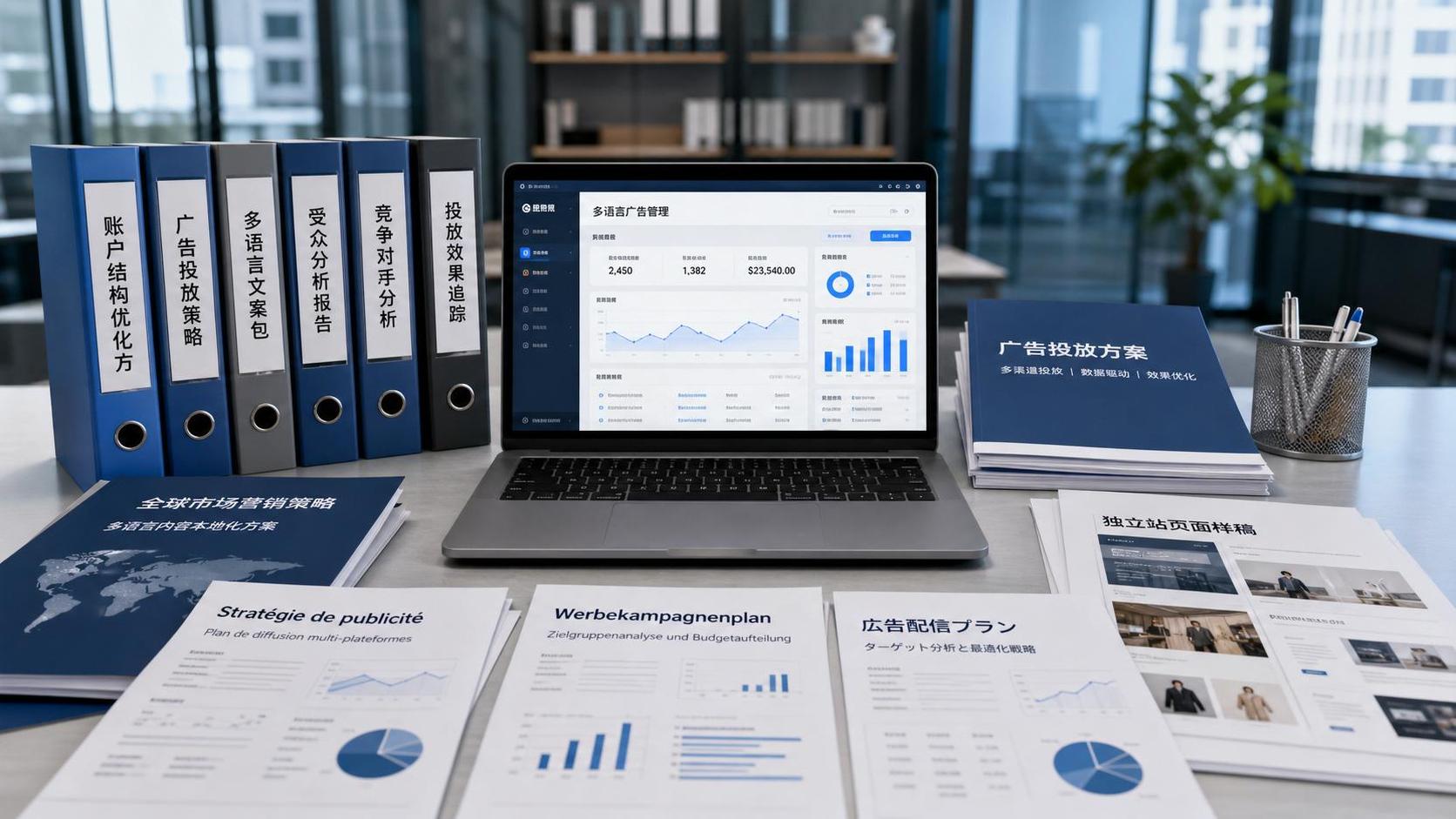
 How to reduce the high management cost of multilingual Google Ads? Optimize account structure
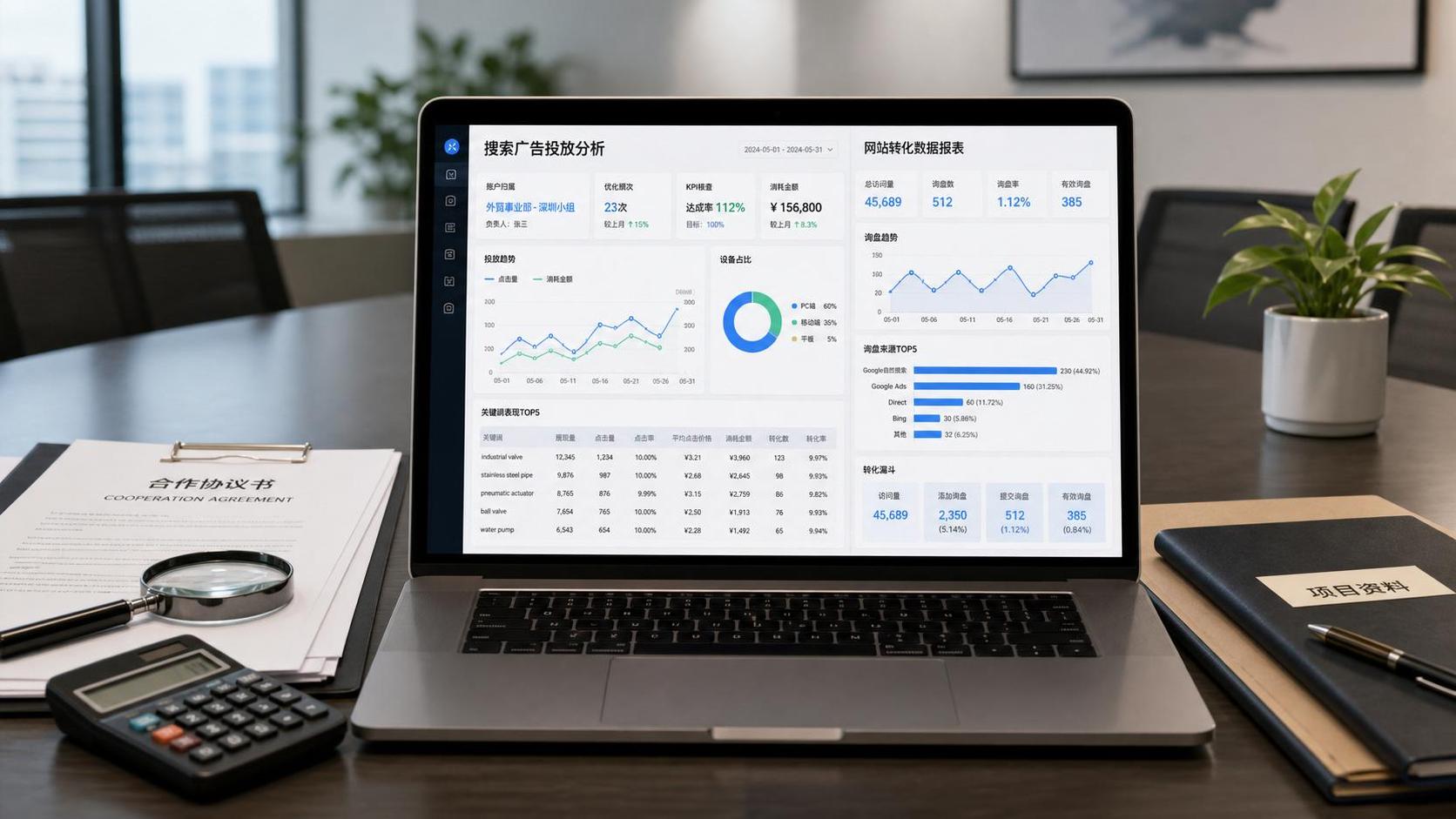
 How to choose a PPC outsourcing provider? Check account ownership, optimization frequency, and KPIs first
Related Products
 EasyCamp SaaS Smart Website Marketing SystemE-Yingbao SaaS Smart Website Marketing System: AI-powered, zero-code website building. Rapidly launch multilingual independent e-commerce sites in just 10 minutes. Global server acceleration and AI-driven SEO optimization empower businesses to efficiently connect with global markets. The seamless integration of technology and user-friendly operation makes building e-commerce sites incredibly simple.
 AI+SEM Intelligent Advertising Marketing SystemAI+SEM drives intelligent ad creation, empowering full-funnel precision advertising marketing. The system automatically generates weekly/monthly reports, AI recommends keywords and target countries, monitors core metrics in real-time with intelligent alerts, and enables one-click high-conversion ad solutions to help quickly acquire customers and improve ROI.
 AI+SEO Dual Engine Optimization ServiceEasyWin AI+SEO Dual Engine Optimization System leverages AI-powered keyword mining, content generation, and comprehensive technical optimization to help foreign trade enterprises acquire high-quality organic traffic, significantly improving search rankings and conversion rates.
 AI+SNS Social Media Marketing SystemYingbao AI+SNS Social Media Marketing System - Precision social capture for the social media era. Supports one-click content synchronization across major platforms like Facebook and LinkedIn. AI intelligently rewrites posts for enhanced relevance. 24/7 AI customer service and user profiling analysis empower businesses to efficiently expand into global markets.
 AI+SEO营销解决方案易营宝AI+SEO营销解决方案,通过AI批量写作、智能生成TDK、精准关键词扩词等功能,全面优化网站SEO效果,提升流量与转化率。助力企业构建高效智能网站新生态。
 AI+SEM Advertising Marketing SolutionsAI+SEM Advertising Marketing Solution leverages AI technology to deeply empower SEM ad campaigns. It automatically generates weekly/monthly reports using AI, presenting account data across multiple dimensions for comprehensive insights into campaign performance and trends. The system precisely recommends keywords and target countries, intelligently generates high-conversion ad copy, and enables one-click activation of efficient campaign plans to help businesses rapidly acquire customers. Simultaneously, it monitors core metrics in real time, intelligently identifies abnormal fluctuations, and issues timely alerts to ensure stable, high-return advertising results.
 Domain Name ServicesEasyWin provides professional domain name services, including intelligent queries, one-stop registration, brand protection, and full lifecycle management, helping businesses build a digital brand image.
 EasyOperate B2C Cross-Border E-Commerce Platform & Independent WebsiteEasyStore B2C Cross-border E-commerce Independent Store is an intelligent website building and cross-border e-commerce integrated solution independently developed by EasyStore Information Technology (Beijing) Co., Ltd. The system is specially designed for small and medium-sized as well as large export enterprises, integrating 'website building, operation, marketing, advertising, and conversion' into one, helping enterprises quickly establish cross-border e-commerce independent stores to achieve brand globalization and global sales growth.
The platform supports multiple languages, multiple currencies, and multi-channel marketing, with built-in AI intelligent translation and SEO optimization systems, suitable for mainstream markets such as Southeast Asia, Europe and America, Latin America, and the Middle East, assisting Chinese manufacturing enterprises in efficiently deploying international e-commerce strategies. SSL证书易营宝提供专业SSL安全证书服务,包括单域名和泛域名证书,确保网站数据传输加密、身份验证和完整性保护,助力企业建立安全可信的在线业务环境。









