









- What should you focus on in the latest enterprise SaaS report? From renewal rates and delivery costs to overseas growth opportunitiesJul 12, 2026View details
- What signals are worth paying attention to in a cross-border marketing trend report? B2B companies should look at these 6 signalsJul 11, 2026View details
- How to Read a Cross-Border Marketing Trends Report? Five Key Dimensions for Evaluating Channel OpportunitiesJul 11, 2026View details
- Which channel has the highest ROI in the global traffic ecosystem? Comparative analysis of search, social media, and advertisingJul 10, 2026View details
- What multilingual website services are available in Sanya? Which model is more suitable for local businesses going global?Jul 08, 2026View details
- How to view the complete list of China SaaS companies in the top 100? Practical methods for screening website-building and marketing service providersJul 08, 2026View details
How to design a marketing automation customer journey? Unpacking the touchpoints from lead acquisition to deal closure
Marketing automation customer journeys: don't rush to implement the system first
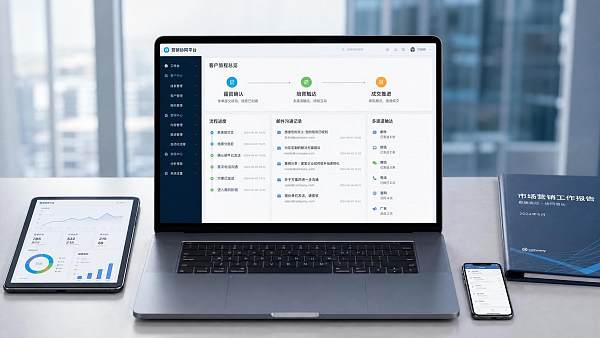
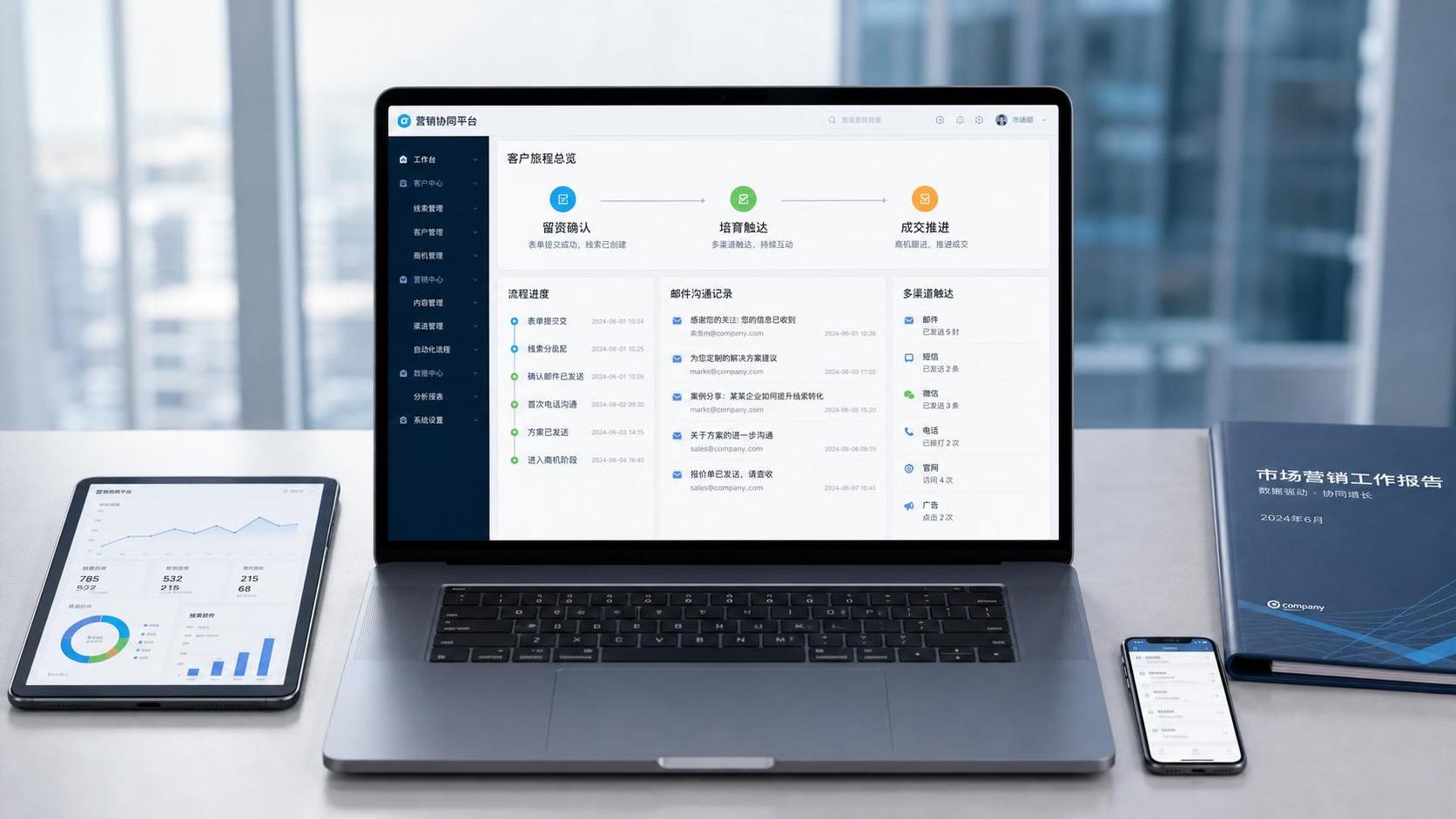
How to design a marketing automation customer journey? Many teams make the mistake at the very first step. They buy the tool first and fill in the process later, only to find that there are many leads but very few deals closed.
A truly effective approach is to first break down the key actions from lead generation to conversion, and then decide what content to send, when to send it, and who should follow up at each step.
In a website + marketing services integrated scenario, customer sources are usually more complex. Some come from organic search, some from ad landing pages, and others from social media direct messages or content downloads.
This also means that a marketing automation customer journey cannot be designed only around “sending emails”; it should be built around “identifying intent, continuous nurturing, and driving conversion”.
If the business involves an independent website, multilingual official website, advertising, and SEO collaboration, customer touchpoints are often cross-channel, cross-content, and cross-cycle. Once the process is not well designed, follow-up will become disconnected.
So, designing a marketing automation customer journey is essentially about solving three questions: who is worth following up with, when to follow up, and what content can best drive the next step.
Define the journey goal first, rather than only looking at lead volume
Many companies understand the marketing automation customer journey as batch reach. The result is that the number of form leads appears to have increased, but the quality of sales feedback leads is not stable.
A more reasonable starting point is to first define the journey goal. For example, is it to improve the effective lead rate, shorten the response time for the first round, or increase the conversion rate of business opportunities.
Different goals mean different priorities in the design of the marketing automation customer journey. Taking project-based businesses as an example, the decision cycle is long, and phased nurturing is usually needed rather than one-time promotion.
It is recommended to first clarify four basic indicators before proceeding with process design.
- Time from lead capture to first touchpoint
- Ratio of first touchpoints that receive an effective response
- Share of leads entering the opportunity pool
- Opportunity-to-deal conversion cycle
With these four indicators in place, the later stage setup will not drift. Otherwise, no matter how complex the process is, it will still be difficult to judge where the actual impact on the deal is.
From lead generation to conversion: how to break down key touchpoints
A workable marketing automation customer journey can usually be broken into five stages. Each stage has a different goal, and the touchpoint content cannot be mixed up.
1. Lead confirmation: build trust first
When a user just submits a form, the concerns are very simple: did I submit successfully, what will happen next, and how long until someone contacts me.
At this touchpoint, do not rush to introduce the full product range; instead, provide clear feedback. Confirmation information, response time, and the contact method must all be stated clearly.
2. First-round screening: determine intent and priority
Not every lead should enter the same journey. Basic segmentation should be based on source channel, page visited, submission content, and region information.
For example, users who leave a lead after visiting a quotation page usually have stronger intent than users who only download materials. The pace of their marketing automation customer journey should be clearly different.
3. Nurturing touchpoints: continuously advance awareness
When users have not yet entered a clear business-opportunity stage, they need to be gradually moved forward through content. At this stage, the focus is not on promotion, but on answering questions and reducing decision-making costs.
Common content includes case studies, solution comparisons, delivery processes, common risks, and localized strategies. This type of content is more suitable for project-based decision scenarios.
4. Opportunity activation: trigger human intervention
When a user shows high-intent actions, such as repeatedly visiting solution pages, booking a demo, or repeatedly checking pricing information, it is time to switch from automation to manual follow-up.
The key here is not “sending more messages automatically”, but promptly handing the most valuable behavioral signals to sales or consultants.
5. Deal promotion: reduce decision barriers
In the pre-deal stage, what customers care about most is often not how complete the features are, but the implementation cycle, resource investment, expected results, and coordination costs.
At this point, the role of the marketing automation customer journey is to provide targeted materials around decision barriers and help with internal reporting and final confirmation.
What to send at each touchpoint to be more effective
After breaking down the stages, many teams still get stuck on content setup. In fact, content can be selected according to “purpose” rather than filled in based on a “content library”.
Here is a very common misunderstanding: writing all content as a brand introduction. This will not drive the marketing automation customer journey; instead, it will make customers lose reading interest faster.
A more effective approach is to let each touchpoint answer only one core question. For example, why do it now, how do multiple channels work together, and what needs to be prepared for project implementation.
Three details that are easiest to overlook when building the system
From recent changes, the marketing automation customer journey is becoming increasingly dependent on data collaboration. The process itself is not difficult; what is difficult is data pathways, trigger rules, and human-machine coordination.
- Lead labels must be standardized. Source, industry, region, and stage of need should at least have standardized fields.
- Trigger conditions must be verifiable. Do not just write “high-intent users”; instead, specify clear behavioral thresholds.
- Manual follow-up must be closed-loop. After automated delivery, whether the user is contacted and what the result is must be fed back into the system.
If these three points are not done well, the marketing automation customer journey can easily turn into a one-way sending system. The process looks complete, but in fact no conversion feedback is formed.
For a website + marketing services integrated business, a more obvious signal is that customers often switch back and forth between the website, ads, and social media. Without a unified view, it is difficult to judge true intent.
A design approach that fits real-world implementation: start small
At the beginning, there is no need to put all customers, all channels, and all content into the marketing automation customer journey. A more stable approach is to first choose one high-frequency scenario as a pilot.
For example, start with website lead customers and build a basic flow of “form submission, automatic confirmation, two rounds of nurturing, opportunity reminder, and manual handoff”.
After this path becomes stable in data, expand to ad landing pages, social media lead generation, and multilingual sites. This makes problems easier to discover and optimization easier to carry out.
If the company already has website building, SEO, advertising, and content collaboration capabilities, the marketing automation customer journey will more easily form continuous growth. That is because front-end lead acquisition and back-end conversion can be linked within one logic.
Platforms like Yiyingbao, which are AI-driven website building and overseas marketing platforms, are advantaged because they place the website, leads, channels, and optimization actions into the same data pipeline, preventing touchpoints from being fragmented.
What matters in the end is not how complex the flowchart is, but whether leads are identified faster, customers are touched more accurately, and deals are advanced more steadily.
If you are preparing to launch a marketing automation customer journey, the most practical action is not to keep discussing concepts, but to first sort out existing lead paths, touchpoints, and manual follow-up rules item by item, and then choose a main path to start validation.
Related Articles
 How to design a marketing automation customer journey? Unpacking the touchpoints from lead acquisition to deal closure
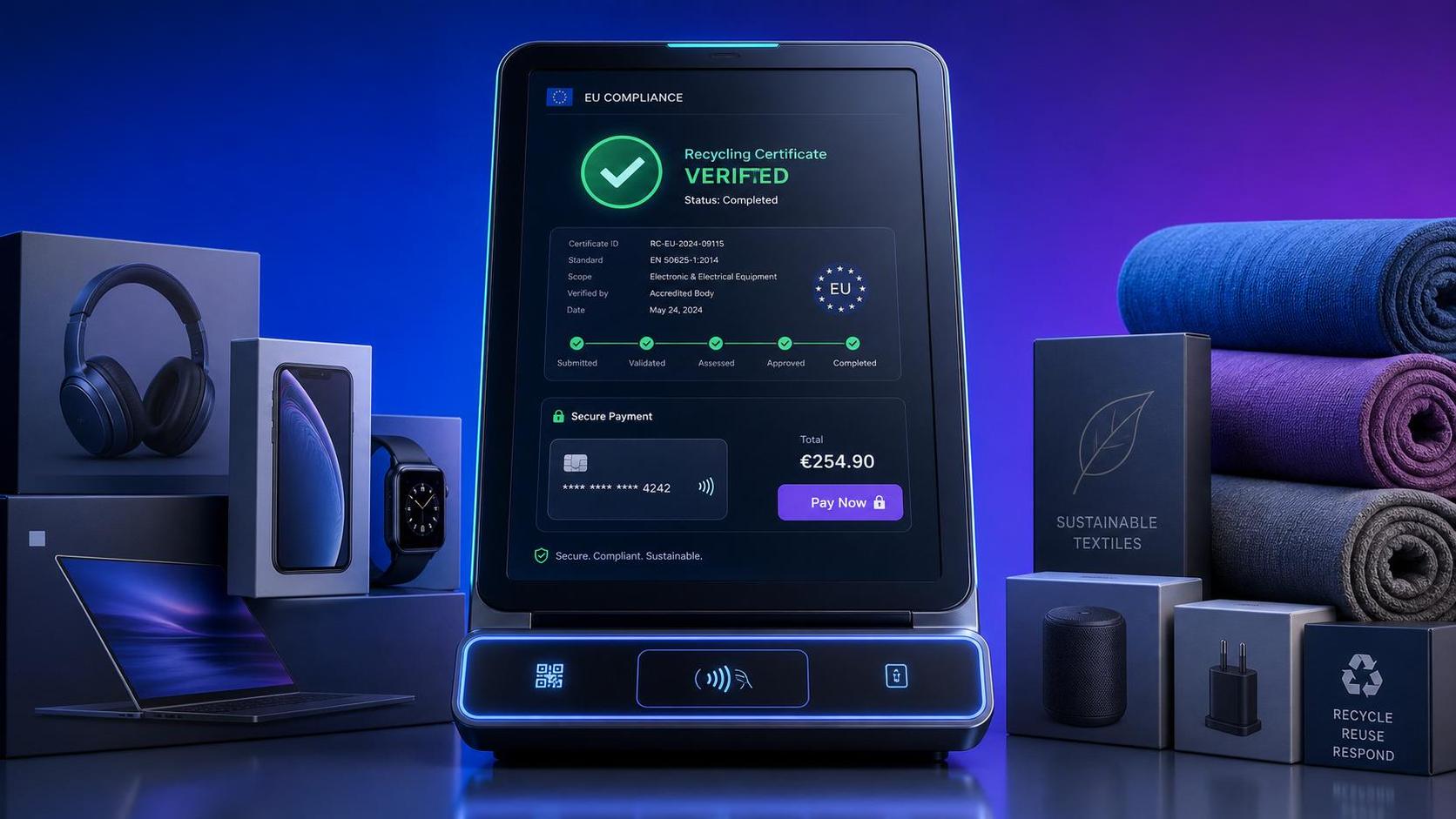
 EU EPR New Regulation Update: Independent Website Checkout Page Must Embed a Digital Recycling Receipt
 Which teams is automation of the foreign trade marketing system suitable for? From lead assignment to email follow-up, a breakdown of the process

Related Products
 EasyCamp SaaS Smart Website Marketing SystemE-Yingbao SaaS Smart Website Marketing System: AI-powered, zero-code website building. Rapidly launch multilingual independent e-commerce sites in just 10 minutes. Global server acceleration and AI-driven SEO optimization empower businesses to efficiently connect with global markets. The seamless integration of technology and user-friendly operation makes building e-commerce sites incredibly simple.
 AI+SEM Intelligent Advertising Marketing SystemAI+SEM drives intelligent ad creation, empowering full-funnel precision advertising marketing. The system automatically generates weekly/monthly reports, AI recommends keywords and target countries, monitors core metrics in real-time with intelligent alerts, and enables one-click high-conversion ad solutions to help quickly acquire customers and improve ROI.
 AI+SEO Dual Engine Optimization ServiceEasyWin AI+SEO Dual Engine Optimization System leverages AI-powered keyword mining, content generation, and comprehensive technical optimization to help foreign trade enterprises acquire high-quality organic traffic, significantly improving search rankings and conversion rates.
 AI+SNS Social Media Marketing SystemYingbao AI+SNS Social Media Marketing System - Precision social capture for the social media era. Supports one-click content synchronization across major platforms like Facebook and LinkedIn. AI intelligently rewrites posts for enhanced relevance. 24/7 AI customer service and user profiling analysis empower businesses to efficiently expand into global markets.
 AI+SEO营销解决方案易营宝AI+SEO营销解决方案,通过AI批量写作、智能生成TDK、精准关键词扩词等功能,全面优化网站SEO效果,提升流量与转化率。助力企业构建高效智能网站新生态。
 AI+SEM Advertising Marketing SolutionsAI+SEM Advertising Marketing Solution leverages AI technology to deeply empower SEM ad campaigns. It automatically generates weekly/monthly reports using AI, presenting account data across multiple dimensions for comprehensive insights into campaign performance and trends. The system precisely recommends keywords and target countries, intelligently generates high-conversion ad copy, and enables one-click activation of efficient campaign plans to help businesses rapidly acquire customers. Simultaneously, it monitors core metrics in real time, intelligently identifies abnormal fluctuations, and issues timely alerts to ensure stable, high-return advertising results.
 Domain Name ServicesEasyWin provides professional domain name services, including intelligent queries, one-stop registration, brand protection, and full lifecycle management, helping businesses build a digital brand image.
 EasyOperate B2C Cross-Border E-Commerce Platform & Independent WebsiteEasyStore B2C Cross-border E-commerce Independent Store is an intelligent website building and cross-border e-commerce integrated solution independently developed by EasyStore Information Technology (Beijing) Co., Ltd. The system is specially designed for small and medium-sized as well as large export enterprises, integrating 'website building, operation, marketing, advertising, and conversion' into one, helping enterprises quickly establish cross-border e-commerce independent stores to achieve brand globalization and global sales growth.
The platform supports multiple languages, multiple currencies, and multi-channel marketing, with built-in AI intelligent translation and SEO optimization systems, suitable for mainstream markets such as Southeast Asia, Europe and America, Latin America, and the Middle East, assisting Chinese manufacturing enterprises in efficiently deploying international e-commerce strategies. SSL证书易营宝提供专业SSL安全证书服务,包括单域名和泛域名证书,确保网站数据传输加密、身份验证和完整性保护,助力企业建立安全可信的在线业务环境。









