









- What should you focus on in the latest enterprise SaaS report? From renewal rates and delivery costs to overseas growth opportunitiesJul 12, 2026View details
- What signals are worth paying attention to in a cross-border marketing trend report? B2B companies should look at these 6 signalsJul 11, 2026View details
- How to Read a Cross-Border Marketing Trends Report? Five Key Dimensions for Evaluating Channel OpportunitiesJul 11, 2026View details
- Which channel has the highest ROI in the global traffic ecosystem? Comparative analysis of search, social media, and advertisingJul 10, 2026View details
- What multilingual website services are available in Sanya? Which model is more suitable for local businesses going global?Jul 08, 2026View details
- How to view the complete list of China SaaS companies in the top 100? Practical methods for screening website-building and marketing service providersJul 08, 2026View details
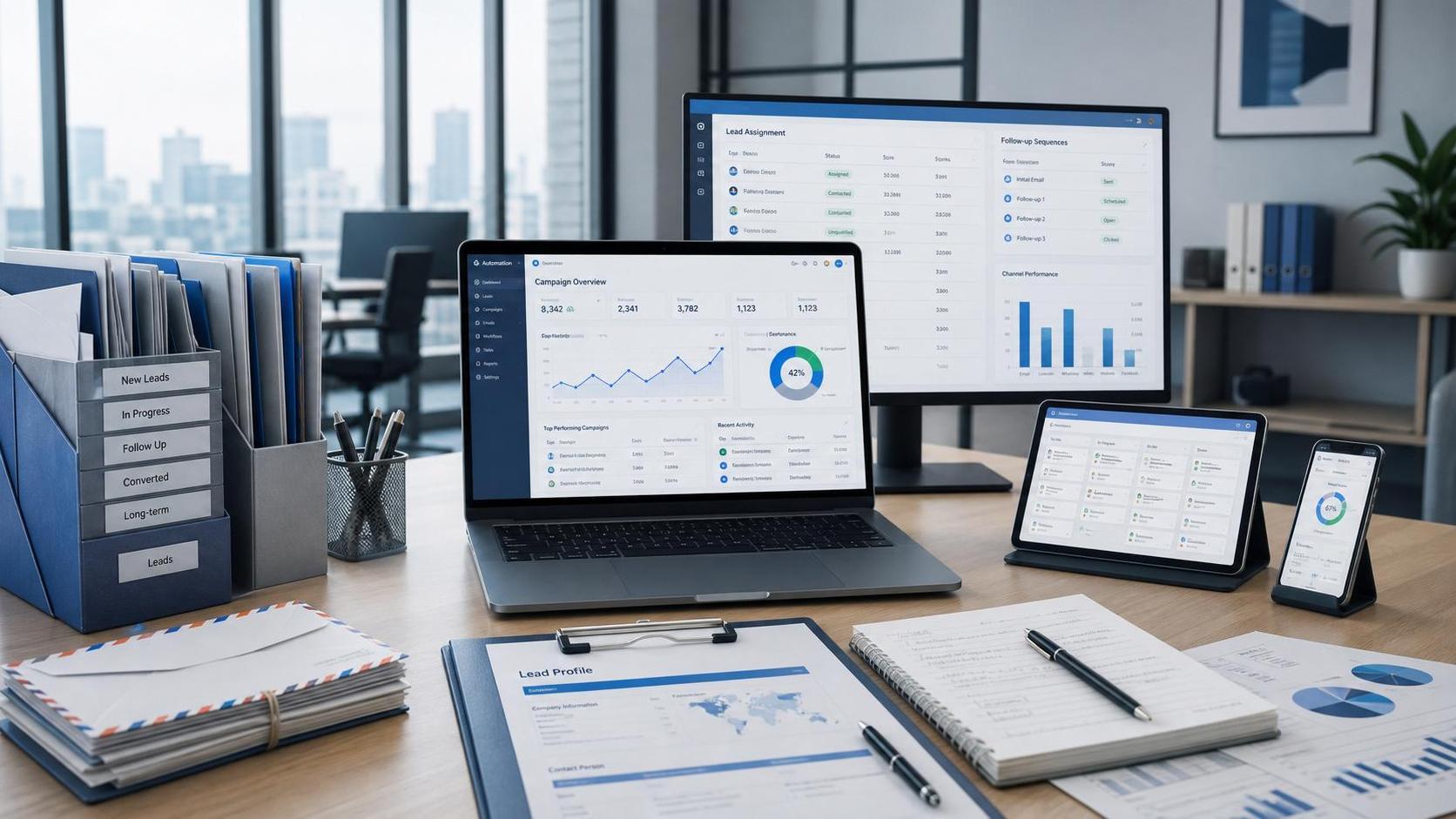
Which teams is automation of the foreign trade marketing system suitable for? From lead assignment to email follow-up, a breakdown of the process
Foreign Trade Marketing System Automation: First Look at Team Stages, Then at Process Complexity

Which teams is foreign trade marketing system automation suitable for? Many companies first pay attention to it not because of technology trends, but because business starts to “hit a bottleneck.” Lead volume keeps increasing, sales cannot keep up, market and business channels are inconsistent, email follow-up is always delayed, and in the end the quality of inquiries looks fine, but conversion is not ideal.
From a practical business perspective, foreign trade marketing system automation is not exclusive to large enterprises. As long as a team has entered the multi-channel customer acquisition stage, or line-of-business handling has begun to rely on multi-person collaboration, it is necessary to consider automation processes. What it solves is not only saving manpower, but also making lead allocation, customer touchpoints, data feedback, and follow-up cadence more stable.
Especially when website lead generation, SEO, ad placement, and social media traffic are being promoted at the same time, foreign trade marketing system automation can turn scattered actions into a closed loop. Where the lead comes from, who responds, when to follow up, and which step it reaches will all be clearer. This is also the first link many teams need to improve when they start increasing overseas lead generation efficiency.
Which Teams Are Most Suitable for Foreign Trade Marketing System Automation
If a team is still in the pure manual customer acquisition stage and only gets single-digit leads per week, the value of automation may not be obvious yet. But when the following situations appear, foreign trade marketing system automation usually has already entered a stage where it can be implemented.
- Website, ads, and social media are all being launched at the same time, and lead sources are dispersed.
- The sales team has grown, and lead distribution has started to rely on spreadsheets and group messages.
- Customers are distributed across multiple countries, and response time zones are inconsistent.
- Inquiry volume is rising, but the first-reply speed is unstable.
- It is difficult for the marketing department to judge which channels are truly driving deals.
There are usually three types of teams that are more suitable for foreign trade marketing system automation. The first is manufacturing plants and foreign trade companies, where there are many product lines, a wide customer base, and lead allocation is prone to mistakes. The second is cross-border brand teams, where website and ad traffic are large and higher-intent customers need to be screened more quickly. The third is enterprises that are rapidly scaling globally, where channel expansion is fast and manual management can no longer keep pace.
From recent changes, AI website building, SEO, ad placement, and social media operations are increasingly becoming a unified whole. The stronger the front-end lead generation, the less the back-end process can be loose. Without automated handoff, the more input on the front end, the more obvious the waste on the back end.
Starting from Lead Distribution: How Foreign Trade Marketing System Automation Is Implemented
When many teams hear “automation,” the first thing they think of is sending emails. In fact, the first step that truly affects efficiency is lead distribution. If the distribution logic is unclear, no matter how fast the follow-up is later, it only magnifies the confusion.
A more practical approach to foreign trade marketing system automation is to first establish rules based on channel, region, product line, and customer intent. In this way, once a new lead enters the system, it can automatically enter the corresponding pool and then be pushed to the appropriate sales or customer service representative.
- Allocate by source. For example, official website forms, ad landing pages, and social media private messages enter different workflows respectively.
- Allocate by region. North America, Europe, and the Middle East can each be assigned to teams familiar with local communication methods.
- Allocate by product. High-ticket products and standard products usually require different handling rhythms.
- Allocate by priority. Customers with complete forms, deep visits, or repeated returns should be followed up first.
The value of this step is that foreign trade marketing system automation turns “who will handle it” from manual judgment into rule-based execution. The team no longer relies on a specific person’s temporary decision-making, and it also reduces collisions, missed leads, and low-efficiency circulation.
Lead Scoring Is More Effective Than Average Allocation
Many teams are used to distributing leads evenly, which seems fair but is not actually efficient. Foreign trade marketing system automation is more suitable for introducing a lead scoring mechanism. For example, page views, dwell time, material downloads, and form completion can all be converted into scoring criteria.
High-scoring leads are prioritized for manual follow-up, while low-scoring leads enter a nurturing process. The key here is not to abandon low-intent customers, but to let sales spend time first on people who are more likely to convert.
Email Follow-Up Is the Conversion Key in Foreign Trade Marketing System Automation
Once a lead is obtained, what often determines the result is the follow-up cadence over the next three days to two weeks. Many inquiries are not because there is no demand, but because they were delayed. The most direct value of foreign trade marketing system automation is to turn email follow-up from “depending on memory” into “depending on process.”
In actual business, a more stable process usually includes five actions: confirmation, classification, trigger, reminder, and recovery. Each action is not complicated, but they must be continuous.
- Confirmation: the customer receives an automatic reply immediately after submitting, reducing the sense of waiting.
- Classification: the system triggers different email content based on industry, region, and product intent.
- Trigger: the first email is sent within a short time to maintain response speed.
- Reminder: if the customer does not reply, the system continues follow-up according to the nodes.
- Recovery: long-inactive leads enter a reactivation process.
It should be noted here that foreign trade marketing system automation is not the same as mass-mail templates. Truly effective automation is about standardizing the steps while making the content as personalized as possible. For example, recommending materials based on pages the customer has visited, adjusting wording based on the country or region, and switching case studies based on product category—this makes the email feel more like real communication rather than a system notification.
Common Follow-Up Cadence Can Be Designed This Way
For most foreign trade lead-generation scenarios, foreign trade marketing system automation can adopt a relatively stable cadence:
Only When Combined with Website and Multi-Channel Lead Generation Can Automation Truly Form a Closed Loop
Foreign trade marketing system automation is not an independent tool layer. It is better placed after website development, SEO optimization, ad placement, and social media marketing, as the bridge and conversion hub. The front end is responsible for attracting customers, and the back end is responsible for retaining and advancing them.
This is also why integrated platforms are more likely to deliver results. AI-driven website building and overseas marketing platforms such as Yiyingbao already cover intelligent website building, multilingual websites, Google SEO, ad placement, social media operations, and AI search optimization, making front-end channel data easier to unify into the system and making foreign trade marketing system automation rules easier to implement.
When website visits, keyword performance, ad conversions, social interactions, and email follow-up are all fed back into the same system, enterprises can more quickly determine which countries have stronger demand, which pages bring in more inquiries, and which channels are more likely to drive deals. This judgment capability is often more valuable than a single automation action.
Before Implementing Foreign Trade Marketing System Automation, Avoid These Common Misconceptions
First, do not rush to launch a system before the process is sorted out. Foreign trade marketing system automation can only magnify existing processes; it cannot replace process design. If the distribution rules are already messy, automation will only spread the problem faster.
Second, do not make the content templates completely uniform. Different regions, different products, and different customer stages require clearly differentiated communication content. The key to automation is cadence standardization, not identical expression.
Third, focus not only on send volume, but also on reply rate and conversion rate. The evaluation standard for foreign trade marketing system automation should not stay at “how many were sent,” but should return to “how many effective business opportunities were brought in.”
Fourth, do not treat automation as a one-time project. Business changes, channels change, and customer behavior also changes, so rules, tags, and email cadence need continuous iteration. System launch is only the beginning, not the end.
How to Determine Whether Your Team Should Use It Now
The judgment is not complicated. As long as the team has already encountered the problem of “not few leads, but unstable follow-up,” foreign trade marketing system automation is worth evaluating. Especially when website, SEO, ads, and social media start to generate momentum together, automated handoff often directly affects the input-output ratio.
A more practical approach is to start with one of the most easy-to-see results processes, such as automatic distribution of inquiries from the official website or automatic follow-up for first-contact emails. After making one small closed loop work, expand to more channels and scenarios. The risk is lower, and the team is more likely to accept it.
Ultimately, foreign trade marketing system automation is not meant to “look more advanced,” but to ensure that every hard-earned overseas lead can be handled more timely and accurately. For enterprises currently pursuing global growth, this is no longer a bonus item, but an increasingly essential foundational capability.
Related Articles
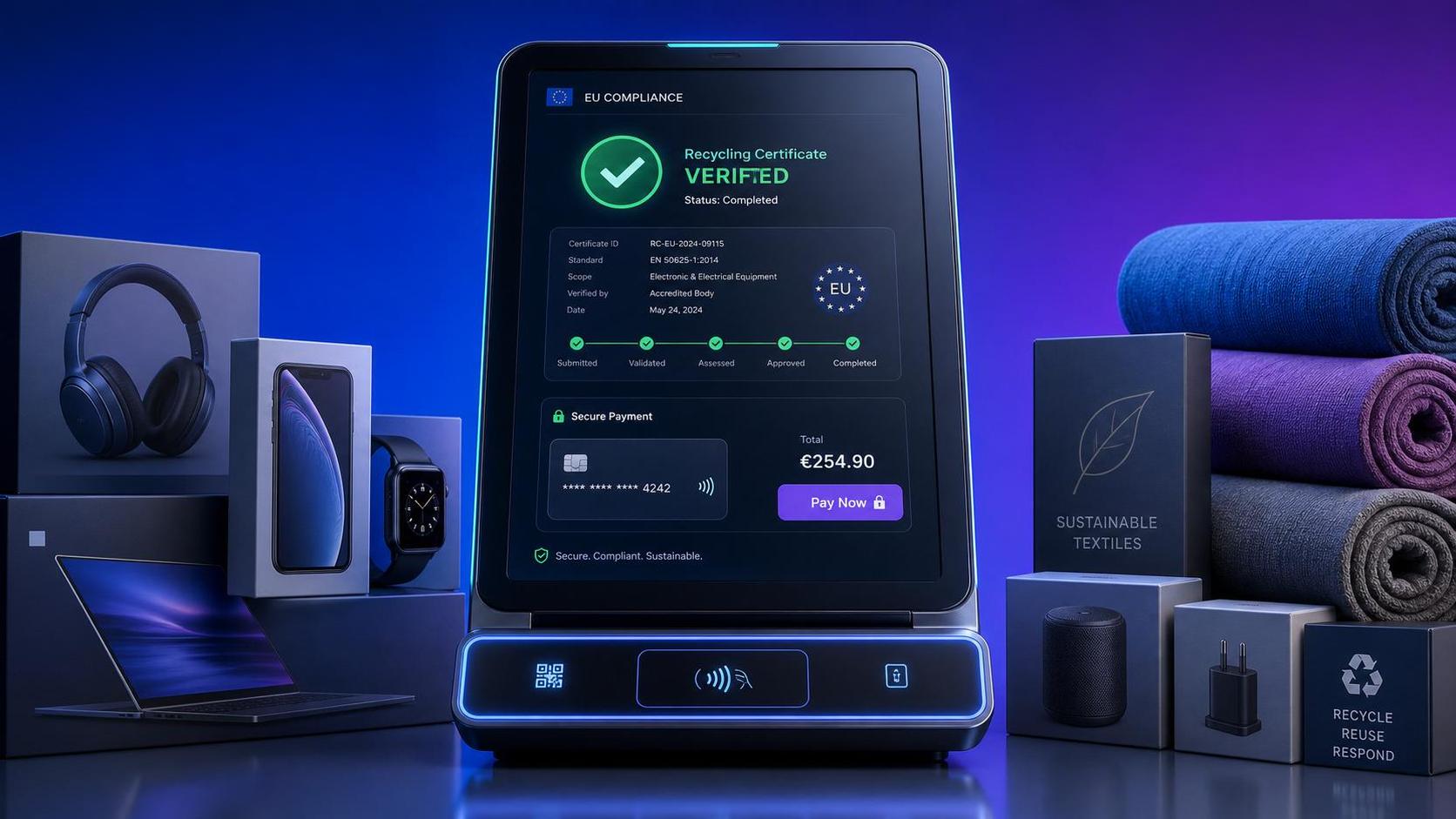
 EU EPR New Regulation Update: Independent Website Checkout Page Must Embed a Digital Recycling Receipt
 Which teams is automation of the foreign trade marketing system suitable for? From lead assignment to email follow-up, a breakdown of the process
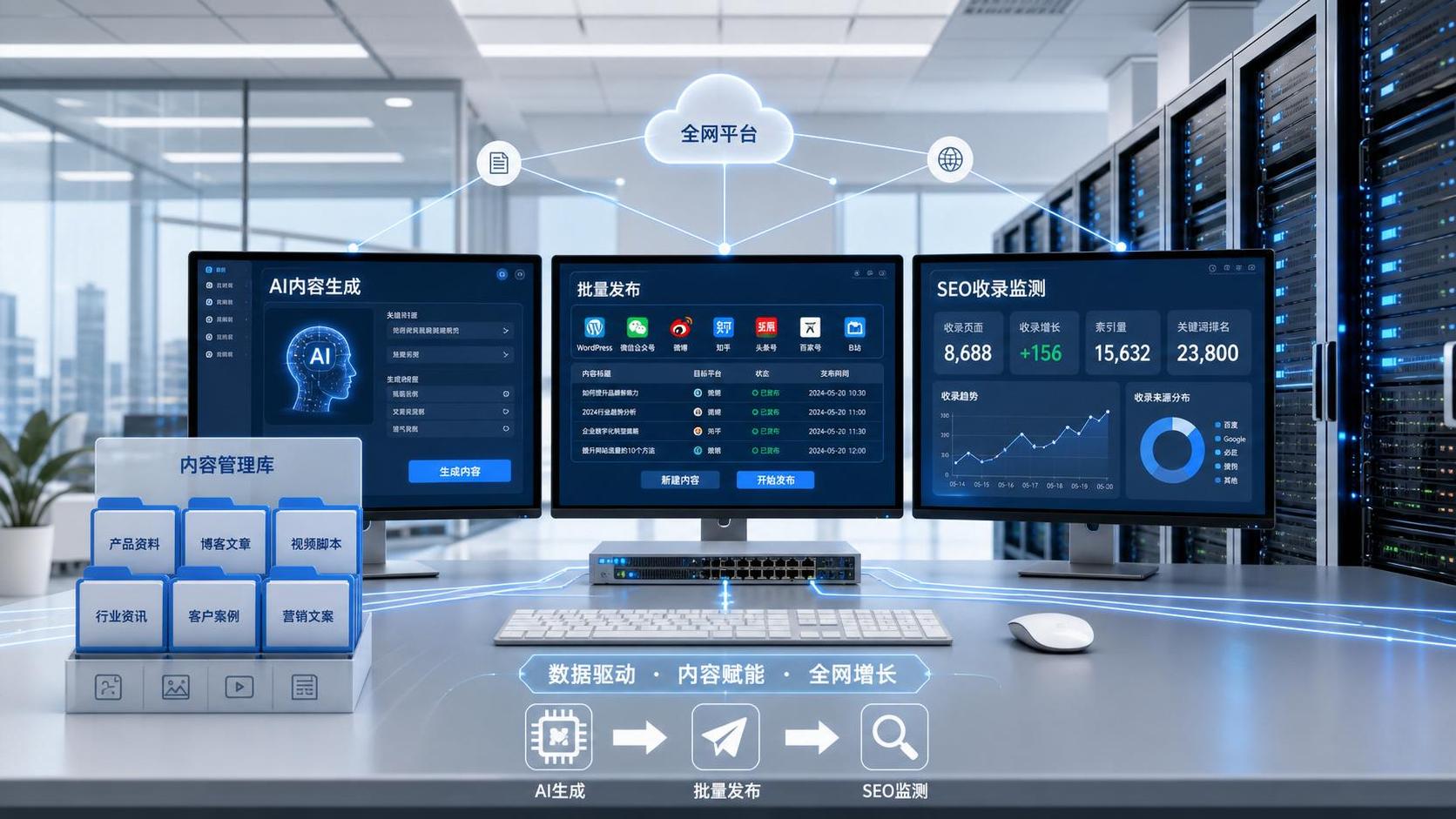
 How Does AI-Assisted Content Generation Enable Bulk Publishing? A Process Design That Balances Indexing Efficiency and Content Quality
Related Products
 EasyCamp SaaS Smart Website Marketing SystemE-Yingbao SaaS Smart Website Marketing System: AI-powered, zero-code website building. Rapidly launch multilingual independent e-commerce sites in just 10 minutes. Global server acceleration and AI-driven SEO optimization empower businesses to efficiently connect with global markets. The seamless integration of technology and user-friendly operation makes building e-commerce sites incredibly simple.
 AI+SEM Intelligent Advertising Marketing SystemAI+SEM drives intelligent ad creation, empowering full-funnel precision advertising marketing. The system automatically generates weekly/monthly reports, AI recommends keywords and target countries, monitors core metrics in real-time with intelligent alerts, and enables one-click high-conversion ad solutions to help quickly acquire customers and improve ROI.
 AI+SEO Dual Engine Optimization ServiceEasyWin AI+SEO Dual Engine Optimization System leverages AI-powered keyword mining, content generation, and comprehensive technical optimization to help foreign trade enterprises acquire high-quality organic traffic, significantly improving search rankings and conversion rates.
 AI+SNS Social Media Marketing SystemYingbao AI+SNS Social Media Marketing System - Precision social capture for the social media era. Supports one-click content synchronization across major platforms like Facebook and LinkedIn. AI intelligently rewrites posts for enhanced relevance. 24/7 AI customer service and user profiling analysis empower businesses to efficiently expand into global markets.
 AI+SEO营销解决方案易营宝AI+SEO营销解决方案,通过AI批量写作、智能生成TDK、精准关键词扩词等功能,全面优化网站SEO效果,提升流量与转化率。助力企业构建高效智能网站新生态。
 AI+SEM Advertising Marketing SolutionsAI+SEM Advertising Marketing Solution leverages AI technology to deeply empower SEM ad campaigns. It automatically generates weekly/monthly reports using AI, presenting account data across multiple dimensions for comprehensive insights into campaign performance and trends. The system precisely recommends keywords and target countries, intelligently generates high-conversion ad copy, and enables one-click activation of efficient campaign plans to help businesses rapidly acquire customers. Simultaneously, it monitors core metrics in real time, intelligently identifies abnormal fluctuations, and issues timely alerts to ensure stable, high-return advertising results.
 Domain Name ServicesEasyWin provides professional domain name services, including intelligent queries, one-stop registration, brand protection, and full lifecycle management, helping businesses build a digital brand image.
 EasyOperate B2C Cross-Border E-Commerce Platform & Independent WebsiteEasyStore B2C Cross-border E-commerce Independent Store is an intelligent website building and cross-border e-commerce integrated solution independently developed by EasyStore Information Technology (Beijing) Co., Ltd. The system is specially designed for small and medium-sized as well as large export enterprises, integrating 'website building, operation, marketing, advertising, and conversion' into one, helping enterprises quickly establish cross-border e-commerce independent stores to achieve brand globalization and global sales growth.
The platform supports multiple languages, multiple currencies, and multi-channel marketing, with built-in AI intelligent translation and SEO optimization systems, suitable for mainstream markets such as Southeast Asia, Europe and America, Latin America, and the Middle East, assisting Chinese manufacturing enterprises in efficiently deploying international e-commerce strategies. SSL证书易营宝提供专业SSL安全证书服务,包括单域名和泛域名证书,确保网站数据传输加密、身份验证和完整性保护,助力企业建立安全可信的在线业务环境。









