









- What should you focus on in the latest enterprise SaaS report? From renewal rates and delivery costs to overseas growth opportunitiesJul 12, 2026View details
- What signals are worth paying attention to in a cross-border marketing trend report? B2B companies should look at these 6 signalsJul 11, 2026View details
- How to Read a Cross-Border Marketing Trends Report? Five Key Dimensions for Evaluating Channel OpportunitiesJul 11, 2026View details
- Which channel has the highest ROI in the global traffic ecosystem? Comparative analysis of search, social media, and advertisingJul 10, 2026View details
- What multilingual website services are available in Sanya? Which model is more suitable for local businesses going global?Jul 08, 2026View details
- How to view the complete list of China SaaS companies in the top 100? Practical methods for screening website-building and marketing service providersJul 08, 2026View details
What Does Google Ads Promotion Service Include? Opening, Campaign, and Optimization Process Explained
Google Ads promotion services are usually not just about “helping with ad placement”
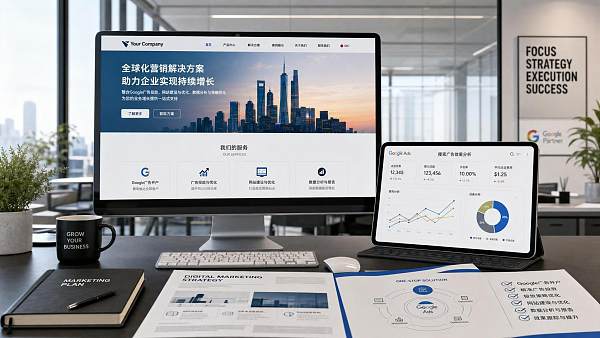
What does Google Ads promotion service include? Many people initially only think of account setup and funding. In actual evaluation, what truly affects results are often early-stage judgment, campaign structure, landing page quality, and ongoing optimization.
Simply put, this kind of service needs to solve two problems: first, to get the ads launched smoothly; second, to convert traffic into inquiries, orders, or valid leads as much as possible. If there is only the former and not the latter, budget consumption will be very fast.
For website + marketing integrated projects, Google Ads promotion services are often considered together with website building, SEO, and data tracking. Because ads bring people in, whether the website can retain them determines whether the investment produces results.
This is also why many companies pay more attention to full-process services. Platforms like Yiyingbao, which focus on long-term overseas growth, usually place intelligent website building, ad placement, SEO optimization, and data analysis within the same growth framework, rather than handling advertising as a separate task.
What should be done at the account setup stage, and why can’t you just look at whether it can be created?
The first step of Google Ads promotion service is account setup, but account setup itself is not complicated; what is complicated is whether the account foundation is suitable for stable long-term delivery later. This usually includes primary material review, billing method configuration, conversion goal setup, and permission assignment.
A more common way to judge is to first look at the promotion objective and then determine the account structure. For B2B lead generation and B2C cross-border stores, the ad campaign structure, conversion definition, and bidding strategy are all different. If the account setup stage is not thought through clearly, there will often be frequent rework later.
It is also necessary to confirm in advance whether the landing page is usable. Page load speed, form logic, mobile experience, language versions, and regional adaptation all directly affect review and conversion. Many accounts do not fail to spend budget; rather, traffic enters the site but does not stay.
If the service provider has both website building and advertising capabilities, the account setup stage can also simultaneously check technical foundations, remarketing code, and form tracking. In this way, later optimization data will be more complete, and it is less likely to encounter the situation of “money was spent but the results are not clear.”
How are keywords, ad types, and landing pages usually split within the service scope?
The core of Google Ads promotion services is not simply choosing a few words to go live; rather, it is about building a delivery framework around search intent. Keyword strategy, ad creative, targeting regions, device allocation, and landing page matching are usually designed together.
Taking search ads as an example, a common approach is to separate brand terms, product terms, industry terms, and competitor terms. This helps distinguish budget priorities and also makes it easier to determine which type of traffic brings real conversions.
If targeting different national markets, multilingual ads and multilingual website integration are also very important. In North America, Europe, Southeast Asia, and other regions, search habits and expression styles differ significantly, so you cannot simply translate from a Chinese mindset and launch directly.
The judgment chart below can help quickly understand the common content boundaries of Google Ads promotion services.
If the service only reaches the stage of “going live and placing ads,” it is usually still not complete. A more mature Google Ads promotion service should place traffic acquisition and page conversion within the same solution.
After launch, how is the optimization process generally advanced?
After the ads go live, the first two weeks are usually the observation and calibration stage. At this stage, the focus is not only on clicks, but more importantly on search term quality, the proportion of invalid traffic, whether conversion signals are stable, and performance differences between ad groups.
It should be noted that optimization is not a single action. It usually includes the following aspects.
- Clean up irrelevant search terms and continuously add negative keywords.
- Adjust budgets and bids based on region, time period, and device performance.
- Test different titles, descriptions, and call-to-action copy.
- Optimize forms, content, and page layout on landing pages.
- Combine remarketing and audience signals to improve secondary reach efficiency.
In practical applications, the key breakthrough for many projects is not in the ad platform, but in page handoff. For example, overly long inquiry forms, unclear above-the-fold information, and slow mobile loading can all cause the effectiveness of Google Ads promotion services to be underestimated.
Therefore, service providers with both a website system and an AI marketing system are more likely to form a closed loop. Platforms like Yiyingbao analyze ad data together with on-site behavior, making optimization actions more specific and not limited to surface-level click metrics.
How do you judge whether this service is worth the investment, beyond just looking at CPC?
When many people evaluate Google Ads promotion services, they tend to ask about CPC first. This metric is certainly important, but it can only explain the level of competition and cannot directly explain service value. What really needs to be examined is whether the customer acquisition path is clear.
A more stable way of judging is to break the evaluation into four layers: traffic quality, conversion efficiency, data transparency, and scalability. If you only look at traffic and not inquiry quality, the conclusion is likely to be biased.
For example, B2B projects often have longer conversion cycles, and orders may not come in immediately at the beginning. But if the keywords are accurate, the page match is high, and the leads are effective, Google Ads promotion services still have investment value. On the contrary, many short-term clicks with no valid leads require a re-examination of the strategy.
If the business also lacks an overseas official website, multilingual pages, or a data tracking system, then planning Google Ads promotion services together with website building, SEO, and social media traffic is usually more likely to reveal long-term value than placing single-channel ads alone.
What are the common misconceptions, and what should be clarified before choosing a service?
Poor results in many projects do not mean that Google Ads promotion services are ineffective; rather, the prerequisite conditions were not prepared well. The three most common misconceptions are: only opening an account without tracking, only looking at exposure and clicks, and putting all markets into the same delivery structure.
Before formal cooperation, it is recommended to confirm the following questions first.
- Does the service include keyword research and competitive analysis.
- Is it responsible for conversion tracking, analytics tools, and report access.
- Who is responsible for landing page optimization, and whether multilingual page adjustments are supported.
- What is the basis for budget allocation, and how often is performance reviewed.
- Is the delivery goal inquiry volume, order volume, or brand exposure.
The earlier these questions are asked, the easier it is to define service boundaries later. For cross-border businesses, if the service provider can also take SEO, social media, and AI search visibility into account, it is more suitable for long-term planning rather than short-term traffic buying.
If you want to start Google Ads promotion services, how should the next step be arranged?
To clearly understand Google Ads promotion services, the key is not the concept, but whether the process is complete. Account setup is the starting point; keyword strategy determines traffic direction; page handoff affects conversion; continuous optimization determines whether the budget can become more and more accurate over time.
If you are still in the evaluation stage, you can first sort out four basic pieces of information: target countries, core products, target conversion actions, and the current website status. This will make the service scope, budget structure, and expected timeline easier to align.
For projects that need overseas growth, it is more appropriate to review Google Ads promotion services within the overall website marketing framework. Look not only at whether ads can bring traffic, but also at whether the website, SEO, and data systems can turn that traffic into real business results.
If you later move into the solution comparison stage, it is recommended to focus on the service checklist, optimization frequency, data access, and page support scope. Clarifying these key items is often more valuable than simply comparing quotes.
Related Articles
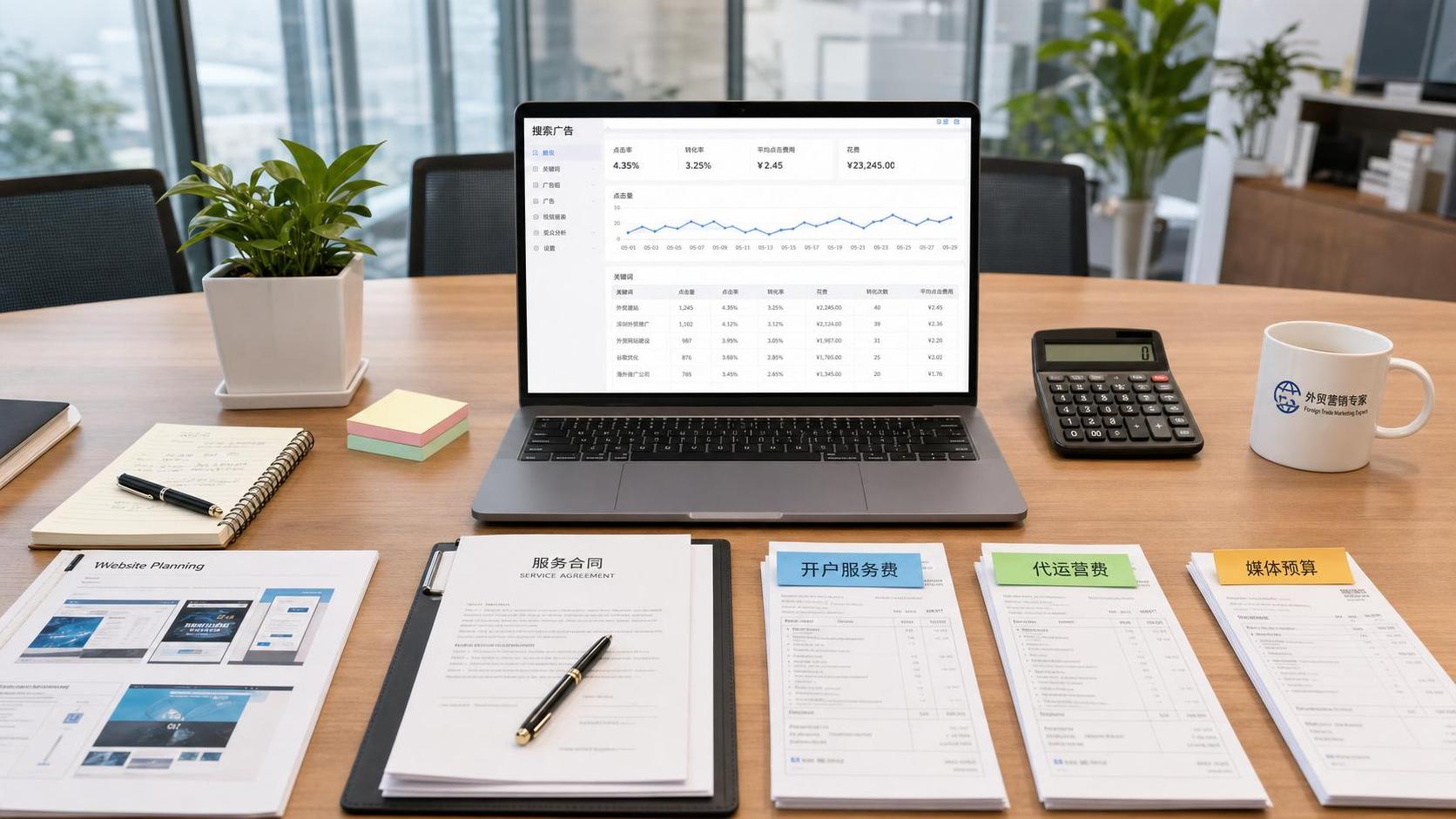
 How is Google Ads promotion service charged? Separate account management, account setup, and media budget for a closer look
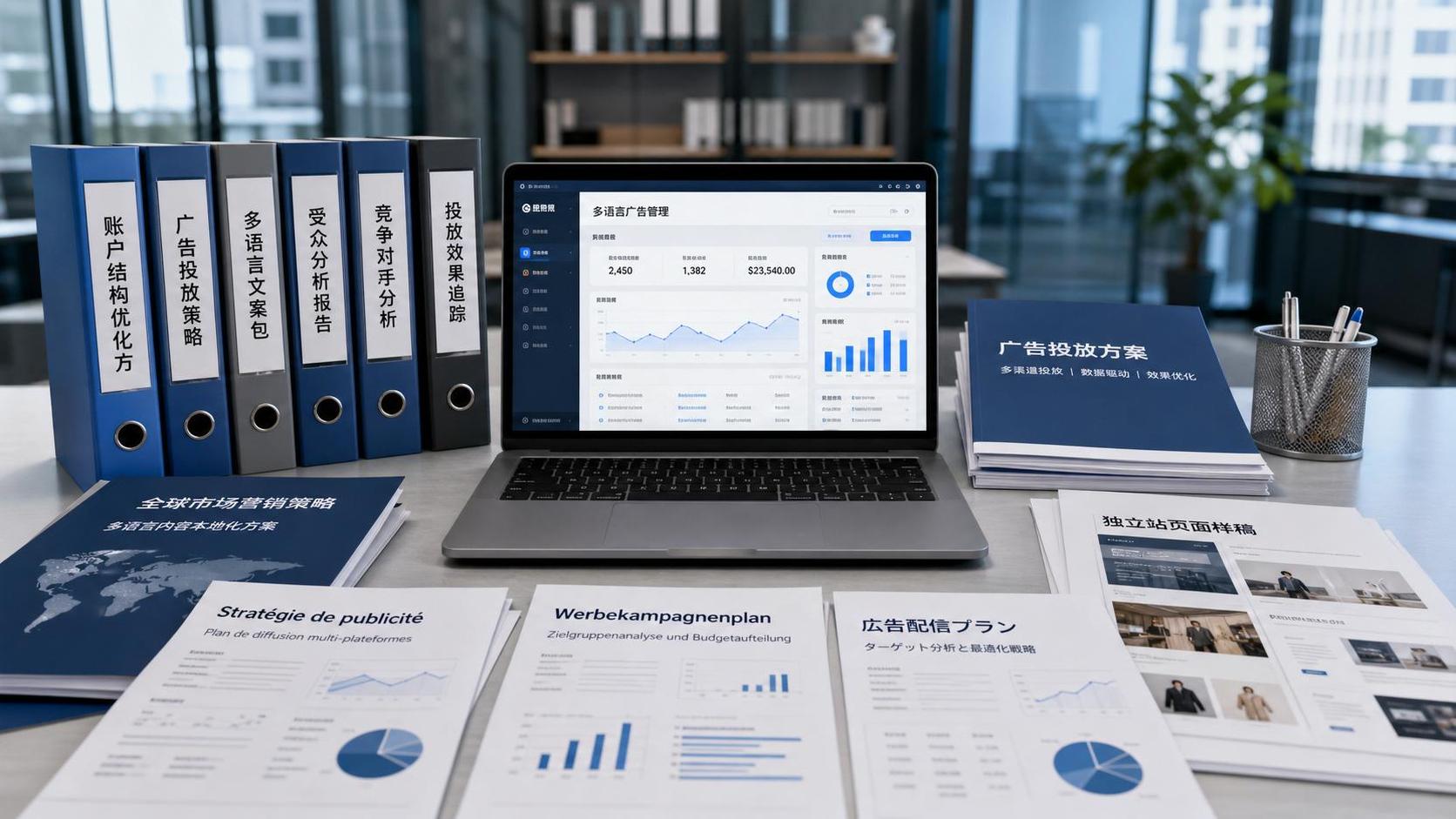
 How to reduce the high management cost of multilingual Google Ads? Optimize account structure
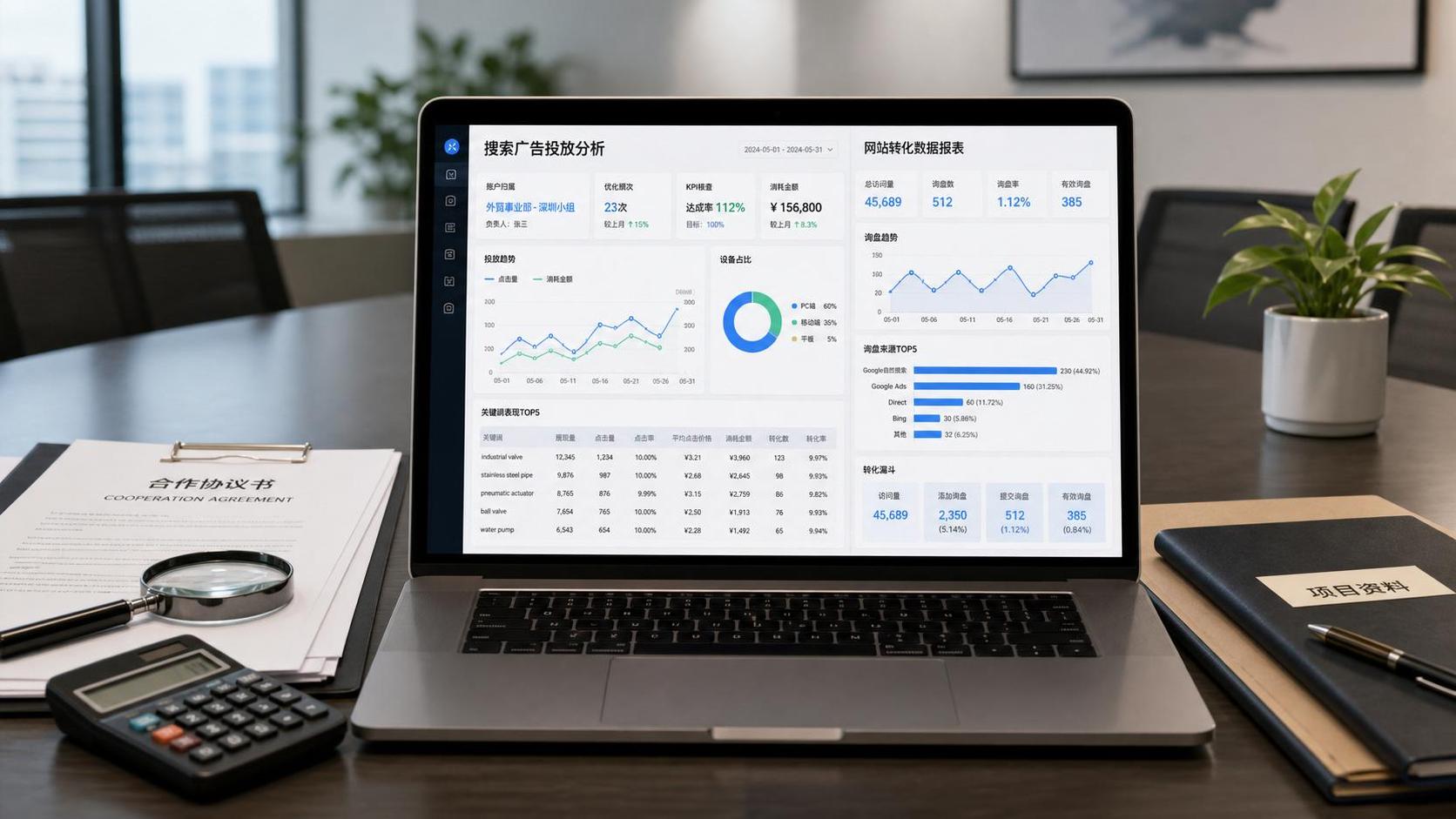
 How to choose a PPC outsourcing provider? Check account ownership, optimization frequency, and KPIs first
Related Products
 EasyCamp SaaS Smart Website Marketing SystemE-Yingbao SaaS Smart Website Marketing System: AI-powered, zero-code website building. Rapidly launch multilingual independent e-commerce sites in just 10 minutes. Global server acceleration and AI-driven SEO optimization empower businesses to efficiently connect with global markets. The seamless integration of technology and user-friendly operation makes building e-commerce sites incredibly simple.
 AI+SEM Intelligent Advertising Marketing SystemAI+SEM drives intelligent ad creation, empowering full-funnel precision advertising marketing. The system automatically generates weekly/monthly reports, AI recommends keywords and target countries, monitors core metrics in real-time with intelligent alerts, and enables one-click high-conversion ad solutions to help quickly acquire customers and improve ROI.
 AI+SEO Dual Engine Optimization ServiceEasyWin AI+SEO Dual Engine Optimization System leverages AI-powered keyword mining, content generation, and comprehensive technical optimization to help foreign trade enterprises acquire high-quality organic traffic, significantly improving search rankings and conversion rates.
 AI+SNS Social Media Marketing SystemYingbao AI+SNS Social Media Marketing System - Precision social capture for the social media era. Supports one-click content synchronization across major platforms like Facebook and LinkedIn. AI intelligently rewrites posts for enhanced relevance. 24/7 AI customer service and user profiling analysis empower businesses to efficiently expand into global markets.
 AI+SEO营销解决方案易营宝AI+SEO营销解决方案,通过AI批量写作、智能生成TDK、精准关键词扩词等功能,全面优化网站SEO效果,提升流量与转化率。助力企业构建高效智能网站新生态。
 AI+SEM Advertising Marketing SolutionsAI+SEM Advertising Marketing Solution leverages AI technology to deeply empower SEM ad campaigns. It automatically generates weekly/monthly reports using AI, presenting account data across multiple dimensions for comprehensive insights into campaign performance and trends. The system precisely recommends keywords and target countries, intelligently generates high-conversion ad copy, and enables one-click activation of efficient campaign plans to help businesses rapidly acquire customers. Simultaneously, it monitors core metrics in real time, intelligently identifies abnormal fluctuations, and issues timely alerts to ensure stable, high-return advertising results.
 Domain Name ServicesEasyWin provides professional domain name services, including intelligent queries, one-stop registration, brand protection, and full lifecycle management, helping businesses build a digital brand image.
 EasyOperate B2C Cross-Border E-Commerce Platform & Independent WebsiteEasyStore B2C Cross-border E-commerce Independent Store is an intelligent website building and cross-border e-commerce integrated solution independently developed by EasyStore Information Technology (Beijing) Co., Ltd. The system is specially designed for small and medium-sized as well as large export enterprises, integrating 'website building, operation, marketing, advertising, and conversion' into one, helping enterprises quickly establish cross-border e-commerce independent stores to achieve brand globalization and global sales growth.
The platform supports multiple languages, multiple currencies, and multi-channel marketing, with built-in AI intelligent translation and SEO optimization systems, suitable for mainstream markets such as Southeast Asia, Europe and America, Latin America, and the Middle East, assisting Chinese manufacturing enterprises in efficiently deploying international e-commerce strategies. SSL证书易营宝提供专业SSL安全证书服务,包括单域名和泛域名证书,确保网站数据传输加密、身份验证和完整性保护,助力企业建立安全可信的在线业务环境。









