









- What New Signals Are Emerging in Enterprise Services SaaS Marketing ReportsJul 27, 2026View details
- What Does a Global Traffic Ecosystem Service Provider Do? What Are the Differences from a Single Advertising AgencyJul 16, 2026View details
- What should you focus on in the latest enterprise SaaS report? From renewal rates and delivery costs to overseas growth opportunitiesJul 12, 2026View details
- What signals are worth paying attention to in a cross-border marketing trend report? B2B companies should look at these 6 signalsJul 11, 2026View details
- How to Read a Cross-Border Marketing Trends Report? Five Key Dimensions for Evaluating Channel OpportunitiesJul 11, 2026View details
- Which channel has the highest ROI in the global traffic ecosystem? Comparative analysis of search, social media, and advertisingJul 10, 2026View details
Facebook advertising campaigns not delivering results? First check your audience, creative, and pixel data.
Facebook ad campaigns not working? Don’t rush to increase the budget first
When many people run Facebook ad campaigns, their first reaction is that the budget is not enough. In fact, budget is often not the first issue to check. When ads fail to deliver results, the most common problems are usually concentrated in these three areas: audience, creatives, and pixel data.
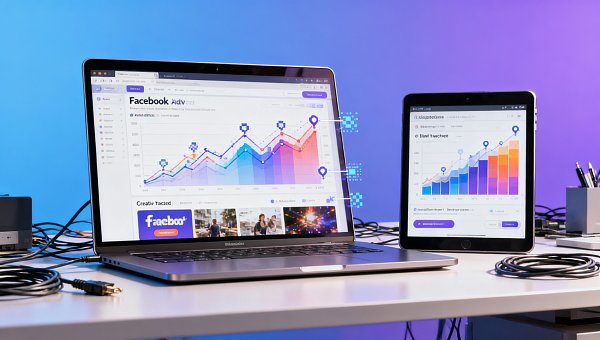
If these three fundamentals are not solid, the faster you increase the budget, the more obvious the waste becomes. Especially when conversion costs keep fluctuating, it is more important to first clean up the delivery path than to blindly scale spend. This is also the first step to improving the stability of Facebook ad campaigns.
In practice, many account issues are not complicated. It may be that the audience is too broad, the creatives lack hooks, or the pixel events are not fully tracked, so the system cannot learn effective signals. As long as you check them one by one, many low-performing campaigns can be improved quickly.
For businesses that rely on independent sites to acquire customers, Facebook ad campaigns are not a single action, but a coordination of the website, creatives, data, and conversion process. Yiyingbao’s integrated website and marketing services are valuable precisely because they connect front-end traffic with back-end conversions.
Look at the audience first: if you can’t target the right people, more exposure still won’t convert
The first step to making Facebook ad campaigns effective is audience targeting. Many accounts are not failing because no one is seeing the ads, but because the wrong people are seeing them. The system pushes ads to low-intent audiences, so it is naturally difficult to generate inquiries, add-to-carts, or orders.
There are three common problems. First, too many interest terms, which makes the targeting tags chaotic. Second, region and language settings do not match. Third, the cold-start phase is too granular, the sample size is too small, and the system cannot learn.
When auditing audiences, focus on these points
- Whether the target region matches the business market, and avoid spending budget on non-target countries.
- Whether age and gender are based on real customers rather than intuition.
- Whether there are too many interest tags; it is recommended to keep only the core tags for testing first.
- Whether lookalike audiences have been built and scaled based on high-quality conversion events.
- Whether existing customers, low-value visitors, and repeatedly reached audiences have been excluded.
A more obvious signal is that the click-through rate is not low, but the landing page dwell time is very short. This usually means the ad creative attracted people, but not the target customers. At this point, do not rush to change the page; first go back and see whether the audience itself is skewed.
In B2B foreign trade, cross-border malls, and brand overseas expansion scenarios, audience strategies differ greatly. Foreign trade lead generation pays more attention to job title, industry, and region matching, while e-commerce conversion relies more on interest, behavior, and retargeting segmentation. Facebook ad campaigns only become more accurate when the data aligns with the business goals.
Then look at the creative: if clicks are weak, it is often not the product
If the audience is fine, the next step is to review the creatives. Many ad accounts fail not because the product is uncompetitive, but because the creative fails to capture attention within the first three seconds, or the value proposition is too plain.
The creatives in Facebook ad campaigns are not just about looking good. They are more like a rapid screening mechanism. Who stays, who clicks, and who becomes interested are often determined together by the headline, hero image, video opening, and call to action.
High-frequency ineffective creatives usually have these characteristics
- Too many selling points, with no standout core message; users cannot understand it within a few seconds.
- Polished visuals but lacking context, making it impossible to build use-case associations.
- Copy reads like a product manual, lacking benefit points and action guidance.
- Creatives are not updated for a long time, and too high a frequency causes creative fatigue.
- Ad promises are disconnected from landing page content, creating a gap after the click.
Looking at recent trends, users are becoming less sensitive to hard-sell expressions. A more effective approach is to put the selling points into real scenarios. For example, problem comparisons, before-and-after changes, and specific benefit demonstrations are all easier to convert than simply emphasizing “good quality”.
If it is an independent site campaign, the creative must also connect with the page logic. The core benefit promised in the ad must be supported by the landing page. Otherwise, even if Facebook ad campaigns bring in clicks, they will still be wasted because the page cannot carry the message.
When many companies manage marketing, they also come into contact with cross-department data analysis materials, such as issues and countermeasures in enterprise group merged financial statements. Although this type of content seems different from advertising, it is essentially the same: first identify the key problem, then optimize the decision path.
Finally look at the pixel: if the data is inaccurate, the system cannot learn
If both the audience and the creatives have been adjusted but the results are still unstable, then the pixel data should be checked closely. Whether Facebook ad campaigns become more accurate over time depends largely on pixel return quality. Without accurate signals, system optimization will fail.
The most common problem is that events are installed, but not completely. For example, only page views are recorded, while key actions such as add-to-cart, initiate checkout, and form submission are not tracked. In this case, the system only sees traffic, not the conversion path.
Core actions for pixel auditing
- Confirm that the pixel code is installed in the correct location to avoid duplicate triggers or missed triggers.
- Check whether key events are complete, with focus on funnel steps such as line inquiries, add-to-cart, and purchase.
- Check whether event parameters are returned, such as amount, currency, and content type.
- Verify domain and event priority settings to ensure the data can be used for optimization.
- Combine conversion APIs to reduce data loss caused by browser restrictions.
In real business, pixel issues are often deeply hidden. On the surface there may be conversions, but in reality the return is seriously delayed, or the same event is counted repeatedly. This not only leads to misjudging ad performance, but also causes subsequent scaling directions to deviate.
For businesses that rely on overseas customer acquisition, a more stable approach is to put website development, data tracking, ad accounts, and SEO layout into the same growth framework. Yiyingbao’s AI website building, ad placement, and optimization capabilities are essentially designed to help businesses connect the data chain of Facebook ad campaigns.
A more practical troubleshooting sequence to avoid repeated trial and error
If you want to improve the efficiency of Facebook ad campaigns, it is recommended not to change all settings at once. In that case, it is difficult to determine which factor is actually working. A better approach is to troubleshoot in sequence and verify step by step.
It is recommended to follow this process
- First look at the data foundation and confirm whether the pixel, events, and conversion goals are functioning normally.
- Then review creative performance, focusing on click-through rate, dwell time, and landing page bounce rate.
- Then adjust the audience, starting with core audiences and lookalike audiences for testing.
- Finally decide whether to scale spend, rather than increasing the budget at the very beginning.
The advantage of this method is clarity and repeatability. Each step has metrics to review, making it easier to identify the root cause. Especially when an ad set has been running for several days without results, this troubleshooting method is more effective than repeatedly rebuilding plans.
If a company manages multiple projects internally at the same time, it can also be analyzed like issues and countermeasures in enterprise group merged financial statements, by splitting variables first and then looking at the main cause. Ad optimization in fact also requires a structured approach.
Turn traffic into results, and the key is overall coordination
When Facebook ad campaigns fail to produce results, it is usually not because one button was clicked wrong, but because multiple links are dragging each other down. If the audience is not accurate, the creatives are weak, and the pixel is unstable, any one of these can increase conversion costs.
Truly effective optimization is not about staring at the ad platform and repeatedly changing numbers, but about starting from business goals and connecting website support, content expression, and data return into a closed loop. Only then can Facebook ad campaigns move from “having traffic” to “having results”.
If the current campaigns still have not improved, it is better to pause anxiety for now and check the three directions of audience, creatives, and pixels one by one. Once the foundation is stabilized, increasing budget is often more likely to lead to sustained, real growth.
Related Articles


Related Products
 EasyCamp SaaS Smart Website Marketing SystemE-Yingbao SaaS Smart Website Marketing System: AI-powered, zero-code website building. Rapidly launch multilingual independent e-commerce sites in just 10 minutes. Global server acceleration and AI-driven SEO optimization empower businesses to efficiently connect with global markets. The seamless integration of technology and user-friendly operation makes building e-commerce sites incredibly simple.
 AI+SEM Intelligent Advertising Marketing SystemAI+SEM drives intelligent ad creation, empowering full-funnel precision advertising marketing. The system automatically generates weekly/monthly reports, AI recommends keywords and target countries, monitors core metrics in real-time with intelligent alerts, and enables one-click high-conversion ad solutions to help quickly acquire customers and improve ROI.
 AI+SEO Dual Engine Optimization ServiceEasyWin AI+SEO Dual Engine Optimization System leverages AI-powered keyword mining, content generation, and comprehensive technical optimization to help foreign trade enterprises acquire high-quality organic traffic, significantly improving search rankings and conversion rates.
 AI+SNS Social Media Marketing SystemYingbao AI+SNS Social Media Marketing System - Precision social capture for the social media era. Supports one-click content synchronization across major platforms like Facebook and LinkedIn. AI intelligently rewrites posts for enhanced relevance. 24/7 AI customer service and user profiling analysis empower businesses to efficiently expand into global markets.
 AI+SEO营销解决方案易营宝AI+SEO营销解决方案,通过AI批量写作、智能生成TDK、精准关键词扩词等功能,全面优化网站SEO效果,提升流量与转化率。助力企业构建高效智能网站新生态。
 AI+SEM Advertising Marketing SolutionsAI+SEM Advertising Marketing Solution leverages AI technology to deeply empower SEM ad campaigns. It automatically generates weekly/monthly reports using AI, presenting account data across multiple dimensions for comprehensive insights into campaign performance and trends. The system precisely recommends keywords and target countries, intelligently generates high-conversion ad copy, and enables one-click activation of efficient campaign plans to help businesses rapidly acquire customers. Simultaneously, it monitors core metrics in real time, intelligently identifies abnormal fluctuations, and issues timely alerts to ensure stable, high-return advertising results.
 Domain Name ServicesEasyWin provides professional domain name services, including intelligent queries, one-stop registration, brand protection, and full lifecycle management, helping businesses build a digital brand image.
 EasyOperate B2C Cross-Border E-Commerce Platform & Independent WebsiteEasyStore B2C Cross-border E-commerce Independent Store is an intelligent website building and cross-border e-commerce integrated solution independently developed by EasyStore Information Technology (Beijing) Co., Ltd. The system is specially designed for small and medium-sized as well as large export enterprises, integrating 'website building, operation, marketing, advertising, and conversion' into one, helping enterprises quickly establish cross-border e-commerce independent stores to achieve brand globalization and global sales growth.
The platform supports multiple languages, multiple currencies, and multi-channel marketing, with built-in AI intelligent translation and SEO optimization systems, suitable for mainstream markets such as Southeast Asia, Europe and America, Latin America, and the Middle East, assisting Chinese manufacturing enterprises in efficiently deploying international e-commerce strategies. SSL证书易营宝提供专业SSL安全证书服务,包括单域名和泛域名证书,确保网站数据传输加密、身份验证和完整性保护,助力企业建立安全可信的在线业务环境。









