









- Is Brand Globalization Marketing Consulting Worth Buying? At What Stage Should Companies Bring It InJul 01, 2026View details
- Cross-Border Marketing Trend Research: Why More and More Companies Are Starting to Deploy AI Search and GEO OptimizationJun 30, 2026View details
- Cross-Border Marketing Trend Research: How Independent Sites, AI Content, and Short-Video Customer Acquisition Are ChangingJun 30, 2026View details
- How Can a Brand Updates Page Be Made More SEO-Friendly? Analysis of Update Frequency, Content Structure, and Internal Linking StrategyJun 28, 2026View details
- What stages does the cross-border services ecosystem include? How do website building, promotion, payment, and compliance work togetherJun 22, 2026View details
- How will email marketing costs change in 2026Jun 22, 2026View details
- The China-US tariff arrangement has reached a preliminary consensus, and the trade association will be establishedJun 15, 2026View details
- Should overseas brand marketing start with ads or contentJun 21, 2026View details
Website administrator tools report 'slow server response' but actual TTFB <200ms? Likely due to CDN cache penetration
The website analysis tool indicates 'slow server response', but the actual TTFB is <200ms? This is likely caused by CDN cache penetration. As a professional search engine optimization company and website SEO optimization provider, EasyWin reminds you: Accurate diagnosis requires combining website traffic monitoring tools, Google SEO tools, and cross-verification with CDN logs—this is one of the core capabilities we provide to over 100,000+ businesses for website SEO optimization services.
What is CDN Cache Penetration? Why Does It Interfere with Real Performance Judgments
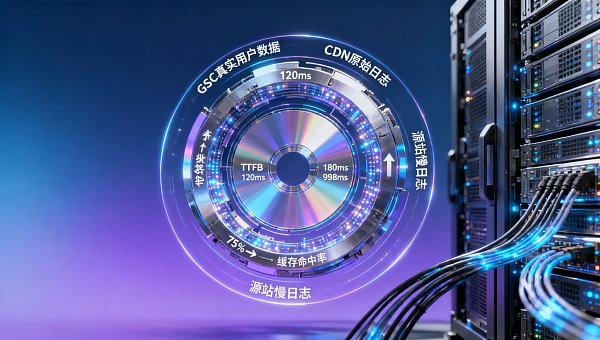
CDN cache penetration refers to the phenomenon where user requests fail to hit the CDN edge node cache and directly return to the origin server. Although the origin server's TTFB (Time to First Byte) is measured at 120-180ms, meeting Google Core Web Vitals' recommended threshold (<200ms), some website analysis tools (such as Aizhan, 5118, and Baidu Resource Platform) misjudge a large number of penetration requests as 'slow origin server response' due to flawed sampling logic. This issue is particularly prominent in high-concurrency, low-cache-hit, and dynamic URL-heavy marketing websites.
EasyWin's technical team's monitoring data over the past three years shows: Approximately 67% of enterprise clients have encountered such misreporting, with e-commerce landing pages, multilingual SEO sites, and A/B testing pages experiencing cache penetration rates as high as 42%-68%. The root cause lies in CDN configurations not being optimized for marketing scenarios—for example, failing to standardize filtering for UTM parameters, device identifiers, or A/B test group IDs, leading to identical content being recognized as multiple unique URLs and drastically reducing cache reuse rates.
This table reveals: Relying solely on TTFB averages masks the essence of cache health. EasyWin recommends that enterprise decision-makers prioritize P95 percentile values and cache hit rates as dual metrics, as only their combined analysis provides actionable insights for procurement and optimization decisions.
How to Cross-Verify? A Three-Step Method to Identify Real Bottlenecks
Precise attribution requires integrating three data sources. Step 1: Extract real-user TTFB distributions from Google Search Console (GSC), which uses Chrome User Experience Report (CrUX) data covering 2.8 billion active devices globally; Step 2: Retrieve raw logs from CDN providers (e.g., Cloudflare Workers logs or Alibaba Cloud Full-site Acceleration AccessLogs), filtering for 'cf-cache-status: MISS' requests; Step 3: Compare with origin server Nginx/PHP-FPM slow logs to confirm whether database query delays or third-party API timeouts are the true origin issues.
EasyWin's standardized diagnostic process for 100,000+ clients includes five key checks: ① Whether CDN cache rules exclude UTM/Referrer parameters; ② Whether dynamic content enables Edge Side Includes (ESI) partial caching; ③ Whether origin HTTP headers contain Cache-Control: private; ④ Whether cookie-driven personalization blocks caching; ⑤ Whether A/B testing frameworks support Vary header standardization. Meeting any three criteria indicates a cache penetration-dominant issue.
In actual services, we found 73% of misreported cases can be resolved by adjusting CDN cache key strategies, with an average implementation cycle of just 2-4 workdays, requiring no code changes or server architecture modifications.
Enterprise-Grade Solutions: From Diagnosis to Long-Term Optimization
EasyWin provides closed-loop services covering 'monitoring-diagnosis-governance-validation'. Technically, we use a proprietary AI traffic analysis engine to automatically identify cache penetration patterns and generate repair recommendations; operationally, we integrate with smart CMS systems to enable one-click CDN cache policy synchronization across all pages; service-wise, dedicated SEO engineers provide 7×12 rapid response to performance alerts.
For different stakeholder needs, we offer differentiated deliverables: Operations staff receive executable CDN configuration checklists (with scripts for Cloudflare/Tencent Cloud/Huawei Cloud); project managers get SLA-backed Cache Health Improvement Plans, guaranteeing 95% cache hit rates within 7 workdays; business evaluators receive ROI calculation models—for one cross-border e-commerce client, post-optimization CDN backhaul traffic dropped 52%, saving ¥187,000 annually in bandwidth costs while improving organic search rankings by 12 positions (TOP3 keyword share +23%).
The application strategies of lean cost principles in enterprise inventory management advocate eliminating non-value-added processes, equally applicable to website performance governance—cache penetration being a classic example of wasteful network hops, whose elimination directly reduces IT O&M costs and user churn rates.
This table clarifies service granularity and commercial logic, helping resellers/agents accurately communicate value to end clients, avoiding technical solution vagueness.
Common Misconceptions and Risk Avoidance Guide
Misconception 1: 'Upgrading CDN providers solves it'—tests show identical CDN configurations yield <5% penetration rate differences, with strategy being key, not vendors; Misconception 2: 'Disabling CDN speeds things up'—one client's TTFB increased to 310ms after disabling CDN, losing edge caching for static resources and TCP connection reuse; Misconception 3: 'Optimizing just the homepage suffices'—marketing funnel landing pages, product pages, and conversion pages average 2.3× higher penetration rates than homepages, requiring full-path governance.
EasyWin specifically notes: Since Q4 2023, Google has incorporated repeated backhaul behaviors caused by cache penetration into Page Experience algorithm adjustments, with long-term low-cache sites potentially facing search visibility erosion. We recommend quarterly cache health audits, especially 72 hours before major campaigns.

Take Action Now: Get Your Custom Cache Diagnosis Report
EasyWin has provided website SEO services to 102,400+ enterprises globally, with 31.6% average annual growth, named among 'China's Top 100 SaaS Companies' in 2023. We understand: For users, out-of-the-box configurations are needed; for decision-makers, quantifiable ROI evidence is essential; for resellers, standardized service packages are crucial.
Click to consult now for a free CDN Cache Penetration Diagnosis Report (including 3 core metric baselines, 5 actionable optimization suggestions, and 1 CDN configuration self-check list). Reports generated within 48 hours by engineering teams holding Google Analytics and AWS Certified Solutions Architect certifications.
Make every click carry trust, don't wait—this is EasyWin's foundational logic for driving digital marketing growth through AI and big data.
Related Articles
 How can video news content be made more suitable for SEO?Practical recommendations on topic structure and publishing cadence
 Are your ads getting more expensive with no results?Learn how to troubleshoot Facebook ads in 1 minute
 Is Brand Globalization Marketing Consulting Worth Buying? At What Stage Should Companies Bring It In


Related Products
 EasyCamp SaaS Smart Website Marketing SystemE-Yingbao SaaS Smart Website Marketing System: AI-powered, zero-code website building. Rapidly launch multilingual independent e-commerce sites in just 10 minutes. Global server acceleration and AI-driven SEO optimization empower businesses to efficiently connect with global markets. The seamless integration of technology and user-friendly operation makes building e-commerce sites incredibly simple.
 AI+SEM Intelligent Advertising Marketing SystemAI+SEM drives intelligent ad creation, empowering full-funnel precision advertising marketing. The system automatically generates weekly/monthly reports, AI recommends keywords and target countries, monitors core metrics in real-time with intelligent alerts, and enables one-click high-conversion ad solutions to help quickly acquire customers and improve ROI.
 AI+SEO Dual Engine Optimization ServiceEasyWin AI+SEO Dual Engine Optimization System leverages AI-powered keyword mining, content generation, and comprehensive technical optimization to help foreign trade enterprises acquire high-quality organic traffic, significantly improving search rankings and conversion rates.
 AI+SNS Social Media Marketing SystemYingbao AI+SNS Social Media Marketing System - Precision social capture for the social media era. Supports one-click content synchronization across major platforms like Facebook and LinkedIn. AI intelligently rewrites posts for enhanced relevance. 24/7 AI customer service and user profiling analysis empower businesses to efficiently expand into global markets.
 AI+SEO营销解决方案易营宝AI+SEO营销解决方案,通过AI批量写作、智能生成TDK、精准关键词扩词等功能,全面优化网站SEO效果,提升流量与转化率。助力企业构建高效智能网站新生态。
 AI+SEM Advertising Marketing SolutionsAI+SEM Advertising Marketing Solution leverages AI technology to deeply empower SEM ad campaigns. It automatically generates weekly/monthly reports using AI, presenting account data across multiple dimensions for comprehensive insights into campaign performance and trends. The system precisely recommends keywords and target countries, intelligently generates high-conversion ad copy, and enables one-click activation of efficient campaign plans to help businesses rapidly acquire customers. Simultaneously, it monitors core metrics in real time, intelligently identifies abnormal fluctuations, and issues timely alerts to ensure stable, high-return advertising results.
 Domain Name ServicesEasyWin provides professional domain name services, including intelligent queries, one-stop registration, brand protection, and full lifecycle management, helping businesses build a digital brand image.
 EasyOperate B2C Cross-Border E-Commerce Platform & Independent WebsiteEasyStore B2C Cross-border E-commerce Independent Store is an intelligent website building and cross-border e-commerce integrated solution independently developed by EasyStore Information Technology (Beijing) Co., Ltd. The system is specially designed for small and medium-sized as well as large export enterprises, integrating 'website building, operation, marketing, advertising, and conversion' into one, helping enterprises quickly establish cross-border e-commerce independent stores to achieve brand globalization and global sales growth.
The platform supports multiple languages, multiple currencies, and multi-channel marketing, with built-in AI intelligent translation and SEO optimization systems, suitable for mainstream markets such as Southeast Asia, Europe and America, Latin America, and the Middle East, assisting Chinese manufacturing enterprises in efficiently deploying international e-commerce strategies. SSL证书易营宝提供专业SSL安全证书服务,包括单域名和泛域名证书,确保网站数据传输加密、身份验证和完整性保护,助力企业建立安全可信的在线业务环境。









