









- Which channel has the highest ROI in the global traffic ecosystem? Comparative analysis of search, social media, and advertisingJul 10, 2026View details
- What multilingual website services are available in Sanya? Which model is more suitable for local businesses going global?Jul 08, 2026View details
- How to view the complete list of China SaaS companies in the top 100? Practical methods for screening website-building and marketing service providersJul 08, 2026View details
- How to view pricing in the global traffic ecosystem? Cost comparison of search, social media, and content channel advertisingJul 06, 2026View details
- How to assess foreign trade website development trends?Looking at 2026 changes from multilingual,AI content to conversion pathsJul 04, 2026View details
- What are the new trends in multilingual marketing data analytics tools in 2026? Focus on attribution、automation and complianceJul 04, 2026View details
- Is Brand Globalization Marketing Consulting Worth Buying? At What Stage Should Companies Bring It InJul 01, 2026View details
- Cross-Border Marketing Trend Research: Why More and More Companies Are Starting to Deploy AI Search and GEO OptimizationJun 30, 2026View details
Does the site acceleration service provider offer edge computing capabilities? Static resource acceleration ≠ fast dynamic interfaces
Can website acceleration service providers truly speed up dynamic interfaces? Static resource acceleration ≠ end-to-end speed improvement. YiYingBao, as a professional search engine optimization company and cross-border website building service provider, integrates edge computing capabilities to empower multilingual foreign trade websites with both performance and SEO enhancements.
Why can't static acceleration represent overall site speed improvement?
Currently, most website acceleration service providers still rely on CDN caching of static resources such as HTML, CSS, JS, and images as their core capability, which can reduce response time to 20-50ms. However, they generally do not deploy edge execution environments for dynamic requests such as API interfaces, user login status, real-time search, and shopping cart checkout. This means that: fast homepage loading ≠ fast conversion path, achieving LCP ≠ stable TTI, and high SEO score ≠ low actual user bounce rate.
According to the 2023 Global Web Performance Practice Report, over 68% of foreign trade enterprises reported that their multilingual websites in emerging markets such as Southeast Asia and Latin America experienced a phenomenon of "fast first screen, slow interaction"—static resources were distributed locally by CDN, while dynamic interfaces still needed to be routed back to the East China IDC, with an average RTT of 280–420ms, resulting in a 3.2-fold increase in form submission failure rate, and an INP (Interaction to Next Paint) exceedance rate of 71% in Google Core Web Vitals.
This reveals a crucial fact: true site acceleration must encompass three layers of capabilities: static distribution, dynamic computation, and intelligent routing. Focusing only on the first layer is equivalent to achieving only one-third of the performance optimization.

How can edge computing refactor dynamic interface acceleration logic?
Edge computing is not simply about moving servers closer together; it's about offloading lightweight business logic (such as A/B test traffic splitting, regionalized content assembly, JWT validation, and multi-language routing decisions) to over 200 edge nodes globally, completing processing in milliseconds and avoiding cross-continental origin server requests. YiYingBao's self-developed EdgeScript engine supports both JavaScript and WASM runtimes and can be uniformly deployed on Cloudflare Workers, Alibaba Cloud EdgeRoutine, and its own edge clusters.
Taking a German industrial parts customer as an example: its product parameter search interface originally required calling 3 backend microservices, with an average time of 890ms; after integrating with EasyCreative edge computing, the three steps of regional preference filtering, inventory status caching, and SEO-friendly URL rewriting were moved to the edge for execution, reducing the interface P95 response time to 132ms, increasing the search page conversion rate by 22.7%, and increasing the proportion of the top 3 rankings of the long-tail keyword "industrial parts + [country]" in Google organic traffic from 14% to 39%.
This capability has been deeply integrated into the EasyCreation Smart Website Building System. When an enterprise enables a multilingual website, the system automatically deploys the corresponding language template rendering service at the edge node of the user's country, achieving "zero-latency page generation" instead of the traditional two-level architecture of "origin site rendering + CDN caching".
Edge computing is being implemented in four key areas of foreign trade.
- Multi-language routing decision: Based on IP address, HTTP headers, and cookies, the system returns the matching language version within milliseconds, avoiding the overhead of 302 redirects.
- Real-time price and inventory synchronization: Edge caching + incremental update mechanism ensures that the price refresh delay on the promotion page is ≤800ms (industry average is 4.2s).
- GDPR compliance interception: Performs EU user cookie authorization verification at the edge layer, blocking unauthorized requests without reaching the origin server.
- SEO structured output: Dynamically generates JSON-LD code conforming to the Schema.org standard, ensuring uniqueness on each page and avoiding duplicate content penalties.
How can you determine whether a service provider truly possesses edge computing capabilities when making a purchase?
There are many "pseudo-edge" claims in the market: they only offer CDN + simple caching rule configuration, yet claim to "support edge computing." Enterprises should cross-verify these claims through the following five hard indicators:
YiYingBao provides all contracted clients with an "Edge Capability Verification Package," which includes three executable actions: ① Free deployment of one edge function for regional redirection testing; ② Provision of a 30-day latency heatmap for target market nodes; ③ Open sandbox environment dynamic interface stress testing script. This process has served over 2,100 foreign trade companies, with an average verification cycle of 2.3 working days.
Why Choose Us? A Growth-Oriented End-to-End Collaborative Solution
YiYingBao delivers more than just an acceleration tool; it embeds edge computing capabilities into a closed loop of "website building—SEO—advertising—conversion": the intelligent website building system automatically generates multilingual routing logic executable at the edge; the SEO module analyzes the page rendering quality of each edge node in real time and pushes optimization suggestions; the advertising system identifies high-value regional users based on edge logs, feeding back into Facebook/Google advertising targeting strategies. This deep coupling reduces the average customer acquisition cost by 18.5% and extends the average page dwell time by 41 seconds.
We offer three types of delivery guarantees: ① Performance guarantee : We promise a core dynamic interface P95 latency of ≤150ms (target market), with service fees calculated on a daily basis for any delays; ② SEO collaboration : We provide a free monthly Edge-SEO health diagnostic report (including structured data coverage, JS rendering integrity, and cross-domain resource loading analysis); ③ Localized support : Our technical teams in Beijing, Shenzhen, and Singapore provide 7x12-hour response, and an emergency channel is activated within 30 minutes for major failures.
For enterprise decision-makers, quality control, and security managers evaluating website acceleration solutions, we recommend prioritizing an application-based performance audit of lean management in public hospital operational cost control —focusing on "conversion loss per millisecond of latency" and "SEO weight gain from each edge function," rather than simply comparing prices. You can schedule our "Feasibility Assessment of Edge Capabilities for Foreign Trade Websites" service at any time to obtain a customized technology roadmap and ROI calculation model.

Common Misconceptions and Key Reminders
Myth 1: "We already have a CDN, so there's no need for additional investment at the edge."
CDN addresses "content distribution," while edge computing addresses "logic execution." They belong to different technology stacks, and their combined use unlocks maximum performance. A standalone CDN cannot reduce dynamic interface latency, nor can it mitigate GDPR compliance risks.
Myth 2: "Edge computing = high cost, unaffordable for small and medium-sized foreign trade enterprises"
YiYingBao adopts a "free basic edge capabilities + tiered billing based on usage" model: the first 500,000 dynamic edge calls per month are free of charge, and subsequent calls are charged at 0.0008 yuan per thousand calls. 92% of customers have an average monthly expenditure of less than 800 yuan, which is far lower than the operation and maintenance manpower cost of self-built edge clusters (estimated ≥ 32,000 yuan/month).
Myth 3: "After deploying at the edge, the origin server can be completely taken offline."
Edge computing is suitable for stateless, lightweight logic. Database read/write, file upload, and complex transaction processing still require origin server support. EasyCyber recommends a hybrid architecture of "edge front-end + origin server backup" to ensure business continuity and scalability.
Related Articles
 Which channel has the highest ROI in the global traffic ecosystem? Comparative analysis of search, social media, and advertising
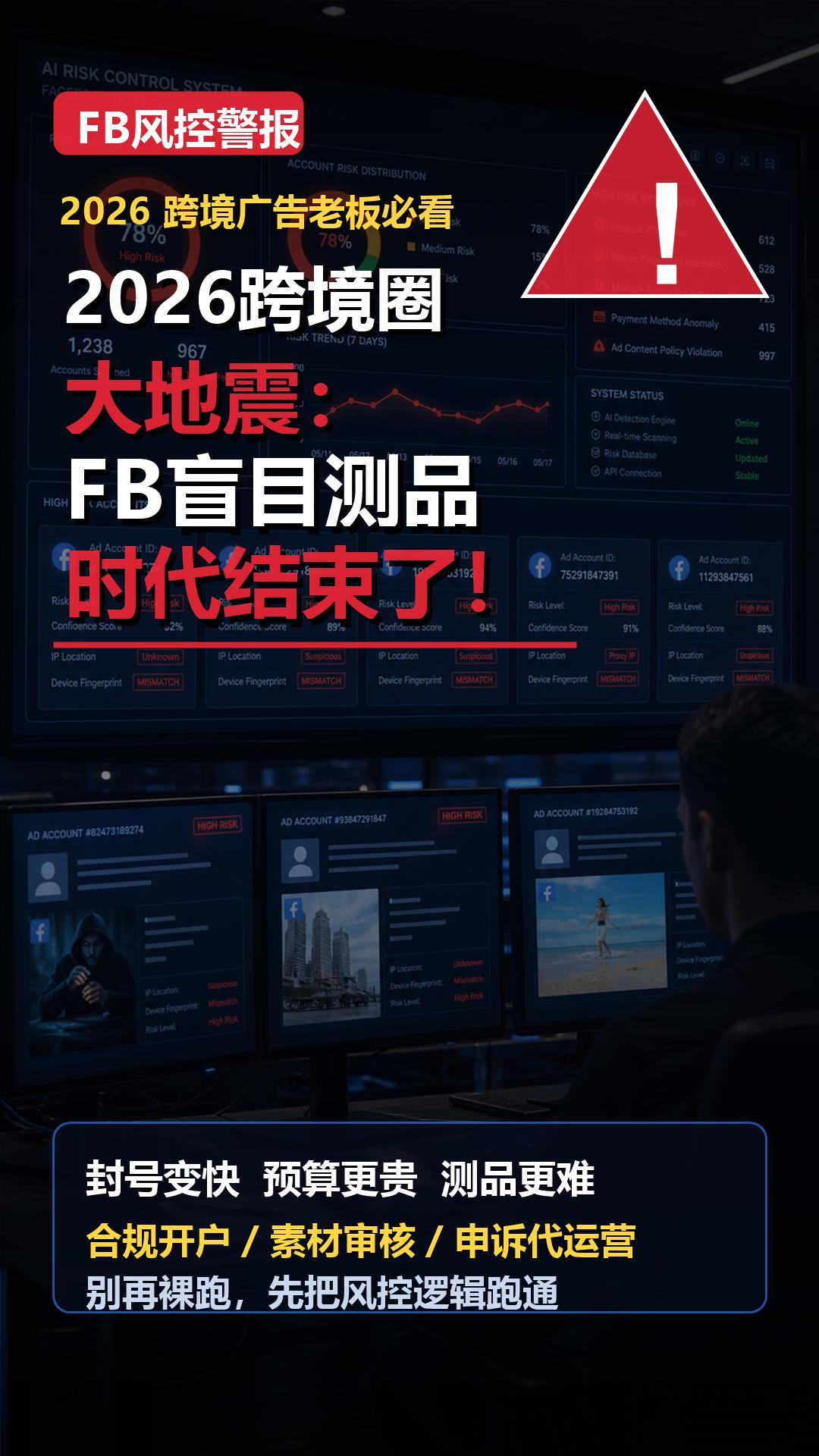
 The Era of Cross-Border Earthquakes in 2026: The Era of Blindly Testing FB Products Has Ended!
 Three key points of domestic-to-foreign trade most important, see if you really did your homework! Don’t take shortcuts.


Related Products
 EasyCamp SaaS Smart Website Marketing SystemE-Yingbao SaaS Smart Website Marketing System: AI-powered, zero-code website building. Rapidly launch multilingual independent e-commerce sites in just 10 minutes. Global server acceleration and AI-driven SEO optimization empower businesses to efficiently connect with global markets. The seamless integration of technology and user-friendly operation makes building e-commerce sites incredibly simple.
 AI+SEM Intelligent Advertising Marketing SystemAI+SEM drives intelligent ad creation, empowering full-funnel precision advertising marketing. The system automatically generates weekly/monthly reports, AI recommends keywords and target countries, monitors core metrics in real-time with intelligent alerts, and enables one-click high-conversion ad solutions to help quickly acquire customers and improve ROI.
 AI+SEO Dual Engine Optimization ServiceEasyWin AI+SEO Dual Engine Optimization System leverages AI-powered keyword mining, content generation, and comprehensive technical optimization to help foreign trade enterprises acquire high-quality organic traffic, significantly improving search rankings and conversion rates.
 AI+SNS Social Media Marketing SystemYingbao AI+SNS Social Media Marketing System - Precision social capture for the social media era. Supports one-click content synchronization across major platforms like Facebook and LinkedIn. AI intelligently rewrites posts for enhanced relevance. 24/7 AI customer service and user profiling analysis empower businesses to efficiently expand into global markets.
 AI+SEO营销解决方案易营宝AI+SEO营销解决方案,通过AI批量写作、智能生成TDK、精准关键词扩词等功能,全面优化网站SEO效果,提升流量与转化率。助力企业构建高效智能网站新生态。
 AI+SEM Advertising Marketing SolutionsAI+SEM Advertising Marketing Solution leverages AI technology to deeply empower SEM ad campaigns. It automatically generates weekly/monthly reports using AI, presenting account data across multiple dimensions for comprehensive insights into campaign performance and trends. The system precisely recommends keywords and target countries, intelligently generates high-conversion ad copy, and enables one-click activation of efficient campaign plans to help businesses rapidly acquire customers. Simultaneously, it monitors core metrics in real time, intelligently identifies abnormal fluctuations, and issues timely alerts to ensure stable, high-return advertising results.
 Domain Name ServicesEasyWin provides professional domain name services, including intelligent queries, one-stop registration, brand protection, and full lifecycle management, helping businesses build a digital brand image.
 EasyOperate B2C Cross-Border E-Commerce Platform & Independent WebsiteEasyStore B2C Cross-border E-commerce Independent Store is an intelligent website building and cross-border e-commerce integrated solution independently developed by EasyStore Information Technology (Beijing) Co., Ltd. The system is specially designed for small and medium-sized as well as large export enterprises, integrating 'website building, operation, marketing, advertising, and conversion' into one, helping enterprises quickly establish cross-border e-commerce independent stores to achieve brand globalization and global sales growth.
The platform supports multiple languages, multiple currencies, and multi-channel marketing, with built-in AI intelligent translation and SEO optimization systems, suitable for mainstream markets such as Southeast Asia, Europe and America, Latin America, and the Middle East, assisting Chinese manufacturing enterprises in efficiently deploying international e-commerce strategies. SSL证书易营宝提供专业SSL安全证书服务,包括单域名和泛域名证书,确保网站数据传输加密、身份验证和完整性保护,助力企业建立安全可信的在线业务环境。









