









- What Does a Global Traffic Ecosystem Service Provider Do? What Are the Differences from a Single Advertising AgencyJul 16, 2026View details
- What should you focus on in the latest enterprise SaaS report? From renewal rates and delivery costs to overseas growth opportunitiesJul 12, 2026View details
- What signals are worth paying attention to in a cross-border marketing trend report? B2B companies should look at these 6 signalsJul 11, 2026View details
- How to Read a Cross-Border Marketing Trends Report? Five Key Dimensions for Evaluating Channel OpportunitiesJul 11, 2026View details
- Which channel has the highest ROI in the global traffic ecosystem? Comparative analysis of search, social media, and advertisingJul 10, 2026View details
- What multilingual website services are available in Sanya? Which model is more suitable for local businesses going global?Jul 08, 2026View details
- How to view the complete list of China SaaS companies in the top 100? Practical methods for screening website-building and marketing service providersJul 08, 2026View details
- How to view pricing in the global traffic ecosystem? Cost comparison of search, social media, and content channel advertisingJul 06, 2026View details
In website design price negotiations, 'UI customization' and 'UX reconstruction' are two completely different levels of workload.
In website design price negotiations, 'UI customization' and 'UX redesign' are often confused as the same thing, when in reality the workload and technical depth are vastly different. As a professional search engine optimization company and an integrated website + marketing service provider, EasyWin has been deeply implementing AI-driven website construction and SEO keyword research, Meta ad placement techniques, and multilingual website support to help businesses precisely control costs and increase efficiency.
1. UI Customization ≠ UX Redesign: Fundamental Differences from Definition to Delivery Cycle
UI (User Interface) customization focuses on visual layer expression, covering color systems, font specifications, component styles, responsive adaptation, and other perceptible elements. The typical delivery cycle is 7-15 days, suitable for projects with mature interaction logic that only require branding upgrades. UX (User Experience) redesign involves information architecture restructuring, user journey mapping, conversion leakage optimization, A/B testing validation, and other underlying logic adjustments, averaging 4-8 weeks and requiring at least 3 rounds of iterative validation with real user behavior data.
There are structural differences in resource investment: UI customization is usually completed by 2 front-end engineers + 1 visual designer, while UX redesign requires a cross-functional team of 1 UX researcher, 1 interaction designer, 1 data analyst, and 1 full-stack developer, with labor costs differing by over 2.3 times (according to 2023 China Digital Marketing Service Delivery White Paper statistics).
Since its founding in 2013, EasyWin has provided integrated website + marketing solutions to over 100,000 enterprises. Its smart website module includes an AI-driven UX diagnostic engine that automatically identifies 37 key experience pain points on existing sites, significantly shortening preliminary UX research cycles.
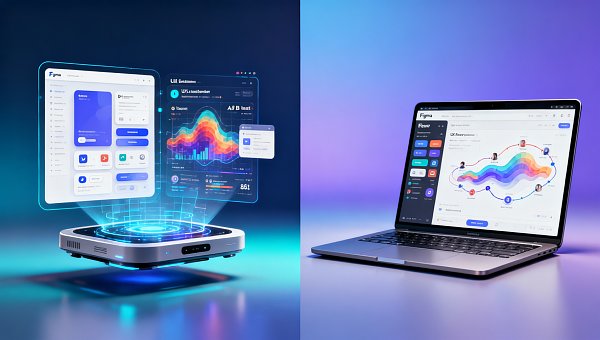
This table clearly shows: UX redesign isn't just about 'making it prettier' but 'making it more accurate.' Its acceptance criteria must be tied to business outcome metrics, not subjective aesthetic evaluations. All EasyWin UX redesign projects enforce the '3×7 rule'—outputting 1 data validation report every 7 days, with 3 consecutive rounds confirming conversion path optimization effectiveness.
2. Procurement Decision Pitfalls: 6 Common Confusion Scenarios and Risk Alerts
Businesses often make these mistakes during price negotiations: mistaking homepage banner animation development for UX optimization; equating backend system Chinese localization with multilingual UX adaptation; using PSD slicing man-hours to estimate full-site interaction logic restructuring. Such misjudgments lead to 41% project rework rates (source: EasyWin 2023 client review report).
Particularly noteworthy is that distributors/reseller groups often package UI customization as 'full-site upgrade solutions' without informing end consumers they can't address core UX issues like high bounce rates or form submission failures. This directly creates post-sale maintenance staff facing 3.8x the troubleshooting pressure of conventional projects.
To mitigate these risks, EasyWin established a 'dual-track requirement clarification process': first-round AI semantic analysis engine parsing of client requirements, second-round senior UX consultant validation, ensuring each requirement point precisely maps to UI or UX work packages, eliminating ambiguous scope creep.
- Pitfall 1: Considering 'redesign equals restructuring,' ignoring existing architecture compatibility assessment (extends delivery cycles by 20%)
- Pitfall 2: Demanding UX redesign while refusing GA4/Hotjar analytics tool integration (leads to data-deficient solutions)
- Pitfall 3: Equating multilingual websites with translation, ignoring localized UX adaptation (e.g., Middle Eastern right-to-left layouts, Japanese character density)
- Pitfall 4: Using UI mockup approval rates as UX project completion criteria (should use ≥15% 7-day retention increase)
- Pitfall 5: Unclear boundaries between SEO optimization and UX redesign (e.g., page load speed optimization belongs to technical SEO)
- Pitfall 6: Neglecting post-sale cost differences (first-year UX redesign maintenance requires 2.7x UI customization hours)
3. Implementation Guide: EasyWin's AI-Driven Tiered Delivery System
Based on a decade of industry practice, EasyWin built a '3-tier delivery capability matrix': L1 (UI customization) uses standardized component libraries + AI color engines for 72-hour draft output; L2 (UX optimization) activates dynamic user segmentation models, auto-matching industry top 10 conversion path templates; L3 (UX redesign) employs its proprietary 'growth sandbox' system to simulate different interaction scenarios' GMV impact coefficients.
This system has proven effective across e-commerce, B2B industrial products, and edtech: one medical device client achieved 176-second average product page dwell time (from 98 seconds) and 34% inquiry conversion increase post-UX redesign, with the case study included in Digital Transformation Background Enterprise Vendor Management Research practical chapters.
For project managers, EasyWin provides a 'four-dimensional progress dashboard': ① Design phase (with user test feedback loops) ② Development phase (daily CI/CD build reports) ③ SEO embedding phase (covering 127 core conversion events) ④ Post-launch 30-day effect tracking (auto-generating ROI attribution analysis).
The table shows different service tiers correspond to differentiated delivery commitments. L3 UX redesign specifically includes 6-month effect monitoring—key to ensuring long-term value, as true UX results often emerge 3-5 weeks post-launch.
4. Action Recommendations: How to Choose Your Optimal Service Combination?
For first-time website builders, prioritize L1 UI customization + basic SEO configuration, controlling budgets to $3,000-$5,000. For businesses operating over 2 years with >65% bounce rates, initiate L2 UX optimization focusing on homepage first-screen conversion leaks. For overseas expansion or major business transformations, adopt L3 UX redesign with synchronized multilingual SEO and Meta ad remarketing strategies.
EasyWin 2023 data shows: enterprises adopting tiered solutions achieve 2.4x higher website ROI than single-service models. We recommend all clients complete free UX health scans (21 core metrics) pre-launch to obtain customized Website Growth Pathway Blueprints.
Contact EasyWin's expert consultant team immediately for tailored integrated website + marketing solutions. Leverage AI-driven smart website engines and 100,000+ enterprise实战经验 to ensure every investment precisely drives business growth.
Related Articles
Related Products
 EasyCamp SaaS Smart Website Marketing SystemE-Yingbao SaaS Smart Website Marketing System: AI-powered, zero-code website building. Rapidly launch multilingual independent e-commerce sites in just 10 minutes. Global server acceleration and AI-driven SEO optimization empower businesses to efficiently connect with global markets. The seamless integration of technology and user-friendly operation makes building e-commerce sites incredibly simple.
 AI+SEM Intelligent Advertising Marketing SystemAI+SEM drives intelligent ad creation, empowering full-funnel precision advertising marketing. The system automatically generates weekly/monthly reports, AI recommends keywords and target countries, monitors core metrics in real-time with intelligent alerts, and enables one-click high-conversion ad solutions to help quickly acquire customers and improve ROI.
 AI+SEO Dual Engine Optimization ServiceEasyWin AI+SEO Dual Engine Optimization System leverages AI-powered keyword mining, content generation, and comprehensive technical optimization to help foreign trade enterprises acquire high-quality organic traffic, significantly improving search rankings and conversion rates.
 AI+SNS Social Media Marketing SystemYingbao AI+SNS Social Media Marketing System - Precision social capture for the social media era. Supports one-click content synchronization across major platforms like Facebook and LinkedIn. AI intelligently rewrites posts for enhanced relevance. 24/7 AI customer service and user profiling analysis empower businesses to efficiently expand into global markets.
 AI+SEO营销解决方案易营宝AI+SEO营销解决方案,通过AI批量写作、智能生成TDK、精准关键词扩词等功能,全面优化网站SEO效果,提升流量与转化率。助力企业构建高效智能网站新生态。
 AI+SEM Advertising Marketing SolutionsAI+SEM Advertising Marketing Solution leverages AI technology to deeply empower SEM ad campaigns. It automatically generates weekly/monthly reports using AI, presenting account data across multiple dimensions for comprehensive insights into campaign performance and trends. The system precisely recommends keywords and target countries, intelligently generates high-conversion ad copy, and enables one-click activation of efficient campaign plans to help businesses rapidly acquire customers. Simultaneously, it monitors core metrics in real time, intelligently identifies abnormal fluctuations, and issues timely alerts to ensure stable, high-return advertising results.
 Domain Name ServicesEasyWin provides professional domain name services, including intelligent queries, one-stop registration, brand protection, and full lifecycle management, helping businesses build a digital brand image.
 EasyOperate B2C Cross-Border E-Commerce Platform & Independent WebsiteEasyStore B2C Cross-border E-commerce Independent Store is an intelligent website building and cross-border e-commerce integrated solution independently developed by EasyStore Information Technology (Beijing) Co., Ltd. The system is specially designed for small and medium-sized as well as large export enterprises, integrating 'website building, operation, marketing, advertising, and conversion' into one, helping enterprises quickly establish cross-border e-commerce independent stores to achieve brand globalization and global sales growth.
The platform supports multiple languages, multiple currencies, and multi-channel marketing, with built-in AI intelligent translation and SEO optimization systems, suitable for mainstream markets such as Southeast Asia, Europe and America, Latin America, and the Middle East, assisting Chinese manufacturing enterprises in efficiently deploying international e-commerce strategies. SSL证书易营宝提供专业SSL安全证书服务,包括单域名和泛域名证书,确保网站数据传输加密、身份验证和完整性保护,助力企业建立安全可信的在线业务环境。









