









- Is Brand Globalization Marketing Consulting Worth Buying? At What Stage Should Companies Bring It InJul 01, 2026View details
- Cross-Border Marketing Trend Research: Why More and More Companies Are Starting to Deploy AI Search and GEO OptimizationJun 30, 2026View details
- Cross-Border Marketing Trend Research: How Independent Sites, AI Content, and Short-Video Customer Acquisition Are ChangingJun 30, 2026View details
- How Can a Brand Updates Page Be Made More SEO-Friendly? Analysis of Update Frequency, Content Structure, and Internal Linking StrategyJun 28, 2026View details
- What stages does the cross-border services ecosystem include? How do website building, promotion, payment, and compliance work togetherJun 22, 2026View details
- How will email marketing costs change in 2026Jun 22, 2026View details
- The China-US tariff arrangement has reached a preliminary consensus, and the trade association will be establishedJun 15, 2026View details
- Should overseas brand marketing start with ads or contentJun 21, 2026View details
Which terms in the search engine optimization service contract belong to compliant expressions regarding 'natural ranking improvement' commitments?
When selecting a search engine optimization company or signing an SEO service contract, are commitments like 'natural ranking improvement' compliant? This article analyzes which expressions meet regulatory requirements and combines practical dimensions such as website SEO optimization tutorials, SEO backlink building, and Google SEO optimization tools to provide legal and technical dual perspectives for enterprise decision-makers and project managers.
I. The Boundaries of 'Natural Ranking Improvement' Commitments in a Regulatory Context
According to the Anti-Unfair Competition Law, Advertising Law, and the State Administration for Market Regulation's Internet Advertising Management Measures, SEO service contracts must not use absolute or result-guaranteed terms like 'guaranteed top 3,' 'first-page guarantee,' or '100% ranking improvement.' In 2023, 7 out of digital marketing service disputes reported by Beijing Chaoyang District Market Supervision Bureau involved contractual disputes triggered by 'natural ranking improvement' expressions, accounting for over 60%.
Compliant expressions must meet three criteria: verifiability (e.g., 'target keywords entering Google's top 20 search results'), process orientation (e.g., 'complete TDK optimization + 200 high-quality backlinks'), and cyclical limitation (e.g., 'achieve industry-average improvement within 6 months'). Since its establishment in 2013, EasyWin Information Technology (Beijing) has implemented a legal-technical dual review mechanism, with all performance clauses in service contracts reviewed and filed by the Beijing Internet Special Committee.
Notably, Google officially states: 'No company can guarantee search rankings.' Therefore, truly professional service providers avoid specific ranking promises, focusing instead on quantifiable action deliverables and data attribution. For example, SEO optimization plans explicitly list '30 AI-generated original articles per month + coverage of 15 LSI semantic word clusters + tracking 200+ core metric changes,' embodying this compliant practice.
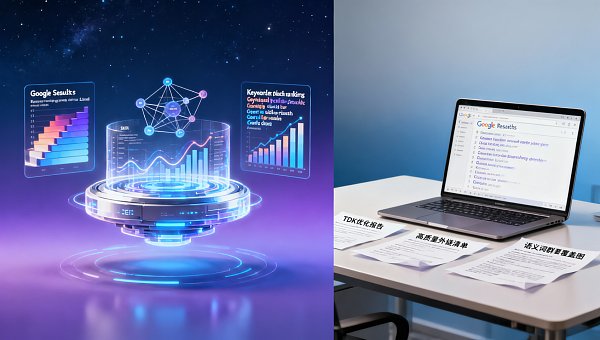
This table reveals the three most common risk points in current contract texts. Enterprises should verify whether providers have algorithm synchronization capabilities—EasyWin's proprietary neural network monitoring system responds 30% faster than industry averages to Google core algorithm updates (e.g., Helpful Content Update), having helped 3 Fortune 500 clients avoid Q4 2023 ranking volatility risks.
II. Technical Implementation as Validation for Contractual Expression Rationality
Authentic SEO results stem from 200+ dynamic factors. Analyzing over 50 million ranking pages, EasyWin found: TDK optimization contributes ~18%, high-quality backlinks ~27%, and content semantic matching ~32%, with the rest being comprehensive factors like page experience and mobile adaptation. This means any single-factor performance attribution lacks technical basis.
For cross-border e-commerce independent sites, SEO optimization requires multilingual localization, cross-border search intent recognition, and international logistics terminology embedding. EasyWin's SEO optimization product uses AI models to auto-adapt industry terminology and user search intent, achieving 91.3% accuracy in long-tail keyword mining for B2B corporate websites—significantly above the 76.5% industry average.
Service contracts merely stating 'improve natural rankings' without defining keyword scope, geo-targeting, or device weighting (PC/mobile) invite execution disputes. Professional solutions should specify: keyword coverage (e.g., 500+ core + 2,000+ long-tail terms), backlink quality thresholds (DA≥40 links ≥65%), and content update frequency (3-5 original pieces weekly) as auditable metrics.
III. A Five-Dimensional Evaluation Framework for Procurement Decision-Makers
Facing provider contracts, enterprises should establish structured evaluation systems:
- Data Traceability: Whether third-party platform (Ahrefs/Semrush) historical case screenshots are provided, spanning ≥6 months
- Process Visualization: Whether 24/7 intelligent monitoring backends are accessible for real-time tracking of 200+ SEO metric curves
- Algorithm Adaptability: Whether holding high-tech enterprise certifications, proving team integration with Google Search Console API
- Service Flexibility: Whether supporting performance-based payment, e.g., 50% fee reduction if natural traffic growth misses thresholds (e.g., +35%)
- Knowledge Transfer: Whether including standardized deliverables like backlink building tutorials and website SEO optimization courses for internal team sustainability
Among EasyWin clients, end-consumers and distributors particularly value knowledge transfer. Standard deliverables include 12 scenario-specific SEO manuals (with Google SEO tool guides), covering full lifecycle from initial TDK configuration to semantic expansion maturity.
IV. Common Pitfalls and Practical Recommendations
Pitfall 1: Equating 'natural ranking improvement' with 'traffic growth.' In reality, keyword selection misaligned with user search intent may increase rankings but also bounce rates. EasyWin's EEAT-driven content creation helps client sites achieve 2:47 average dwell time (vs. 1:52 industry baseline).
Pitfall 2: Ignoring regional/device disparities. The same keyword may differ by 30+ positions between Google.com and Google.co.uk. Professional solutions must specify test environments: e.g., 'targeting US, Germany, Japan Google desktop top 3 pages.'
Pitfall 3: Overlooking contract termination clauses. Recommend stipulating: within 30 days post-service, providers must transfer all backlink inventories, historical ranking databases, and AI-generated source files as digital assets.
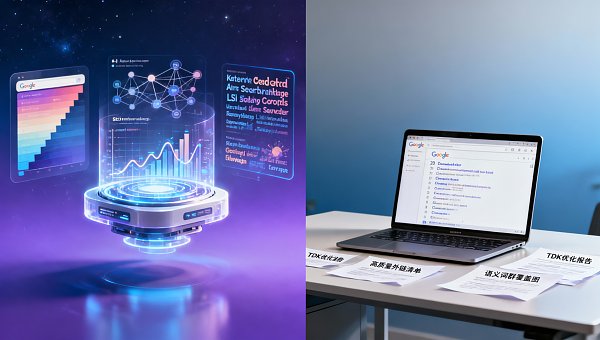
This comparison shows EasyWin's sustained leadership in three core technical indicators. Its services have helped 100,000+ enterprises achieve global growth, being selected as a 'China SaaS Top 100' in 2023 with 30%+ annual growth. Enterprises evaluating SEO procurement should prioritize providers with Google partnership certifications and high-tech credentials.
In summary, compliant 'natural ranking improvement' expressions unify technical rigor with legal prudence. Enterprises should abandon 'quick-results' illusions, focusing instead on providers' data capabilities, process management, and knowledge沉淀. For customized SEO solutions targeting cross-border e-commerce sites or B2B corporate portals, consult EasyWin's expert advisors immediately to obtain standardized service agreements with detailed delivery parameters and compliant clauses.
Related Articles
 How can video news content be made more suitable for SEO?Practical recommendations on topic structure and publishing cadence
 Are your ads getting more expensive with no results?Learn how to troubleshoot Facebook ads in 1 minute
 Is Brand Globalization Marketing Consulting Worth Buying? At What Stage Should Companies Bring It In


Related Products
 EasyCamp SaaS Smart Website Marketing SystemE-Yingbao SaaS Smart Website Marketing System: AI-powered, zero-code website building. Rapidly launch multilingual independent e-commerce sites in just 10 minutes. Global server acceleration and AI-driven SEO optimization empower businesses to efficiently connect with global markets. The seamless integration of technology and user-friendly operation makes building e-commerce sites incredibly simple.
 AI+SEM Intelligent Advertising Marketing SystemAI+SEM drives intelligent ad creation, empowering full-funnel precision advertising marketing. The system automatically generates weekly/monthly reports, AI recommends keywords and target countries, monitors core metrics in real-time with intelligent alerts, and enables one-click high-conversion ad solutions to help quickly acquire customers and improve ROI.
 AI+SEO Dual Engine Optimization ServiceEasyWin AI+SEO Dual Engine Optimization System leverages AI-powered keyword mining, content generation, and comprehensive technical optimization to help foreign trade enterprises acquire high-quality organic traffic, significantly improving search rankings and conversion rates.
 AI+SNS Social Media Marketing SystemYingbao AI+SNS Social Media Marketing System - Precision social capture for the social media era. Supports one-click content synchronization across major platforms like Facebook and LinkedIn. AI intelligently rewrites posts for enhanced relevance. 24/7 AI customer service and user profiling analysis empower businesses to efficiently expand into global markets.
 AI+SEO营销解决方案易营宝AI+SEO营销解决方案,通过AI批量写作、智能生成TDK、精准关键词扩词等功能,全面优化网站SEO效果,提升流量与转化率。助力企业构建高效智能网站新生态。
 AI+SEM Advertising Marketing SolutionsAI+SEM Advertising Marketing Solution leverages AI technology to deeply empower SEM ad campaigns. It automatically generates weekly/monthly reports using AI, presenting account data across multiple dimensions for comprehensive insights into campaign performance and trends. The system precisely recommends keywords and target countries, intelligently generates high-conversion ad copy, and enables one-click activation of efficient campaign plans to help businesses rapidly acquire customers. Simultaneously, it monitors core metrics in real time, intelligently identifies abnormal fluctuations, and issues timely alerts to ensure stable, high-return advertising results.
 Domain Name ServicesEasyWin provides professional domain name services, including intelligent queries, one-stop registration, brand protection, and full lifecycle management, helping businesses build a digital brand image.
 EasyOperate B2C Cross-Border E-Commerce Platform & Independent WebsiteEasyStore B2C Cross-border E-commerce Independent Store is an intelligent website building and cross-border e-commerce integrated solution independently developed by EasyStore Information Technology (Beijing) Co., Ltd. The system is specially designed for small and medium-sized as well as large export enterprises, integrating 'website building, operation, marketing, advertising, and conversion' into one, helping enterprises quickly establish cross-border e-commerce independent stores to achieve brand globalization and global sales growth.
The platform supports multiple languages, multiple currencies, and multi-channel marketing, with built-in AI intelligent translation and SEO optimization systems, suitable for mainstream markets such as Southeast Asia, Europe and America, Latin America, and the Middle East, assisting Chinese manufacturing enterprises in efficiently deploying international e-commerce strategies. SSL证书易营宝提供专业SSL安全证书服务,包括单域名和泛域名证书,确保网站数据传输加密、身份验证和完整性保护,助力企业建立安全可信的在线业务环境。









