









- Which channel has the highest ROI in the global traffic ecosystem? Comparative analysis of search, social media, and advertisingJul 10, 2026View details
- What multilingual website services are available in Sanya? Which model is more suitable for local businesses going global?Jul 08, 2026View details
- How to view the complete list of China SaaS companies in the top 100? Practical methods for screening website-building and marketing service providersJul 08, 2026View details
- How to view pricing in the global traffic ecosystem? Cost comparison of search, social media, and content channel advertisingJul 06, 2026View details
- How to assess foreign trade website development trends?Looking at 2026 changes from multilingual,AI content to conversion pathsJul 04, 2026View details
- What are the new trends in multilingual marketing data analytics tools in 2026? Focus on attribution、automation and complianceJul 04, 2026View details
- Is Brand Globalization Marketing Consulting Worth Buying? At What Stage Should Companies Bring It InJul 01, 2026View details
- Cross-Border Marketing Trend Research: Why More and More Companies Are Starting to Deploy AI Search and GEO OptimizationJun 30, 2026View details
When choosing an advertising placement service provider, should you focus on results or service
When selecting an advertising placement service provider, procurement personnel cannot focus only on short-term results, but should also evaluate service capabilities, data transparency, and long-term growth support. A truly reliable partner should balance advertising return and professional service, helping enterprises achieve sustainable customer acquisition and steady growth.
In the integrated website + marketing service industry, advertising placement is no longer as simple as buying traffic alone. What procurement personnel often face is a complete growth chain including website building, content, conversion paths, lead management, and campaign optimization. Weakness in any one link will amplify customer acquisition costs.
Therefore, when evaluating an advertising placement service provider, you cannot just focus on 7-day clicks or 30-day form submissions, nor be persuaded only by “low-cost managed ads” or “rapid volume growth.” More importantly, whether the other party has continuous optimization capabilities, cross-channel integration capabilities, and a deep understanding of business goals.
For procurement roles, a truly valuable partner should be able to provide diagnostics before launch, maintain transparency during launch, accumulate data assets after launch, and create synergy with website development, SEO, and social media marketing, rather than merely delivering a spend report.
Why advertising placement service providers should not be judged only by short-term results

When many companies choose an advertising placement service provider, the first metrics they look at are CTR, CPC, and the number of inquiries in the current month. These metrics are certainly important, but if judgments are made only based on 1 campaign cycle, 1 major promotion period, or 1 platform’s performance, decisions can easily become distorted.
Good short-term data does not mean truly high conversion quality
Within the first 7 to 14 days of an ad account, what is commonly seen is “exploratory volume scaling.” Some service providers, in order to demonstrate performance, may prioritize low-cost clicks or the number of form submissions, but if lead sources are inaccurate, duplicate inquiries are frequent, and sales follow-up conversion is low, the cost per valid business opportunity will ultimately increase by 20% to 50%.
For procurement personnel, “form volume” and “valid opportunity volume” should be viewed separately, with at least 3 metrics observed simultaneously: valid lead rate, sales follow-up rate, and 30-day conversion rate. Only when front-end advertising and back-end deal logic are aligned does ad investment have real value.
Campaign results are heavily affected by the website’s foundational capabilities
In the integrated website + marketing service scenario, advertising performance is not determined solely by the media buyer. Landing page load speed, form field length, mobile responsiveness, content persuasiveness, and customer service response timeliness all directly affect conversions. Usually, when page loading exceeds 3 seconds, the bounce risk rises significantly.
This is also why service providers with coordinated capabilities in website building, SEO, content planning, and advertising placement are more suitable for B2B companies. If a service provider only understands traffic buying but does not understand website structure and conversion path optimization, it is difficult to truly turn the advertising budget into business growth.
Procurement evaluation should shift from “single campaign placement” to “growth system”
Mature procurement does not only compare whether a service provider’s ROI is high this month, but whether it can support growth goals for 2 to 4 quarters. For example, whether it can expand keyword volume, establish remarketing strategies, integrate with CRM, and coordinate with website revamps and content optimization—these are all more important than short-term traffic surges.
Common procurement misjudgment points
- Only looking at the first month’s cost, without looking at stability from month 2 to month 6.
- Only looking at advertising backend data, without looking at sales-side deal quality.
- Only comparing service fees, without comparing service depth and response mechanisms.
- Only asking “How many leads can you bring,” without asking “How will you continuously optimize lead structure?”
The table below can help procurement personnel quickly distinguish between advertising placement service providers that “only do managed ads” and those with “integrated growth capabilities.”
From a procurement perspective, the real difference between advertising placement service providers lies not only in “whether they can run ads,” but in “whether they can turn advertising into a replicable, optimizable, and accumulative growth mechanism.” This is also the core reason why integrated services have greater long-term value than single-point managed advertising.
The 4 core dimensions procurement personnel should focus on
When companies are preparing to screen advertising placement service providers, it is recommended to narrow the evaluation dimensions into 4 categories: business understanding, execution capability, data transparency, and service coordination. Each category can be verified in proposals, trial campaigns, or monthly reviews, rather than remaining at the level of verbal promises.
1. Whether they understand the company’s customer acquisition model
The procurement cycle of B2B companies usually ranges from 30 to 180 days, and advertising goals should not simply be equated with immediate transactions. Excellent service providers will first clarify the target customer profile, inquiry path, and sales handoff capability, and then design keyword strategies, landing page structures, and remarketing rules.
If a service provider only asks about budget at the very beginning, without asking about average order value, region, channel mix, or sales conversion stages, it often indicates limited service depth, and subsequent performance fluctuations are likely to be greater.
2. Whether they have cross-stage execution capabilities
If an advertising placement service provider can simultaneously coordinate website development, SEO optimization, social media content, and data tracking, procurement risk will be much lower. This is because companies do not need to work with 3 to 4 vendors at the same time, communication costs are lower, and issue identification is faster, which is especially suitable for medium and large enterprises or global business expansion.
Taking Yiyingbao Information Technology (Beijing) Co., Ltd. as an example, the company was established in 2013 and is headquartered in Beijing. It has long used artificial intelligence and big data to drive digital marketing, building full-chain services around intelligent website building, SEO optimization, social media marketing, and advertising placement. This type of comprehensive capability is more procurement-friendly.
3. Whether they are willing to disclose key data
A truly professional advertising placement service provider will not only provide surface-level conclusions such as “how much leads increased this month,” but will also explain budget allocation, creative testing results, search term quality, conversion path drop-off points, and next-stage optimization actions. It is usually recommended to have at least 1 formal review per month and 1 brief communication per week.
4. Whether they have a stable service mechanism
In addition to reviewing proposals, procurement personnel should also assess service organization capabilities, such as whether account anomalies are responded to within 24 hours, whether creative adjustments can be completed within 48 hours, whether special landing pages require 3 to 5 working days to go live, and whether there is a fixed project manager and optimizer. These details directly affect the cooperation experience and campaign efficiency.
To facilitate comparison and selection, it is recommended to turn the core evaluation items into a checklist-based assessment. The following table is suitable for use during supplier screening, bid Q&A, or trial campaign evaluation stages.
These 4 categories of evaluation items can help procurement personnel turn “feels professional” into “quantifiable judgment.” Especially when the budget reaches a monthly level of 30,000 yuan, 100,000 yuan, or higher, the more detailed the selection criteria, the lower the subsequent rework and trial-and-error costs.
How to judge whether service and results are truly balanced
An ideal advertising placement service provider is not one that only knows service, nor one that only knows data, but one that can turn service actions into performance growth. Procurement personnel can verify whether service and results are balanced through 3 stages: before, during, and after launch.
Before launch: check whether the diagnosis is specific
Before launch, high-quality service providers usually complete 3 basic actions: website and landing page audit, keyword and audience structure analysis, and conversion path mapping. If they only provide broad budget suggestions without pointing out page issues, content issues, and data collection issues, it indicates insufficient early-stage preparation.
During launch: check whether optimization is continuous
The first 2 weeks after account launch are usually the data accumulation period; from week 3 to week 6, it enters the stage of structural adjustment and stable optimization. At this time, attention should be paid to whether the service provider is carrying out detailed actions such as negative keyword expansion, creative A/B testing, time-slot bidding, and page button testing, rather than mechanically spending the budget.
When some companies conduct internal training for management personnel, they also pay attention to how artificial intelligence changes job capabilities, such as The Reconstruction of Core Competencies of Corporate Finance Personnel Driven by Artificial Intelligence. In essence, this is similar to marketing procurement decision-making: both require shifting from tool usage to data judgment and process coordination.
After launch: check whether long-term assets are accumulated
After one round of advertising placement ends, the truly valuable deliverable is not just a report, but reusable data assets, such as a high-converting search term library, high-quality creative directions, landing page version performance, audience segmentation results, and remarketing lists. These assets can continue to play a role in the next 30-day or 60-day cycle.
6 questions procurement should prioritize asking
- Who is responsible for the account, and is it served by a fixed team?
- What reports are delivered weekly and monthly respectively?
- If lead quality declines, how quickly can the strategy be adjusted?
- Can website landing pages and conversion forms be optimized simultaneously?
- Does it support coordinated placement and remarketing across multiple platforms?
- After 3 months of cooperation, what reusable data assets can be accumulated?
If an advertising placement service provider can clearly answer the above questions and provide phased goals, execution rhythm, and collaboration boundaries, it is usually more worthy of being included in a long-term cooperation shortlist than a vendor that only promises “better results.”
From the perspective of procurement implementation, what kind of service provider is more worthy of long-term cooperation
Procurement is not just about completing the signing, but also about being responsible for the stability of subsequent execution. Advertising placement service providers that are truly worth long-term cooperation usually have 3 characteristics: clear capability boundaries, standardized service processes, and reviewable growth goals. This type of partner is more suitable for companies doing annual budget planning and global market expansion.
Integrated capabilities reduce vendor management costs
When a service provider can cover website development, SEO optimization, social media marketing, and advertising placement, the procurement side can often reduce at least 2 types of coordination costs: cross-vendor communication costs and issue attribution costs. This collaborative advantage is especially more obvious for overseas business, regional campaigns, and multilingual websites.
Technical capabilities determine the upper limit of optimization
As AI and big data are increasingly used in digital marketing, the value of advertising placement service providers is shifting from “manually monitoring accounts” to the combined capability of “data insights + automated optimization + localized execution.” Teams that can use technology to improve audience identification, content matching, and campaign rhythm judgment are usually more likely to maintain stable performance over a cycle of more than 90 days.
For companies that value long-term growth, service providers like Yiyingbao, which have cultivated the industry for ten years and formed a dual-driven capability of technological innovation and localized service, are better able to meet procurement’s comprehensive requirements for stable delivery, cross-module collaboration, and continuous growth. Their service logic is not limited to traffic buying, but revolves around the enterprise growth loop.
A phased acceptance mechanism can be set before cooperation
To reduce decision-making risk, procurement personnel can divide the cooperation into 3 stages: the 1st stage focuses on diagnosis and setup, the 2nd stage focuses on campaign stability, and the 3rd stage focuses on valid lead quality and data accumulation. Setting 2 to 3 acceptance indicators for each stage is more practical than simply requiring “guaranteed results.”
If the company is also advancing internal digital training at the same time, it can also pay attention to content such as The Reconstruction of Core Competencies of Corporate Finance Personnel Driven by Artificial Intelligence, helping procurement, finance, and marketing departments establish consistent data management awareness, thereby improving the overall collaboration efficiency of advertising projects.
When choosing an advertising placement service provider, what really matters is not choosing between “results” or “service,” but whether the two form a closed loop: there are outcomes, and there is also process; there is placement, and there is also optimization; there are short-term leads, and there are also long-term assets. For procurement personnel, such a partner is better able to support the dual goals of budget efficiency and business growth.
If you are screening for an advertising placement service provider that is more suitable for the long-term development of your business, it is recommended to prioritize evaluating its integrated website + marketing service capabilities, data transparency mechanisms, and phased delivery standards. If you want to further understand the campaign mix, landing page optimization solutions, and growth paths suitable for your industry, feel free to contact us now to obtain customized solutions and more options.
Related Articles
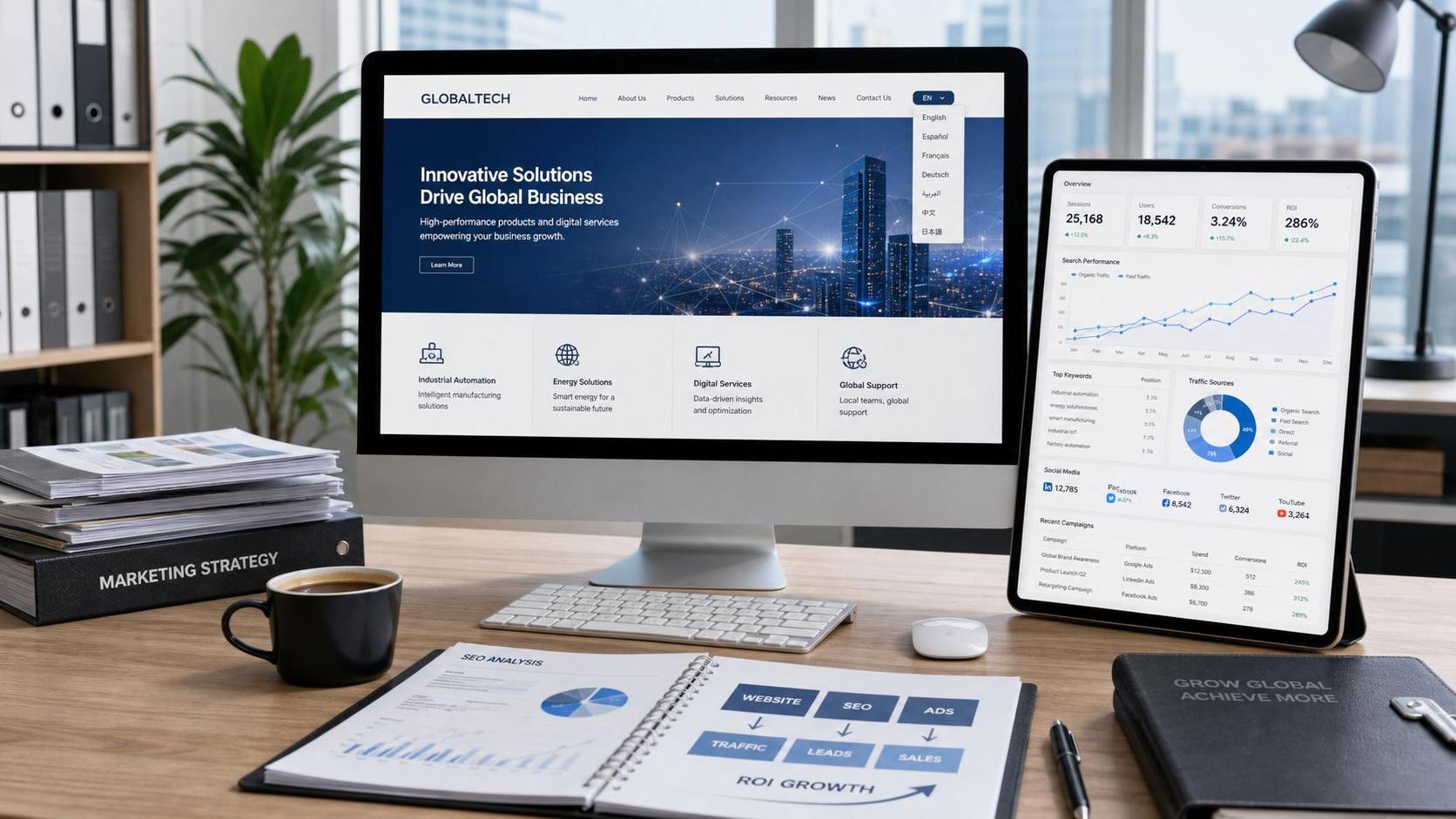
 Which channel has the highest ROI in the global traffic ecosystem? Comparative analysis of search, social media, and advertising
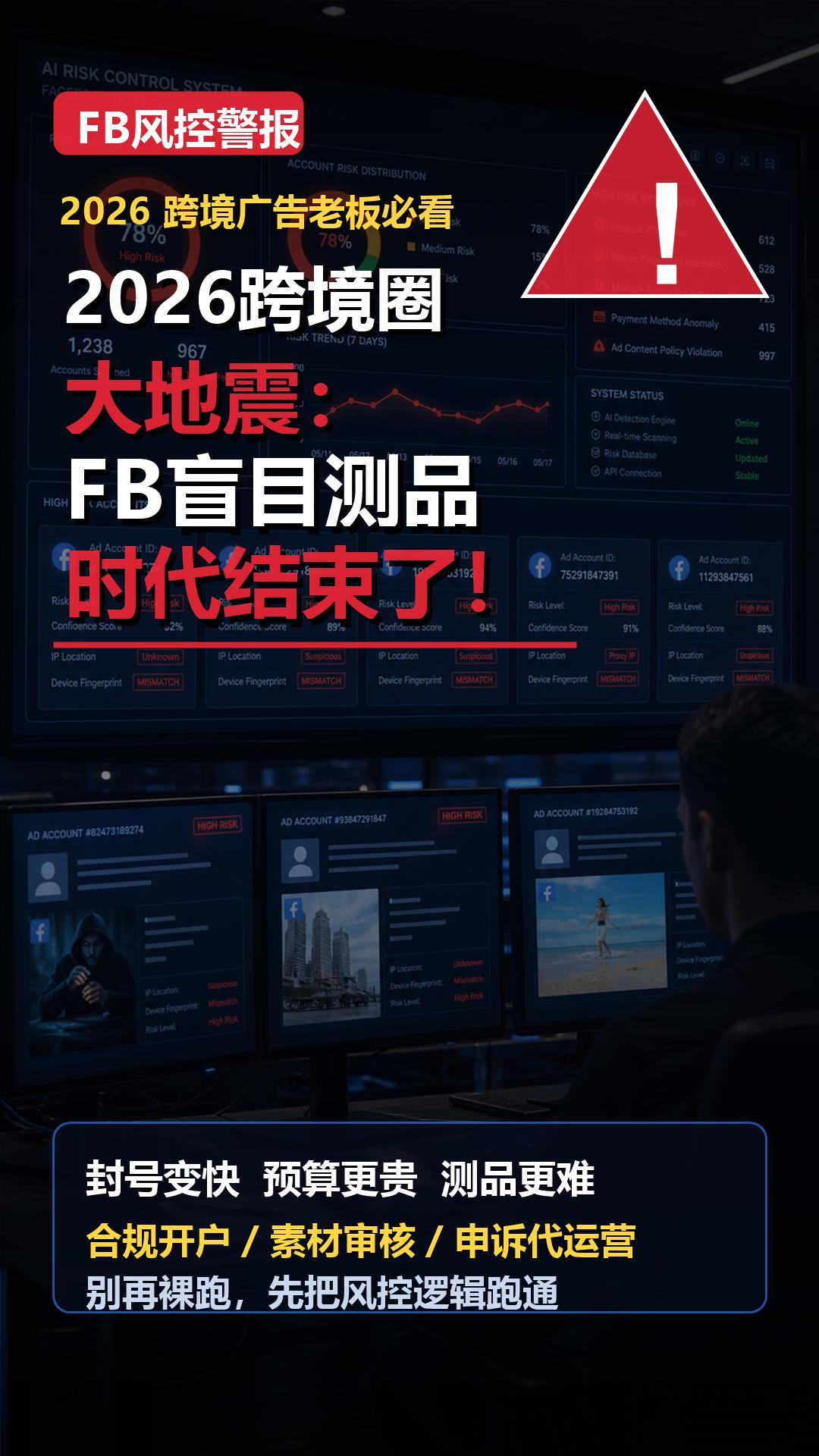
 The Era of Cross-Border Earthquakes in 2026: The Era of Blindly Testing FB Products Has Ended!
 Three key points of domestic-to-foreign trade most important, see if you really did your homework! Don’t take shortcuts.

Related Products
 EasyCamp SaaS Smart Website Marketing SystemE-Yingbao SaaS Smart Website Marketing System: AI-powered, zero-code website building. Rapidly launch multilingual independent e-commerce sites in just 10 minutes. Global server acceleration and AI-driven SEO optimization empower businesses to efficiently connect with global markets. The seamless integration of technology and user-friendly operation makes building e-commerce sites incredibly simple.
 AI+SEM Intelligent Advertising Marketing SystemAI+SEM drives intelligent ad creation, empowering full-funnel precision advertising marketing. The system automatically generates weekly/monthly reports, AI recommends keywords and target countries, monitors core metrics in real-time with intelligent alerts, and enables one-click high-conversion ad solutions to help quickly acquire customers and improve ROI.
 AI+SEO Dual Engine Optimization ServiceEasyWin AI+SEO Dual Engine Optimization System leverages AI-powered keyword mining, content generation, and comprehensive technical optimization to help foreign trade enterprises acquire high-quality organic traffic, significantly improving search rankings and conversion rates.
 AI+SNS Social Media Marketing SystemYingbao AI+SNS Social Media Marketing System - Precision social capture for the social media era. Supports one-click content synchronization across major platforms like Facebook and LinkedIn. AI intelligently rewrites posts for enhanced relevance. 24/7 AI customer service and user profiling analysis empower businesses to efficiently expand into global markets.
 AI+SEO营销解决方案易营宝AI+SEO营销解决方案,通过AI批量写作、智能生成TDK、精准关键词扩词等功能,全面优化网站SEO效果,提升流量与转化率。助力企业构建高效智能网站新生态。
 AI+SEM Advertising Marketing SolutionsAI+SEM Advertising Marketing Solution leverages AI technology to deeply empower SEM ad campaigns. It automatically generates weekly/monthly reports using AI, presenting account data across multiple dimensions for comprehensive insights into campaign performance and trends. The system precisely recommends keywords and target countries, intelligently generates high-conversion ad copy, and enables one-click activation of efficient campaign plans to help businesses rapidly acquire customers. Simultaneously, it monitors core metrics in real time, intelligently identifies abnormal fluctuations, and issues timely alerts to ensure stable, high-return advertising results.
 Domain Name ServicesEasyWin provides professional domain name services, including intelligent queries, one-stop registration, brand protection, and full lifecycle management, helping businesses build a digital brand image.
 EasyOperate B2C Cross-Border E-Commerce Platform & Independent WebsiteEasyStore B2C Cross-border E-commerce Independent Store is an intelligent website building and cross-border e-commerce integrated solution independently developed by EasyStore Information Technology (Beijing) Co., Ltd. The system is specially designed for small and medium-sized as well as large export enterprises, integrating 'website building, operation, marketing, advertising, and conversion' into one, helping enterprises quickly establish cross-border e-commerce independent stores to achieve brand globalization and global sales growth.
The platform supports multiple languages, multiple currencies, and multi-channel marketing, with built-in AI intelligent translation and SEO optimization systems, suitable for mainstream markets such as Southeast Asia, Europe and America, Latin America, and the Middle East, assisting Chinese manufacturing enterprises in efficiently deploying international e-commerce strategies. SSL证书易营宝提供专业SSL安全证书服务,包括单域名和泛域名证书,确保网站数据传输加密、身份验证和完整性保护,助力企业建立安全可信的在线业务环境。









