









- What Does a Global Traffic Ecosystem Service Provider Do? What Are the Differences from a Single Advertising AgencyJul 16, 2026View details
- What should you focus on in the latest enterprise SaaS report? From renewal rates and delivery costs to overseas growth opportunitiesJul 12, 2026View details
- What signals are worth paying attention to in a cross-border marketing trend report? B2B companies should look at these 6 signalsJul 11, 2026View details
- How to Read a Cross-Border Marketing Trends Report? Five Key Dimensions for Evaluating Channel OpportunitiesJul 11, 2026View details
- Which channel has the highest ROI in the global traffic ecosystem? Comparative analysis of search, social media, and advertisingJul 10, 2026View details
- What multilingual website services are available in Sanya? Which model is more suitable for local businesses going global?Jul 08, 2026View details
- How to view the complete list of China SaaS companies in the top 100? Practical methods for screening website-building and marketing service providersJul 08, 2026View details
- How to view pricing in the global traffic ecosystem? Cost comparison of search, social media, and content channel advertisingJul 06, 2026View details
If your advertising ROI is low, check these 5 aspects first.
If your advertising ROI is consistently low, the problem often goes beyond just budget. For integrated website and marketing services, advertising is merely a traffic entry point. What truly determines effectiveness is whether your target audience, creative content, page layout, and data tracking can form a closed loop. If you only focus on cost-per-click while ignoring the backend conversion process, even high exposure will struggle to deliver the desired return.
In the context of intensifying global competition in digital marketing, advertising ROI has become a crucial indicator for measuring growth quality. Yiyingbao Information Technology (Beijing) Co., Ltd., with years of experience in intelligent website building, SEO optimization, social media marketing, and advertising, leverages artificial intelligence and big data capabilities to emphasize identifying the root causes of inefficiencies from a systemic perspective, rather than resorting to isolated fixes. Checking these five areas first is usually more effective than blindly increasing the budget.
Basic understanding and judgment criteria of advertising ROI
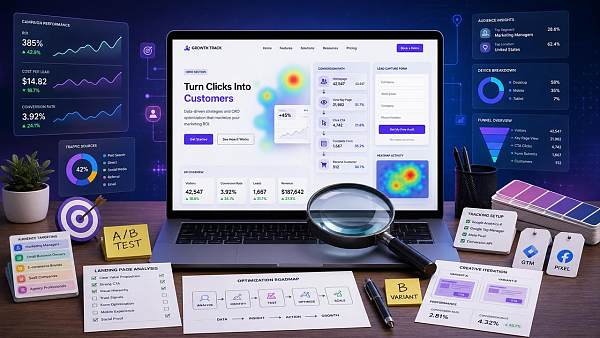
Advertising ROI is essentially the ratio of input to output. It's not just about the number of leads or the amount of money sold; it requires a comprehensive assessment that considers customer acquisition cost, conversion cycle, average order value, repurchase rate, and channel contribution.
For industries that integrate website and marketing services, the ROI of advertising is often influenced by both the quality of front-end traffic and the load factor of back-end pages. While advertising platforms can bring in visits, website architecture, form paths, content delivery, and data attribution are the keys to converting visits into inquiries and sales.
If businesses only look at whether there are clicks, they are prone to misjudging the effectiveness of their campaigns. A truly effective evaluation method should cover at least the following aspects:
- Traffic layer: Are the exposure, click-through rate, and cost-per-click reasonable?
- Page layer: Are the bounce rate, dwell time, and form completion rate normal?
- Conversion layer: Are the effective lead rate, opportunity rate, and conversion rate continuously improving?
- Management: Can the value of a single customer cover the investment in customer acquisition?
Common industry signals of low ROI in current advertising campaigns
When advertising ROI remains consistently low, the problem is usually not isolated but rather a combination of multiple factors. The following signals are commonly seen in enterprise scenarios where there is insufficient synergy between the website and marketing services.
These phenomena illustrate that advertising ROI is not a problem of a single ad placement, but rather a problem of the entire value chain. The earlier an integrated mechanism for website, content, placement, and data is established, the shorter the trial-and-error cycle can be.
First, check these 5 steps to pinpoint the root cause of inefficient ROI in ad placement.
1. Does the target setting deviate from the actual operating results?
Many campaigns set the wrong goals from the start. Focusing solely on clicks, impressions, or forms can easily direct budgets towards seemingly high-volume traffic rather than high-value users who are more likely to convert.
A more prudent approach is to align advertising goals with operational metrics. For example, incorporating effective inquiry rate, appointment rate, and lead conversion rate into performance metrics will allow for a more accurate assessment of advertising ROI.
2. Is the target audience too broad or too shallow?
If your ads reach the wrong people, no matter how cheap they are, it's meaningless. Targeting the wrong audience will result in a large number of invalid clicks; shallow audience insight will prevent your advertising from hitting the right needs.
It is recommended to segment based on dimensions such as search intent, region, browsing behavior, page dwell time, and historical conversion data. Combining website behavior data with advertiser audience segmentation typically makes it easier to improve ad ROI.
3. Do the creative materials only focus on the product and not on its benefits?
Many materials contain complete information, but lack conversion drivers. Users don't care how much you say; they care whether the problem can be solved quickly, whether the cost is controllable, and whether the results are verifiable.
High-quality creative content should achieve three things: clearly defined benefits, authentic scenario, and clear action guidance. For website marketing services, it should also emphasize website building efficiency, organic traffic growth, lead management capabilities, and synergistic value of ad placements.
4. Are there any breaks in the conversion path on the landing page?
Good ad performance but a poor landing page is a frequent reason for low ad ROI. Common issues include unclear initial screen information, slow loading speed, excessively long forms, insufficient trusted elements, and poor mobile experience.
In integrated operations, the website is not a display page, but a conversion page. The page content should be consistent with the advertising promises, highlighting service processes, success stories, delivery capabilities, and clear next steps.
For example, in optimizing content structure, some companies also refer to cross-industry methodological materials, such as the process decomposition thinking reflected in the research on the application optimization of activity-based costing in coal mining enterprise cost accounting , which breaks down complex links into nodes for evaluation, thereby discovering the steps that are really dragging down efficiency.
5. Is the data tracking complete, attributable, and retrospective?
If data tracking is incomplete, even the best ROI analysis for advertising campaigns can easily become distorted. Focusing solely on platform backend data while ignoring website conversion rates, customer service follow-up, and sales feedback can create the illusion of a "great frontend but a failed backend."
It is recommended to establish a unified tracking standard, at least linking ad clicks, page behavior, lead submissions, valid leads, and transaction feedback. Only by seeing the complete chain can optimization actions move beyond superficiality.
Business Value and Applicable Scenarios of Advertising ROI Optimization
For companies that integrate website and marketing services, improving advertising ROI is not just about saving budgets, but more importantly, about increasing growth certainty. It helps companies shorten customer acquisition paths, improve content utilization, and truly make the website a sales front-end.
- New website launch phase: Quickly verify audience and page relevance;
- Promotion and scaling up phase: Control customer acquisition costs and avoid ineffective expansion;
- Multi-channel parallel stage: unify attribution criteria and improve resource allocation efficiency;
- Overseas growth phase: Leveraging localized pages and data analytics to improve returns.
Yiyingbao Information Technology (Beijing) Co., Ltd. has long emphasized a dual-track strategy of "technological innovation + localized services." Its value lies in examining website building, SEO, social media, and advertising within the same growth trajectory. This approach, when optimizing advertising ROI, doesn't stop at simply buying traffic, but simultaneously improves conversion rates and data feedback efficiency.
Practical suggestions and next steps
If you want to improve your advertising ROI more quickly, start with the following steps:
- Redefine conversion goals and differentiate between invalid leads and valid business opportunities;
- Reconstruct the audience package based on industry keywords, scenario keywords, and decision-making keywords;
- Simultaneously iterate on ad copy and landing page homepage information;
- Compress form paths and add case studies, qualifications, and trust endorsements;
- Establish a weekly review mechanism to check the actual returns by channel.
During the post-mortem analysis, it's crucial to consider both click-through rate and final transaction contribution; to optimize both advertising ROI and website performance. When necessary, methods emphasizing process breakdown and cost allocation, such as those used in activity-based costing (ABC) in coal mining cost accounting, can be employed to gain a clearer understanding of the input-output relationship at each step.
A low ROI in advertising doesn't necessarily mean the channel is ineffective; more often, it indicates a problem at a specific point in the process. By systematically checking the target audience, creative content, landing page, and data tracking, and combining this with integrated website and marketing service optimization, growth efficiency will usually see a more stable improvement. The next step might be to start with a comprehensive data and page review to ensure that every advertising budget is closer to its true return.
Related Articles
 Attention! Builders' must-see: Yibingbao AI components updated, design efficiency directly doubled!
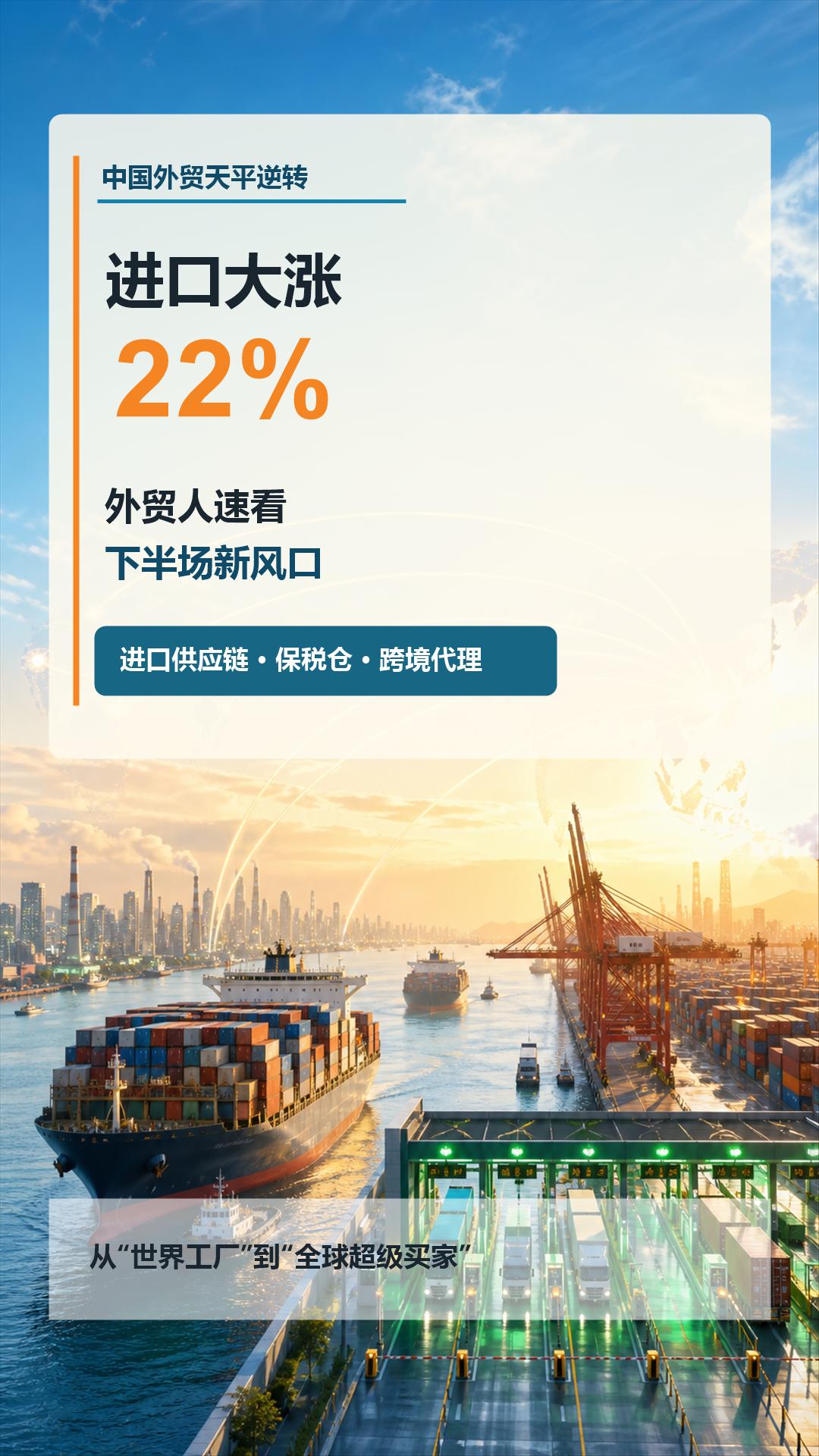
 China's foreign trade sees a turnaround: imports surge by 22%! Foreign trade professionals should quickly take note of the new trends in the second half of the year
 What Does a Global Traffic Ecosystem Service Provider Do? What Are the Differences from a Single Advertising Agency


Related Products
 EasyCamp SaaS Smart Website Marketing SystemE-Yingbao SaaS Smart Website Marketing System: AI-powered, zero-code website building. Rapidly launch multilingual independent e-commerce sites in just 10 minutes. Global server acceleration and AI-driven SEO optimization empower businesses to efficiently connect with global markets. The seamless integration of technology and user-friendly operation makes building e-commerce sites incredibly simple.
 AI+SEM Intelligent Advertising Marketing SystemAI+SEM drives intelligent ad creation, empowering full-funnel precision advertising marketing. The system automatically generates weekly/monthly reports, AI recommends keywords and target countries, monitors core metrics in real-time with intelligent alerts, and enables one-click high-conversion ad solutions to help quickly acquire customers and improve ROI.
 AI+SEO Dual Engine Optimization ServiceEasyWin AI+SEO Dual Engine Optimization System leverages AI-powered keyword mining, content generation, and comprehensive technical optimization to help foreign trade enterprises acquire high-quality organic traffic, significantly improving search rankings and conversion rates.
 AI+SNS Social Media Marketing SystemYingbao AI+SNS Social Media Marketing System - Precision social capture for the social media era. Supports one-click content synchronization across major platforms like Facebook and LinkedIn. AI intelligently rewrites posts for enhanced relevance. 24/7 AI customer service and user profiling analysis empower businesses to efficiently expand into global markets.
 AI+SEO营销解决方案易营宝AI+SEO营销解决方案,通过AI批量写作、智能生成TDK、精准关键词扩词等功能,全面优化网站SEO效果,提升流量与转化率。助力企业构建高效智能网站新生态。
 AI+SEM Advertising Marketing SolutionsAI+SEM Advertising Marketing Solution leverages AI technology to deeply empower SEM ad campaigns. It automatically generates weekly/monthly reports using AI, presenting account data across multiple dimensions for comprehensive insights into campaign performance and trends. The system precisely recommends keywords and target countries, intelligently generates high-conversion ad copy, and enables one-click activation of efficient campaign plans to help businesses rapidly acquire customers. Simultaneously, it monitors core metrics in real time, intelligently identifies abnormal fluctuations, and issues timely alerts to ensure stable, high-return advertising results.
 Domain Name ServicesEasyWin provides professional domain name services, including intelligent queries, one-stop registration, brand protection, and full lifecycle management, helping businesses build a digital brand image.
 EasyOperate B2C Cross-Border E-Commerce Platform & Independent WebsiteEasyStore B2C Cross-border E-commerce Independent Store is an intelligent website building and cross-border e-commerce integrated solution independently developed by EasyStore Information Technology (Beijing) Co., Ltd. The system is specially designed for small and medium-sized as well as large export enterprises, integrating 'website building, operation, marketing, advertising, and conversion' into one, helping enterprises quickly establish cross-border e-commerce independent stores to achieve brand globalization and global sales growth.
The platform supports multiple languages, multiple currencies, and multi-channel marketing, with built-in AI intelligent translation and SEO optimization systems, suitable for mainstream markets such as Southeast Asia, Europe and America, Latin America, and the Middle East, assisting Chinese manufacturing enterprises in efficiently deploying international e-commerce strategies. SSL证书易营宝提供专业SSL安全证书服务,包括单域名和泛域名证书,确保网站数据传输加密、身份验证和完整性保护,助力企业建立安全可信的在线业务环境。









