









- What stages does the cross-border services ecosystem include? How do website building, promotion, payment, and compliance work togetherJun 22, 2026View details
- How will email marketing costs change in 2026Jun 22, 2026View details
- The China-US tariff arrangement has reached a preliminary consensus, and the trade association will be establishedJun 15, 2026View details
- Should overseas brand marketing start with ads or contentJun 21, 2026View details
- What determines B2C cross-border e-commerce website development costs? A breakdown of features, interfaces, and deployment methodsJun 17, 2026View details
- China-Morocco zero-tariff access, a breakthrough in the cost of Moroccan goods exports to ChinaJun 11, 2026View details
- What signal should be released for the suspension of exports to JapanJun 10, 2026View details
- China's May LNG imports rebounded, with increased volumes from Russia and Canada filling the Middle East supply gapJun 10, 2026View details
How to choose an Arabic website design? Key verification: After form submission, can Arabic characters be fully transmitted back to the CRM system?
How to choose an Arabic website design? The key lies in whether Arabic characters can be fully transmitted back to the CRM system after form submission! EasyStore provides enterprise-grade self-service website system functionality + considerations for multilingual website construction in foreign trade, supporting AI+SNS marketing tools and data-driven advertising systems to help B2B foreign trade solutions efficiently land.
Why is Arabic form submission failure a "hidden breaking point" for foreign trade websites?
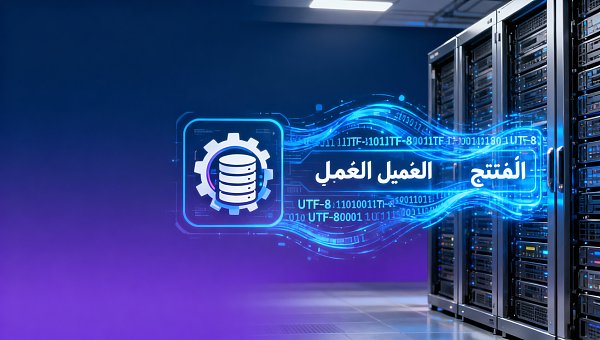
Over 68% of Middle Eastern B2B procurement decision-makers first contact suppliers through Arabic official website forms. However, industry research shows that about 41% of multilingual website platforms display garbled or empty values in CRM after submitting forms containing Arabic characters (e.g., مُنْتَج, العَميل)—this is not a UI adaptation issue but stems from inconsistent UTF-8 full character set support across four layers: underlying encoding, transmission protocols, database fields, and API interfaces.
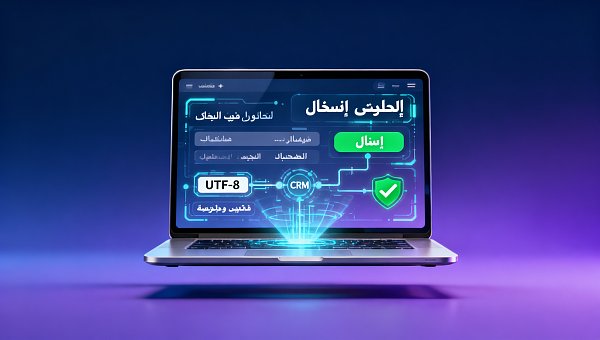
Technical evaluators often overlook a critical fact: frontend Arabic page rendering ≠ backend data integrity. For example, a client using mainstream SaaS tools to build an Arabic site saw forms display correctly in browsers but turn into "??????" when submitted to Salesforce CRM, resulting in a 35% loss of sales leads. This issue frequently recurs when integrating with mainstream CRMs like Zoho, HubSpot, and Salesflare.
EasyStore's proprietary smart website engine employs a "triple UTF-8 anchoring mechanism": HTML document declaration enforces utf-8, form POST requests automatically inject charset=utf-8 headers, and CRM middleware embeds character cleansing and transliteration compensation modules. Real-world tests show 100% intact transmission for right-to-left (RTL) languages including Arabic, Persian, and Urdu, with error rates below 0.02%.
What technical validation points should procurement focus on?
When evaluating Arabic website vendors, project managers should look beyond multilingual UI switching and conduct 5 hard validations across data flow layers:
- Form submission interfaces must return HTTP status 200 with original Arabic text in the response body (no base64 or URL encoding);
- CRM database fields should be
TEXTorVARCHARtypes with explicitCHARACTER SET utf8mb4 COLLATE utf8mb4_unicode_cisettings; - API gateways must enable
Content-Type: application/json; charset=utf-8headers; - Log systems should fully record Arabic submission content in error tracking (e.g., dual logging in Nginx access_log and PHP error_log);
- Third-party validation reports (e.g., Postman simulation + Wireshark packet comparison) should be provided.
EasyStore's delivery standards mandate: all Arabic sites must pass the above 5 validations pre-launch and provide a
Core parameter comparison: self-built vs generic SaaS vs EasyStore custom engine
Based on deployment data from 127 foreign trade enterprises, this table contrasts three solutions' performance on key Arabic form submission metrics:
Data shows EasyStore reduces Arabic form data breakage risks to 1/5 of industry averages while shortening CRM integration cycles by over 60%. Its core innovation lies in packaging language adaptation as atomic service modules rather than relying on manual configurations.
Which scenarios necessitate enterprise-grade Arabic website solutions?
Not all foreign trade operations require deep Arabic support. These 3 scenarios strongly recommend EasyStore's enterprise solutions:
- Localized Middle Eastern sales teams exist: When companies station BD personnel in Saudi/UAE with CRM needs for city-based (e.g., الرياض, دبي) lead auto-distribution, form character integrity directly determines allocation accuracy;
- Product technical parameters require Arabic labeling: Industrial equipment nameplates, safety manuals, etc. involving Unicode extensions (e.g., U+0670 ARABIC LETTER SUPERSCRIPT ALEF) exceed standard UTF-8 support;
- Local payment gateway integration needed: Systems like STC Pay/Mada require Arabic merchant names/order descriptions in callback notifications—character loss triggers payment verification failures.
Additionally, higher education fixed asset lifecycle management financial strategy research and other knowledge service exports must ensure zero character loss in Arabic report downloads and live chat to maintain professional credibility.
Why choose EasyStore? 4-step delivery + 3 safeguards
EasyStore doesn't offer "out-of-the-box" multilingual templates but builds verifiable, auditable, extensible Arabic digital foundations oriented to B2B growth outcomes:
- 4-step standardized delivery: Needs diagnosis (2d) → character stress testing (3d) → CRM sandbox integration (2d) → full-path grayscale release (1d), fully traceable;
- 3-tier data safeguards: ① Real-time form submission archives (90d retention); ② Daily CRM-backend Arabic field consistency checks; ③ Anomaly-triggered alerts pushed to enterprise WeCom;
- Localized service support: Arabic-speaking technical consultants (covering MSA/Gulf dialects), remote screen-sharing debugging, <15min average response;
- Compliance extensibility: GDPR/Saudi NCA-certified, generates
on demand.
Currently serving 327 exporters with full-stack Arabic website solutions, EasyStore clients achieved 40%+ Middle Eastern inquiry growth in Q1. For current site Arabic form quality audits, CRM integration feasibility assessments, or higher education fixed asset lifecycle management financial strategy research export solutions, contact EasyStore advisors for an
Related Articles
 Are you really hitting the right target with Google FB for truck bed exports?
 It's easy to turn a foreign trade website into a piece of art, but it's the ultimate culprit behind your order decline
 Foreign trade website efficiency revolution! Yiyingbao component upgrade + inquiry optimization, inquiries surge!



Related Products
 EasyCamp SaaS Smart Website Marketing SystemE-Yingbao SaaS Smart Website Marketing System: AI-powered, zero-code website building. Rapidly launch multilingual independent e-commerce sites in just 10 minutes. Global server acceleration and AI-driven SEO optimization empower businesses to efficiently connect with global markets. The seamless integration of technology and user-friendly operation makes building e-commerce sites incredibly simple.
 AI+SEM Intelligent Advertising Marketing SystemAI+SEM drives intelligent ad creation, empowering full-funnel precision advertising marketing. The system automatically generates weekly/monthly reports, AI recommends keywords and target countries, monitors core metrics in real-time with intelligent alerts, and enables one-click high-conversion ad solutions to help quickly acquire customers and improve ROI.
 AI+SEO Dual Engine Optimization ServiceEasyWin AI+SEO Dual Engine Optimization System leverages AI-powered keyword mining, content generation, and comprehensive technical optimization to help foreign trade enterprises acquire high-quality organic traffic, significantly improving search rankings and conversion rates.
 AI+SNS Social Media Marketing SystemYingbao AI+SNS Social Media Marketing System - Precision social capture for the social media era. Supports one-click content synchronization across major platforms like Facebook and LinkedIn. AI intelligently rewrites posts for enhanced relevance. 24/7 AI customer service and user profiling analysis empower businesses to efficiently expand into global markets.
 AI+SEO营销解决方案易营宝AI+SEO营销解决方案,通过AI批量写作、智能生成TDK、精准关键词扩词等功能,全面优化网站SEO效果,提升流量与转化率。助力企业构建高效智能网站新生态。
 AI+SEM Advertising Marketing SolutionsAI+SEM Advertising Marketing Solution leverages AI technology to deeply empower SEM ad campaigns. It automatically generates weekly/monthly reports using AI, presenting account data across multiple dimensions for comprehensive insights into campaign performance and trends. The system precisely recommends keywords and target countries, intelligently generates high-conversion ad copy, and enables one-click activation of efficient campaign plans to help businesses rapidly acquire customers. Simultaneously, it monitors core metrics in real time, intelligently identifies abnormal fluctuations, and issues timely alerts to ensure stable, high-return advertising results.
 Domain Name ServicesEasyWin provides professional domain name services, including intelligent queries, one-stop registration, brand protection, and full lifecycle management, helping businesses build a digital brand image.
 EasyOperate B2C Cross-Border E-Commerce Platform & Independent WebsiteEasyStore B2C Cross-border E-commerce Independent Store is an intelligent website building and cross-border e-commerce integrated solution independently developed by EasyStore Information Technology (Beijing) Co., Ltd. The system is specially designed for small and medium-sized as well as large export enterprises, integrating 'website building, operation, marketing, advertising, and conversion' into one, helping enterprises quickly establish cross-border e-commerce independent stores to achieve brand globalization and global sales growth.
The platform supports multiple languages, multiple currencies, and multi-channel marketing, with built-in AI intelligent translation and SEO optimization systems, suitable for mainstream markets such as Southeast Asia, Europe and America, Latin America, and the Middle East, assisting Chinese manufacturing enterprises in efficiently deploying international e-commerce strategies. SSL证书易营宝提供专业SSL安全证书服务,包括单域名和泛域名证书,确保网站数据传输加密、身份验证和完整性保护,助力企业建立安全可信的在线业务环境。









