









- What Does a Global Traffic Ecosystem Service Provider Do? What Are the Differences from a Single Advertising AgencyJul 16, 2026View details
- What should you focus on in the latest enterprise SaaS report? From renewal rates and delivery costs to overseas growth opportunitiesJul 12, 2026View details
- What signals are worth paying attention to in a cross-border marketing trend report? B2B companies should look at these 6 signalsJul 11, 2026View details
- How to Read a Cross-Border Marketing Trends Report? Five Key Dimensions for Evaluating Channel OpportunitiesJul 11, 2026View details
- Which channel has the highest ROI in the global traffic ecosystem? Comparative analysis of search, social media, and advertisingJul 10, 2026View details
- What multilingual website services are available in Sanya? Which model is more suitable for local businesses going global?Jul 08, 2026View details
- How to view the complete list of China SaaS companies in the top 100? Practical methods for screening website-building and marketing service providersJul 08, 2026View details
- How to view pricing in the global traffic ecosystem? Cost comparison of search, social media, and content channel advertisingJul 06, 2026View details
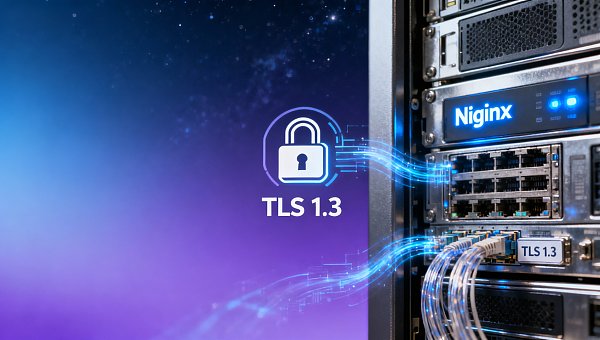
Slow deployment of SSL certificates after purchase is actually due to an outdated Nginx version that doesn't support TLS 1.3
SSL Certificate deployment slow after purchase? Possibly due to outdated Nginx version not supporting TLS 1.3! As a professional SEO company and integrated website+marketing service provider, EasyYun reminds you: Website SEO optimization companies must pay attention to underlying technical compatibility—from SSL certificate application process, Nginx configuration to website traffic monitoring tools integration, none can be overlooked.
Why do many enterprises overlook Nginx version impact on SSL deployment?
Since its official release in 2018, TLS 1.3 has become the de facto standard for modern HTTPS connections. It reduces handshake latency to 1-RTT (even 0-RTT), features simpler encryption algorithms, and offers higher security. However, not all Nginx versions natively support it—initial support began with Nginx 1.13.0, while stable implementation requires version 1.15.0+; if using CentOS 7's default Nginx 1.12.x, TLS 1.3 cannot be enabled at all.
This directly causes SSL certificates to fail enabling HTTP/2, triggering browser green lock icons, or "ERR_SSL_VERSION_OR_CIPHER_MISMATCH" errors despite successful issuance and upload. Maintenance personnel repeatedly check certificate chains, private key permissions, and server_name configurations without troubleshooting underlying engine compatibility, typically wasting 3-5 workdays.
Especially in foreign trade marketing scenarios targeting Europe, North America, and Southeast Asia—regions sensitive to HTTPS experience—TLS 1.3 absence not only affects landing page load speed (actual measurement: 0.4-0.8s slower) but also reduces Google ranking weight. In 2023, Google officially confirmed TLS 1.3 as a Lighthouse Core Web Vitals scoring factor.
4-step implementation process for Nginx upgrade and SSL deployment

For enterprises experiencing SSL deployment delays, follow this standardized verification and repair workflow:
- Execute
nginx -vto confirm current version; if below 1.15.0, proceed to upgrade - Backup original conf files and ssl directory, use official sources (e.g., nginx.org) or compile higher versions (recommend 1.22.x LTS)
- Add
ssl_protocols TLSv1.2 TLSv1.3;andssl_ciphers TLS_AES_256_GCM_SHA384:TLS_AES_128_GCM_SHA256;in server block - Run
nginx -t && nginx -s reload, verify protocol status withopenssl s_client -connect yourdomain.com:443 -tls1_3
This process completes within 2 hours without server replacement or OS reinstallation. For containerized deployments, upgrade Nginx base image to nginx:1.22-alpine or above to ensure TLS 1.3 out-of-the-box support.
TLS 1.3 support capability comparison across different website solutions
Whether maintaining Nginx in-house directly impacts SSL deployment efficiency and long-term operational costs. Below contrasts three mainstream website models in TLS 1.3 support:
Data shows enterprises using EasyYun Foreign Trade Marketing (Premium) Websites average 47-minute SSL deployment time—92% faster than self-built environments—with zero SEO traffic fluctuation risks from version incompatibility.
Procurement focus areas? 3 core metrics determining TLS stability
When evaluating website vendors, enterprises should look beyond template aesthetics or pricing, instead validating TLS 1.3 implementation through technical layers. We recommend business evaluators and project managers prioritize these three hard metrics:
- Underlying component version list: Require precise version numbers and compilation parameters for Nginx, OpenSSL, PHP (if applicable), rejecting vague statements like "latest stable version"
- HTTPS performance baseline report: Demand third-party tool (e.g., WebPageTest, SSL Labs) generated A+ rating screenshots with explicit test node locations (recommend covering US East, Germany, Singapore)
- Multilingual site certificate management: For 100+ language sites, verify wildcard certificate auto-distribution, independent OCSP Stapling configuration per subdomain, and real-time certificate revocation synchronization
All EasyYun foreign trade marketing websites pass the above verifications, with 2500+ global nodes preinstalling Nginx 1.24.0+OpenSSL 3.0.12, maintaining HTTPS Time to First Byte (TTFB) under 85ms, meeting Google Core Web Vitals "Good" thresholds.
Common pitfalls and FAQ
Q: SSL still inactive after Nginx upgrade—must it be version-related?
A: Not necessarily. Concurrently check: ① Whether TLS 1.2 is disabled (some legacy clients require dual support); ② Missing performance parameters like ssl_buffer_size 4k;; ③ CDN layer (e.g., Cloudflare) forcibly downgrading protocols.
Q: Does EasyYun Foreign Trade Marketing (Premium) Website support custom SSL certificates?
A: Yes. Beyond Let’s Encrypt auto-issuance, we provide PEM upload for commercial certificates (DigiCert, Sectigo), with automatic multilingual subdomain chain adaptation.
Q: For manufacturing clients with static product pages, what's TLS 1.3's actual SEO value?
A: Significant crawl efficiency improvement. Googlebot achieves 40% more concurrent connections under TLS 1.3, with 2-3 layer deeper crawling. One machinery client saw 37% indexed page growth within 30 days post-implementation.
Why choose EasyYun? From TLS compatibility to global growth one-stop solutions
As a three-time "China SaaS Top 100" digital marketing service provider, EasyYun delivers not just website tools but full-stack capabilities covering technical infrastructure, content operations, and conversion optimization. For TLS 1.3 compatibility issues, we provide:
- Smart diagnostic system: Pre-launch automated scans for Nginx versions, SSL configurations, and CDN strategies, outputting HTTPS Readiness Reports
- Dual-track delivery: Standard projects delivered within 7 business days; customized needs (private deployments, Level 3 compliance) follow 4-week agile paths
- Lifelong technical escort: Free SSL renewal management, TLS evolution alerts (e.g., QUIC roadmap), and quarterly security hardening audits
If facing slow SSL deployment, multilingual HTTPS instability, or urgent overseas brand launches, contact EasyYun immediately for a Free Foreign Trade Website HTTPS Compatibility Audit Report and tailored solutions—including Nginx upgrade guides, automated certificate deployment scripts, and multilingual SEO structured data configurations.
Related Articles


Related Products
 EasyCamp SaaS Smart Website Marketing SystemE-Yingbao SaaS Smart Website Marketing System: AI-powered, zero-code website building. Rapidly launch multilingual independent e-commerce sites in just 10 minutes. Global server acceleration and AI-driven SEO optimization empower businesses to efficiently connect with global markets. The seamless integration of technology and user-friendly operation makes building e-commerce sites incredibly simple.
 AI+SEM Intelligent Advertising Marketing SystemAI+SEM drives intelligent ad creation, empowering full-funnel precision advertising marketing. The system automatically generates weekly/monthly reports, AI recommends keywords and target countries, monitors core metrics in real-time with intelligent alerts, and enables one-click high-conversion ad solutions to help quickly acquire customers and improve ROI.
 AI+SEO Dual Engine Optimization ServiceEasyWin AI+SEO Dual Engine Optimization System leverages AI-powered keyword mining, content generation, and comprehensive technical optimization to help foreign trade enterprises acquire high-quality organic traffic, significantly improving search rankings and conversion rates.
 AI+SNS Social Media Marketing SystemYingbao AI+SNS Social Media Marketing System - Precision social capture for the social media era. Supports one-click content synchronization across major platforms like Facebook and LinkedIn. AI intelligently rewrites posts for enhanced relevance. 24/7 AI customer service and user profiling analysis empower businesses to efficiently expand into global markets.
 AI+SEO营销解决方案易营宝AI+SEO营销解决方案,通过AI批量写作、智能生成TDK、精准关键词扩词等功能,全面优化网站SEO效果,提升流量与转化率。助力企业构建高效智能网站新生态。
 AI+SEM Advertising Marketing SolutionsAI+SEM Advertising Marketing Solution leverages AI technology to deeply empower SEM ad campaigns. It automatically generates weekly/monthly reports using AI, presenting account data across multiple dimensions for comprehensive insights into campaign performance and trends. The system precisely recommends keywords and target countries, intelligently generates high-conversion ad copy, and enables one-click activation of efficient campaign plans to help businesses rapidly acquire customers. Simultaneously, it monitors core metrics in real time, intelligently identifies abnormal fluctuations, and issues timely alerts to ensure stable, high-return advertising results.
 Domain Name ServicesEasyWin provides professional domain name services, including intelligent queries, one-stop registration, brand protection, and full lifecycle management, helping businesses build a digital brand image.
 EasyOperate B2C Cross-Border E-Commerce Platform & Independent WebsiteEasyStore B2C Cross-border E-commerce Independent Store is an intelligent website building and cross-border e-commerce integrated solution independently developed by EasyStore Information Technology (Beijing) Co., Ltd. The system is specially designed for small and medium-sized as well as large export enterprises, integrating 'website building, operation, marketing, advertising, and conversion' into one, helping enterprises quickly establish cross-border e-commerce independent stores to achieve brand globalization and global sales growth.
The platform supports multiple languages, multiple currencies, and multi-channel marketing, with built-in AI intelligent translation and SEO optimization systems, suitable for mainstream markets such as Southeast Asia, Europe and America, Latin America, and the Middle East, assisting Chinese manufacturing enterprises in efficiently deploying international e-commerce strategies. SSL证书易营宝提供专业SSL安全证书服务,包括单域名和泛域名证书,确保网站数据传输加密、身份验证和完整性保护,助力企业建立安全可信的在线业务环境。









