









- What multilingual website services are available in Sanya? Which model is more suitable for local businesses going global?Jul 08, 2026View details
- How to view the complete list of China SaaS companies in the top 100? Practical methods for screening website-building and marketing service providersJul 08, 2026View details
- How to view pricing in the global traffic ecosystem? Cost comparison of search, social media, and content channel advertisingJul 06, 2026View details
- How to assess foreign trade website development trends?Looking at 2026 changes from multilingual,AI content to conversion pathsJul 04, 2026View details
- What are the new trends in multilingual marketing data analytics tools in 2026? Focus on attribution、automation and complianceJul 04, 2026View details
- Is Brand Globalization Marketing Consulting Worth Buying? At What Stage Should Companies Bring It InJul 01, 2026View details
SSL certificate configured but browser still shows 'Not Secure'? 7 hidden configuration errors IT staff must troubleshoot
SSL certificate has been configured, but the browser still displays "Not Secure"? This often stems from hidden configuration errors. This article compiles 7 high-frequency operational vulnerabilities, combined with practical scenarios such as AI-powered SEO optimization and social media automation tools, to assist procurement personnel, security administrators, and project managers in quickly identifying issues, ensuring the security and stability of key channels like Facebook social media automation management and LinkedIn marketing automation.
1. SSL Certificate ≠ Automatic HTTPS Activation: The Overlooked Basic Logic

Many researchers mistakenly assume that simply completing the SSL certificate application and deploying it to the server will automatically enable HTTPS by default. However, this is not the case—an SSL certificate only provides encryption capabilities, while protocol enforcement redirects, HSTS headers, mixed content cleanup, and other steps are indispensable. Particularly in smart website-building systems like EasyStore, multilingual standalone sites often distribute static resources via CDN. If the CDN fails to synchronize HTTPS back-to-origin settings or update caching policies, it will directly trigger the browser's "Not Secure" warning.
More covert is the HTTP/2 protocol compatibility issue: Some older Nginx versions fail to correctly configure ALPN negotiation when enabling HTTP/2, causing TLS handshake failures and downgrading to plain HTTP transmission. Such errors won't appear in logs but expose API interfaces called by Facebook ad automation tools to man-in-the-middle attack risks.
2. Deep Inspection Checklist for 7 Hidden Configuration Errors
Based on 12,000+ enterprise security audit cases handled by EasyStore's technical backend over the past 3 years, we've distilled the following high-frequency vulnerability items. All issues are now built into the AI marketing engine's solution detection module, supporting one-click scanning and repair recommendations:
3. Amplified Risks in Social Media Automation Scenarios

When SSL configuration flaws overlap with social media automation tools, risks multiply exponentially. For example: LinkedIn's automated marketing strategy relies on OAuth 2.0 token exchange—if callback domains aren't fully HTTPS-enabled, attackers can hijack the authorization flow; when Facebook ad automation tools call Meta Graph API, uncovered wildcard domains (e.g., *.shop.example.com) in server certificates cause silent failures in bulk ad campaigns.
EasyStore's smart website system now implements real-time SSL health monitoring: Certificates with <30 days validity, <2048-bit key strength, or disabled OCSP Stapling trigger alerts pushed to project managers' enterprise WeChat. This capability stems from our 15 core patented technologies, including dynamic SSL verification algorithms.
4. Why Choose EasyStore: Full-Stack Protection from Diagnosis to Resolution
As a Google Premier Partner and Meta official agent, EasyStore integrates SSL security into its "Build-Acquire-Convert" full-chain risk control system. Our AI marketing engine not only optimizes TDK and content generation but deeply incorporates SSL compliance checks—automatically identifying challenges and strategies for expanding enterprise cost accounting scope pages requiring HTTPS enforcement, then coordinating global CDN nodes for second-level policy deployment.
For procurement teams, we offer SSL configuration health SLAs: 99.99% uptime guarantee with ≤15-minute incident response; for distributors/resellers, all diagnostic reports support white-label exports for demonstrating professional security credentials; for brand controllers/security officers, the system outputs audit logs compliant with PCI DSS, GDPR, and Level 3 requirements of China's Cybersecurity Law.
Contact EasyStore technical consultants now for a free in-depth SSL configuration assessment report, unlocking the security capabilities of our AI-driven all-in-one smart marketing platform.
- SSL Certificate
- Multilingual Independent Website
- LinkedIn Marketing
- Facebook Ads
- Yiyingbao
- SEO
- Independent Website
- Smart website builder system
- SEO Optimization
- Smart Website Building
- EasySite Intelligent Website Builder
- AI Marketing Engine
- Social Media Automation
- Marketing Automation
- AI Marketing
Related Articles
 What do I need to prepare to configure payment in a WeChat Mini Program? Merchant ID, certificate, and review process explained.
 Is 20 inquiries per month for a foreign trade website considered low? First look at traffic quality、average order value and conversion rate
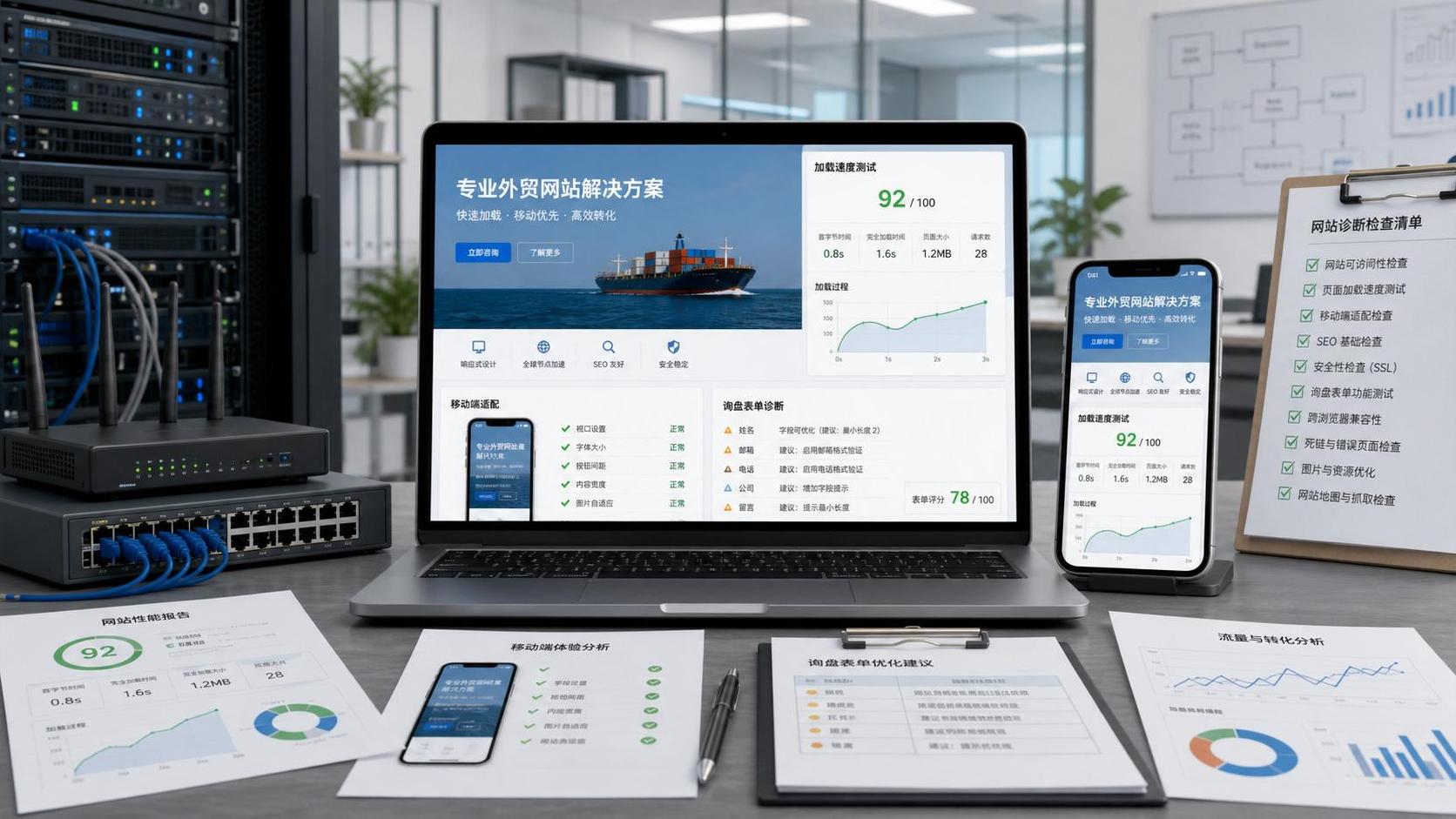
 How to troubleshoot foreign trade website development issues? Diagnose item by item from loading speed to inquiry forms


Related Products
 EasyCamp SaaS Smart Website Marketing SystemE-Yingbao SaaS Smart Website Marketing System: AI-powered, zero-code website building. Rapidly launch multilingual independent e-commerce sites in just 10 minutes. Global server acceleration and AI-driven SEO optimization empower businesses to efficiently connect with global markets. The seamless integration of technology and user-friendly operation makes building e-commerce sites incredibly simple.
 AI+SEM Intelligent Advertising Marketing SystemAI+SEM drives intelligent ad creation, empowering full-funnel precision advertising marketing. The system automatically generates weekly/monthly reports, AI recommends keywords and target countries, monitors core metrics in real-time with intelligent alerts, and enables one-click high-conversion ad solutions to help quickly acquire customers and improve ROI.
 AI+SEO Dual Engine Optimization ServiceEasyWin AI+SEO Dual Engine Optimization System leverages AI-powered keyword mining, content generation, and comprehensive technical optimization to help foreign trade enterprises acquire high-quality organic traffic, significantly improving search rankings and conversion rates.
 AI+SNS Social Media Marketing SystemYingbao AI+SNS Social Media Marketing System - Precision social capture for the social media era. Supports one-click content synchronization across major platforms like Facebook and LinkedIn. AI intelligently rewrites posts for enhanced relevance. 24/7 AI customer service and user profiling analysis empower businesses to efficiently expand into global markets.
 AI+SEO营销解决方案易营宝AI+SEO营销解决方案,通过AI批量写作、智能生成TDK、精准关键词扩词等功能,全面优化网站SEO效果,提升流量与转化率。助力企业构建高效智能网站新生态。
 AI+SEM Advertising Marketing SolutionsAI+SEM Advertising Marketing Solution leverages AI technology to deeply empower SEM ad campaigns. It automatically generates weekly/monthly reports using AI, presenting account data across multiple dimensions for comprehensive insights into campaign performance and trends. The system precisely recommends keywords and target countries, intelligently generates high-conversion ad copy, and enables one-click activation of efficient campaign plans to help businesses rapidly acquire customers. Simultaneously, it monitors core metrics in real time, intelligently identifies abnormal fluctuations, and issues timely alerts to ensure stable, high-return advertising results.
 Domain Name ServicesEasyWin provides professional domain name services, including intelligent queries, one-stop registration, brand protection, and full lifecycle management, helping businesses build a digital brand image.
 EasyOperate B2C Cross-Border E-Commerce Platform & Independent WebsiteEasyStore B2C Cross-border E-commerce Independent Store is an intelligent website building and cross-border e-commerce integrated solution independently developed by EasyStore Information Technology (Beijing) Co., Ltd. The system is specially designed for small and medium-sized as well as large export enterprises, integrating 'website building, operation, marketing, advertising, and conversion' into one, helping enterprises quickly establish cross-border e-commerce independent stores to achieve brand globalization and global sales growth.
The platform supports multiple languages, multiple currencies, and multi-channel marketing, with built-in AI intelligent translation and SEO optimization systems, suitable for mainstream markets such as Southeast Asia, Europe and America, Latin America, and the Middle East, assisting Chinese manufacturing enterprises in efficiently deploying international e-commerce strategies. SSL证书易营宝提供专业SSL安全证书服务,包括单域名和泛域名证书,确保网站数据传输加密、身份验证和完整性保护,助力企业建立安全可信的在线业务环境。









