- Does EasyAd's advertising performance have guarantees? How does the service mechanism work?2026-01-18View details
- Is the cost of using AI advertising smart manager high? How to calculate the budget more reasonably2026-01-18View details
- How to implement multilingual advertising optimization solutions in the general internet industry2026-01-18View details
- Is EasyAd AI Advertising Smart Manager easy to use? Is it suitable for general internet service companies?2026-01-19View details
- Which company provides the best multilingual website construction services for foreign trade? How should companies of different scales choose suppliers2026-01-17View details
- What is the role of HTTPS for websites? Why is the decision-making level increasingly emphasizing digital trust systems2026-01-15View details
- What is Global CDN Acceleration? Key Considerations for Enterprise Selection from Architecture to Cost2026-01-16View details
- What are the low-cost customer acquisition solutions suitable for SMEs? The practical path of integrating search and social media2026-01-17View details
AI+SEM Advertising System Strategy: Budget Allocation, Keyword Strategy and ROI Evaluation
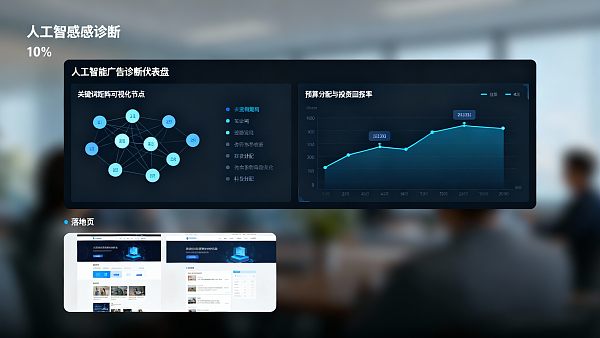
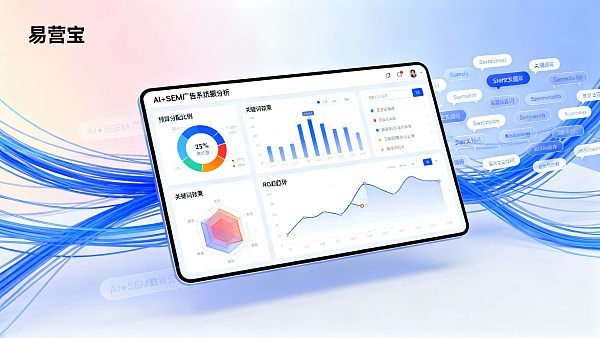
This strategy leverages Alibaba's Easy Treasure, detailing the AI+SEM Advertising System's budget allocation, keyword strategy, and ROI evaluation to teach you how to use AI tools that improve website SEO rankings to enhance foreign trade conversions. This article targets market researchers, corporate decision-makers, and project managers, focusing on common pain points in foreign trade businesses such as limited budgets, insufficient keyword coverage, and unquantifiable ad returns. We will explore four dimensions: budget allocation frameworks, keyword system construction, creative and landing page correlation, and ROI model establishment, combining AI-driven operational methods and measurable KPIs to help you achieve more efficient lead acquisition and conversions on Google Ads, Meta, and cross-border search platforms. This article balances strategy and execution details for easy implementation by marketing teams.
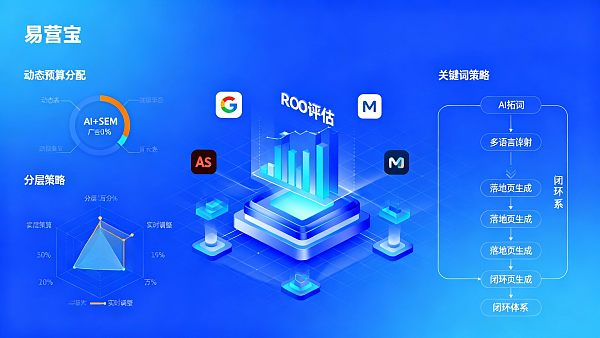
Budget Allocation: Layered Strategy from Macro to Ad Unit Level
Under the AI+SEM environment, budget allocation should follow two principles: "goal orientation + data feedback loops." First, allocate annual or quarterly budgets by goal tiers: brand exposure (≤20%), search lead acquisition (40%-60%), remarketing & recall (20%-30%), while reserving 10% for testing and emergent opportunities. Second, establish a three-layer account structure: country/language layer, product/category layer, and intent/keyword layer. Each tier requires independent KPIs and quick ROI rules, e.g., CPC caps, conversion rate baselines, and CPA thresholds. Operationally, use AI ad diagnostic tools for real-time budget reallocation: when high-intent keywords in a country show below-baseline CPA with upward trends, AI automatically increases daily budget share; conversely, underperforming assets get deprioritized or paused. Additionally, allocate 10% of budgets to keyword mining and content testing (long-tail keywords and multilingual landing page experiments), using data to identify scalable audiences and creatives. This closed-loop, tiered budget management helps foreign trade businesses maximize high-quality traffic while controlling total spend.
Keyword Strategy: Closed-Loop System from AI Expansion to Multilingual Landing Pages
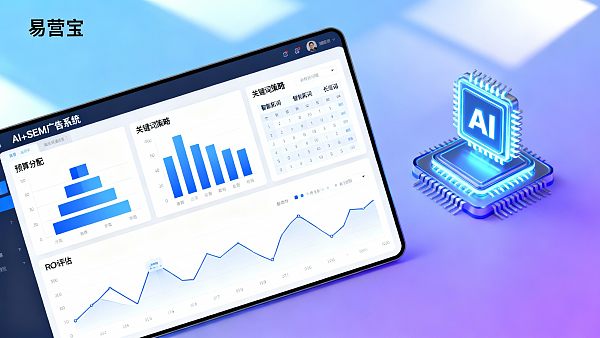
Keyword architecture must cover four intent types: brand, transactional, informational, and long-tail combo. Step 1: Use AI keyword mining tools for large-scale seed expansion, combining search volume, trends, and bid costs into a preliminary matrix. Step 2: Prioritize low-competition, high-value long-tail keywords to reduce CPC and capture high-potential conversions. Step 3: Implement multilingual mapping strategies, generating localized keywords and TDK (Title/Description/Keywords) based on regional language habits and purchase paths, synchronized with multilingual website builders for corresponding landing pages. For landing pages, AI-generated images and auto-TDK generators significantly improve relevance and quality scores while reducing manual production cycles. We recommend a one-click keyword matrix generation workflow paired with landing page templates, ensuring each keyword has a tailored UX to boost ad quality scores and lower costs. Case studies show AI-generated multilingual landing pages achieve higher CTRs and conversions in target markets, further enhanced by smart internal linking and structured data for organic and paid traffic synergy.
Creative & Landing Page Optimization: Conversion Funnel Design from Assets to UX
Ad and landing page performance directly determines SEM marginal returns. For creatives, adopt a "creative factory" model where AI generates high-CTR ad copy, multilingual assets, and dynamic keyword libraries, enabling rapid A/B test iterations and top-performers integration. Landing pages should prioritize three elements: load speed (<2s), trust signals (structured data and social proof), and simplified conversion paths (clean forms or multi-step flows). Additionally, build an asset-keyword-landing page mapping matrix. Any creative test must sync with relevant keyword clusters and landing pages to ensure post-click experience consistency, improving conversion rates. With real-time performance monitoring, AI flags declining combinations and suggests optimizations, forming a closed loop from creative generation to landing page refinement for sustained ROI growth.
ROI Evaluation & Continuous Optimization: Operational Data Feedback Loops
ROI assessment hinges on trackable conversion paths and proper attribution models. For foreign trade, use layered attribution: combine direct conversions, first/last clicks with data-driven models, regularly testing KPI sensitivities. Cost analysis should separate media, creative, and landing page production/maintenance costs; revenue tracking must include order net values, ad-influenced price premiums, and LTV. Build sensitivity analyses to quantify profit impacts when CPA fluctuates, adjusting budget ratios and ad rhythms accordingly. Actionable tips: 1) Weekly ROI reports for keywords and creatives; 2) AI-powered account health checks; 3) "Test pools" to validate new keywords and multilingual content. For quick starts, consider platforms like AI+SEO Dual-Engine Optimization Services that integrate AI keyword expansion, auto-TDK generation, multilingual content creation, and technical SEO audits into one loop, shortening testing cycles while stabilizing rankings and conversions.
Summary & Action Guide
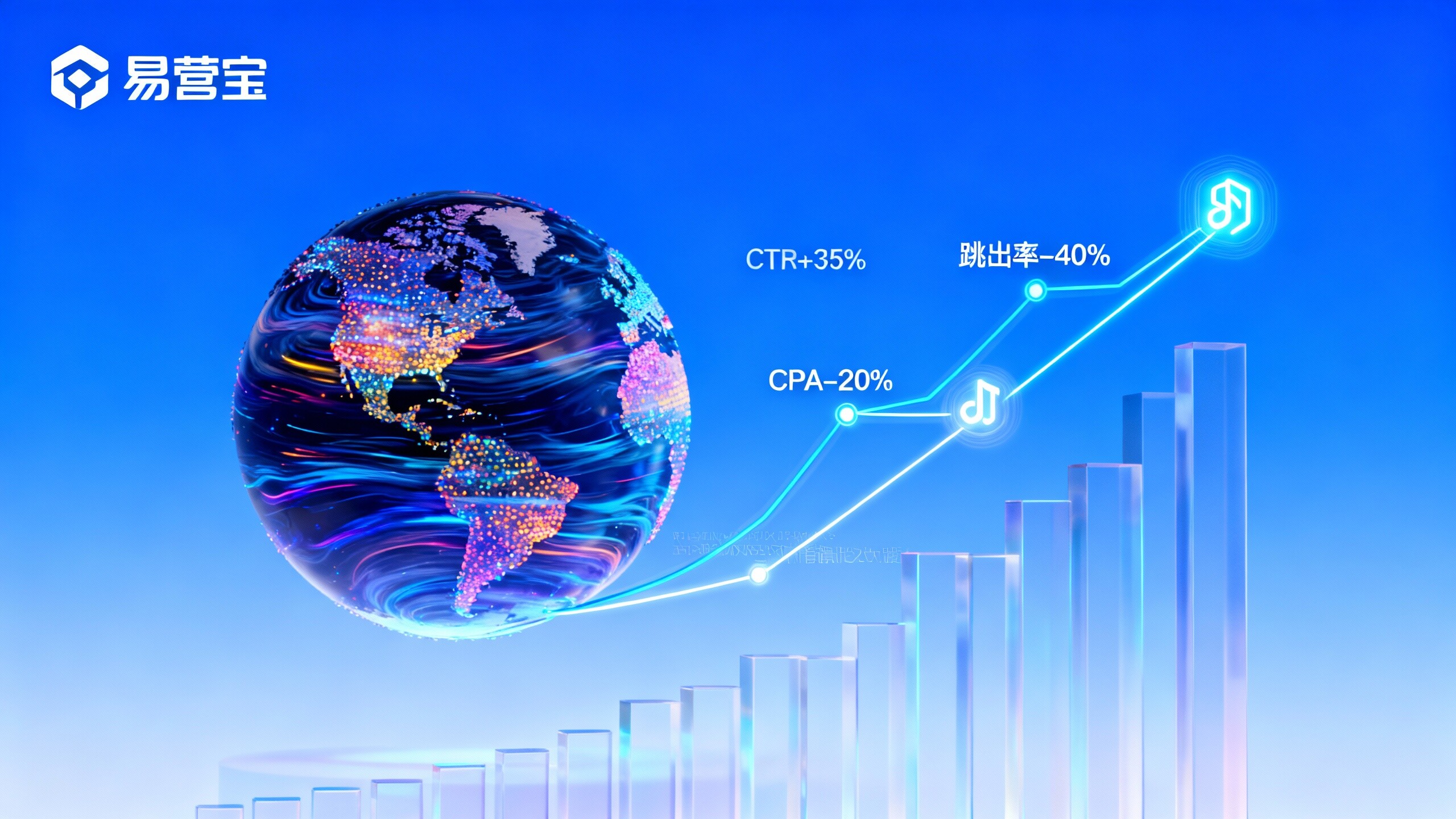
In summary, the AI+SEM Advertising System core lies in data-driven budget-keyword ecosystems, using AI tools for scalable keyword mining, multilingual landing page generation, and creative automation—balancing ad cost control with conversion rate and ranking stability. Foreign trade businesses should operate budgets, keywords, creatives, and ROI evaluation as a closed loop, leveraging real-time monitoring and machine learning for continuous optimization. To quickly build these capabilities with industry-validated tech support, evaluate vendors with AI ad diagnostics, global servers, and multilingual automation. Contact us for solution details, success cases, or product trials to start enhancing your foreign trade website’s conversions and search performance with AI today.
Related Articles


Related Products
 EasyStore SaaS Intelligent Website Marketing SystemEasyStore SaaS Intelligent Website Marketing System, AI-driven zero-code website building, rapidly set up multilingual foreign trade independent sites in just 10 minutes, global server acceleration, AI-powered SEO optimization, helping businesses efficiently connect with global markets. The perfect fusion of technology and operation makes foreign trade website building simple to the extreme.
 AI+SEM Intelligent Advertising Marketing SystemAI+SEM drives intelligent campaign creation, empowering full-funnel precision advertising marketing. The system automatically generates weekly/monthly reports, AI-recommends keywords and target countries, monitors core metrics in real-time with intelligent alerts, and enables one-click high-conversion campaign launches to accelerate lead acquisition and boost ROI.
 AI+SEO Dual-Engine System Optimization ServiceE-Yingbao AI+SEO Dual-Engine Optimization System leverages AI-powered keyword mining, content generation, and comprehensive technical optimization to help export-oriented enterprises capture high-quality organic traffic, significantly boosting search rankings and conversion rates.
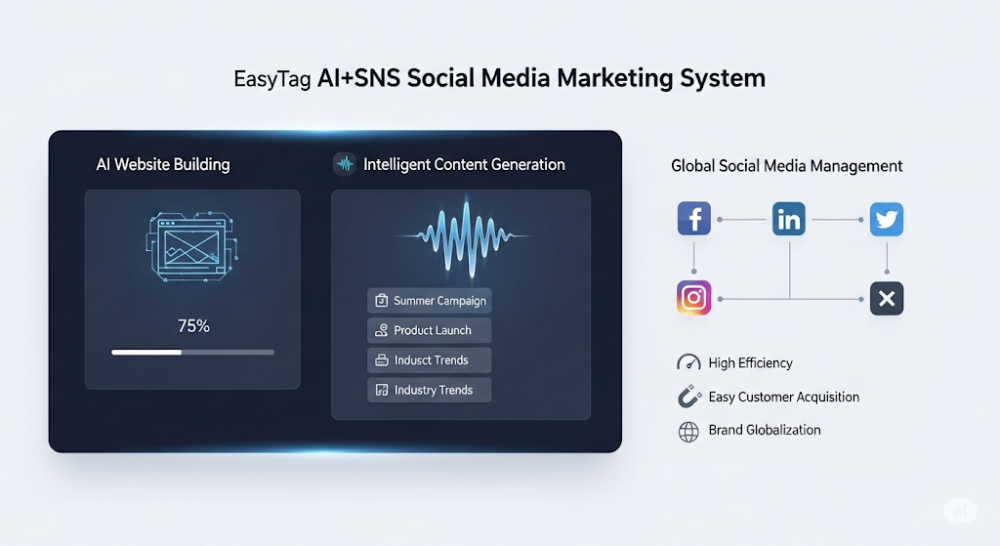
 AI + SNS Social Media Full Intelligence Marketing SystemEYBao AI+SNS Social Media All Intelligent Marketing System - Precise social capture in the era of social media, supporting one-click synchronization of content on mainstream platforms such as Facebook, LinkedIn, etc., AI intelligent rewriting of postings to enhance the degree of adaptability, 24/7 intelligent customer service and user profile analysis, helping enterprises to efficiently expand the global market.
 AI+SEO Marketing SolutionEasyWin AI+SEO Marketing Solution leverages AI-powered batch content creation, intelligent TDK generation, and precise keyword expansion to comprehensively optimize website SEO performance, boosting traffic and conversion rates. Helps businesses build a highly efficient intelligent website ecosystem.
 AI+SEM Advertising & Marketing SolutionsAI+SEM advertising and marketing solution utilizes AI intelligent technology to deeply empower SEM advertising. Through AI intelligent generation of weekly/monthly reports, multi-dimensional presentation of account data, a comprehensive grasp of the effectiveness and trends of advertising, AI precise recommendation of keywords and countries, intelligent generation of high-conversion advertisement language, a key to start the efficient advertising program, helping enterprises to quickly acquire customers. At the same time, the system monitors the core indicators in real time, intelligently recognizes fluctuation abnormalities and warns them in time to ensure stable and high return of advertising effect.
 Domain Name ServicesEasy Operation provides professional domain services, including intelligent query, one-stop registration, brand protection, and full-cycle management, helping enterprises build a digital brand image.
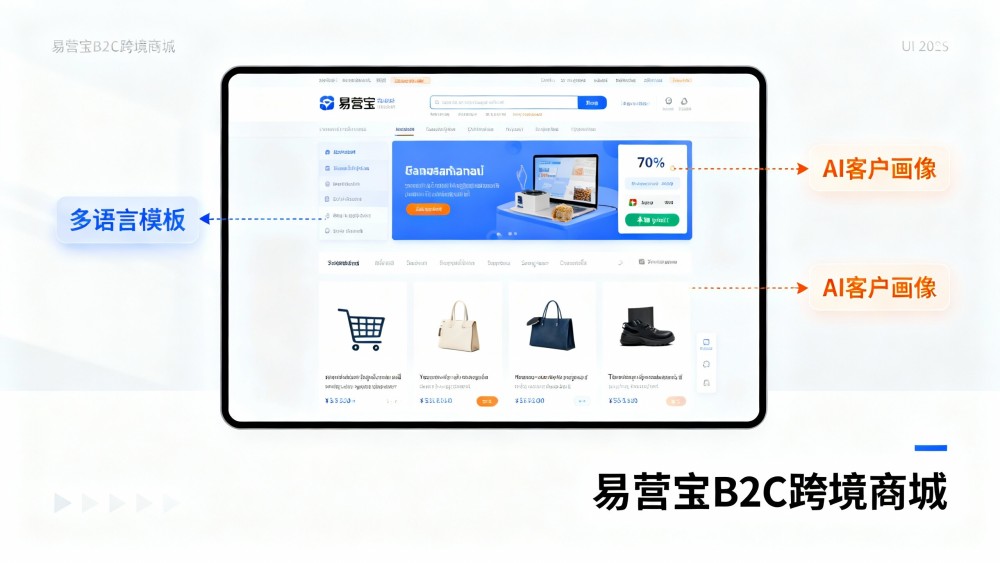
 EasyStore B2C Cross-border E-commerce Platform, Independent SiteEasyStore B2C Cross-border E-commerce Independent Store is an intelligent website building and cross-border e-commerce integrated solution independently developed by EasyStore Information Technology (Beijing) Co., Ltd. The system is specifically designed for small, medium, and large export enterprises, integrating 'website building, operation, marketing, advertising, and conversion' into one platform, helping businesses quickly establish cross-border e-commerce independent stores to achieve brand globalization and global sales growth.
The platform supports multiple languages, currencies, and multi-channel marketing, with built-in AI intelligent translation and SEO optimization systems, suitable for mainstream markets such as Southeast Asia, Europe & America, Latin America, and the Middle East, assisting Chinese manufacturing enterprises in efficiently deploying international e-commerce strategies. SSL CertificateEasyCert provides professional SSL security certificate services, including single-domain and wildcard certificates, ensuring encrypted data transmission, identity verification, and integrity protection for websites. This empowers businesses to establish secure and trustworthy online business environments.