









- What stages does the cross-border services ecosystem include? How do website building, promotion, payment, and compliance work togetherJun 22, 2026View details
- How will email marketing costs change in 2026Jun 22, 2026View details
- The China-US tariff arrangement has reached a preliminary consensus, and the trade association will be establishedJun 15, 2026View details
- Should overseas brand marketing start with ads or contentJun 21, 2026View details
- What determines B2C cross-border e-commerce website development costs? A breakdown of features, interfaces, and deployment methodsJun 17, 2026View details
- China-Morocco zero-tariff access, a breakthrough in the cost of Moroccan goods exports to ChinaJun 11, 2026View details
How much does SaaS website building cost compared to WordPress
How much does SaaS website development differ from WordPress in cost, and why can’t you just look at the quote
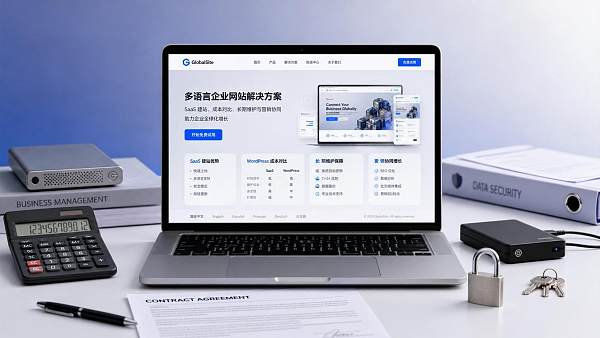
SaaS website development and WordPress are often compared together, but their cost structures are not the same. On the surface, WordPress can seem inexpensive to launch, while SaaS website development appears more straightforward with annual fees. What really creates the gap is often not the first-year build cost, but the ongoing investment in maintenance, security, plugins, redesigns, and coordinated promotion.
If a website is only a digital brochure, the difference may not be obvious. But once it involves multiple languages, inquiry conversion, SEO indexing, ad landing pages, and overseas market expansion, the total cost of SaaS website development and WordPress can quickly diverge. A more common way to judge is to see the website as a continuous customer acquisition system, rather than a one-time page project.
In a website + marketing services integrated scenario, whether the expense is worth it depends on whether the platform can work smoothly with SEO, ad campaigns, social media content, and data analytics. In this sense, the question is no longer just “how much does SaaS website development differ from WordPress in cost,” but which one is more suitable for long-term operations.
Does a low first-year cost mean greater savings
Not necessarily. The common low-cost impression of WordPress comes from the open-source software itself being free, but going live does not rely on the software alone. Domain name, hosting, themes, plugins, basic development, page adaptation, backups, and security protection all create real expenses. If you later need multilingual support, form tracking, and speed optimization, the cost will continue to rise.
The key feature of SaaS website development is that the fee items are relatively concentrated. Templates, hosting, backups, system upgrades, and some security capabilities are usually integrated. During approval, it is easier to see the annual budget clearly, and it is not easy for small add-on expenses to appear repeatedly during the project. For companies that value predictable costs, this point is often more important than a purely low price.
This is especially true for overseas business, where issues such as time zones, access speed, node deployment, and multi-region promotion are more likely to arise. Yiyingbao has long served foreign trade companies, manufacturing factories, and cross-border sellers. Its AI-driven intelligent website building and marketing system is valuable because it brings website building, SEO, advertising, and multilingual capabilities into the same logic, reducing repeated procurement and integration costs.
When reviewing the budget, which hidden costs are easiest to miss
In actual approval, the following items are the most likely to be underestimated in the early stage:
- Plugin renewal fees, especially for multilingual, SEO, form, caching, and security tools.
- Technical maintenance, including version upgrades, compatibility fixes, and troubleshooting.
- Redesign costs, where adding new pages or functions often requires secondary development.
- Security and backups, where recovery costs are higher after a site is attacked or data is lost.
- Marketing coordination, where if the site is not conducive to SEO and ad conversion, customer acquisition costs will increase significantly.
Where exactly do the costs differ between SaaS website development and WordPress
If you only compare “building a website,” the difference between the two may be limited. But if you extend the cycle to two or three years, the difference mainly appears in maintenance methods, execution efficiency, and team involvement.
This is also why many companies begin to feel that WordPress is “not cheap” in the second year. It is not that the system itself is expensive, but that every add-on purchase accumulates over time, and it is difficult to estimate in advance.
Which business scenarios are better suited to SaaS website development, and which situations are more suitable for WordPress
If the focus is on fast launch, multilingual deployment, batch creation of marketing pages, and continued promotion afterward, SaaS website development is usually more stable. The reason is simple: a website does not exist in isolation. It needs to form a closed loop with SEO rules, ad tracking, form conversion, and content updates.
Yiyingbao’s approach is to connect cloud intelligent website building, cross-border malls, AI ad marketing, and AI+SEO/GEO optimization, so that the website already has a foundation for promotion and indexing from the moment it goes live. For overseas independent sites, this kind of integrated capability is often more valuable than having a website alone.
When is WordPress more suitable? Usually when the requirements for customization freedom are very high, and the internal or external technical resources are stable enough to manage servers, code, and the plugin ecosystem for the long term. If the team already has a mature development process, WordPress can still be a controllable solution.
When arguing the budget, you can also refer to some cross-department evaluation materials, such as Analysis of implementation paths for ESG helping enterprises develop new quality productive forces. The value of this kind of content is not to replace website decisions, but to help enterprises establish a more complete long-term investment perspective.
A practical rule of thumb: look at three years, not three months
- If you need to frequently build campaign pages, language sites, and ad landing pages within three years, SaaS website development is easier to control in terms of cost.
- If you will keep only a small number of pages within three years and make almost no redesigns, WordPress may be more economical.
- If customer acquisition depends on Google SEO and overseas advertising, the website system must balance speed, structure, and conversion.
Why do some WordPress websites become more and more expensive later
A common reason is not project failure, but changes in project goals. At first it is only for display, later multilingual support is needed; initially there is no content marketing, later SEO is required; advertising is not launched at the beginning, but later tracking and landing pages must be connected. WordPress can handle each change, but every change may generate new implementation costs.
Another situation that is easy to overlook is personnel dependency. When a website relies heavily on a certain developer or service provider, later handover, redesigns, and troubleshooting can all push up costs. SaaS website development, although more limited in flexibility, is more standardized, and handover and operations are usually more stable.
For overseas business, whether a website can continue generating inquiries is more critical than how much is saved on one-time development. If the site structure is not conducive to indexing, or if slow page loading leads to poor ad conversion, the money saved on building the site will often be lost many times over in promotion.
Before approval, how to judge which solution is more cost-effective
First break down the problem, and do not just ask “which is better, SaaS website development or WordPress.” More effective is to list the decision checklist and compare item by item.
- What is the website goal: display, lead generation, or store sales.
- Will multilingual support, SEO, advertising, and social media traffic generation be needed over the next two to three years.
- Whether there are stable internal technical resources, and whether maintenance and security responsibilities can be handled.
- Whether faster launch is required, with the ability to keep adding pages or regional sites.
- Whether the website, promotion, and data tracking need to work together within one system.
If two or more of these conditions appear at the same time, SaaS website development is usually more likely to deliver stable returns. If the requirements are simple, the development capability is mature, and changes are not many, WordPress may not lose out either. The key is not which tool is “absolutely cheaper,” but which solution better fits the pace of the business.
To conclude simply, how much SaaS website development differs from WordPress in cost is often not answered on the first page of the quote, but in the total three-year cost, maintenance complexity, and conversion efficiency. The next step can be to first sort out the function list, promotion plan, and staffing configuration, then compare them against the annual budget and total cost of ownership. That way, the conclusion will be closer to real operating results.
Related Articles
Related Products
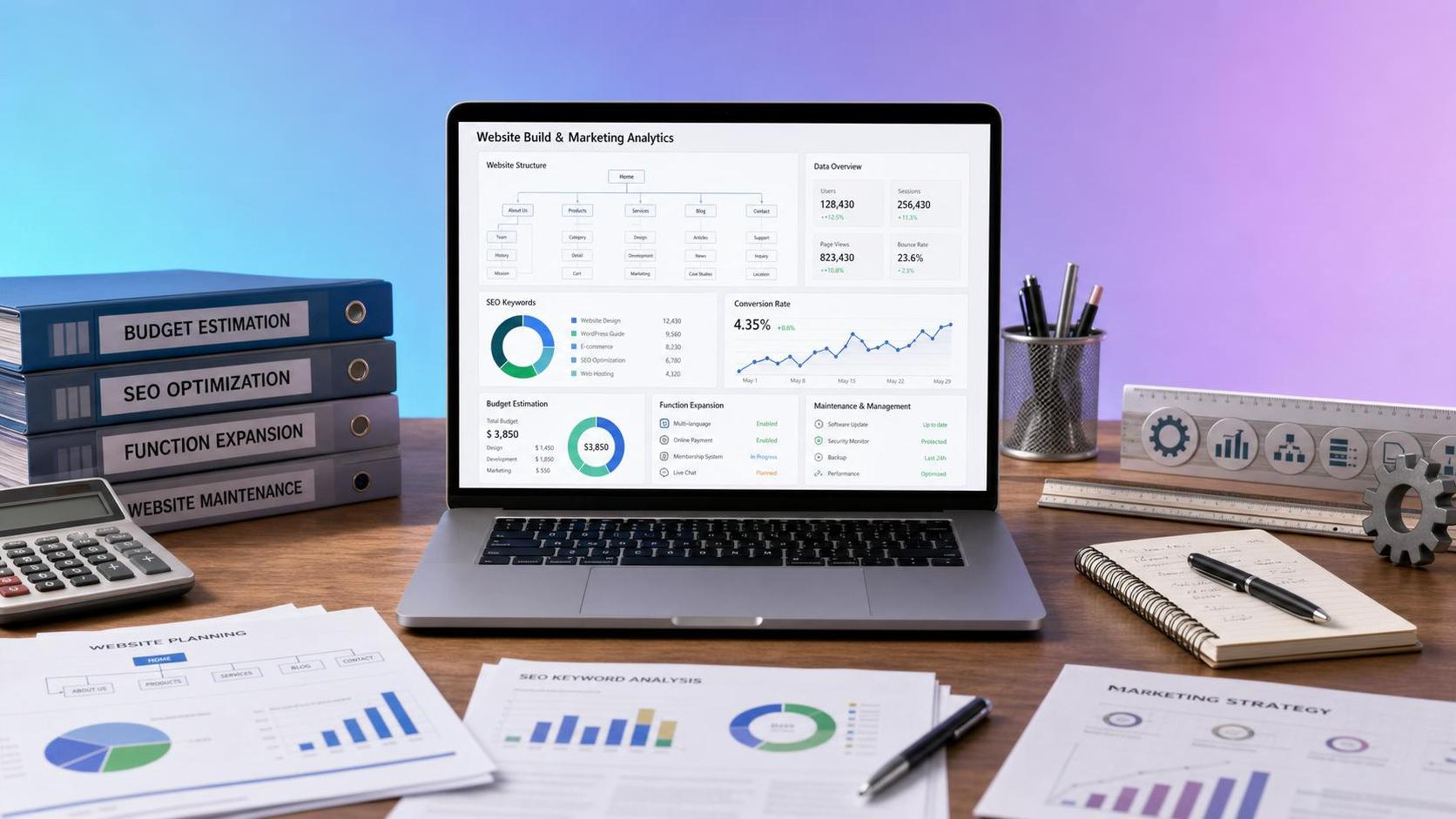
 EasyCamp SaaS Smart Website Marketing SystemE-Yingbao SaaS Smart Website Marketing System: AI-powered, zero-code website building. Rapidly launch multilingual independent e-commerce sites in just 10 minutes. Global server acceleration and AI-driven SEO optimization empower businesses to efficiently connect with global markets. The seamless integration of technology and user-friendly operation makes building e-commerce sites incredibly simple.
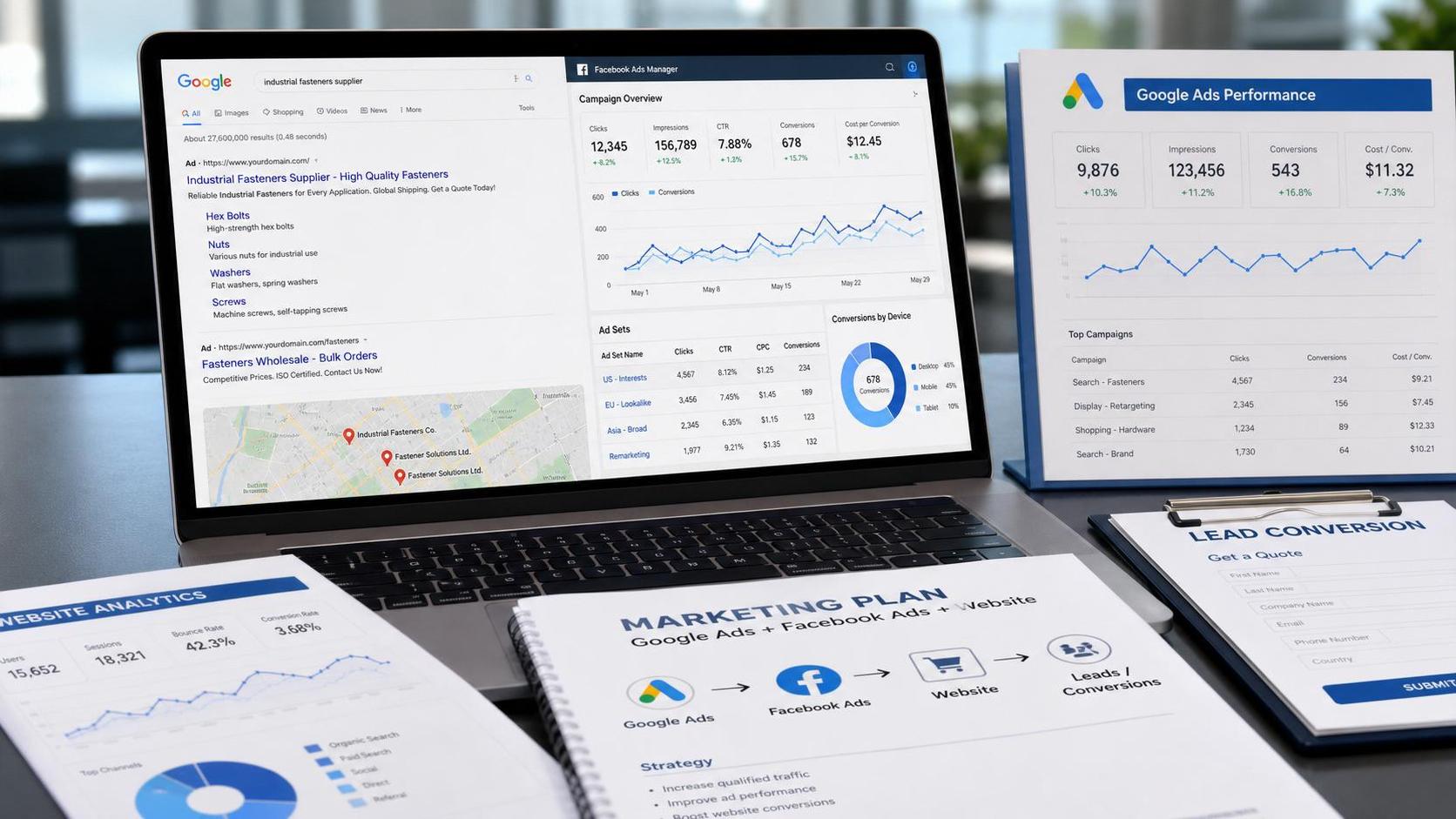
 AI+SEM Intelligent Advertising Marketing SystemAI+SEM drives intelligent ad creation, empowering full-funnel precision advertising marketing. The system automatically generates weekly/monthly reports, AI recommends keywords and target countries, monitors core metrics in real-time with intelligent alerts, and enables one-click high-conversion ad solutions to help quickly acquire customers and improve ROI.
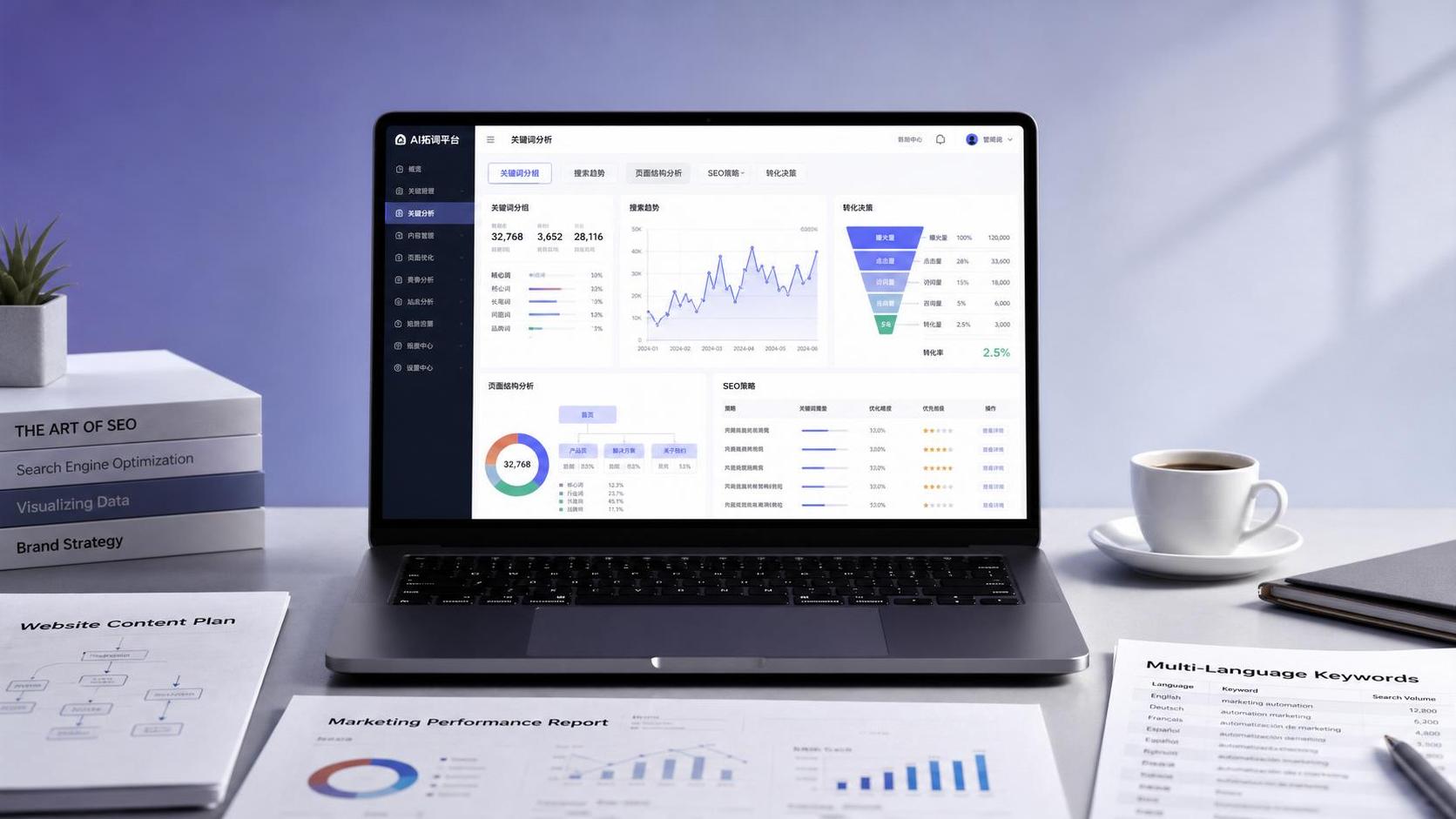
 AI+SEO Dual Engine Optimization ServiceEasyWin AI+SEO Dual Engine Optimization System leverages AI-powered keyword mining, content generation, and comprehensive technical optimization to help foreign trade enterprises acquire high-quality organic traffic, significantly improving search rankings and conversion rates.
 AI+SNS Social Media Marketing SystemYingbao AI+SNS Social Media Marketing System - Precision social capture for the social media era. Supports one-click content synchronization across major platforms like Facebook and LinkedIn. AI intelligently rewrites posts for enhanced relevance. 24/7 AI customer service and user profiling analysis empower businesses to efficiently expand into global markets.
 AI+SEO营销解决方案易营宝AI+SEO营销解决方案,通过AI批量写作、智能生成TDK、精准关键词扩词等功能,全面优化网站SEO效果,提升流量与转化率。助力企业构建高效智能网站新生态。
 AI+SEM Advertising Marketing SolutionsAI+SEM Advertising Marketing Solution leverages AI technology to deeply empower SEM ad campaigns. It automatically generates weekly/monthly reports using AI, presenting account data across multiple dimensions for comprehensive insights into campaign performance and trends. The system precisely recommends keywords and target countries, intelligently generates high-conversion ad copy, and enables one-click activation of efficient campaign plans to help businesses rapidly acquire customers. Simultaneously, it monitors core metrics in real time, intelligently identifies abnormal fluctuations, and issues timely alerts to ensure stable, high-return advertising results.
 Domain Name ServicesEasyWin provides professional domain name services, including intelligent queries, one-stop registration, brand protection, and full lifecycle management, helping businesses build a digital brand image.
 EasyOperate B2C Cross-Border E-Commerce Platform & Independent WebsiteEasyStore B2C Cross-border E-commerce Independent Store is an intelligent website building and cross-border e-commerce integrated solution independently developed by EasyStore Information Technology (Beijing) Co., Ltd. The system is specially designed for small and medium-sized as well as large export enterprises, integrating 'website building, operation, marketing, advertising, and conversion' into one, helping enterprises quickly establish cross-border e-commerce independent stores to achieve brand globalization and global sales growth.
The platform supports multiple languages, multiple currencies, and multi-channel marketing, with built-in AI intelligent translation and SEO optimization systems, suitable for mainstream markets such as Southeast Asia, Europe and America, Latin America, and the Middle East, assisting Chinese manufacturing enterprises in efficiently deploying international e-commerce strategies. SSL证书易营宝提供专业SSL安全证书服务,包括单域名和泛域名证书,确保网站数据传输加密、身份验证和完整性保护,助力企业建立安全可信的在线业务环境。









