Checklist of Functional Differences Between AI Website Building and Template Website Building
For technical evaluators,this article outlines the functional differences between AI website building and template website building,helping you quickly assess architecture capabilities,scalability,and marketing-fit value。
I。First judgment:you are not evaluating “whether a website can be built”,but “whether continuous growth can be achieved”

When technical evaluators search for “functional differences between AI website building and template website building”,they usually do not want a conceptual introduction,but need to quickly determine the real gaps between the two types of solutions in architecture,efficiency,scalability,and subsequent operations。
Overall,template website building is more suitable for standardized display,rapid launch,and low-budget trial and error;AI website building is more suitable for continuous content production,automated SEO optimization,multilingual expansion,and marketing closed-loop construction。
Therefore,the evaluation focus should not stay on whether the page looks attractive,but should focus on generation logic,data structure,component openness,SEO capabilities,performance,and whether long-term iteration is supported。
II。Differences in page generation methods:fixed template application or dynamic combination
The core of template website building is preset layouts,where users replace images,text,and colors within a fixed structure。Its advantages are stability,controllability,and a low learning curve,but the risk of page homogenization is relatively high。
AI website building usually generates page structures based on industry,business,keywords,and brand information,and can automatically combine sections,copy,and layouts,making it more suitable for enterprises that need to quickly generate multi-page websites。
During technical evaluation,it is necessary to check whether AI-generated results are editable,whether component-level adjustments are supported,and whether a manual review workflow can be retained,so as to avoid the problem of “fast generation but lack of control”。
III。Differences in content capabilities:one-time filling or continuous production
Template website building often treats content as static materials before launch。Subsequent articles,landing pages,and product pages still need to be maintained manually item by item,and content growth depends on the investment of the operations team。
The value of AI website building lies in embedding content production into the website-building process,such as generating section copy,FAQ,blogs,and SEO title descriptions based on industry terms,product selling points,and target markets。
However,technical staff need to confirm whether content generation has review,rewriting,version management,and sensitive word control capabilities。AI content without a governance mechanism may bring quality and compliance risks。
IV。Differences in SEO functions:basic configuration or strategy-level optimization
Template website building usually provides basic functions such as TDK entry,URL settings,sitemaps,and image ALT,which are suitable for existing SEO personnel to perform manual configuration and regular maintenance。
If AI website building is to demonstrate differentiation,it must have keyword expansion,page semantic matching,internal link suggestions,title generation,and content update suggestions,rather than simply changing forms into automatic filling。
For example,when enterprises build marketing-oriented websites,they can combine the AI+SEO marketing solution,using AI for batch writing,intelligent TDK generation,and precise keyword expansion to improve website content coverage and conversion efficiency。
During evaluation,it is recommended to focus on whether SEO configurations can be processed in batches,whether multilingual TDK is supported,whether optimization suggestions can be output,and to verify whether the page source code is conducive to search engine crawling。
V。Differences in architecture and scalability:lightweight publishing or system integration
Template website building mostly uses mature CMS or SaaS page editors,with good stability,but plug-ins,interfaces,and customization capabilities may be limited by the platform,making complex business scenarios easily constrained。
If AI website building is only a front-end generator,its scalability value is limited。A more mature solution should support API,CRM lead synchronization,ad tracking,form distribution,and data dashboard integration。
Technical evaluators should pay attention to whether the data structure is clear,whether pages support secondary development,whether components are reusable,and whether the permission system can meet multi-role collaboration and cross-regional operations。
VI。Differences in performance and security:launch speed cannot replace engineering quality
Because template website building has a fixed structure,its performance is usually easier to predict。If the platform provides CDN,caching,image compression,and mobile adaptation,the basic experience can meet standards relatively quickly。
AI website building generates more pages and updates content more frequently,so more attention should be paid to page size,script loading,Core Web Vitals,caching strategies,and static generation capabilities。
In terms of security,it is necessary to confirm whether HTTPS,permission isolation,log auditing,backup and recovery,form anti-spam protection,and data desensitization are supported。The deeper the AI capabilities go,the clearer the data boundaries must be。
VII。Differences in marketing fit:display-oriented website or growth-oriented asset
Template website building is suitable for official website display,brand introduction,campaign pages,and entry-level websites for small businesses。Its advantages are controllable costs,short launch cycles,and no need for complex technical evaluation。
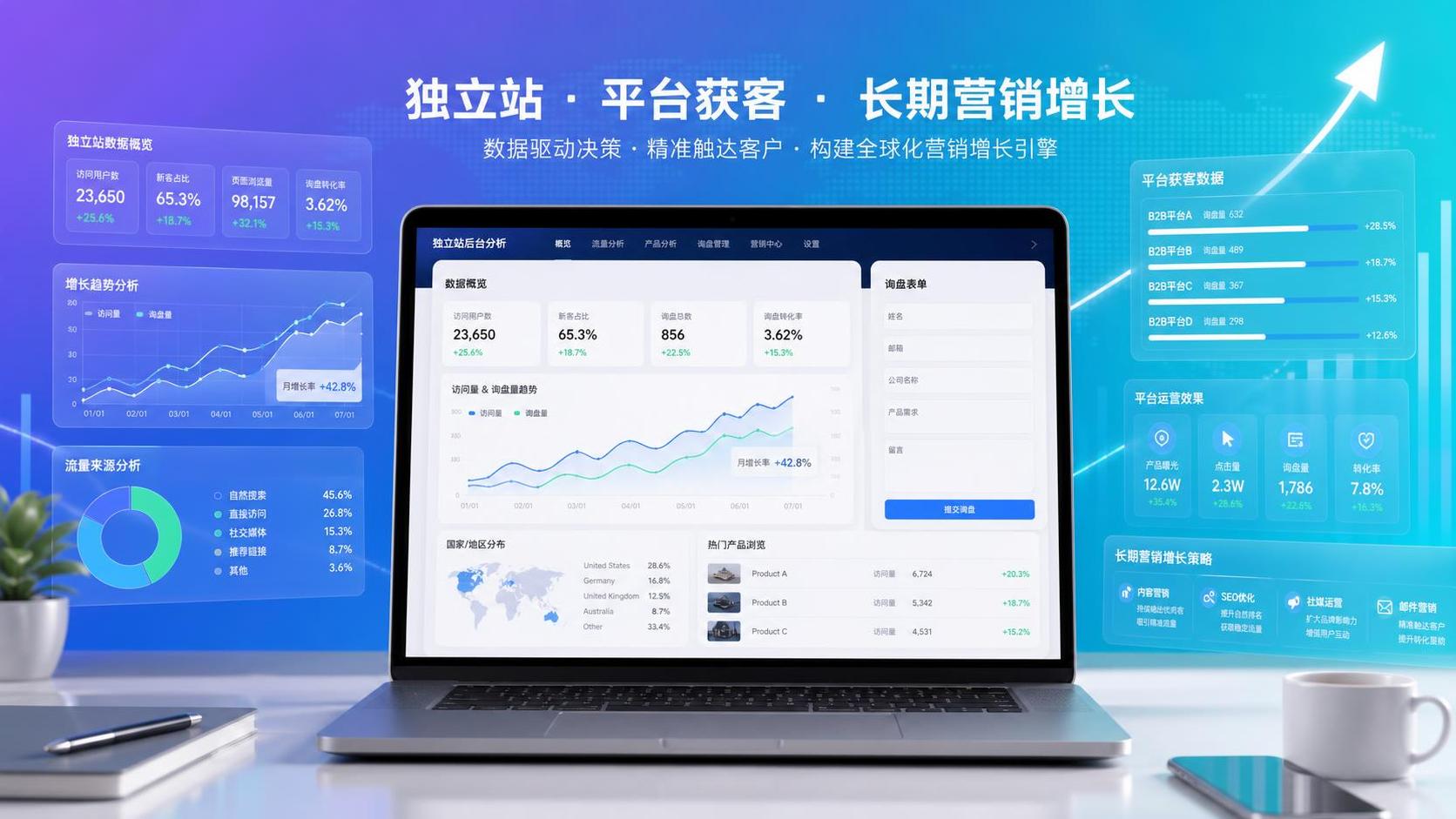
AI website building is more suitable for enterprises that need long-term customer acquisition,such as cross-border businesses,companies with multiple product lines,service-oriented enterprises,and B2B teams that need to continuously publish SEO content。
For technical evaluators,the key is not to judge which method is absolutely better,but to determine whether the current business needs content scaling,a data closed loop,and marketing automation capabilities。
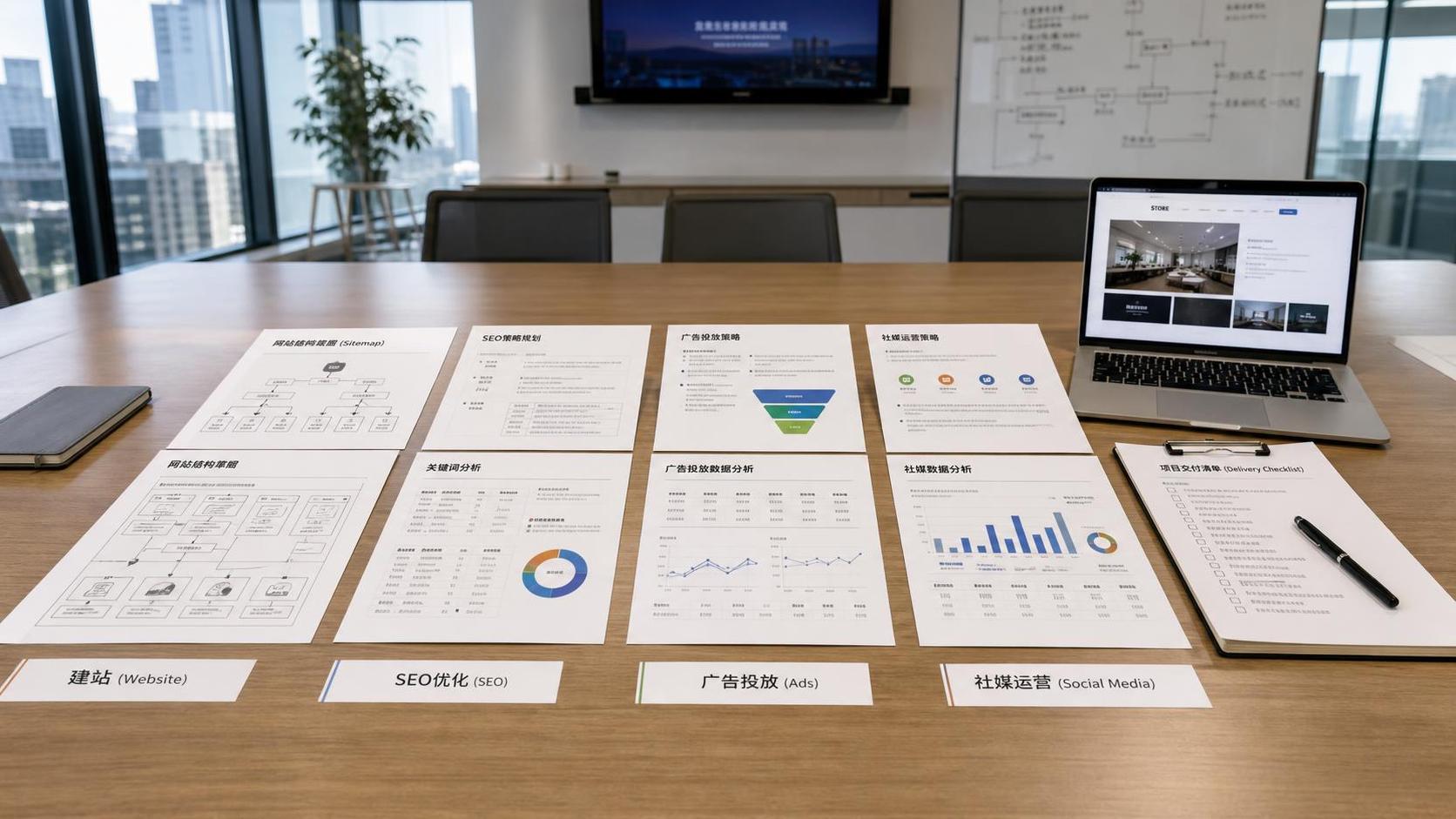
VIII。Checklist of functional differences:it is recommended to score based on these dimensions
First,look at page generation capabilities,including industry adaptation,section recommendations,component editing,mobile results,and post-generation controllability。Fast generation that cannot be maintained does not qualify as a high-quality solution。
Second,look at SEO capabilities,including batch TDK generation,keyword expansion,structured data,sitemaps,internal link suggestions,page indexing friendliness,and content update mechanisms。
Third,look at integration capabilities,including CRM,ad pixels,analytics tools,email systems,form assignment,customer service systems,and third-party APIs,which determine whether the website can enter the marketing workflow。
Fourth,look at operations and maintenance capabilities,including permissions,backup,security,logs,performance monitoring,multilingual support,multi-site management,and version rollback,as these directly affect long-term usage costs。
IX。Selection recommendations:different scenarios correspond to different priorities
If the project goal is to complete a corporate display website within three to five days,and the content changes relatively little,template website building is more suitable。At this time,priority should be given to template quality,responsive performance,and after-sales support。
If the goal is to acquire customers through search engines,continuously publish content,and cover multiple national markets,AI website building is more worth evaluating。At this time,priority should be given to verifying SEO,content,and data capabilities。
If the enterprise already has a technical team,it can choose a more open AI website-building platform;if it lacks operations personnel,it should choose an integrated solution that provides website building,SEO,and marketing services at the same time。
Conclusion summary:the essence of functional differences is the difference in website-building goals
The functional differences between AI website building and template website building are not just “whether AI can write copy” or “whether the template looks good”。The real difference lies in whether the website can be upgraded from a one-time delivery into a continuous growth asset。
Technical evaluators should place the focus of judgment on generation logic,SEO capabilities,scalable interfaces,performance security,and the marketing closed loop。Only when these capabilities are in place can AI website building have long-term value。
The final choice should return to business goals:choose templates for short-term launch,and look at AI and marketing capabilities for long-term customer acquisition。Verifying each item against a functional checklist is more reliable than simply comparing prices。