









- How Can a Brand Updates Page Be Made More SEO-Friendly? Analysis of Update Frequency, Content Structure, and Internal Linking StrategyJun 28, 2026View details
- What stages does the cross-border services ecosystem include? How do website building, promotion, payment, and compliance work togetherJun 22, 2026View details
- How will email marketing costs change in 2026Jun 22, 2026View details
- The China-US tariff arrangement has reached a preliminary consensus, and the trade association will be establishedJun 15, 2026View details
- Should overseas brand marketing start with ads or contentJun 21, 2026View details
- What determines B2C cross-border e-commerce website development costs? A breakdown of features, interfaces, and deployment methodsJun 17, 2026View details
- China-Morocco zero-tariff access, a breakthrough in the cost of Moroccan goods exports to ChinaJun 11, 2026View details
- What signal should be released for the suspension of exports to JapanJun 10, 2026View details
How to use EasyOperate Smart Website Builder to avoid template homogenization? Differentiated implementation methods under the Creative Factory model
How to use EasyStore's intelligent website builder? The key lies in breaking free from template homogeneity pitfalls! Leveraging the creative factory model, combined with EasyStore's AI image generation, multilingual ad material creation, and automatic TDK generation capabilities, it truly achieves differentiated implementation for B2B foreign trade independent websites. Efficient website building + precise conversion is the core advantage of EasyStore's enterprise overseas services.
1. Why do 90% of foreign trade independent websites fall into the "template aesthetic fatigue" trap?
According to the 2023 "Global B2B Independent Website User Experience Whitepaper", 87% of SMEs still rely on basic template libraries for website building, with homepage similarity as high as 63%, and average user dwell time less than 48 seconds. The root issue isn't technical deficiency but website logic stuck at "feature stacking" rather than "brand expression"—using the same responsive framework with default colors and generic icons, overlaid with standardized product carousels, easily categorized by overseas buyers as "generic traffic-type suppliers", undermining trust.
Researchers often overlook a critical threshold: in foreign trade buyer decision chains, website visual professionalism impacts first inquiry conversion rates by 31% (Source: EasyStore 2024 Cross-Border Procurement Behavior Report). Project managers should be more alert: sites using non-customized templates score 1.8 points lower on Google Ads Quality Score, directly increasing CPC costs by 22%~35%.
The creative factory model is a systematic solution designed for this pain point—it doesn't simply replace banner images but uses brand assets as input and localized scenarios as output, driving full-chain differentiation from visual layer, content layer to SEO layer.

2. Decoding the Three Differentiation Engines of "Creative Factory"
The creative factory isn't an abstract concept but executable modules comprising AI image generation engines, multilingual material workshops, and smart TDK architecture. The trio operates synergistically, forming a "strategy input→intelligent generation→manual calibration→data feedback" closed loop.
This table reveals the practical value of creative factory: it compresses the original 3-5 day workflow requiring outsourced designers+translators+SEO specialists into a 24-hour delivery cycle. Especially for distributors, it enables rapid "thousands of sites, thousands of faces" website packages for different regional clients, strengthening channel competitiveness.
3. Four-Step Implementation: Transition Path from Template to Brand Site
Avoiding homogeneity isn't about starting over but phased upgrades. EasyStore's service team validated this high-success-rate four-step method:
- Diagnosis Phase (1-3 days): Use "homogeneity index scanner" to analyze visual elements, keyword layouts, and conversion paths between existing sites and TOP50 competitors, outputting ≥12 prioritized optimization items;
- Prototype Phase (3-5 days): Based on corporate VI, target countries' procurement habits, and high-frequency inquiry terms from past 6 months, generate 3 differentiated homepage prototypes (including mobile interaction logic);
- Validation Phase (7 days): A/B test prototypes on Google Ads CTR, Facebook ad CTR, and site bounce rate to select the optimal solution;
- Precipitation Phase (ongoing): Archive successful visual components, copy templates, and TDK rules into the enterprise's "creative asset library" for new product pages to inherit the style system automatically.
This approach has been applied to over 53,200 foreign trade enterprises, increasing average first-month inquiries by 41%. Medical device clients complying with EU MDR regulations through compliant graphics saw conversion cycles shorten by 2.3 weeks. Notably, public hospital human resource management optimization strategies mentioned organizational capacity building methods transferable to website teams' cross-functional collaboration mechanisms.
4. Pitfall Guide: Three Common Mistakes and Countermeasures
From serving 100,000+ enterprises, we identified recurring errors:
- Mistake 1: Over-pursuing "premium feel" at the cost of loading speed—tests show when hero images exceed 1.2MB, Middle Eastern user abandonment rates spike 68%. Recommend WebP format+CDN smart compression ensuring LCP<2.5s;
- Mistake 2: Treating multilingual as literal translation—Spanish clients focus on "certificación CE" while Latin Americans prefer "garantía extendida". Region-specific semantic lexicons are needed, not mechanical replacements;
- Mistake 3: No validation after auto-generating TDK—AI-generated titles may misuse absolute terms like "best supplier" triggering Google algorithm penalties, requiring manual review nodes.
For these risks, EasyStore provides a "website health dashboard" monitoring 23 compliance metrics in real-time, automatically pushing整改 suggestions for anomalies across code to content layers.

5. Role-Based Differentiation Application Recommendations
Creative factory's value释放 depends on role positioning:
Data shows enterprises adopting role-specific strategies shortened website project delivery cycles by 37% with 89.2% client retention. This confirms the factory's essence—not replacing manpower but amplifying professional value.
Conclusion: Make Every Independent Site a Brand's Digital Avatar
EasyStore intelligent website's value has surpassed "quick launch". When AI imaging engines transform factory scenes into TÜV-compliant visual narratives, when multilingual workshops auto-adapt "high precision" into Saudi-understood "دقة عالية في التصنيع", when TDK frameworks continuously learn Google algorithm updates—technology completes the leap from tool to partner.
For researchers, this is a verifiable differentiation path; for operators, zero-threshold professional productivity; for managers, quantifiable growth leverage; for distributors, sustainable regional service moats. A decade deep in the field, EasyStore drives "tech innovation+localized service" dual engines, helping Chinese enterprises transition from "having sites" to "having influence, trust, and conversions" in global brand building.
Get your customized website health diagnosis report now, taking the first step in differentiated implementation.
Related Articles
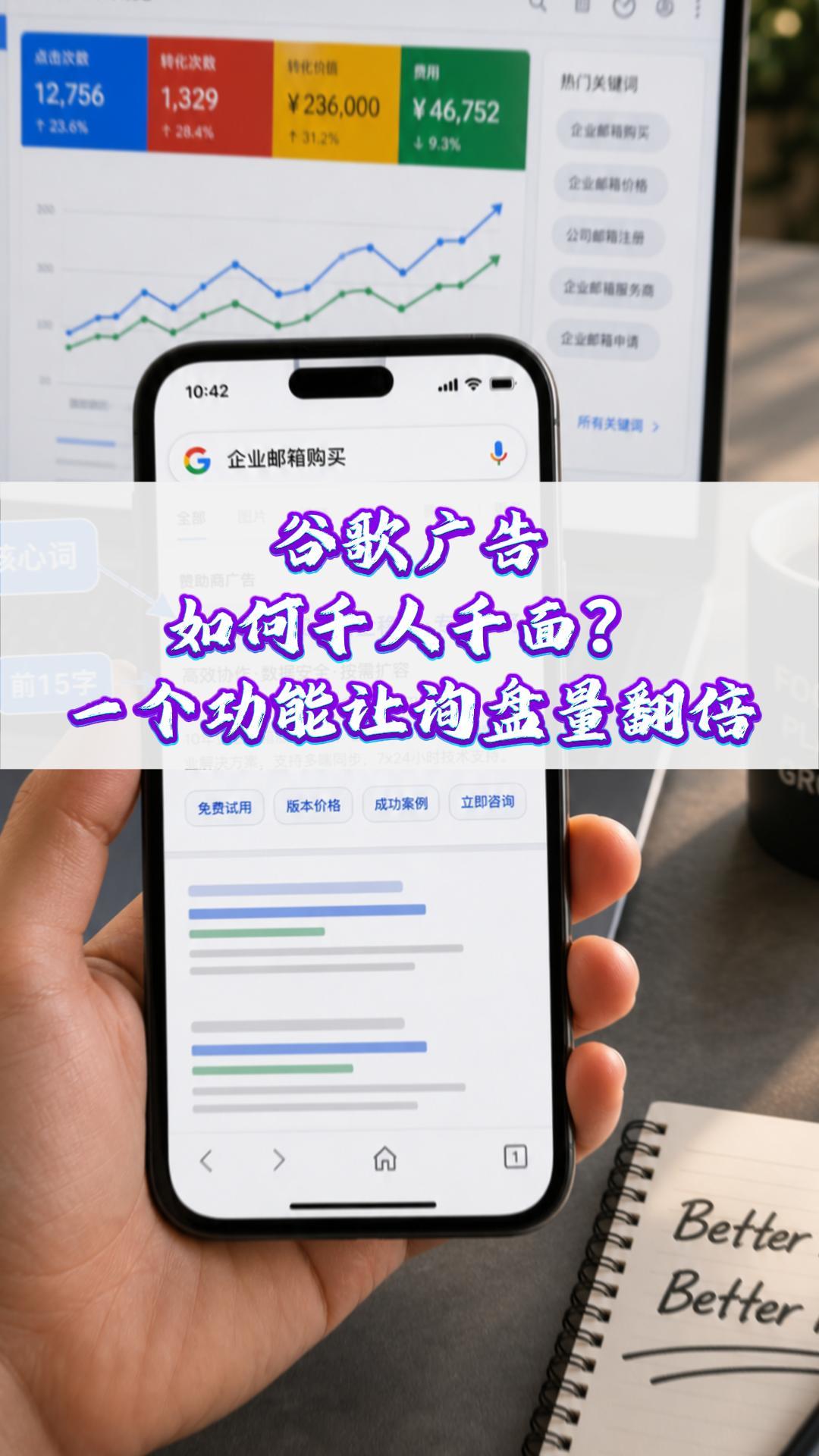
 How can Google Ads deliver one-to-one personalization? One feature can double your inquiry volume#ExportMarketing#OverseasPromotion#GoogleAds#SocialMediaMarketing#ForeignTradeIndependentWebsite
 Why a Google-optimized independent website is essential for trailer exports
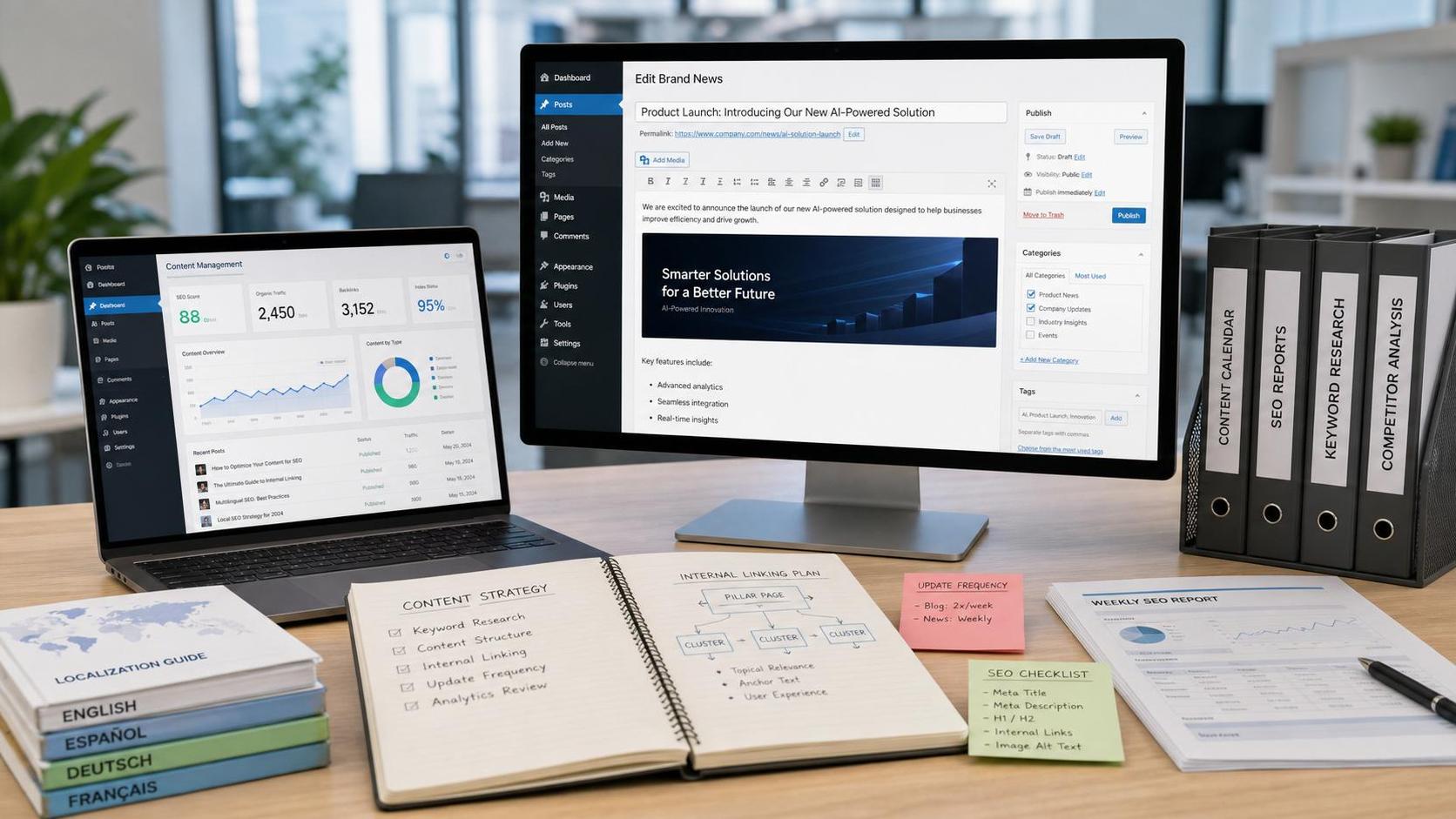
 How Can a Brand Updates Page Be Made More SEO-Friendly? Analysis of Update Frequency, Content Structure, and Internal Linking Strategy

Related Products
 EasyCamp SaaS Smart Website Marketing SystemE-Yingbao SaaS Smart Website Marketing System: AI-powered, zero-code website building. Rapidly launch multilingual independent e-commerce sites in just 10 minutes. Global server acceleration and AI-driven SEO optimization empower businesses to efficiently connect with global markets. The seamless integration of technology and user-friendly operation makes building e-commerce sites incredibly simple.
 AI+SEM Intelligent Advertising Marketing SystemAI+SEM drives intelligent ad creation, empowering full-funnel precision advertising marketing. The system automatically generates weekly/monthly reports, AI recommends keywords and target countries, monitors core metrics in real-time with intelligent alerts, and enables one-click high-conversion ad solutions to help quickly acquire customers and improve ROI.
 AI+SEO Dual Engine Optimization ServiceEasyWin AI+SEO Dual Engine Optimization System leverages AI-powered keyword mining, content generation, and comprehensive technical optimization to help foreign trade enterprises acquire high-quality organic traffic, significantly improving search rankings and conversion rates.
 AI+SNS Social Media Marketing SystemYingbao AI+SNS Social Media Marketing System - Precision social capture for the social media era. Supports one-click content synchronization across major platforms like Facebook and LinkedIn. AI intelligently rewrites posts for enhanced relevance. 24/7 AI customer service and user profiling analysis empower businesses to efficiently expand into global markets.
 AI+SEO营销解决方案易营宝AI+SEO营销解决方案,通过AI批量写作、智能生成TDK、精准关键词扩词等功能,全面优化网站SEO效果,提升流量与转化率。助力企业构建高效智能网站新生态。
 AI+SEM Advertising Marketing SolutionsAI+SEM Advertising Marketing Solution leverages AI technology to deeply empower SEM ad campaigns. It automatically generates weekly/monthly reports using AI, presenting account data across multiple dimensions for comprehensive insights into campaign performance and trends. The system precisely recommends keywords and target countries, intelligently generates high-conversion ad copy, and enables one-click activation of efficient campaign plans to help businesses rapidly acquire customers. Simultaneously, it monitors core metrics in real time, intelligently identifies abnormal fluctuations, and issues timely alerts to ensure stable, high-return advertising results.
 Domain Name ServicesEasyWin provides professional domain name services, including intelligent queries, one-stop registration, brand protection, and full lifecycle management, helping businesses build a digital brand image.
 EasyOperate B2C Cross-Border E-Commerce Platform & Independent WebsiteEasyStore B2C Cross-border E-commerce Independent Store is an intelligent website building and cross-border e-commerce integrated solution independently developed by EasyStore Information Technology (Beijing) Co., Ltd. The system is specially designed for small and medium-sized as well as large export enterprises, integrating 'website building, operation, marketing, advertising, and conversion' into one, helping enterprises quickly establish cross-border e-commerce independent stores to achieve brand globalization and global sales growth.
The platform supports multiple languages, multiple currencies, and multi-channel marketing, with built-in AI intelligent translation and SEO optimization systems, suitable for mainstream markets such as Southeast Asia, Europe and America, Latin America, and the Middle East, assisting Chinese manufacturing enterprises in efficiently deploying international e-commerce strategies. SSL证书易营宝提供专业SSL安全证书服务,包括单域名和泛域名证书,确保网站数据传输加密、身份验证和完整性保护,助力企业建立安全可信的在线业务环境。









