









- What types of businesses are end-to-end solutions suitable for?Jun 03, 2026View details
- 2026 Global Growth Channel TrendsJun 02, 2026View details
- Which stages is the brand visibility enhancement service suitable forMay 29, 2026View details
- What Are the Key Modules of International Digital Marketing ServicesMay 29, 2026View details
- Why Global Websites Are Switching to Headless CMSMay 29, 2026View details
- Which overseas expansion companies are Guangzhou global digital marketing solutions suitable forMay 30, 2026View details
- Where do the differences in digital marketing strategy agency services generally lieMay 30, 2026View details
- Is Internet Marketing Consulting Company Services Really Worth BuyingMay 30, 2026View details
EasyStore launches a global compliant website building engine, enabling one-click generation of 23 localized standalone site versions
Lead-in
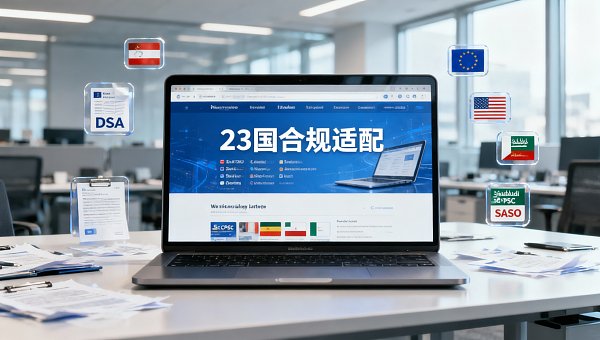
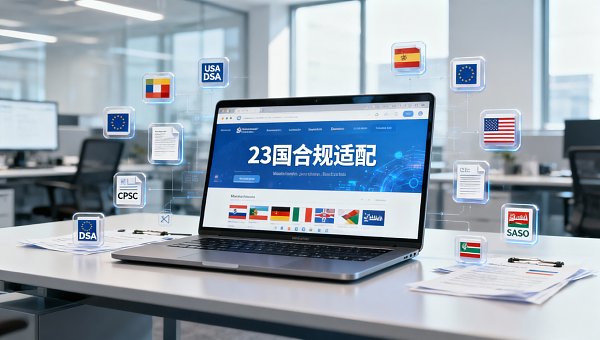
On April 6, 2026, EasyStore officially launched the 'Global Compliance Engine', which is based on AI semantic parsing and local regulatory knowledge graphs. It supports foreign trade enterprises by allowing them to input a Chinese website and automatically generate an independent site variant that complies with the regulatory requirements of 23 jurisdictions, including the EU's DSA, the US CPSC, and Saudi Arabia's SASO. This technology will directly impact cross-border e-commerce, B2B foreign trade, and digital marketing service providers in niche sectors. Its core value lies in addressing the compliance cost pain points of multinational operations through automation tools.
Event Overview
On April 6, 2026, EasyStore released its global compliance website engine, with core features including:
1. One-click generation of compliant versions for 23 jurisdictions from a Chinese website
2. Automatic adaptation to regulations like the EU DSA, US CPSC, and Saudi SASO
3. Automated TDK generation, localized privacy policies, and embedded certification documents
Current public information indicates the system uses AI semantic parsing and knowledge graph technology, but specific case studies or actual test data have not been disclosed.
Impact on Key Industries
Direct Trade Enterprises
Primarily affects cross-border e-commerce sellers and B2B export companies targeting EU, US, and Middle Eastern markets. While the technology can reduce manual review costs by over 90% compared to traditional compliance改造 investments of tens of thousands per country, attention must be paid to verifying the accuracy of auto-generated content.
Digital Marketing Service Providers
Website service providers and SEO agencies need to reassess their value chains. Basic compliance services may be replaced by standardized tools, while advanced localized operations and certification guidance will gain prominence.
Supply Chain Service Providers
Logistics and payment service providers must monitor clients' website compliance status changes. For example, modifications to product descriptions under Saudi SASO certification may affect customs clearance processes, requiring pre-established data exchange mechanisms.
Key Focus Areas for Related Enterprises
Verification of Key Market Adaptation Accuracy
Conflicts exist between the EU DSA's user data tracking requirements and US CPSC's product description specifications. It's recommended to prioritize manual review for 3-5 core markets.
Distinguishing Compliance from Commercial Effectiveness
While auto-generated privacy policies meet legal requirements, they may not align with local consumer reading habits, necessitating optimization by localization teams.
Managing Certification Document Dynamics
Certifications like Saudi SASO have validity periods. Enterprises should implement automatic update reminders rather than relying on one-time generation.
Industry Perspective
From an industry viewpoint, this technology serves more as a compliance workflow efficiency tool rather than a business model disruptor. Current focal points include:
1. Whether it triggers technical countermeasures from major regulatory bodies
2. If leading platforms (e.g., Amazon, Shopify) will adopt similar features
3. The actual implementation costs and learning curve for SMEs
Conclusion
The engine's launch marks the intelligentization phase of cross-border compliance, but should be viewed as an efficiency tool rather than a universal solution. Enterprises must maintain proactive monitoring of target market regulation changes, combining technical tools with manual review.
Source Information
1. Official EasyStore announcement on April 6, 2026
2. Pending observation: Progress on country-specific compliance certifications and actual case data
Related Articles



Related Products
 EasyCamp SaaS Smart Website Marketing SystemE-Yingbao SaaS Smart Website Marketing System: AI-powered, zero-code website building. Rapidly launch multilingual independent e-commerce sites in just 10 minutes. Global server acceleration and AI-driven SEO optimization empower businesses to efficiently connect with global markets. The seamless integration of technology and user-friendly operation makes building e-commerce sites incredibly simple.
 AI+SEM Intelligent Advertising Marketing SystemAI+SEM drives intelligent ad creation, empowering full-funnel precision advertising marketing. The system automatically generates weekly/monthly reports, AI recommends keywords and target countries, monitors core metrics in real-time with intelligent alerts, and enables one-click high-conversion ad solutions to help quickly acquire customers and improve ROI.
 AI+SEO Dual Engine Optimization ServiceEasyWin AI+SEO Dual Engine Optimization System leverages AI-powered keyword mining, content generation, and comprehensive technical optimization to help foreign trade enterprises acquire high-quality organic traffic, significantly improving search rankings and conversion rates.
 AI+SNS Social Media Marketing SystemYingbao AI+SNS Social Media Marketing System - Precision social capture for the social media era. Supports one-click content synchronization across major platforms like Facebook and LinkedIn. AI intelligently rewrites posts for enhanced relevance. 24/7 AI customer service and user profiling analysis empower businesses to efficiently expand into global markets.
 AI+SEO营销解决方案易营宝AI+SEO营销解决方案,通过AI批量写作、智能生成TDK、精准关键词扩词等功能,全面优化网站SEO效果,提升流量与转化率。助力企业构建高效智能网站新生态。
 AI+SEM Advertising Marketing SolutionsAI+SEM Advertising Marketing Solution leverages AI technology to deeply empower SEM ad campaigns. It automatically generates weekly/monthly reports using AI, presenting account data across multiple dimensions for comprehensive insights into campaign performance and trends. The system precisely recommends keywords and target countries, intelligently generates high-conversion ad copy, and enables one-click activation of efficient campaign plans to help businesses rapidly acquire customers. Simultaneously, it monitors core metrics in real time, intelligently identifies abnormal fluctuations, and issues timely alerts to ensure stable, high-return advertising results.
 Domain Name ServicesEasyWin provides professional domain name services, including intelligent queries, one-stop registration, brand protection, and full lifecycle management, helping businesses build a digital brand image.
 EasyOperate B2C Cross-Border E-Commerce Platform & Independent WebsiteEasyStore B2C Cross-border E-commerce Independent Store is an intelligent website building and cross-border e-commerce integrated solution independently developed by EasyStore Information Technology (Beijing) Co., Ltd. The system is specially designed for small and medium-sized as well as large export enterprises, integrating 'website building, operation, marketing, advertising, and conversion' into one, helping enterprises quickly establish cross-border e-commerce independent stores to achieve brand globalization and global sales growth.
The platform supports multiple languages, multiple currencies, and multi-channel marketing, with built-in AI intelligent translation and SEO optimization systems, suitable for mainstream markets such as Southeast Asia, Europe and America, Latin America, and the Middle East, assisting Chinese manufacturing enterprises in efficiently deploying international e-commerce strategies. SSL证书易营宝提供专业SSL安全证书服务,包括单域名和泛域名证书,确保网站数据传输加密、身份验证和完整性保护,助力企业建立安全可信的在线业务环境。









